Imagine stepping into your primary bath and catching a warm teak glow, sharp geometric lines, and a playful hit of avocado green. Nostalgic yet fresh, that mix is the magic of mid-century modern design.
Data backs the feeling: the 2023 Houzz survey shows wood-tone vanities edging out white—33 percent versus 29 percent—while a mid-range primary-bath remodel returns about 74 percent of its cost, according to the latest Cost vs. Value report. Choose a vanity that marries timeless style with modern function and you’ll enjoy it now, then reap rewards at resale.
We’ve already sorted the crowded market to bring you four options that meet real-world storage, plumbing, and durability demands without faking the era. Ready to explore? The first idea proves why teak still rules.
Why Mid-Century Vanities Still Feel Fresh in 2026
Mid-century vanities feel current because they mix familiar warmth with forward-looking lines. Clean planes, honest materials, and a hint of quirk create a friendly modern mood that never slips into cold minimalism.
Bathrooms of the 1950s were compact by today’s standards. The 2023 Houzz survey shows that 22 percent of homeowners enlarge the primary bath during a remodel. Designers meet these bigger footprints with floating cabinets, sustainable woods, and hidden storage that preserve mid-century character while adding usable space (see this Architectural Digest gallery).
Homeowner preferences back the shift. In the same Houzz report, wood-tone vanities edged past white—33 percent versus 29 percent—proving that people crave the warmth of walnut and teak, according to Architectural Digest.
Function keeps pace with fashion. Sixty-five percent of renovators now choose dual sinks, so an authentic vanity has to manage two morning routines without clutter. Today’s best mid-century pieces deliver deep drawers, smart plumbing cut-outs, and hardware that nods to the 1960s while gliding like 2026.
In short, the style checks three modern boxes at once: timeless design, natural-material confidence, and generous storage. That trio explains why your future self—or the next buyer—will still smile every time the bathroom door opens.
Ready for idea one? Teak leads the way.
1. Teak Floating Double-Sink Vanity: Light, Luxe, and Built to Last
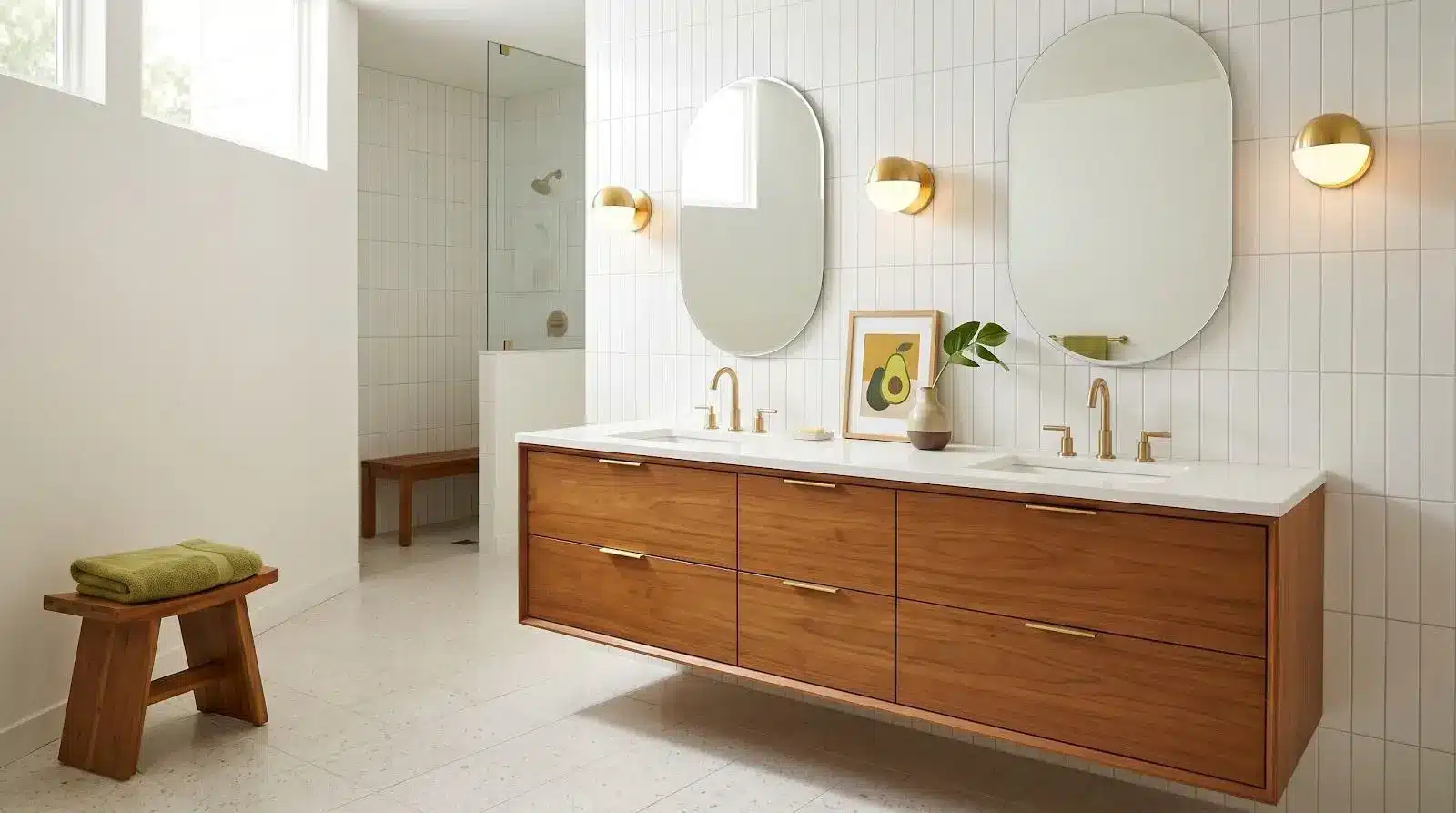
Slide a wall-hung slab of golden teak across your primary bath and the room immediately feels larger. The floor flows uninterrupted, the cabinet appears to hover, and cleaning shifts from a crouch to a quick swipe.
Function matches the style. Couples need elbow room, and 65 percent of current primary-bath renovations include double sinks. A 72-inch teak floater supports two basins and four deep drawers while leaving open space that helps a modest room read like a spa suite.
Teak justifies its premium. Boat builders value the wood’s oil-rich grain for water resistance, and that same property shrugs off daily steam. Unlike thin veneers, solid or thick-ply teak can be refinished decades from now, so the vanity ages gracefully instead of heading to the landfill.
Design authenticity matters. Danish craftsmen in the 1950s paired teak with crisp whites and brass accents. Repeat that look today with a teak front, slim brass pulls, and low-profile undermount sinks and the piece telegraphs “mid-century” without feeling like a theme park.
Need a teak floater pronto? Willow Bath and Vanity curates sustainable teak and mango-wood vanities in widths from 24 to 96 inches, so even a snug powder room or sprawling primary bath can land the mid-century look. Their 72-inch Madison ships pre-sealed with hardware rated for 500 pounds and an optional integrated porcelain top, so your installer only drills faucet holes. Because true teak is still handcrafted, plan for about six weeks of lead time.
Styling stays simple. Run terrazzo or white stacked tile to the floor so the cabinet seems to float. Add globe sconces at eye level and echo the wood tone with a teak shower stool or narrow shelf. In a single weekend, your bath can jump from builder basic to Palm Springs cool without adding square footage.
2. Walnut Freestanding Vanity With Tapered Legs: Furniture-Grade Flair
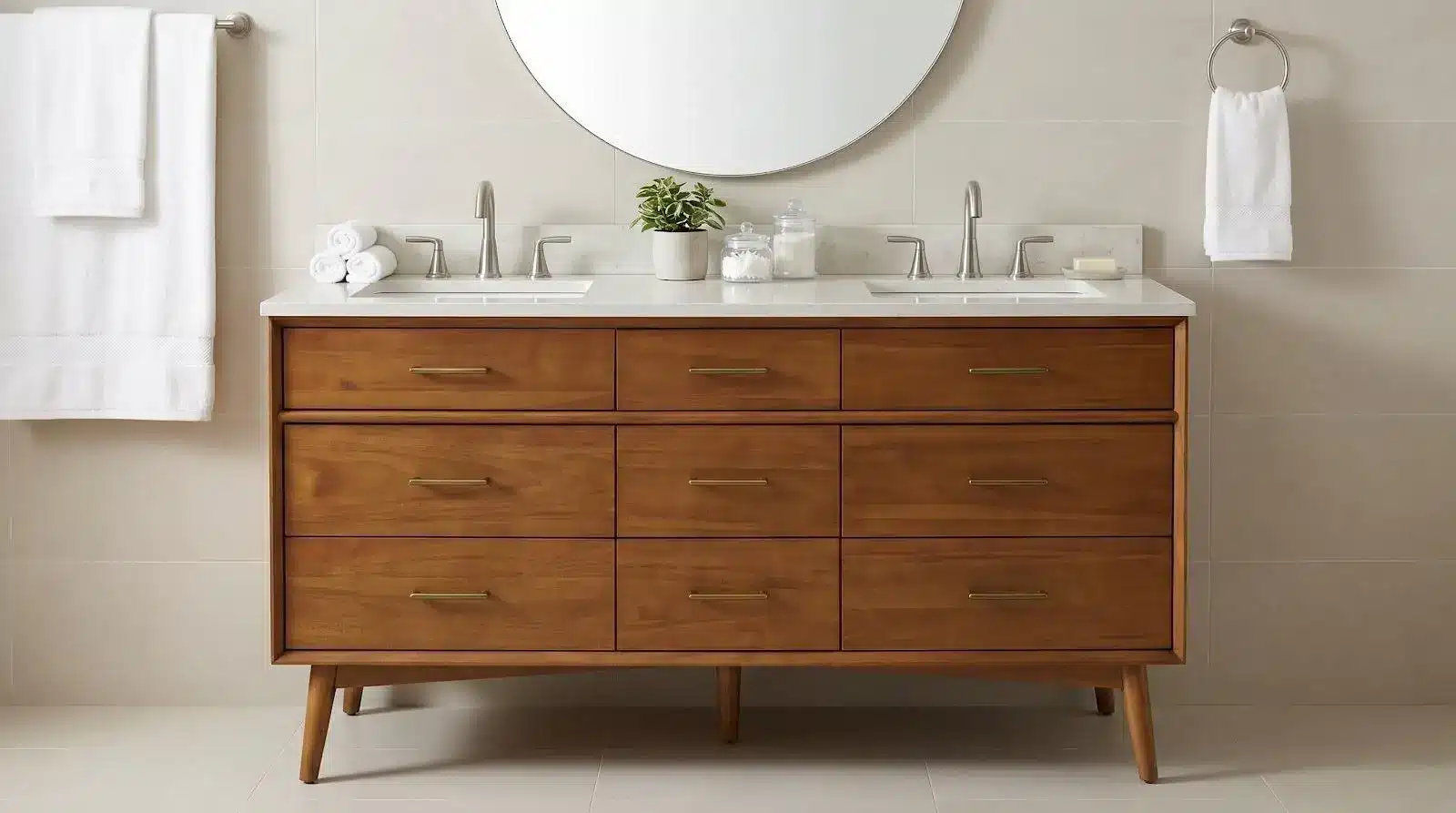
If teak is the surfer, walnut is the cocktail host. The wood’s deep grain and pencil-thin legs evoke a vintage credenza that wandered in from the living room and decided to stay.
A freestanding walnut vanity commands attention because it reads as furniture. Legs lift the cabinet about eight inches, allowing floor tile to flow under and around the piece and giving small baths visual breathing room. Early-sixties makers tipped their legs in brass; you can keep that metal or shift to matte black for sharper contrast.
Practicality backs up the charm. Modern versions hide full-extension soft-close drawers behind flat fronts, keeping hair tools and skincare out of sight. Standard counter heights land near 34 inches, ideal for under-mount sinks that preserve a low, sleek profile. Drop in a colored porcelain basin—powder blue or blush—and watch the walnut glow.
Check construction details before you buy. A solid-wood face frame paired with a plywood box veneered in real walnut balances durability and budget. Veneer quality matters: sliced walnut shows long cathedral grain, while rotary cuts feel busy and break the era vibe. Inside, full-depth dovetailed drawers beat half-box fronts when you need every cubic inch.
West Elm’s 63-inch Mid-Century Double Bathroom Vanity hits those marks: solid wood legs, acorn finish, two drawers, and an optional quartz top that ships in two to six weeks. For a custom look on a lean budget, Semihandmade offers walnut fronts sized for IKEA bases.
Style it simply. Pair the rich wood with pale wall tile—white zellige or light terrazzo—so the grain sings. Hang two frameless oval mirrors to echo the leg curves, then finish with cone-shaped brass sconces. In just five pieces—vanity, mirrors, lights—you have a scene straight from a 1962 catalog, minus the cigarette smoke and shag rugs.
3. Up-Cycled Vintage Credenza Vanity: Authenticity on a Budget
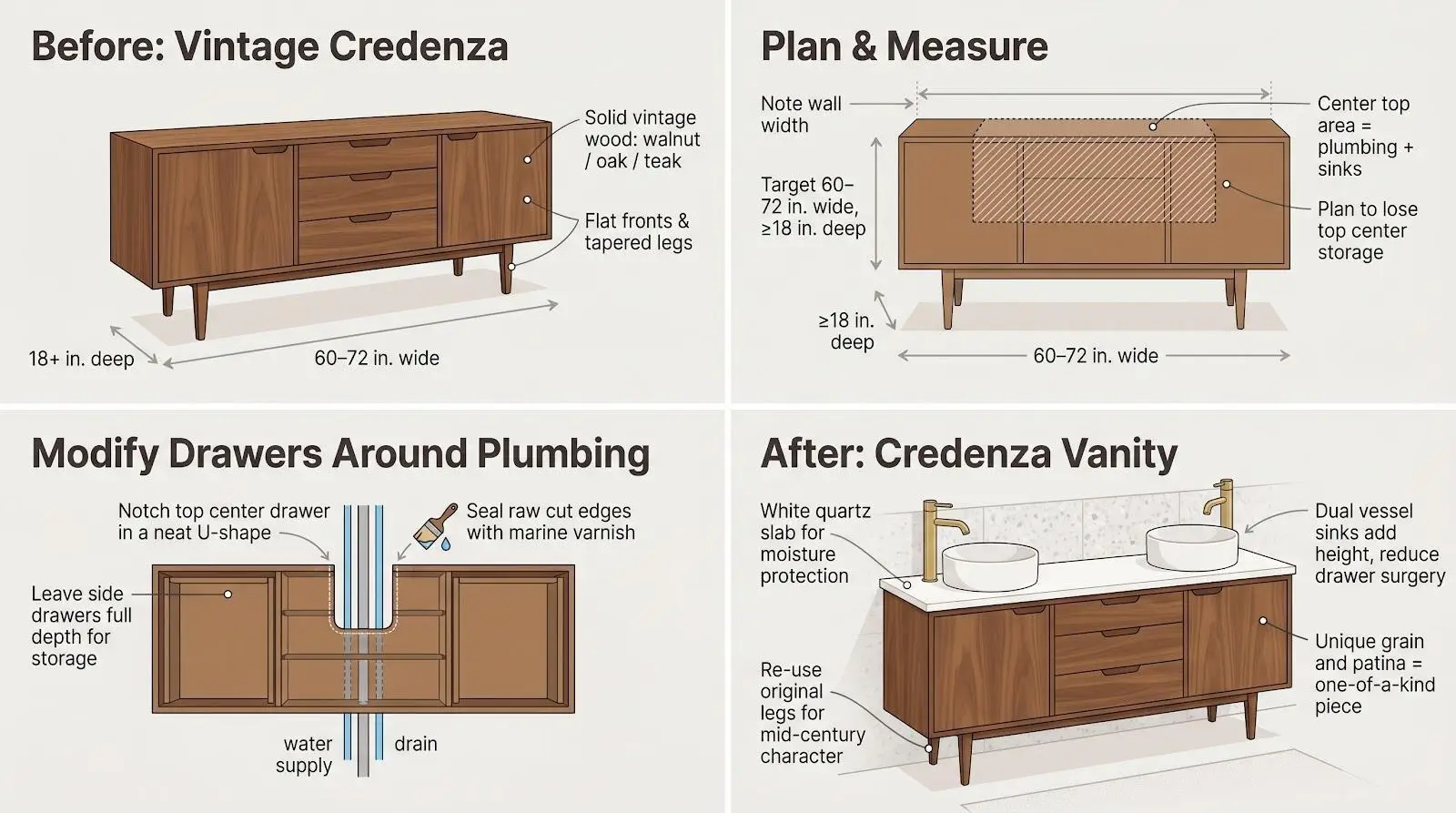
The smartest “new” vanity might be sixty years old and waiting at a resale shop. Mid-century dressers and credenzas were built from solid walnut, oak, or teak and feature the flat fronts, sculpted pulls, and low profiles designers still chase today. Converting one into a bathroom centerpiece gives you history while avoiding mass-market sameness.
Start with measurements. Note your wall width, then look for a piece between 60 and 72 inches wide and at least 18 inches deep. Check the drawer layout: you will lose the top center storage to plumbing, so extra side drawers keep the project practical.
Conversion is straightforward with planning. Many DIYers add a white quartz slab for moisture protection and set vessel sinks on top to boost height and avoid heavy drawer surgery. Seal any raw cut edges with marine varnish. Finally, notch drawers in a neat U shape so they glide around supply lines instead of jamming.
Costs stay friendly. A solid-walnut dresser found for 400 dollars, plus a 600-dollar quartz remnant and 300 dollars in plumbing parts, often totals less than a new solid-wood double vanity. The finished piece feels bespoke because it is; each vintage grain pattern and leg taper is unique.
Let the star shine. Keep tile and wall color quiet—classic white ceramic or soft gray terrazzo—so the aged patina leads the scene. Add a round pivot mirror and cone-shade sconces for an era-true touch, and your bathroom looks curated rather than catalogued.
Up-cycling demands care: wipe splashes quickly, ventilate the room, and re-oil wood fronts once a year. Treat the vanity like heirloom furniture and it will outlast trend cycles—and maybe even your mortgage.
4. Color-Pop Vanity in Iconic Mid-Century Hues: Retro Energy, Modern Mood
Mid-century designers loved bold palettes: think kitchen appliances in turquoise and bathrooms dressed in Mamie-pink fixtures. Re-capturing that joy today can be as easy as swapping a safe white box for a vanity finished in a statement shade.
Olive green, mustard, and powder blue are leading the comeback. They read vintage yet refined, especially when paired with slim brass pulls and a bright white countertop. On deeper tones such as navy or teal, brass hardware glows, turning ordinary drawers into jewelry.
You have three routes to get the look.
- Order a factory-finished vanity. Brands like Fabuwood will spray low-VOC lacquer in any Sherwin-Williams code and top-coat it for bathroom humidity. Lead time is several weeks, but the finish arrives flawless.
- Hire a local cabinetmaker to spray a raw wood unit. Professionals use catalyzed conversion varnish that resists chips better than DIY paint.
- Refresh an existing cabinet yourself: scuff-sand, prime with a bonding primer, roll on two coats of high-hide enamel, then seal with water-based polyurethane. The materials cost about 150 dollars and a weekend of effort.
Color makes styling simple. Echo the vanity hue once, perhaps in a terrazzo fleck or patterned shower curtain, then keep the rest neutral so the focus shines. White stack-bond tile, globe sconces, and a frameless mirror let the color sing without tipping into kitsch.
Concerned about resale? Bold vanities are surprisingly adaptable because paint can change. Strip and respray later, and the solid cabinet beneath keeps adding value. Until then, every morning starts with a spark of retro optimism that a plain white box can’t match.
Quick-Glance Comparison
Choosing among four strong options can feel like a rapid round of dating: each looks appealing, but which one truly fits your lifestyle? The table below lines up mounting style, size, sinks, materials, price, and lead time so you can spot trade-offs in ten seconds.
|
Vanity idea |
Mounting and footprint |
Typical widths |
Sink setup |
Core material |
Ballpark price* |
Lead time |
Ideal for |
|
Teak floating double |
Wall hung, full floor visible |
60–72 in. |
Dual undermount or integrated |
Solid teak |
3,000–4,500 dollars |
6–8 weeks |
Space-saving luxury and easy cleaning |
|
Walnut freestanding |
Furniture legs, 8 in. clearance |
48–72 in. |
Dual undermount |
Walnut veneer on plywood, solid legs |
1,800–3,200 dollars |
4–6 weeks |
Warm statement piece with big drawers |
|
Up-cycled credenza |
Freestanding or leg boost |
60–72 in. (varies) |
Dual vessel |
Vintage solid wood |
About 1,000 dollars (DIY) |
Varies with hunting |
Ultimate originality and eco value |
|
Color-pop painted |
Freestanding or floating |
48–72 in. |
Single or dual |
Maple or MDF with pro lacquer |
1,500–2,500 dollars |
6–8 weeks factory, weekend DIY |
Bold personality that can be repainted |
*Prices cover cabinet and a basic top; premium stone, faucets, or custom work add cost.
Buying and Styling Tips for a Seamless Retro Retreat
Start with scale. Measure wall to wall, then subtract at least 30 inches for comfortable clearance in front of doors or drawers. A 72-inch double vanity may fit on paper, but if you cannot bend to tie a shoe without bumping a knee, size down.
Mind the plumbing. Converting one sink to two requires extra supply lines and a second drain. Factor that rough-in cost before you splurge on stone. Wall-hung cabinets need blocking in the studs, so ask your carpenter for backing before drywall goes up.
Choose materials for moisture, not just looks. Solid teak or well-sealed walnut shrugs off steam, while painted MDF relies on a tough topcoat. Request catalyzed lacquer or conversion varnish—the same finish pro cabinet shops use on kitchen fronts—so splashes wipe off instead of bubbling the paint.
Hardware is the handshake people remember. Go warm (brass) against cool colors or woods, or crisp black against lighter tones. Swap stock knobs for cone pulls or slim finger grooves and the whole piece feels custom.
Echo, don’t copy. Repeat a vanity’s wood tone in one other spot—a shower stool, open shelf, or picture frame—so the room feels curated rather than monotone. If you chose bold color, pick up a single accent in towels or art and keep walls neutral. The eye needs a place to rest.
Light from the sides, not just overhead. Globe sconces placed about 65 inches high cast shadow-free light and amplify the mid-century vibe. Add a dimmer so the evening routine feels spa-calm.
Protect your investment. Run the exhaust fan during every shower, wipe water beads off drawer fronts, and re-oil teak once a year. Small habits keep your vanity showroom fresh and help lock in the 74 percent resale ROI bathrooms now command.
Conclusion
Each option delivers mid-century bones—clean lines, honest materials, and hardware that sings. Your pick simply layers in nuance: floating for a spa mood, furniture style for warmth, vintage for a one-of-a-kind story, or color for pure joy.