Getting your kitchen seating wrong is more common than you think. Knees bumping the counter. Feet dangling in mid-air. Stools that look stunning in photos but feel awkward the moment you sit down.
The right bar stools and counter stools can completely transform how your kitchen looks and feels, turning an island or breakfast bar into the most inviting spot in your home.
Whether you are starting from scratch or replacing a tired set, this guide covers everything you need: height, spacing, style, materials, and the mistakes most buyers make before they even add to cart.

What’s the Difference Between Bar Stools and Counter Stools?
The difference comes down to height. Counter stools have a seat height of 24 to 27 inches and are designed for standard kitchen counters that sit around 34 to 36 inches from the floor.
Bar stools are taller, with seat heights ranging from 28 to 32 inches, built for bar-height surfaces between 40 and 42 inches.
The golden rule is simple: your seat should sit 9 to 12 inches below the underside of your surface.
If you need flexibility, adjustable stools bridge both heights and work well in multi-purpose kitchen and dining spaces.
How to Measure Before You Buy
Buying without measuring first is the single most common stool mistake. A few quick steps before you shop will save you the frustration of returns and wrong-height seating.
Step 1: Measure from the floor to the underside of your counter or bar top.
Step 2: Subtract 10 to 12 inches from that number. The result is your ideal seat height.
Step 3: Measure the full length of your island or counter. Divide that number by 24 for counter stools or by 26 to 28 for bar stools to find out how many stools will fit comfortably with enough space between each seat.
Once you have your numbers, you can shop with complete confidence knowing exactly what size you need before style even enters the conversation.
Note: Always measure your specific counter rather than relying on “standard” dimensions. Not every kitchen or home bar is built to the same height.
Backless vs. Backed: Which Is Right for You?
Choosing between a backless and backed stool is about more than looks. The right choice depends on how you use the space, how long you sit, and how much room you have to work with.
| Stool Type | Best For | Key Benefit | Trade-off |
| Backless | Small kitchens, quick meals, minimal look | Tucks fully under counter, saves space | Less comfort for long sitting sessions |
| Low-back | Open-plan kitchens, social spaces | Comfort without blocking sightlines | Does not tuck as far under counter |
| Full-back | Long meals, home office at island, family use | Maximum support and comfort | Requires more space, may not fully tuck under |
With the right stool type matched to your lifestyle, you will never find yourself shifting uncomfortably after twenty minutes at the island.
Note: If your kitchen opens into a living or dining area, a low-back or backless stool is almost always the better choice. Tall high-back stools in open-plan spaces can disrupt sightlines and make the room feel closed off.
Styles That Suit Every Kitchen Aesthetic
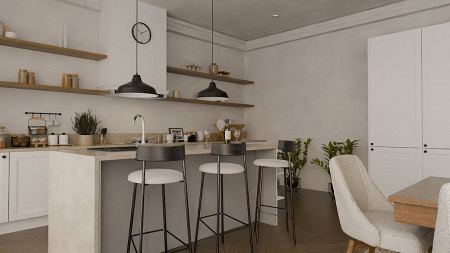
Your stools should feel like a natural extension of your kitchen, not an afterthought.
Coastal and natural kitchens come alive with rattan, wicker, or rope-wrapped designs. Brands like Serena and Lily have built entire collections around this look, blending organic textures with relaxed silhouettes that feel effortlessly at home near light cabinetry and warm wood tones.
Modern and minimalist spaces call for clean metal frames, slim profiles, and neutral finishes that do not compete for attention.
Farmhouse and transitional kitchens suit cross-back designs or distressed wood, adding warmth without visual noise.
Industrial spaces pair best with mixed metal and wood combinations for a raw, textured look.
Whatever your style, pick up one finish detail from your existing hardware, whether that is a faucet, a light fitting, or cabinet handles, and carry it into your stool choice for a space that feels intentional from every angle.
Materials: What Lasts, What Cleans, What Looks Good
The material you choose affects not just how your stools look, but how long they last and how much effort they take to maintain.
- Wood brings warmth and timeless character to any kitchen. It is durable and easy to match to existing furniture, though it may need occasional refinishing with heavy daily use.
- Metal is the most low-maintenance option. It wipes clean easily, holds up well in busy households, and suits modern or industrial interiors beautifully.
- Upholstered fabric or leather offers the best comfort for longer seating. If you have young children, pets, or a love for red wine, opt for performance fabric or vinyl rather than standard upholstery.
- Rattan and wicker add organic texture and a relaxed, coastal feel. Indoor versions work well in low-traffic spaces, while resin versions now offer the same look with significantly better durability.
The right material is the one that matches how you actually live, not just how you want your kitchen to look in photos.
Swivel or Fixed: And Other Features Worth Considering
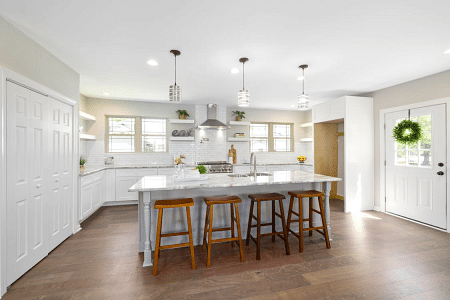
Swivel stools are more practical than most people give them credit for. In a social kitchen where you are constantly turning to chat, check on the stove, or face the living room, a swivel base removes the need to shuffle the stool across the floor every time.
Fixed stools, on the other hand, sit cleaner and feel more stable. They work especially well in formal or design-led spaces where a uniform, symmetrical look matters more than ease of movement.
Beyond the swivel question, a few other features are worth your attention before you buy.
A footrest is non-negotiable for comfort on taller stools as it prevents pressure building on the backs of your thighs over time.
Stackable stools are worth considering if you need flexibility for occasional use or guest seating. And if you have a mixed household, adjustable height stools offer a practical middle ground that works for adults and children alike without compromise.
Common Mistakes to Avoid When Buying Bar Stools and Counter Stools
Even well-intentioned buyers make avoidable errors. Here are the most common ones to watch out for:
- Buying before measuring: Falling in love with a style before checking the height is the number one reason for returns. Measure first, always.
- Choosing style over sizing: A beautiful stool at the wrong height is useless. Get the numbers right before thinking about aesthetics.
- Overcrowding the island: More stools does not always mean better seating. Cramped spacing feels uncomfortable and looks cluttered.
- Ignoring the footrest: A seat without a well-positioned footrest will cause discomfort surprisingly quickly, especially on taller bar height stools.
- Forgetting the sightline: Tall high-back stools in open-plan kitchens can block the view between rooms. Consider the full visual impact before committing.
- Skipping the material check: Choosing upholstery without considering your actual lifestyle, think kids, pets, or frequent entertaining, will cost you in cleaning and wear over time.
Avoiding these mistakes before you shop will save you time, money, and the hassle of living with the wrong seat.
Conclusion
Getting your bar stools and counter stools right starts with one simple step: measuring before you browse. Once you have your height sorted, everything else falls into place.
Pick a style that suits your kitchen’s existing aesthetic, choose a material that matches how you actually use the space, and think about practical features like swivel bases or footrests that will make a real difference day to day.
Stools are one of the most impactful and affordable ways to refresh a kitchen. The right pair can anchor the whole room.
Take the measurements, trust the process, and choose seats that will feel just as good in five years as they do on delivery day.