I’ve been looking into home additions lately, and 3-season rooms keep coming up as one of the best options if you want more space without spending a fortune.
If you are thinking about adding a bright room where you can relax and enjoy the outdoors without dealing with bugs or bad weather, you are probably wondering what it’ll cost and if it’s actually worth it.
I did the research so you don’t have to. Here, I’ll break down everything about 3-season rooms, how they’re different from 4-season rooms, what features to expect, and if you need permits. By the end, you’ll know if it is the right choice for your home.
Understanding 3-Season Room?
A 3 season room is an enclosed space added to a home for use during spring, summer, and fall. It lets you enjoy the outdoors while staying protected from bugs, wind, and light rain.
Most of these rooms have large windows or screens and are not insulated, so they are not meant for cold winter weather. Compared to a screened porch, the room offers more comfort.
Screened porches only use mesh screens, while 3 season rooms usually include glass or vinyl windows. This helps block rain and keeps the space warmer during cool days.
Many homeowners choose this as a budget-friendly sunroom option. It creates a bright, relaxing space that works well for reading, dining, or spending time with family.
How Much Does a 3-Season Room Cost in the USA?
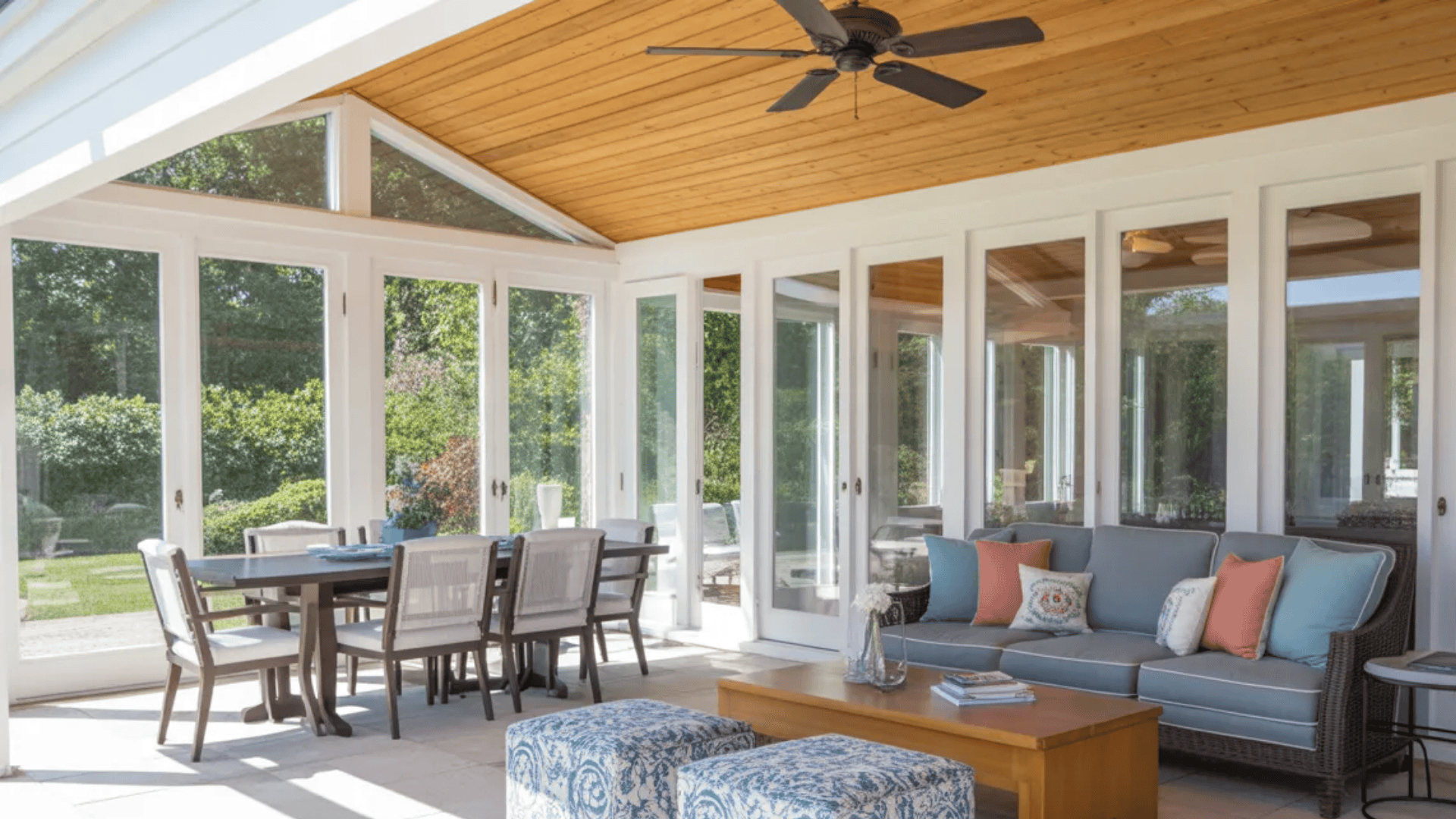
A 3-season room can range from $8,000 to $70,000, depending on size, materials, and features. Let’s break it down by room size and costs per square foot to give you a clearer picture.
Basic Range: $8,000–$15,000 for Smaller or Basic Designs
This is the cost for a smaller room, typically around 100-150 square feet. You can expect a basic structure with minimal features such as single-pane windows, simple framing, and a basic roof.
This option is affordable but still offers a functional and enjoyable outdoor space during the spring, summer, and fall.
Mid-Range: $15,000–$40,000 for Mid-Sized Rooms with Higher-End Features
Rooms in this range, usually 150-250 square feet, offer better materials and more custom features. You can expect double-pane glass windows, a higher-quality roof, and possibly added extras like electrical wiring or upgraded flooring.
These rooms provide a more comfortable space for extended use in mild weather and are ideal for homeowners who want a bit more luxury without a significant price jump.
High-End: $40,000–$70,000 for Larger Rooms with Custom Features
High-end 3-season rooms, typically over 250 square feet, offer full customization. These rooms often come with premium materials, such as insulated glass windows, a custom-built roof, or advanced climate control features.
Expect a larger footprint and luxury finishes, ideal for homeowners looking for a spacious, high-end addition to their home.
What Affects the Cost of a 3-Season Room?
Several factors affect the final cost of a 3-season room. Understanding these details helps you plan better and avoid surprise expenses later.
- Size and Layout: Bigger rooms need more materials and time. Simple square or rectangular designs cost less, while custom shapes or divided spaces raise labor and overall price.
- Foundation (Existing Patio vs New Slab): Using an existing patio saves money. Building a new slab adds costs for digging, concrete, and inspections, which can add several thousand dollars.
- Window Type (Screens, Vinyl, Glass, Triple-Track): Screens are the cheapest and allow airflow. Vinyl or glass blocks wind and rain. Triple-track slides easily but is usually the priciest option.
- Roofing Materials: Lightweight panels are cheaper and easier to install. Matching your home roof costs more. Heavy materials may need extra support, increasing labor and costs.
- Labor and Location in the USA: Labor costs vary by location. Cities cost more than rural areas. Experienced contractors may charge more but often deliver higher-quality work.
- Permits and Inspections: Most U.S. areas require permits to meet building codes. Fees range from hundreds to over a thousand dollars. Some contractors always confirm permits.
By knowing these cost factors ahead of time, you can set a realistic budget and make smarter choices when planning your 3-season room.
DIY vs. Hiring a Professional: What’s Right for You?
When planning your 3-season room, one of the biggest decisions is whether to DIY or hire a professional contractor. Here’s a quick look at the pros and cons of each approach to help you make the right choice for your project.
| Factor | DIY | Hiring a Professional |
|---|---|---|
| Cost | Generally lower (you save on labor costs). | Higher due to labor, but guarantees quality. |
| Time Commitment | Takes longer, especially for beginners. | Faster, as pros handle everything. |
| Expertise | Requires basic to advanced skills. | Experienced contractors know the ins and outs. |
| Permits | You handle the permits and inspections. | The contractor manages permits and inspections. |
| Customization | Flexible, you can make changes on the fly. | Customizations available, but more costly. |
| Quality of Work | Varies depending on experience. | Consistent quality, done to code. |
| Risk of Mistakes | Higher risk of costly mistakes. | Less risk of errors, professional guarantees. |
If you’re comfortable with hands-on work and want to save money, a DIY project could be a great option.
However, if you prefer peace of mind, professional quality, and quicker completion, hiring a contractor is the better choice. Both options have their benefits depending on your budget and goals.
Key Features of a 3-Season Room
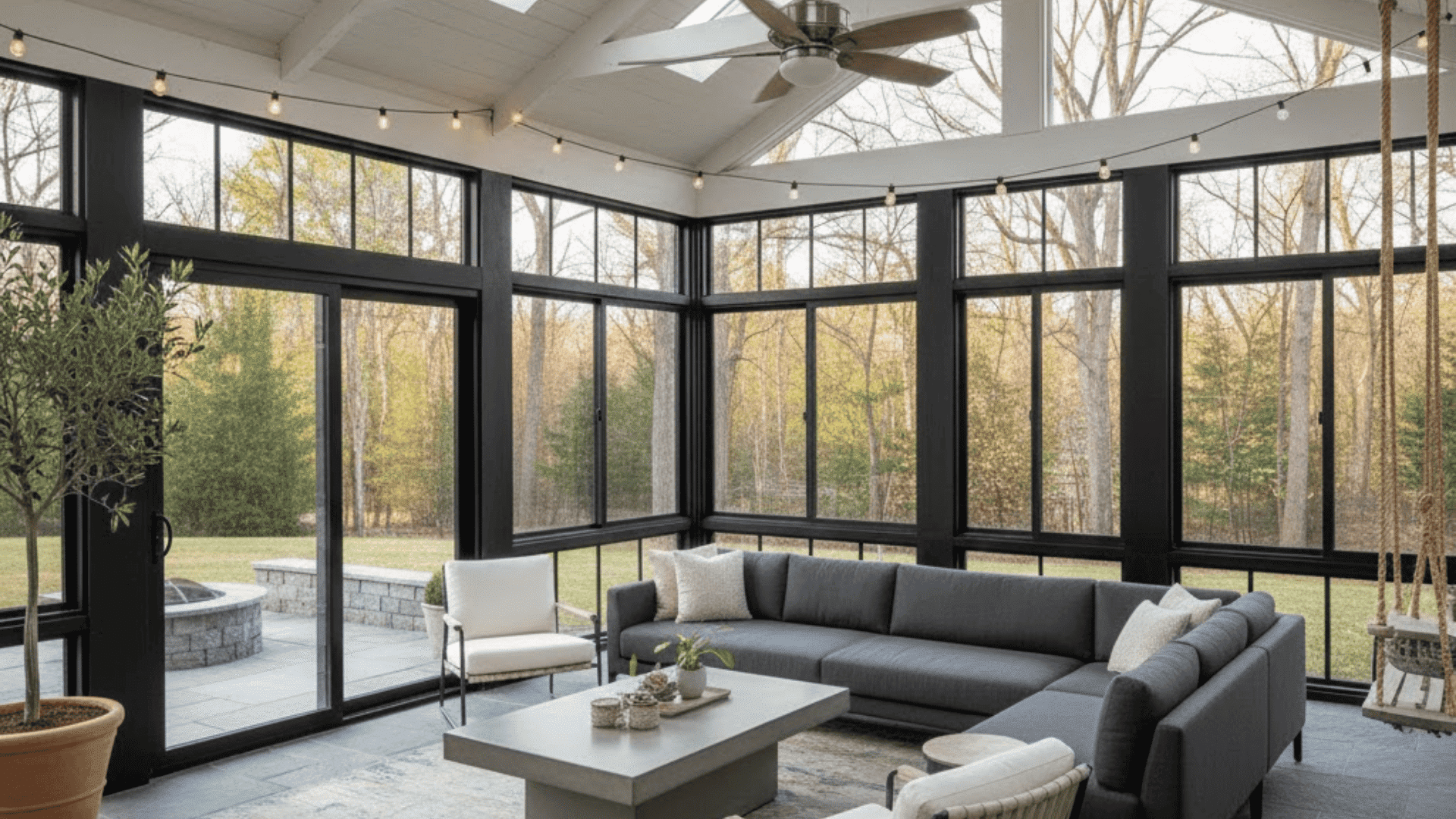
Let me tell you about the main parts that make up a this room. Understanding these features will help you know what to expect and what choices you’ll need to make when building yours.
1. Windows and Ventilation Systems
The windows are the most important part. Most rooms use triple-track systems with three sliding panels. You can choose single-pane glass (cheaper) or double-pane (warmer).
The cool part? You can swap between glass and screens. Use screens on nice days for that outdoor feel without bugs, then close the glass when it rains.
2. Flooring Options
Since these rooms aren’t designed for winter, the floors lack insulation. The key is to pick something durable that handles heat and cold without cracking. Tile is easy to clean and looks niceand concrete is super strong and cheap.
Wood or composite decking feels warmer underfoot. And vinyl is affordable and comes in many styles. However, Tile and concrete work best because they’re tough and can take whatever the weather throws at them.
3. Climate Control Options
Want to enjoy your room on a cool October night? Simply plug in a portable heater or electric fireplace; they’re perfect for fall and spring.
To keep the air fresh in summer, ceiling fans with built-in lights are effective; they’re affordable and noticeably improve circulation.
Do You Need a Permit for a 3-Season Room?
In most cases, yes, you’ll need a permit to build a 3-season room. Permits ensure the structure meets local building codes and safety standards.
A permit means the city knows you are building something safe and legal. If permits are skipped and it gets caught later, there could be huge fines, or the whole thing might need to be torn down.
Permits are usually required when adding a new structure, building anything over 100-200 square feet, doing electrical work, or changing the foundation.
Just call the local building department and ask what’s needed. If a contractor is hired, they usually handle all the permit stuff anyway.
Don’t skip this step; it might cost a few hundred bucks, but it’s way better than dealing with problems when trying to sell the house later!
Is a 3-Season Room Actually Worth the Investment?
This is the big question, right? You are about to spend $20,000 to $65,000, so you want to know if it’s actually worth it. Let’s break it down.
- ROI Considerations: Most home additions return 50-70% of the cost when selling. A 3 season room falls in that range, adding curb appeal and helping houses sell faster, especially to buyers who love outdoor living spaces.
- Lifestyle Benefits: Provides extra living space for entertaining, relaxing, or kids’ play without the cost of expensive full additions. No more bugs ruining outdoor time while still enjoying fresh air and sunshine in a bright, peaceful retreat.
- Climate Compatibility: Perfect for mild winter areas like Southern states or California, where it gets used 7-9 months yearly. Not great for harsh winters or extreme heat, where it would sit empty most of the year without temperature control.
- Long-Term Value: Well-built rooms last 20-30 years with basic maintenance. Increases home’s square footage and value with low ongoing costs. No expensive HVAC repairs are needed like 4-season rooms require for year-round comfort.
Worth it if the room gets actual use and the climate is decent most of the year. But if winters are very cold and it would only be used for 3 months a year, reconsider or save up for a 4-season room instead.
3-Season Room vs. 4-Season Room
Before choosing the best room for you, comparing factors like cost, comfort, and usability side by side helps you select the option that aligns with your budget and lifestyle.
| Feature | 3-Season Room | 4-Season Room |
|---|---|---|
| Insulation | No insulation in walls or floors | Fully insulated everywhere |
| Heating & Cooling | Not connected to your home’s AC or heat | Connected to your home’s HVAC system |
| When You Can Use It | Spring, summer, and fall only | All year round, even in winter |
| Windows | Single-pane glass or screens | Double or triple-pane insulated glass |
| Average Cost | $20,000 – $65,000 | $40,000 – $100,000+ |
| Winter Use | Too cold to use comfortably | Warm and cozy like any other room |
| Electric Bills | No change to your bills | Your heating and cooling bills go up |
A 3-season room is cheaper because it doesn’t have insulation or full heating and cooling. A 4-season room costs more but can be used year-round. If you live in a cold climate or want a room that works well in winter, a 4-season room makes sense.
Final Thoughts
After finding the details, it’s clear that a 3 season room is a practical option for homeowners who want more space without the expense of year-round construction.
It offers a bright, relaxing area to enjoy spring, summer, and fall while keeping costs under control. The final price depends on size, materials, and if you build on an existing structure, but with the right choices, it can be a very rewarding upgrade.
I believe the key is understanding your climate, budget, and how you plan to use the space. If you’re looking for comfort, flexibility, and value, this is worth considering.
Still unsure? Share your budget, space, or biggest question in the comments, and I would love to help you plan it better.