I used to think the entryway was just a place to drop shoes and grab keys. Over time, I noticed how walking into a messy or dark space affected my mood right away.
You’ve probably felt that too, even if you never put words to it. A feng shui entryway matters because it shapes how you arrive home and how you leave each day.
Small layout issues, clutter, or poor lighting can quietly add stress. Getting this space right makes daily routines feel easier and more settled.
Ahead, you’ll find clear rules, layout fixes, and practical ideas that work for real homes, so your entryway feels steady and easy from the moment you step inside.
Understanding the Feng Shui Entryway Means for Your Home
The entryway is the first space you move through when entering or leaving your home. Because of this, it plays a direct role in how your day begins and ends.
When this area feels tight, dark, or cluttered, that feeling often follows you inside. When it feels clear and steady, the rest of the home feels easier to move through.
Feng Shui focuses on how movement travels through a space and how that movement affects daily comfort. The entryway acts as a filter between the outside world and your living space.
If this filter feels blocked or rushed, it can affect focus, rest, and routines without you noticing right away. By keeping this area open, well-lit, and simple, you support smoother transitions and a calmer home environment overall.
Feng Shui Entryway Rules You Should Follow First
These core Feng Shui entryway rules help keep movement clear, reduce stress, and set a tone for your home before adding furniture, color, or decor.
Rule 1: Keep the Entryway Clean, Open, and Uncluttered

Your entryway should feel open the moment you step inside. Shoes, bags, mail, and random items slow movement and create mental noise. Feng Shui treats clutter as stalled energy, which affects how you feel when entering or leaving your home.
Start by clearing the floor completely. Keep only daily-use items in this space. Everything else should live in closets or storage away from the door.
Walls and corners should also stay mostly clear. When the entryway stays open and tidy, movement feels easier, and your home feels calmer from the start.
Rule 2: Make Sure the Front Door Opens Fully and Smoothly
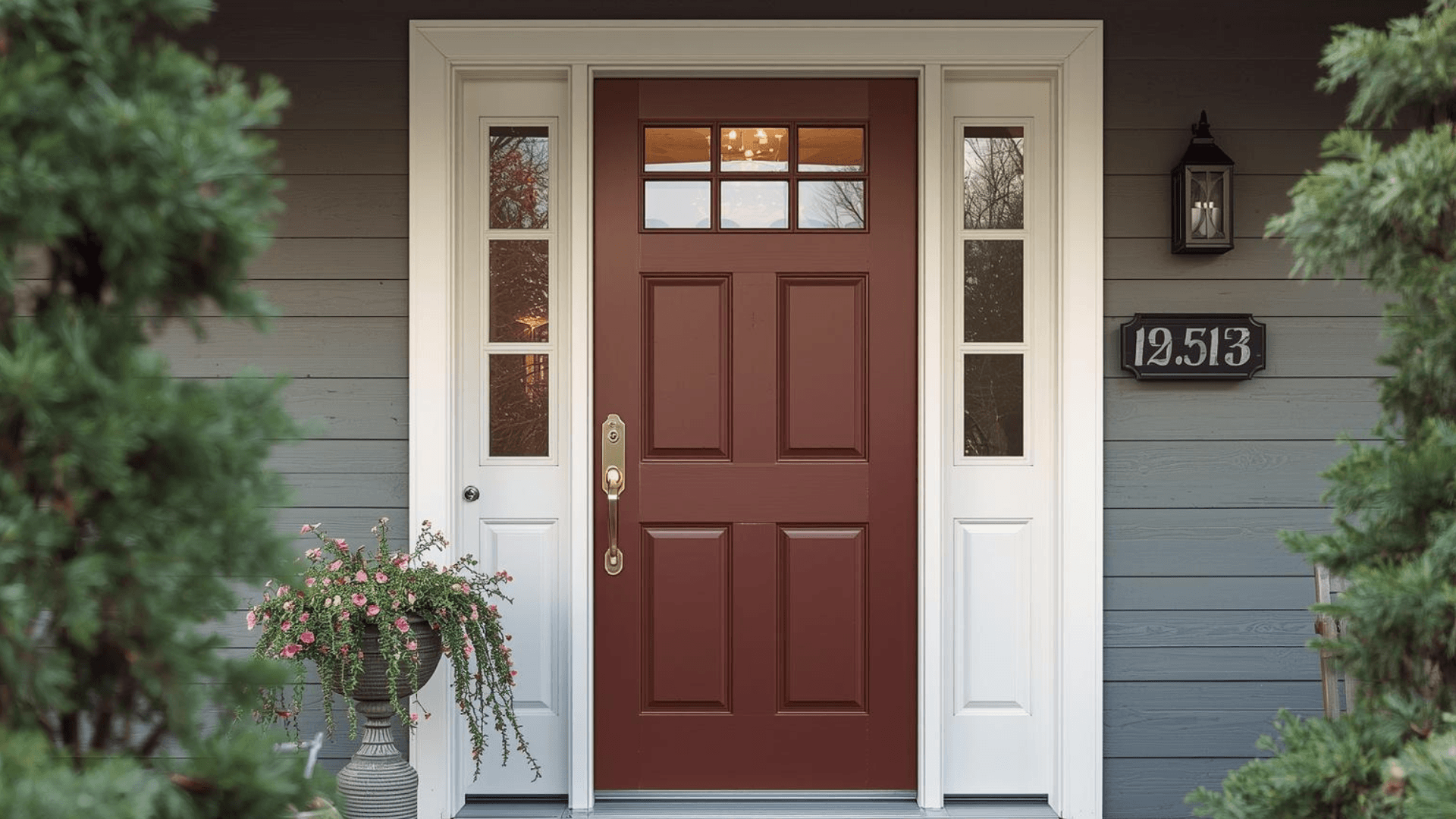
The front door is the main entry point for energy, so it must work without effort. If the door sticks, scrapes, or feels heavy, energy flow becomes strained.
Check that the door opens all the way without hitting furniture or walls. Fix squeaky hinges, loose handles, or broken locks. Clean the door surface and frame often, since dirt builds up quickly in this area.
A door that moves easily sets the tone for smooth daily routines. If opening your door feels stressful, it affects everything that follows once you step inside.
Rule 3: Use Bright, Steady Lighting Inside and Outside
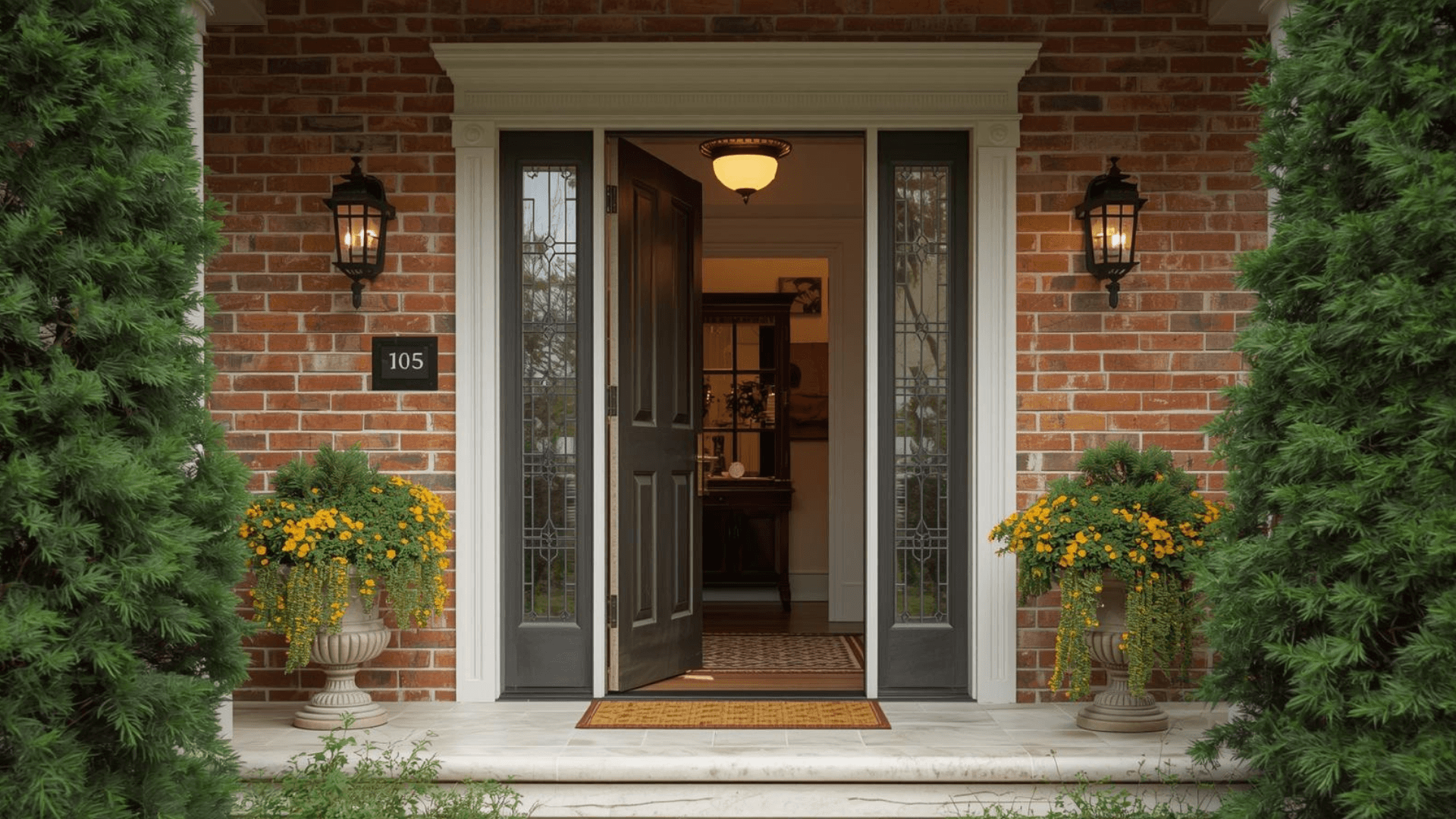
Lighting plays a major role in how an entryway feels. A dark entrance creates tension and makes the space feel closed off. Use steady lighting that clearly shows the floor, walls, and door area.
Overhead lights should fully light the space, not leave shadows. Add a lamp or wall light if needed. Outside lighting matters just as much, since energy starts forming before the door opens.
Replace dim bulbs and fix broken fixtures. A well-lit entryway helps the space feel safe, clear, and easy to move through at any time of day.
Rule 4: Keep a Clear Walking Path With No Blocked Movement
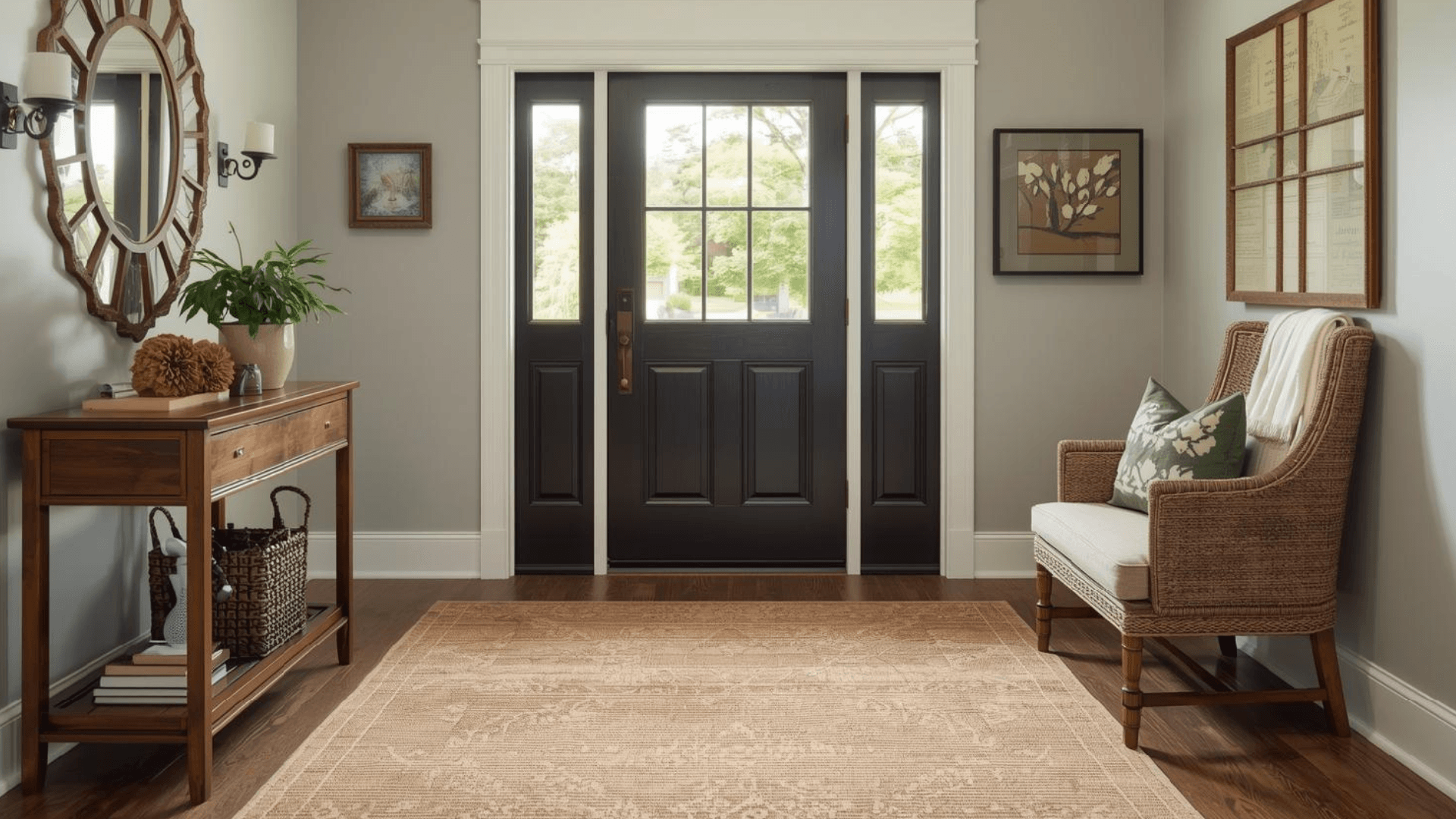
Energy should move straight into your home without obstacles. Furniture, baskets, or shoes placed too close to the door interrupt that movement.
Make sure you can open the door, step inside, and walk forward without sidestepping anything. The path from the door into the home should stay wide and simple. Rugs should lie flat and not bunch up.
Hooks and storage should stay off the main path. When movement feels natural, your body relaxes without effort. A clear path helps the entryway feel steady and controlled rather than rushed or cramped.
Rule 5: Aim for a Calm, Simple First Impression
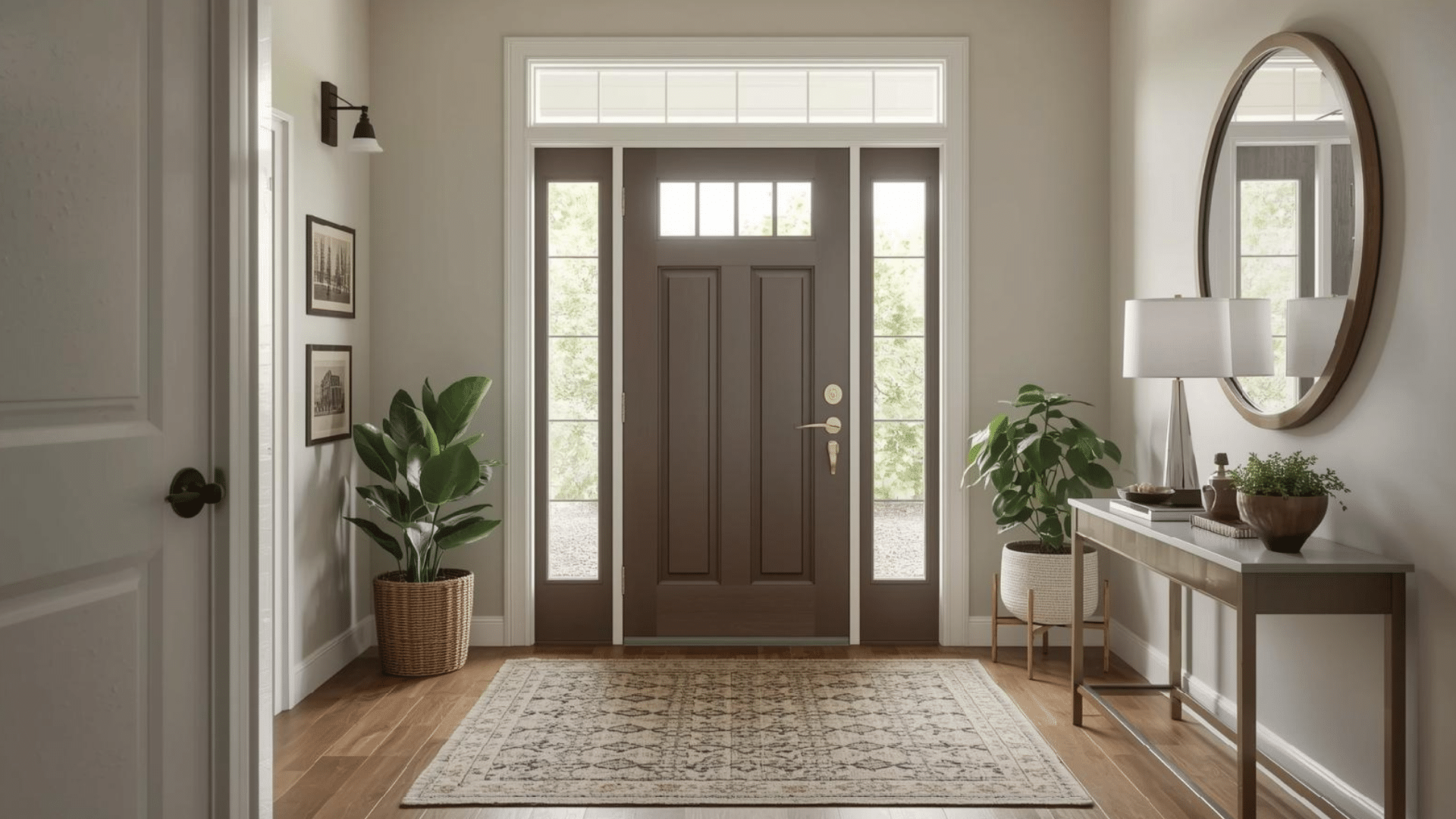
The entryway should feel steady, not busy. Too many colors, patterns, or objects overload the senses right away. Choose a few simple pieces instead of many small ones.
One rug, one mirror, or one plant is often enough. Wall art should feel pleasant and easy to look at. Avoid sharp shapes or heavy items near the door. This space sets the mood for the rest of your home, so keep it easy on the eyes.
A calm first impression helps you settle quickly when you arrive and leave without feeling weighed down.
Step-by-Step Feng Shui Entryway Setup
Follow these simple steps in order to set up your entryway so movement feels easy, clear, and steady from the moment you enter.
- Start by clearing the floor and door area. Remove shoes, bags, boxes, or furniture that sit too close to the door. You should be able to open the door fully and step inside without adjusting your body or path.
- Next, check the door itself. Make sure it opens and closes without noise or resistance. Tighten loose handles, oil hinges, and repaint chipped areas if needed. A door that works smoothly supports easier daily movement.
- Clean the entrance area inside and outside. Wipe the door, frame, handle, and nearby walls. Sweep or vacuum the floor. Outside, clear dirt, leaves, or broken items near the door. Energy starts forming before you step inside, so this area matters.
- Improve the lighting next. Replace dim bulbs and fix broken fixtures. The space should feel clearly lit at all times, especially at night. If needed, add a lamp or wall light to remove dark corners.
- Set basic storage limits. Decide how many shoes, bags, and jackets can stay in the entryway. Keep only daily-use items here. Everything else should move to closets or other rooms.
- Place a rug just inside the door. It should lie flat and guide movement inward. Avoid rugs that curl, slide, or block the door swing.
- Add a mirror only if placement works. It should sit on a side wall, not across from the door. Skip the mirror if there is no suitable wall.
- Finish with one natural item, such as a healthy plant or simple wall art. Keep it minimal so the space stays open and easy to move through.
Feng Shui Approved Entryway Layouts
This section explains how different entryway layouts affect movement and comfort, and how small layout changes can help energy move steadily instead of rushing or stopping.
1. When the Front Door Faces a Wall or Stairs
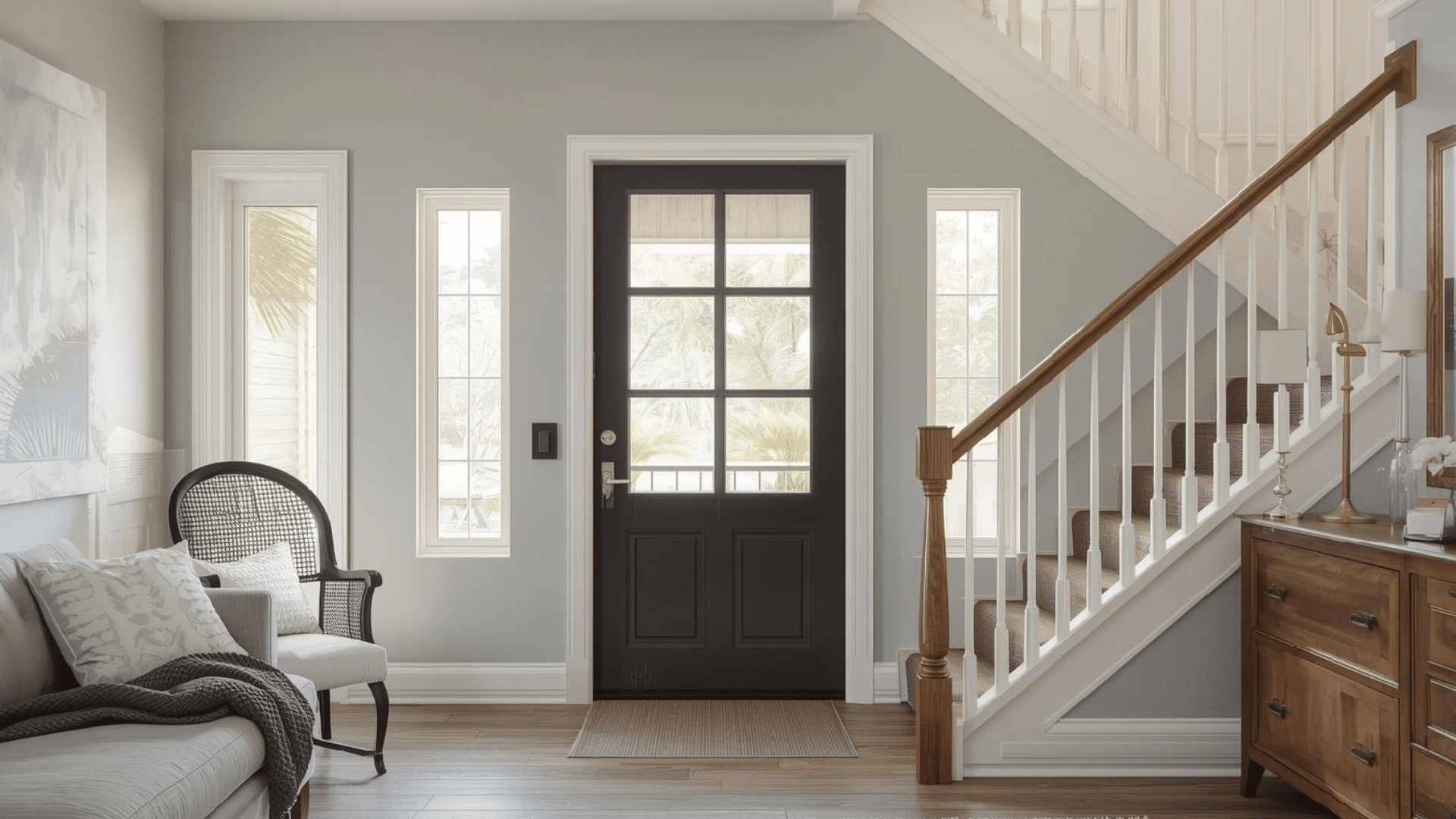
When the front door opens directly into a wall or staircase, movement stops or rushes too quickly.
A wall can make energy feel blocked, while stairs pull movement upward before it spreads through the home. You can soften this by adding a rug just inside the door to slow the first step forward.
Use steady lighting to brighten the area and reduce the closed-in feeling. Wall art with calm imagery can also help guide attention inward instead of straight ahead. Avoid placing large furniture here, since that adds pressure to an already tight layout.
2. When the Front Door Aligns With the Back Door
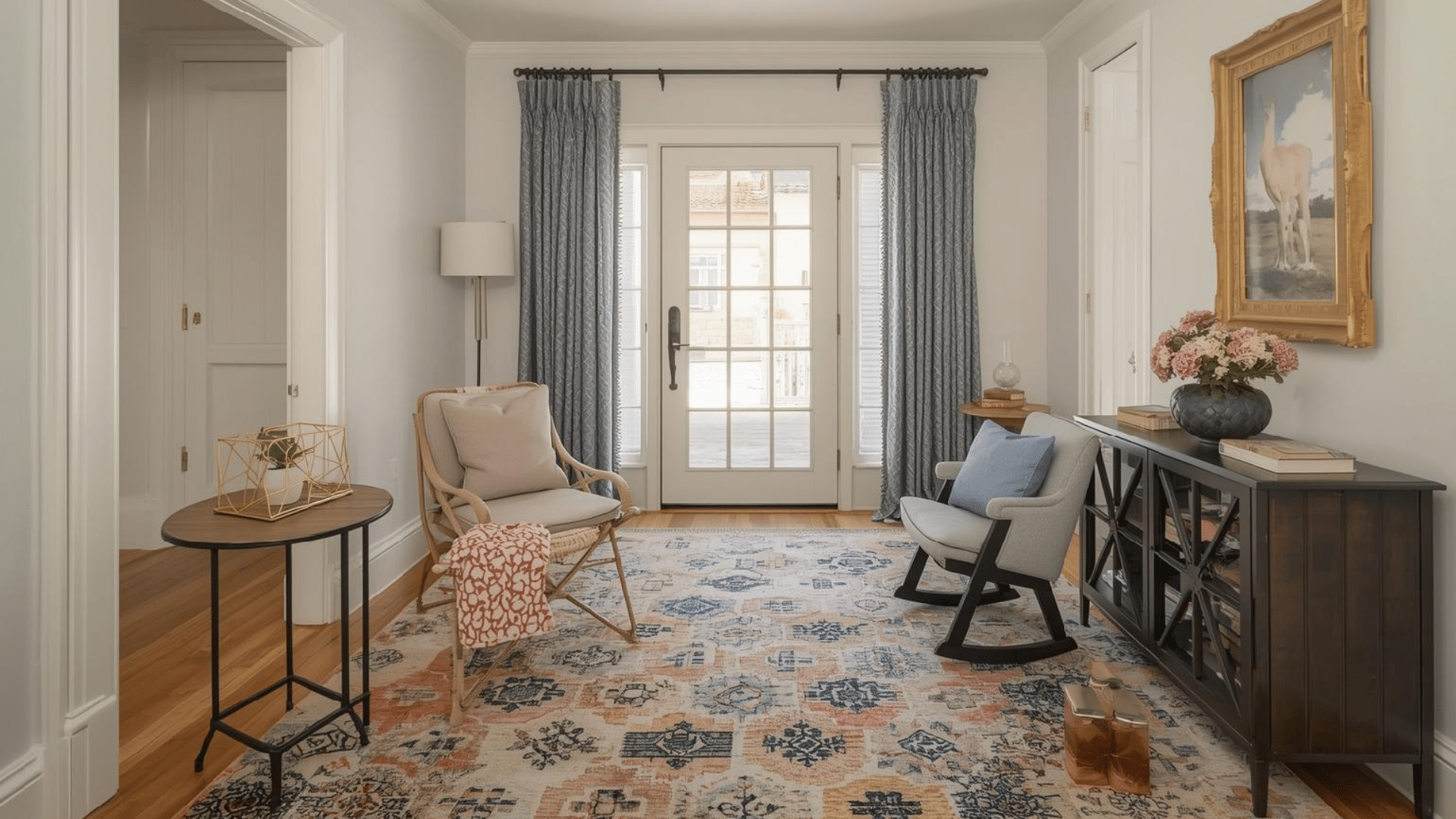
When the front and back doors line up, movement enters and exits too fast. This creates a pass-through effect that makes the home feel unsettled. To slow this, place a rug near the entry that visually anchors the space.
A console table or low furniture piece along the path can also help redirect movement. Curtains or furniture placement near the back door can reduce the straight line of sight.
The goal is to keep movement circulating inside the home instead of rushing straight out the back.
3. Long, Narrow, or Hallway Entryways
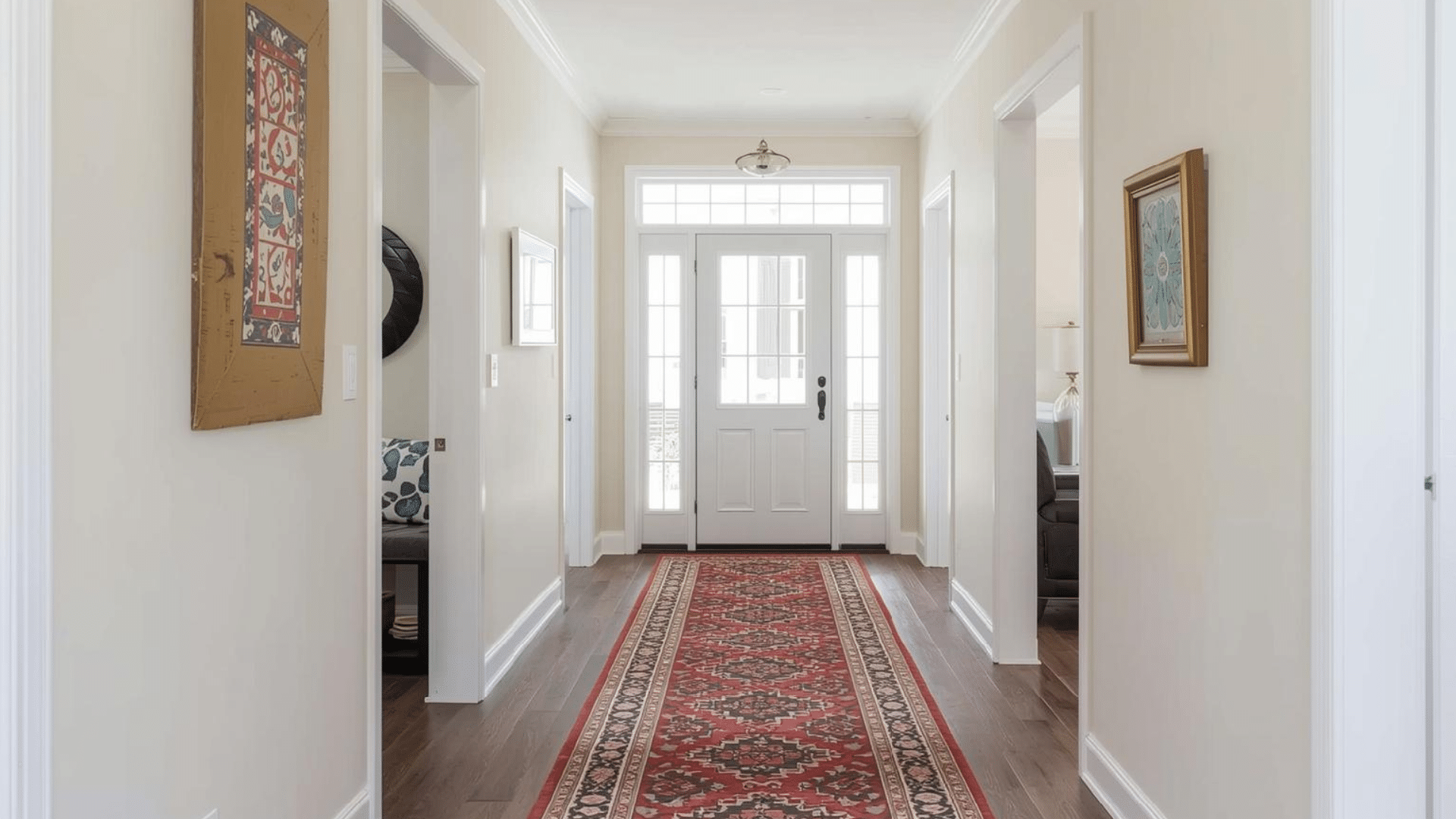
Long or narrow entryways tend to push movement forward too quickly. This can feel rushed and uncomfortable over time. Use rugs placed in sections rather than one long strip to slow the pace.
Lighting should be even along the space, not bright at one end and dark at the other. Wall decor should stay simple and spaced out to avoid visual crowding.
Keep storage flat against walls and off the walking path. These small changes help movement feel steady instead of fast or tense.
4. No Entryway at All (Door Opens Into Living Room)
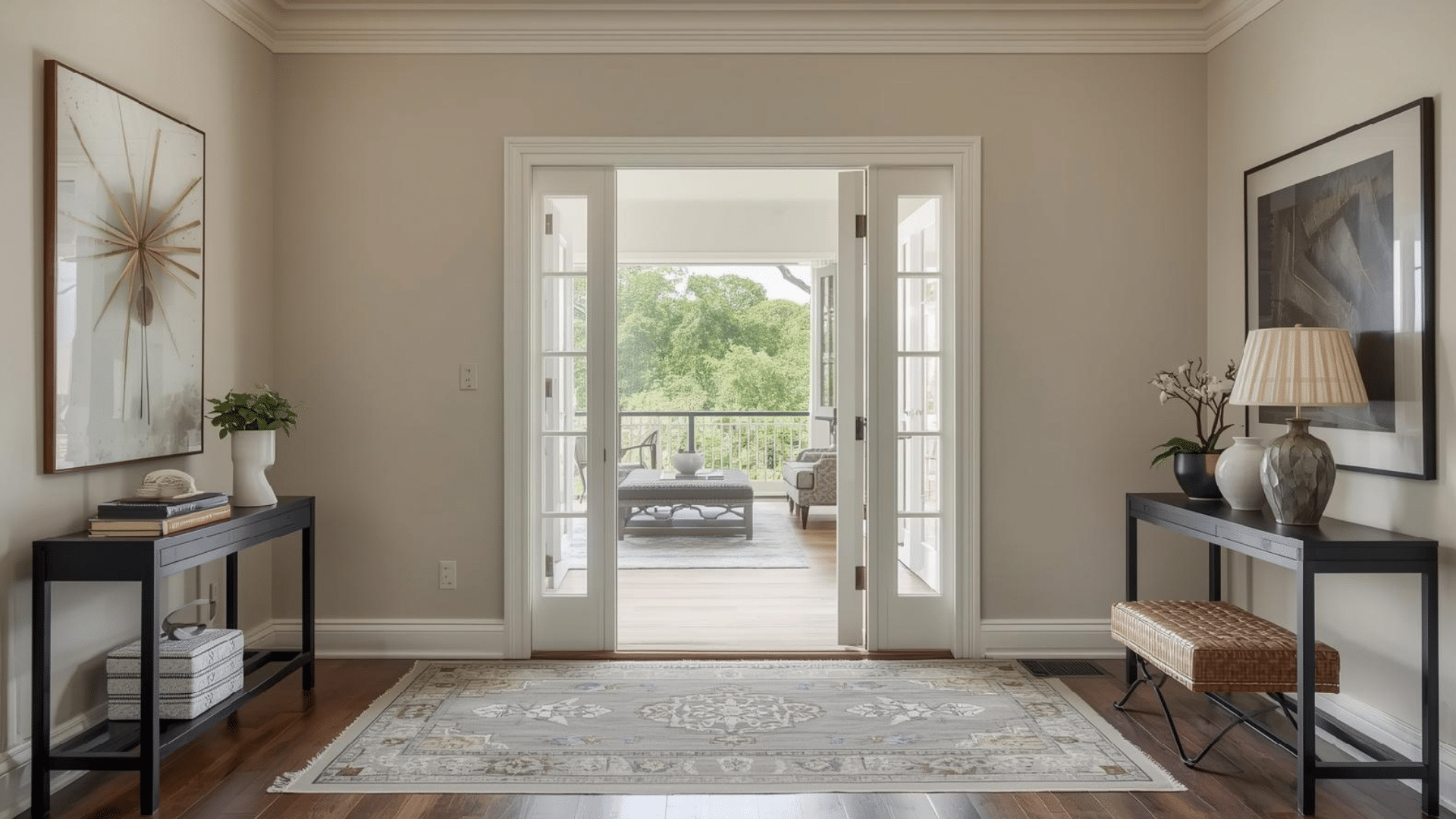
When the door opens straight into a living room, energy spreads without direction. You can create a clear entry zone using a rug placed near the door to mark the area. A console table, shelf, or seating placed slightly away from the door helps form a boundary.
Lighting near the door also helps separate the entry space from the rest of the room. Keep this area clear and simple so it feels like a proper arrival point, even without walls or a defined foyer.
Entryway Furniture and Storage Feng Shui
Entryway furniture should support easy movement, not crowd the space. Choose slim pieces that sit against walls, such as a narrow console, small bench, or wall-mounted shelf.
Avoid oversized tables or deep cabinets that block the door or walking path. One or two furniture pieces are usually enough. More than that can make the area feel tight and stressful.
Storage should stay simple and controlled. Closed storage works better when clutter builds up fast, while open storage only works if items stay limited. Set clear limits for shoes, bags, and keys so the space stays manageable.
Keep daily-use items only. Avoid placing large furniture, tall cabinets, trash bins, or piles of bags near the door. The goal is a space that feels clear, easy to enter, and quick to reset each day.
Mirrors in the Entryway
Mirrors can help or harm an entryway, depending on placement. A mirror should never sit directly across from the front door.
When a mirror faces the door, movement entering the home gets pushed back out, which creates a stop-start feeling. “Facing the door” means the mirror reflects the door clearly when you stand inside the space.
Side angles usually work better. The best mirror placements sit on a wall beside the door, often above a console or shelf. In small entryways, mirror size matters.
Choose one that fits the wall without covering it edge to edge. The mirror should reflect light, open space, or a clean wall, not clutter, stairs, or another door.
Common Feng Shui Entryway Mistakes to Avoid
Placing a mirror directly across from the front door is a common mistake. When the mirror reflects the door clearly, movement entering the home gets pushed back out instead of settling inside.
Allowing floors and hooks to become cluttered creates tension in the entryway. Shoes, bags, and coats piling up make the space feel tight and hard to move through.
Poor lighting weakens the entryway. Dim bulbs, dark corners, or broken fixtures make the space feel closed and uncomfortable, especially at night.
Ignoring the area outside the front door affects the entryway before you even step inside. Dirt, broken items, or poor lighting outside carry the same issues indoors.
Blocking door movement or the main walking path disrupts ease. Furniture placed too close to the door or along the path makes entering and leaving feel forced instead of natural.
Feng Shui Entryway Tips for Apartments and Rentals
These tips help improve entryway flow in apartments and rentals using simple changes that do not require drilling, damage, or permanent updates.
- Use rugs to define the entry area when the door opens straight into the living space. A flat, well-sized rug helps mark the entry zone clearly.
- Choose wall hooks, slim shelves, or over-the-door storage instead of large furniture. This keeps movement easy in tight spaces.
- Improve lighting with plug-in lamps or battery lights if ceiling fixtures are limited. The area should feel clearly lit at all times.
- Keep shared hallways and corridors tidy near your door. Even small changes outside your unit affect how the space feels inside.
- Limit shoes, bags, and coats to daily-use items only. Extra items should stay stored away to avoid buildup near the door.
- Use removable mirrors or art placed on side walls, never across from the door. Placement matters more than size or style.
Conclusion
Throughout this blog, you saw how simple rules, layout fixes, and clear limits can change how your entryway feels each day.
When movement stays clear, and the space remains easy to manage, the rest of the home feels more settled, too. I’ve found that starting with the basics works better than adding more items or rearranging often.
One small change, like better lighting or fewer shoes near the door, can make a real difference.
A feng shui entryway supports calmer arrivals and smoother exits when it stays clean and open. Which change will you try first? If this topic helped, take a look at other blogs for more practical home setup ideas and simple space fixes.
Frequently Asked Questions
What Color Is Best for an Entryway in Feng Shui?
Soft earthy neutrals such as warm beige, taupe, or terracotta are a safe choice because they feel grounding and welcoming without overwhelming a small space.
What Is the Luckiest Front Door Color in Feng Shui?
Red is traditionally seen as the luckiest front door color because it symbolizes protection and good fortune, though black, navy, and deep green are also popular choices.
Is a Welcome Mat Good Feng Shui?
Yes, a clean welcome mat that is about as wide as the door marks the threshold clearly, so replace it once it frays, fades, or carries a negative message.