Remodeling your kitchen is exciting, but I know it can also test your patience. Once the walls come down and the tools come out, time seems to stretch longer than you expected.
How long it all takes depends on a few things: your project size, layout changes, materials, and your contractor’s schedule.
In this guide, you’ll see how long does a kitchen remodel takes, what happens during each phase, what can slow things down, and what real homeowners have learned along the way.
Let’s look at what to expect before, during, and after your remodel.
Understand How Long Does a Kitchen Remodel Take?
Most kitchen remodels take about 6–12 weeks of construction time. If you count planning, permits, and material orders, the whole process often runs 3–5 months from start to finish.
Here’s a general breakdown:
- Small updates: 2–4 weeks
- Mid-range remodels: 6–10 weeks
- Full gut or custom remodels: 10–16+ weeks
Your exact timeline depends on how complex the work is, how quickly materials arrive, and how available your contractor is.
Differences in Project Duration for Various Remodel Types
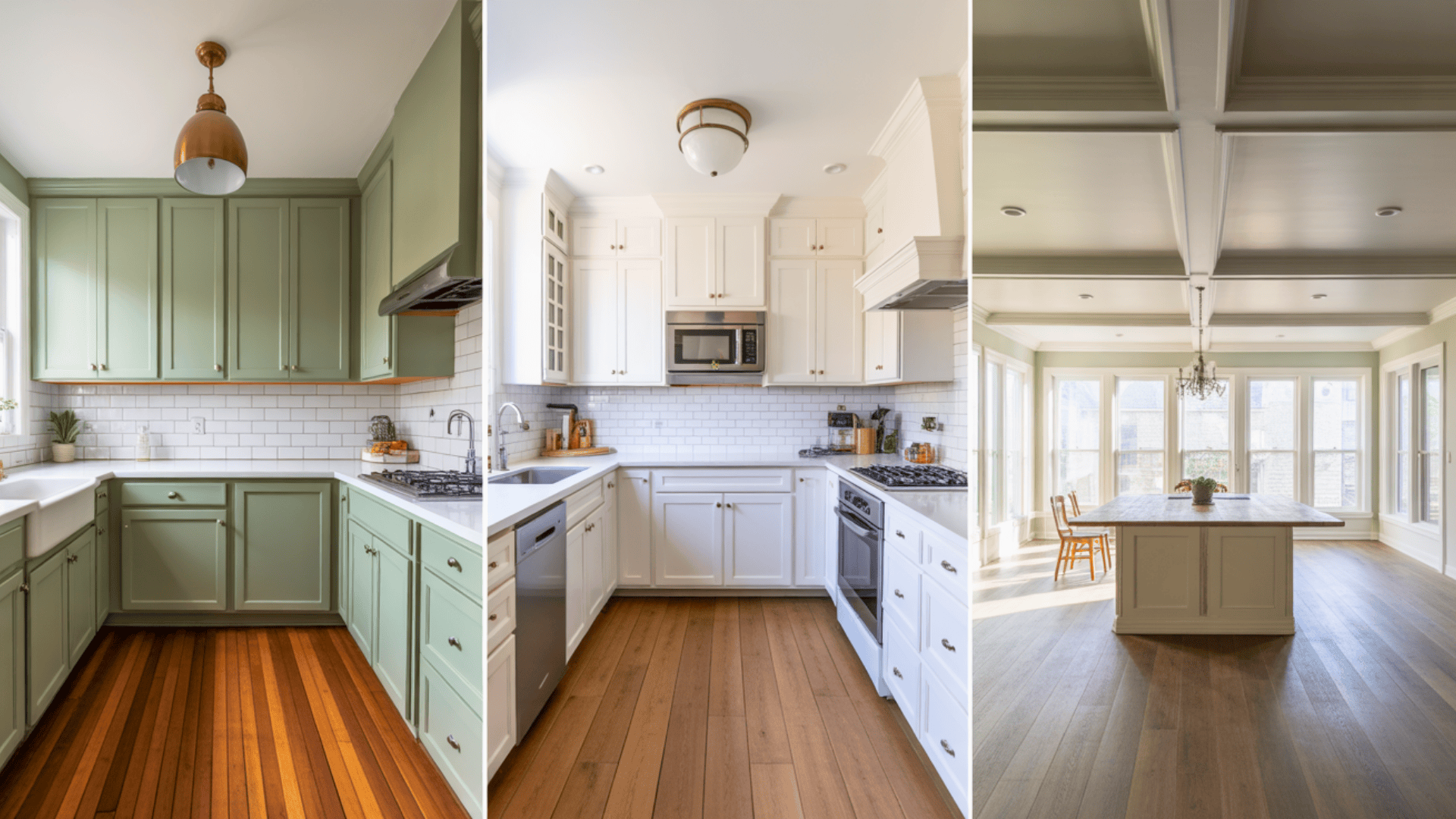
Not every kitchen remodel follows the same schedule. A quick refresh moves fast, while structural work can stretch into months. I’ve seen timelines vary a lot depending on how deep you go with your changes.
1. Cosmetic Refresh
A cosmetic remodel focuses on surface updates: painting walls, swapping fixtures, or changing cabinet hardware. It’s simple, affordable, and usually finished within a few weeks.
The main slowdown comes from drying times and delivery delays. Even a single backordered part can push things out by days. If you’re handling parts of it yourself, expect it to take a little longer.
Takeaway: Small updates move quickly, but plan extra time for deliveries and weekend DIY work.
2. Pull-and-Replace Remodel
This remodel swaps out cabinets, countertops, and appliances but keeps your layout the same. Because plumbing and wiring don’t move, it avoids the bigger construction delays.
You can expect this type to take 6–10 weeks. The longest wait usually comes from cabinet or countertop fabrication. Once those arrive, the rest of the work, from installation to finishing, goes smoothly.
Takeaway: Order cabinets and counters early. The sooner they arrive, the faster your kitchen takes shape.
3. Structural or Custom Remodel
A structural or custom remodel means starting almost from scratch; knocking down walls, moving plumbing, or adding built-ins.
It’s a major transformation that can take 10–16+ weeks, depending on inspections and design complexity. You’ll also want to budget time for unexpected findings behind walls, like old wiring or damaged subflooring. Those fixes keep your kitchen safe but often add a week or two.
Takeaway: Expect surprises and add buffer time from the start. It keeps stress low when schedules shift.
Phase-by-Phase Breakdown of Kitchen Remodel
A kitchen remodel moves through a few clear stages: planning, construction, and finishing. Some steps overlap slightly, but they all build on each other.
1. Planning, Design, and Permits (3–8 weeks)
This early phase covers layout design, material choices, budgeting, and permits. You’ll work with your designer or contractor to plan every detail, from cabinet placement to lighting.
Cities vary when it comes to permits. Some approve them quickly; others take weeks. Ordering cabinets, flooring, and countertops early helps you stay ahead of delays.
Tip: Finalize your design and submit permits as soon as possible. Most remodel delays start right here.
2. Demolition and Rough-Ins (2–3 weeks)
Once everything’s approved and materials are on the way, demolition begins. Old flooring, cabinets, and walls are removed to clear space for new work.
Next come the rough-ins, plumbing, electrical, and framing. This is when inspections happen, too. Coordinating trades is key; I’ve noticed remodels move faster when one general contractor manages all crews.
Tip: Expect small surprises during demo, water damage, or old wiring can add a few extra days.
3. Walls, Paint, and Flooring (1–2 weeks)
After inspections pass, drywall goes up, then primer and paint. Flooring installation follows, though some contractors wait until cabinetry is done to prevent damage.
These steps bring the space back to life. You’ll start seeing your new layout take shape.
Tip: Ask your contractor about their preferred order for paint and floors. It helps avoid rework.
4. Cabinets, Countertops, and Fixtures (2–3 weeks)
Installing cabinets is one of the biggest turning points; it’s when your kitchen really starts to look finished.
After the cabinets are in, countertop pros take exact measurements. Custom counters often need an extra week or two for fabrication and installation. Then, fixtures, sinks, and appliances go in and get tested.
Tip: Order custom counters early. This stage often takes the longest due to fabrication lead times.
5. Finishing Touches and Final Walkthrough (1–2 weeks)
The last phase includes final hookups, detail work, cleanup, and inspections. Your contractor will walk through the space with you to make sure every detail is right.
Small touch-ups happen here: paint fixes, alignment checks, and last-minute hardware installs.
Tip: Take your time during the walkthrough. It’s your chance to catch small issues before sign-off.
What Impacts the Kitchen Remodel Timeline the Most?
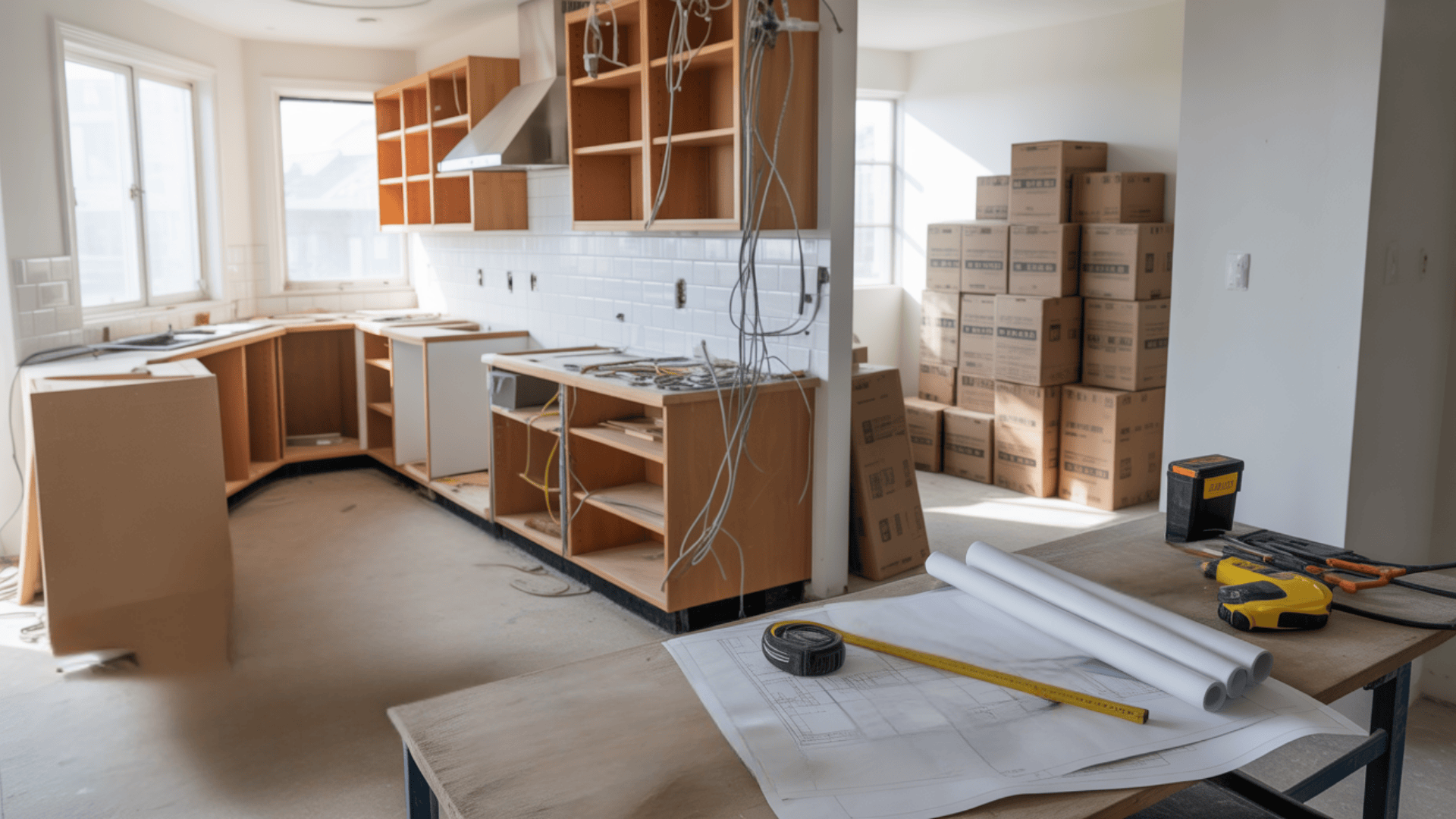
Even with careful planning, certain things can slow down your kitchen remodel. Here are the most common ones I’ve seen:
- Permit and inspection delays: Some cities move fast; others don’t. If your permit takes weeks or an inspection requires fixes, work pauses until it’s cleared.
- Material backorders: Cabinets, tiles, and appliances can take longer than expected to arrive. A single missing part can hold up progress for days or weeks.
- Mid-project design changes: Adjusting layouts or finishes after construction starts means reordering materials or redoing measurements, which adds time.
- Contractor scheduling conflicts: Good contractors stay busy. If another job runs long, your start or finish date might shift slightly.
- Hidden issues behind walls: Old wiring, water damage, or uneven flooring often show up during demolition. They take extra time to fix, but are worth addressing right away.
You can’t control every delay, but planning ahead helps. Order materials early, finalize designs before demo, and keep steady communication with your contractor to stay on schedule.
Kitchen Remodel Real Experiences from Homeowners
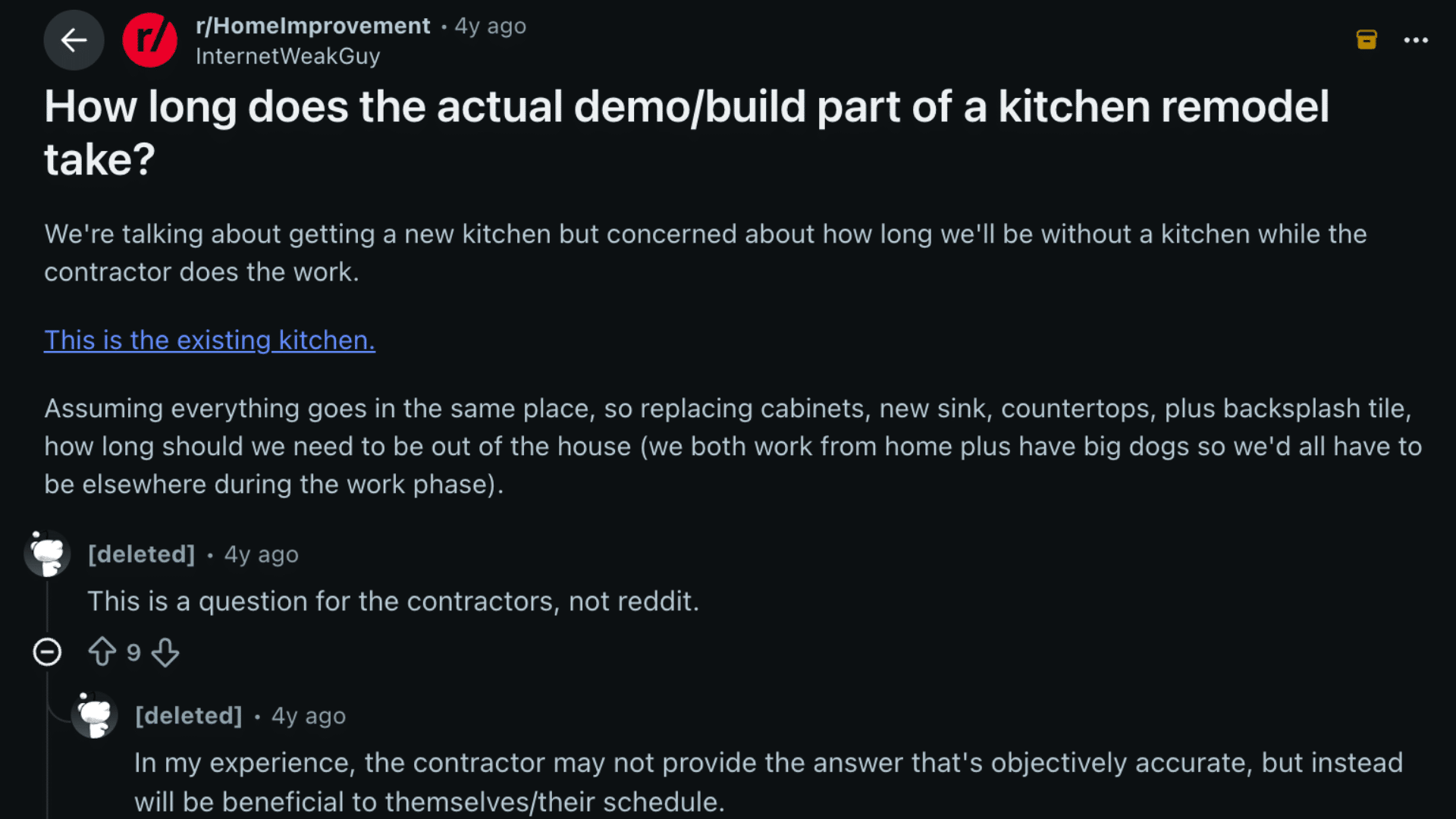
In a Reddit thread on r/HomeImprovement, homeowners shared that real timelines often stretch longer than expected. Most said a full remodel rarely finishes in under a month.
One person managed it in three weeks only by scheduling every subcontractor themselves, while another reported seven weeks with licensed pros and no major issues.
Many mentioned long waits for materials, inspections, and coordination between trades.
From what I’ve seen, that sounds about right; things always take longer once walls come down. A little buffer time keeps you sane when those inevitable hiccups happen.
Cost vs. Time Considerations
Your budget often decides how fast your kitchen remodel moves. Choosing materials, labor, and design scope wisely can help you stay realistic about both cost and timing.
| Budget Choice | Time Impact | Notes |
|---|---|---|
| In-stock materials | Faster completion | Readily available cabinets, flooring, or fixtures speed up installation. |
| Custom cabinets or handmade tiles | Adds several weeks | Fabrication and shipping take longer, especially for specialty designs. |
| Simple layout (no plumbing or wall changes) | Quicker turnaround | Keeping the same layout avoids extra labor and inspections. |
| Major structural changes | Extends timeline by weeks | Moving plumbing or walls requires permits, inspections, and added labor costs. |
| Hiring extra labor | Shortens timeline (costs more) | More hands on-site can speed up progress if the budget allows. |
| DIY or part-time work | Slower progress | Saving money means working around your own schedule, which adds time. |
Time and budget work together. The more custom or complex your remodel, the longer it takes, so plan both early to avoid surprises
Common Kitchen Remodel Mistakes to Avoid
Even with a solid plan, a few missteps can slow down your remodel or stretch your budget. I’ve seen these mistakes happen often, and they’re easy to prevent with a little awareness.
- Changing your mind mid-project: Once work starts, even small design changes can lead to reorders and scheduling gaps.
- Skipping permits or inspections: It might save time now, but unapproved work can cause major setbacks later.
- Overlooking plumbing or electrical updates: Outdated systems often need upgrades once walls are open. Ignoring them early can lead to bigger issues later.
- Choosing looks over function: A layout that photographs well doesn’t always fit daily routines. Think about how you actually use your kitchen.
- Forgetting to plan buffer time: Every remodel has a few surprises. Extra time keeps things less stressful when delays happen.
Avoiding these mistakes helps your remodel stay closer to schedule and keeps the process from feeling overwhelming once construction begins.
Summing Up
If you’ve ever wondered how long a kitchen remodel takes, the truth is there’s no single answer.
Most projects last 6–12 weeks once construction starts, but the full process often stretches to 3–5 months when you include planning and material orders.
The timeline depends on your design choices, the contractor’s schedule, and how early you make key decisions.
From what I’ve seen, patience and preparation matter more than speed. A carefully planned remodel feels less chaotic, even when delays occur.
If this helped, check out my other home notes; I’ve shared what’s worked for me in keeping projects simple, organized, and as stress-free as possible.