
The most revealing photo in a Chanel listing might be the one taken from the side. A flap bag that looks roomy head-on can turn out to be too shallow for a favorite sunglasses case. A side view can also show whether the bag holds its shape or whether the seller tucked tissue inside for the photo. Those details are easy to miss when the quilting is beautiful and the color is exactly right.
Start With What Goes in the Bag
When shopping for used Chanel bags, start by emptying the handbag you reach for most often. A phone in its case, a wallet, house keys and glasses make a better size guide than a model photo. Measuring that everyday bag gives you something familiar to compare with the width, height and depth in a listing.
With a flap style, it helps to see the bag open. An interior flap or a divided compartment can make the usable space smaller than the outside dimensions suggest. Someone who needs to reach a phone quickly may care more about an accessible back pocket than room for an extra lipstick. Strap drop deserves a measurement, too. A length of ribbon looped to match the listed drop gives a fair idea of where the bag will sit, particularly over a coat.
Look Closely Where the Bag Meets the Body
The back of a bag spends much of its life against clothing. On a pale bag, a daylight photo of that panel is especially useful. Chanel’s care guidance identifies lambskin among the materials particularly susceptible to color transfer. For someone who lives in dark denim, a secondhand cream flap with a faint blue patch poses two questions. Would the existing mark bother the buyer, and would she feel comfortable carrying the bag with her favorite jeans?
Texture changes what shows up in a photograph. Lambskin has a soft, smooth surface, while the grained calfskin commonly called caviar has a pebbled finish. On either one, a photo taken at an angle can reveal rubbing that disappears under bright, even lighting. Ask for close-ups of the bottom corners and the edge of the flap, then look at a picture of the whole bag from a few feet away. A tiny scuff magnified on a screen may be invisible at the distance anyone would actually see it.
Condition descriptions also leave out things a camera can’t settle. Does the clasp turn smoothly? Is there a perfume or smoke odor inside? Has anyone touched up the corners or recolored the leather? A shopper who would happily accept a visible scratch might feel differently about an undisclosed repair. It is worth getting an answer in writing while there is still time to choose another bag.
Find Out Who Authenticated It
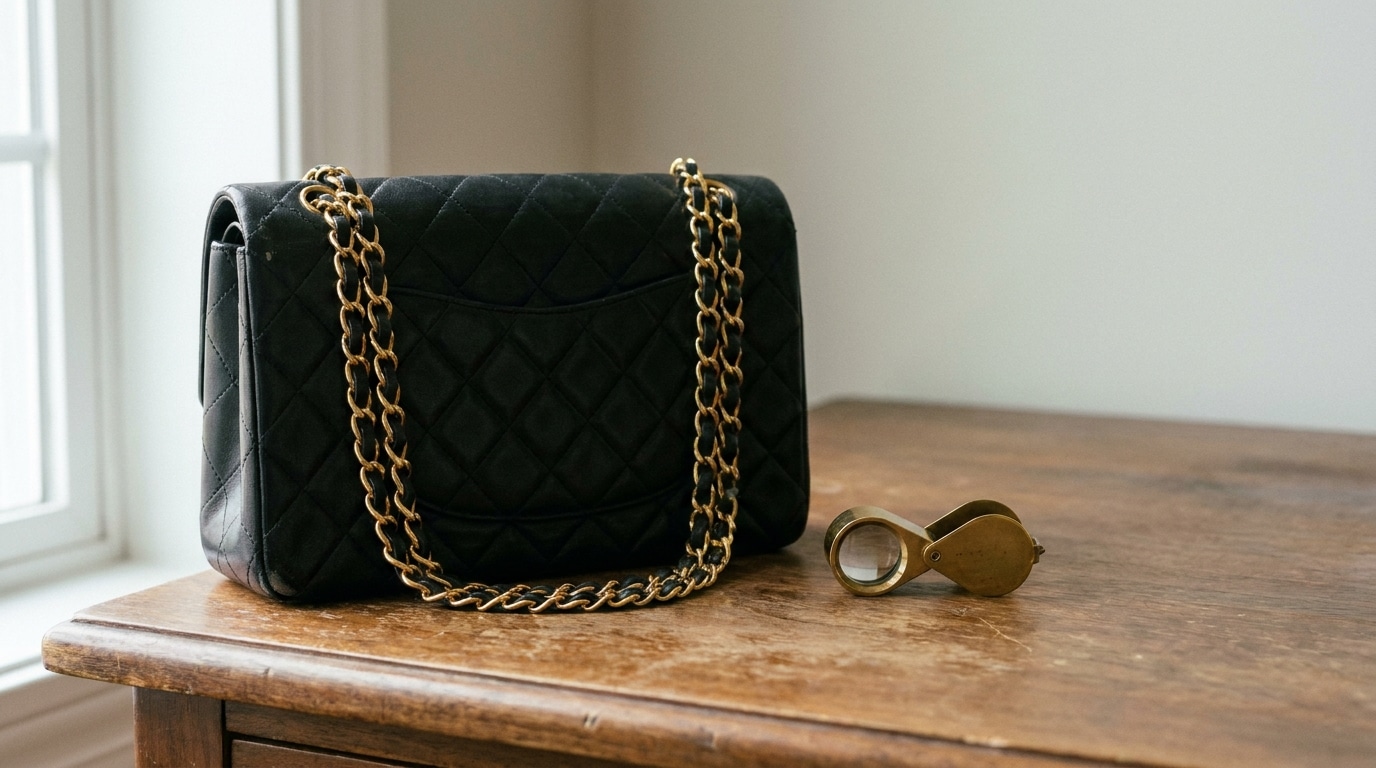
A receipt, dust bag or authenticity card can be a welcome part of the purchase. The harder question is who examined the handbag itself. In its guide to authenticating Chanel handbags, Christie’s recommends consulting a trusted expert to verify a classic Chanel flap.
For a buyer, a useful conversation with a seller starts with asking who assessed this particular bag, what experience that person has with Chanel and whether the seller will provide the assessment in writing.
It is also worth reading the authenticity guarantee alongside the ordinary return policy. They answer different questions. A buyer may have one reason to send a bag back if an independent specialist disputes its authenticity and another if the chain feels uncomfortable after ten minutes. Before paying, the shopper should know what evidence the seller requires for an authenticity claim and whether a bag can be returned simply because it doesn’t suit.
Work Out What the Price Includes
Two black quilted flaps can look nearly identical when browsing Chanel bags online. Before judging the prices, match the model and measurements, then compare leather, condition and any disclosed repairs. Recent completed sales with visible sale prices offer a useful reference. An active listing shows what the seller hopes to receive, which may be quite different from the amount a buyer will pay.
The choice gets easier when the shopper can name what the extra money buys. Paying more for an unused-looking interior might make sense for a pale evening bag intended as a gift. For a black shoulder bag destined for daily wear, a few marks inside may be an easy compromise. Shipping, tax and any return fee belong in that calculation. So does a missing strap if the buyer is counting on carrying the bag crossbody.
Give It a Trial Run Indoors
Before checkout, confirm when the return window begins, whether the item qualifies for a refund or store credit, and which tags and accessories must remain intact. Save the listing photos and condition description.
When a returnable bag arrives, a few minutes at home can settle the questions left open online. With tags in place and within the seller’s try-on rules, the buyer can inspect the corners in daylight, slip in a phone and try the chain over the jacket she wears most.
Then comes the small test that matters every time the bag leaves the house. Can she reach her keys and close the flap with her glasses still inside? If a bag passes that test, the reasons for buying it will still make sense long after the excitement of opening the box.