Travel can interrupt a pumping routine, whether you are waiting for a flight, driving between cities, or staying somewhere without a familiar place to clean your equipment. The most useful plan covers three things before you leave: when you expect to pump, how you will keep the parts clean, and where the milk will go afterward.
What to Pack When Traveling with a Breast Pump
Choose equipment for the length and type of trip. A double electric breast pump lets you pump both breasts at once, but check how you will power and carry it away from home. Charge it before departure if it runs on a battery, and check whether you will need an outlet or adapter at your destination. The CDC also suggests having a backup way to express milk, such as a manual pumpor hand expression, in case your usual pump is unavailable.
Pack the parts you need for each session, including breast shields, valves, membranes, and collection containers. Compatible spares can help if a small part is lost or damaged. Bring milk storage bags or clean containers with tight-fitting lids, labels, and an insulated cooler with frozen ice packs. A separate bag for used parts will keep them apart from clean equipment until you can wash them.
Think through cleaning before you travel. Find out whether you will have access to a sink and a place for parts to air-dry. If cleaning between sessions will be difficult, bring extra clean sets of parts. Breastfeeding education resources can help you review pumping and milk-handling basics before a trip; for your particular pump, follow its instructions on cleaning and reassembly. The CDC advises washing your hands before expressing milk and planning how you will clean pump parts in each travel setting.
How to Pump During Different Types of Travel
Air travel: Keep the pump and supplies you expect to use where you can reach them. Check your departure and connection airports for lactation spaces, and leave extra time for security screening. If you have a long layover, decide in advance where you could pump and store the milk rather than waiting until your usual session time.
Road trips: Plan stops around your normal pumping frequency. A rest stop gives you time to park, wash your hands, pump, and put milk in the cooler. Keep the cooler out of direct sun, and avoid leaving milk in a parked car while you eat or sightsee. Do not try to assemble, adjust, or handle a pump while driving.
Train or bus travel: Space and privacy vary by route. Check what facilities are available and keep essential supplies within reach instead of in luggage you cannot easily access. If you cannot pump comfortably on board, consider the time before departure and after arrival when planning your sessions.
Hotel stays: Ask about refrigeration before booking or arriving. Confirm whether the room has a refrigerator suitable for food storage and where you can wash and dry pump parts. A cooler is useful during transit, but you will need a storage plan once you reach the hotel.
How to Store Breast Milk Safely
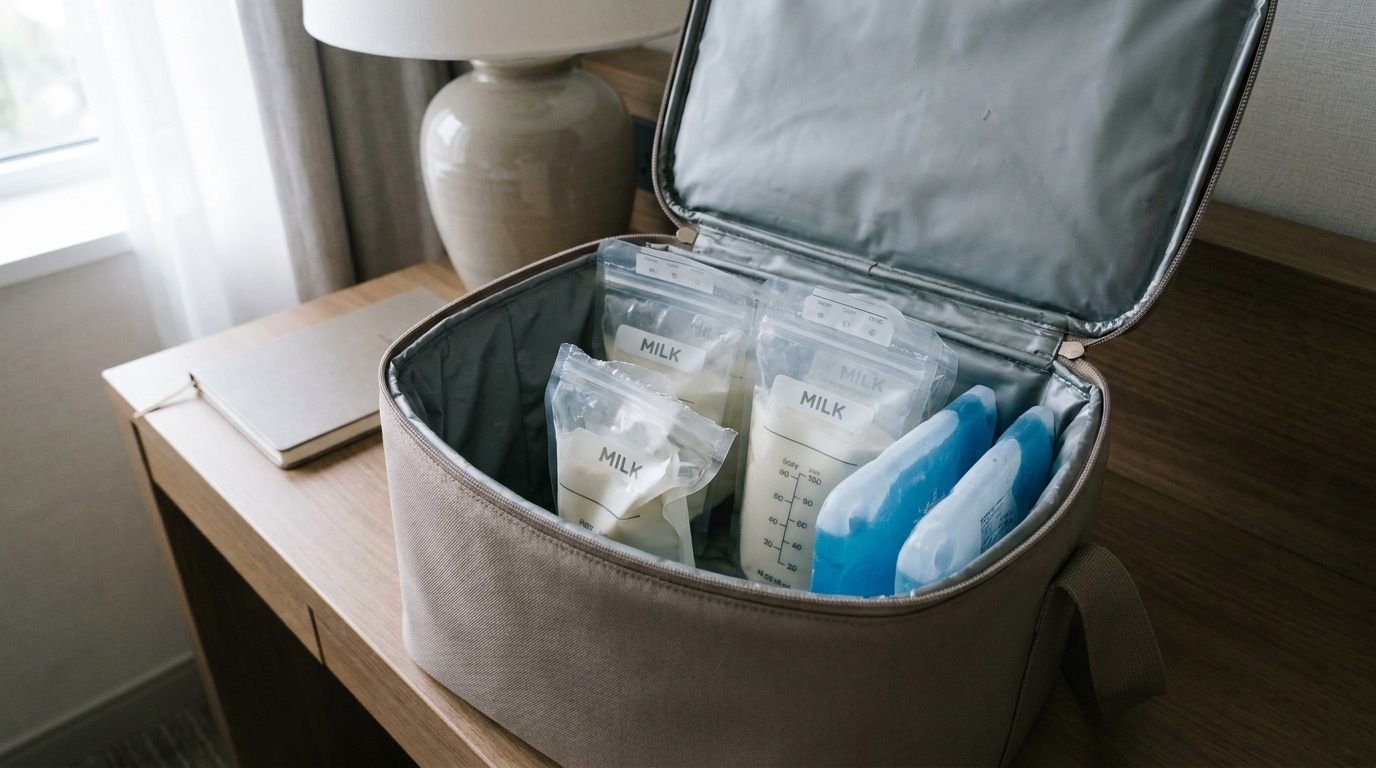
Use breast milk storage bags or clean, food-grade containers with tight-fitting lids. Mark each one with the date and time the milk was expressed. Put it in a refrigerator promptly or in an insulated cooler with frozen ice packs while traveling.
The CDC says freshly expressed milk can be kept for up to four hours at room temperature of 77°F or colder, up to four days in a refrigerator at 40°F, and in a freezer at 0°F or colder for about six months for best quality; up to 12 months is acceptable. During travel, freshly expressed milk can remain in an insulated cooler with frozen ice packs for up to 24 hours. At your destination, use it, refrigerate it, or freeze it. Different rules apply to milk that has already been thawed.
Keep Your Routine Flexible
Use your usual pumping times as a starting point, then account for boarding, traffic, and check-in. The CDC suggests trying to pump about as often as your baby drinks breast milk when you are apart. If a delay changes your plans, identify your next practical opportunity to express milk rather than relying on an exact travel timetable.
What Are Your Pumping Rights When Flying?
At U.S. airport security checkpoints, breast milk is not subject to the usual 3.4-ounce carry-on liquid limit. Pumps, pump kits, and cooling accessories such as ice packs may also be carried through security, even if your baby is not traveling with you. Tell the TSA officer about the milk and related items at the start of screening, and remove them from your bag for separate screening. Check current TSA guidance before departure, since screening may involve additional steps.
For an international itinerary, check the rules for each country and airline as well. U.S. screening rules do not necessarily apply at a checkpoint abroad.
Conclusion
Traveling while pumping is easier when you plan for the whole session, including cleaning and milk storage. Pack for the journey you are taking, identify places to pump, and leave room for delays. Your routine may look different from a day at home without having to stop altogether.