Choosing an artificial Christmas tree involves more than finding an attractive design. The right tree should complement your interior, fit the available space, and offer practical features that make assembly, decoration, and storage easier. With options ranging from traditional green trees to contemporary colored designs, understanding the differences can help you make a more suitable purchase.
Whether you’re furnishing a compact apartment or decorating a spacious family home, the following considerations can help you find a tree that balances appearance, functionality, and long-term value.
Measure Your Space Before Choosing a Tree
One common mistake when shopping for a Christmas tree is focusing exclusively on height while overlooking its width. A tree may fit beneath the ceiling but still occupy too much floor space.
Measure the intended location, including ceiling clearance, available floor area, and surrounding furniture. Remember to account for the stand, tree topper, and ornaments that extend beyond the branches.
For smaller rooms, slim Christmas tree offers a space-conscious alternative. Their narrower profiles work particularly well in apartments, entryways, and compact living areas. However, compare the actual maximum diameter rather than relying solely on product labels.
Choose a Shape That Complements Your Interior
Artificial Christmas trees are available in several silhouettes, each suited to different decorating preferences.
Full-shaped trees create a traditional holiday centerpiece with generous branch coverage for ornaments and ribbons. Slim designs provide a more understated appearance, while tabletop trees are suitable for desks, shelves, and smaller living spaces.
Consider the proportions of your furniture and the overall layout. A narrower tree may create a better visual balance in rooms with limited floor space, while a fuller design can anchor a larger living room.
Explore Different Colors and Decorating Styles
Although green remains the classic choice, artificial Christmas trees are no longer limited to traditional evergreen appearances.
White Christmas trees create a bright winter-inspired display, while pink designs introduce a playful decorative element. Black Christmas tree, meanwhile, offers a distinctive contemporary aesthetic. Their darker branches contrast effectively with metallic ornaments, warm lighting, and jewel-toned decorations.
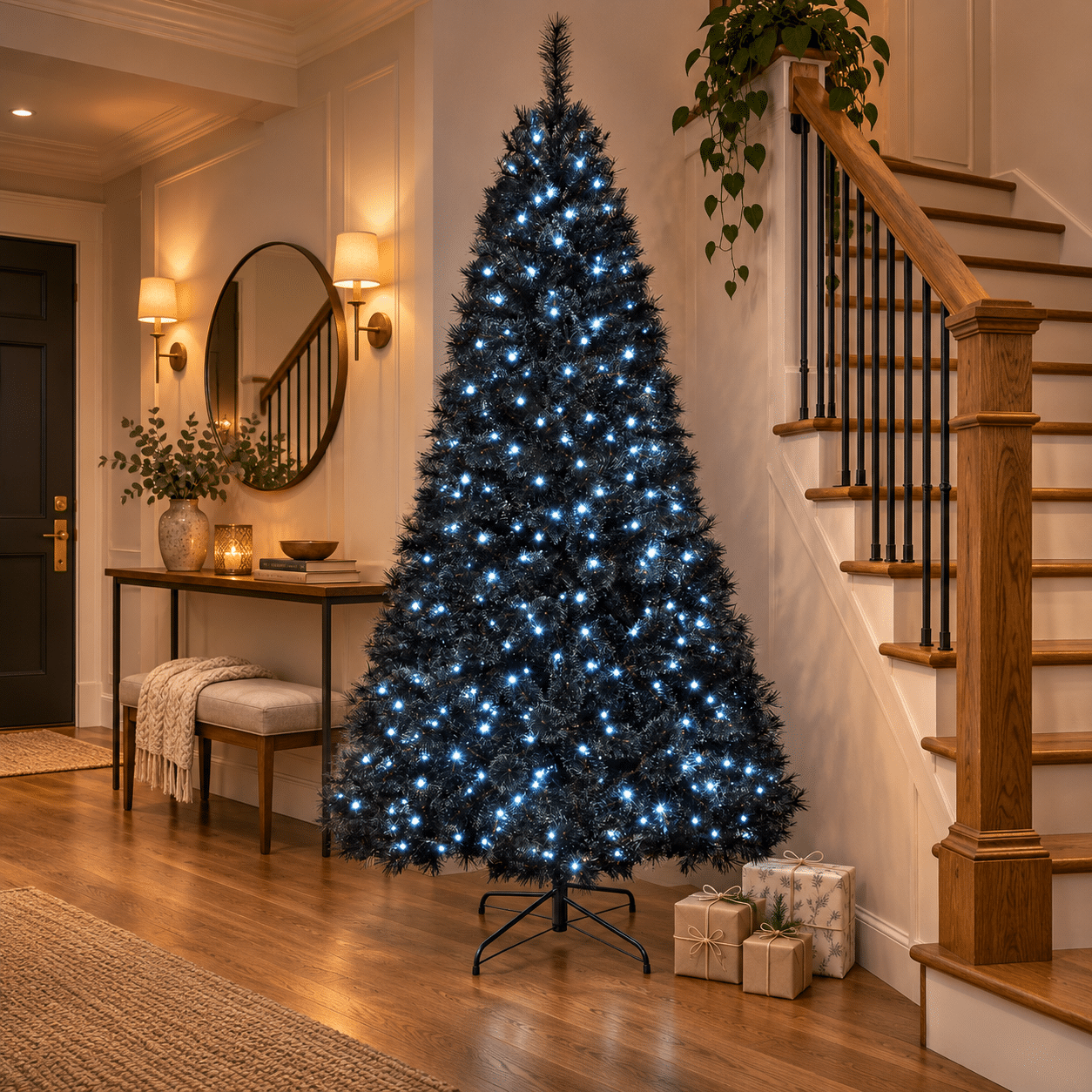
When choosing an alternative color, consider how it interacts with your wall finishes, furniture, and natural lighting. A coordinated selection of ornaments can help establish a cohesive holiday theme without requiring extensive changes to your existing decor.
Compare Pre-Lit and Unlit Christmas Trees
Pre-lit trees come with integrated lighting, reducing the need to install separate light strings. Depending on the model, features may include multiple lighting modes, different color settings, or remote controls.
Unlit trees offer greater flexibility for homeowners who prefer changing their lighting arrangements each season. However, they require additional setup and careful storage of separate light strands.
Consider your decorating habits and maintenance preferences before deciding. Convenience, replacement options, and lighting controls are all worth reviewing when comparing products.
Understand Branch Materials and Construction
The materials used in artificial Christmas trees influence their appearance and overall structure.
PVC branches are commonly used to create fullness, while PE branches feature molded needles designed to resemble natural evergreen foliage more closely. Some trees combine both materials to balance visual realism and density.
Beyond materials, examine branch tip counts, attachment mechanisms, and construction quality. Hinged branches generally simplify assembly by swinging outward from the central frame, although setup requirements vary by model.
Reviewing detailed product photographs and available customer feedback can provide a clearer understanding of the tree’s appearance once assembled.
Consider Storage and Long-Term Convenience
An artificial tree is a seasonal purchase intended for repeated use, so storage requirements deserve attention.
Check the number of sections, disassembled dimensions, and recommended storage conditions before purchasing. A suitable storage bag can help protect branches from dust and damage, while avoiding excessive compression helps preserve their shape.
Durable construction and convenient assembly can also improve the overall ownership experience, making these factors important when comparing products at different price points.
Match Your Tree to Your Household Needs
Your decorating preferences should influence the final decision. Households displaying larger ornaments may benefit from stronger branches and fuller designs, while minimalist decorators may prefer narrower silhouettes.
Families with children or pets should prioritize a stable stand, secure placement, and safe electrical arrangements. Keep decorations and cords away from heat sources and follow the manufacturer’s assembly and lighting instructions.
The best Christmas tree is ultimately one that fits both your interior and your everyday lifestyle.
Finding Quality and Value in Seasonal Home Products
A well-chosen Christmas tree is an investment in years of holiday decorating. Beyond appearance and construction, shoppers may also consider product variety, pricing, delivery convenience, and after-sales support.
Founded in the United States in 2011, Costway has developed into a billion-dollar global home brand with a diverse portfolio spanning more than 10 categories and over 20,000 products. Originally rooted in furniture, the company has expanded into outdoor living, home appliances, wellness, baby and kids products, and other household essentials.
Operating under the brand slogan “More than Just Furniture,” Costway focuses on combining functional product design, quality, and competitive pricing. Its extensive assortment is intended to provide accessible home solutions while offering shoppers the convenience of exploring multiple product categories in one place.
Costway also emphasizes the overall shopping experience through local warehousing, fast delivery, and customer support. Additional services include a 30-day return guarantee, privacy protection, and product warranties, helping customers shop with greater confidence.
Final Thoughts
Selecting the right artificial Christmas tree requires balancing dimensions, shape, color, lighting, construction, and storage needs. By evaluating these factors before purchasing, you can find a design that complements your living space and remains practical throughout multiple holiday seasons.
With a wide selection of household products and a focus on quality, value, and customer convenience, Costway provides another option for shoppers looking to make their homes more comfortable and festive.