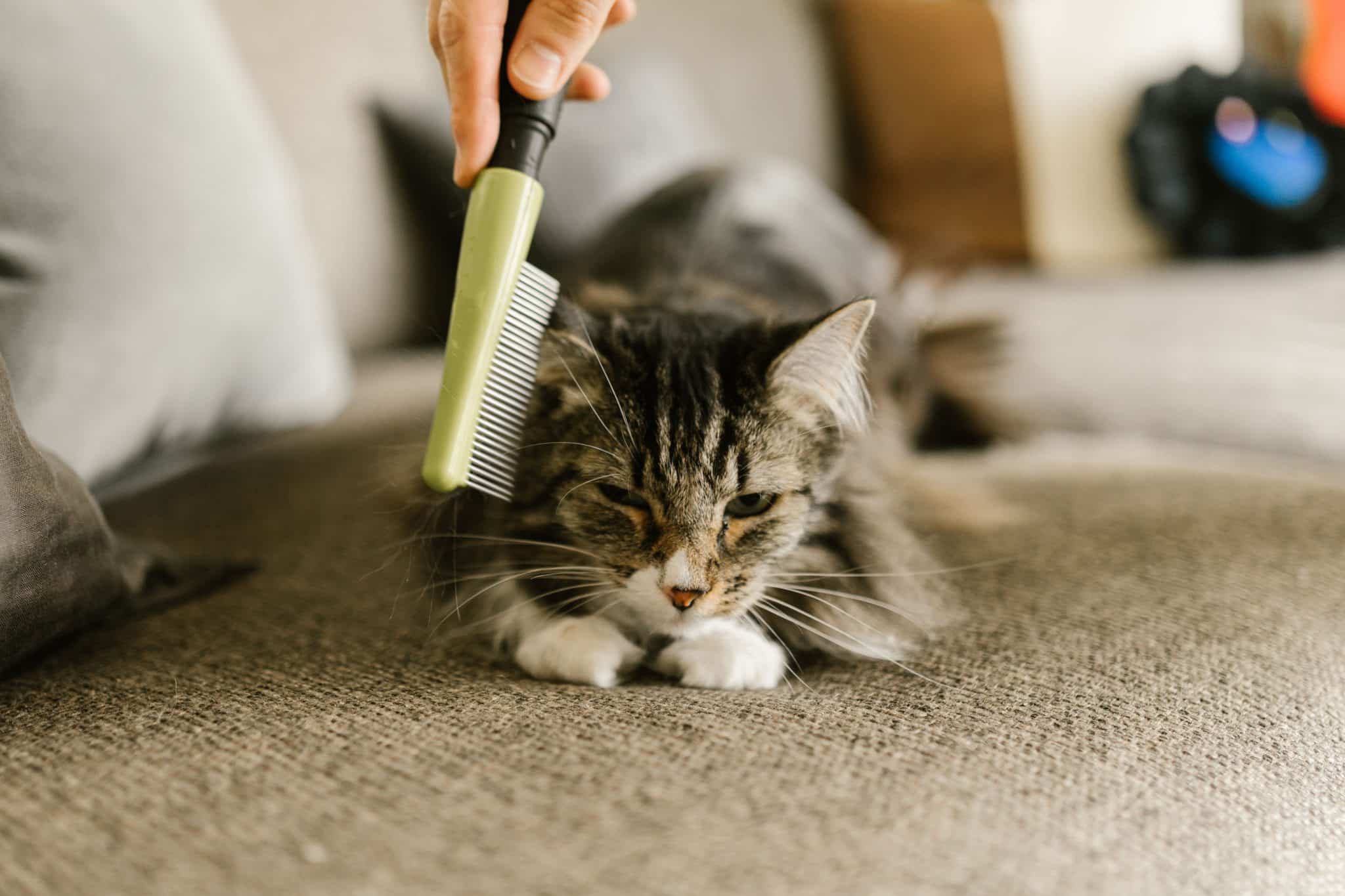
The easiest way to groom a long-haired cat for life is to start while it is a kitten: short, calm sessions every day, a wide-toothed comb before a brush, gentle handling of paws, ears and mouth, and a treat or a game at the end. If you plan to buy a Maine Coon kitten this winter, grooming is one of the first routines worth teaching, because the habit forms long before the full adult coat grows in.
A kitten that learns to relax on your lap while you comb it becomes an adult that accepts nail trims, tooth brushing and the occasional mat without a struggle. A kitten that only meets the comb during a crisis learns the opposite.
Why a Long Coat Needs a Routine
Long fur collects loose hair, dust and small tangles that turn into mats when nobody combs them out. The ASPCA’s cat grooming tips explain that brushing removes dirt, grease and dead hair, helps remove skin flakes and stimulates blood circulation. The ASPCA suggests one or two brushings a week for a typical cat, and adds that a cat that fights grooming to the point where someone could get hurt should see a professional groomer or a veterinarian instead.
Long coats need more. The CFA breed profile of the Maine Coon notes that breeders recommend combing the breed two or three times a week, in sessions of five to ten minutes, to control shedding, prevent hairballs and protect against matting. The CFA also describes the Maine Coon as a slow-maturing breed that can take up to three years to reach full growth, so the coat keeps changing long after the kitten stage. Daily mini-sessions in the first months are about building the habit, not about the coat itself.
Choose Simple Tools
You do not need a full grooming kit. Start with:
- A wide-toothed metal comb for the first pass;
- A finer comb for the face, chest and behind the ears;
- A soft slicker brush, used lightly;
- Cat nail clippers;
- A cat toothbrush or finger brush and toothpaste made for pets;
- Small treats your kitten already loves.
Avoid de-shedding tools with blades until your veterinarian or a professional groomer shows you how to use them on a young cat. A kitten’s skin is thin, and it is easy to scrape it.
Keep the First Sessions Short

In the first weeks, a session can be one minute long. Choose a time when the kitten is relaxed, such as after a meal or a play session. Comb a few strokes along the back, offer a treat, and stop before the kitten starts to wriggle.
Increase the time slowly. Most kittens accept five calm minutes within a few weeks if every session ends on a good note. If your kitten bites or swishes its tail hard, you went a little too far. Stop, wait, and try a shorter session tomorrow.
Work in a Predictable Order
Cats like routines. Use the same order every time so your kitten knows what comes next:
- Back and sides, where most cats enjoy being touched.
- Chest and neck.
- Behind the ears and under the collar line.
- Legs and paws.
- Belly and britches, only when the kitten is relaxed.
Comb in the direction the hair grows, holding the hair near the skin so you do not tug on it. Finish with a few strokes the kitten clearly enjoys.
Handle Mats Gently
Mats tend to form behind the ears, in the armpits, on the belly and under the tail. Work small tangles apart with your fingers first, then with the end teeth of the comb, holding the hair at the base.
Do not cut mats with scissors close to the skin. A cat’s skin tents up into a mat, and it is easy to cut it by mistake. If a mat is tight, large or close to the skin, ask a professional groomer or your veterinary team to remove it. Preventing mats with daily combing is far easier than removing them.
Teach Paw Handling and Nail Trims

Start by touching your kitten’s paws during calm moments, without clippers. Press gently on a toe pad so the nail extends, then release and give a treat. After a few days, trim the very tip of one nail.
Look for the pink area inside a light-colored nail, called the quick, and stay well away from it. If your kitten has dark nails, trim only the sharp tip. One or two nails per session is a perfectly good start. A sturdy scratching post helps keep nails in shape between trims.
Check Ears, Eyes and the Rear End
Grooming time is also a quick health check. Look inside the ears for redness, dark debris or a strong smell, and look at the eyes for discharge. On long-haired cats, check the fur under the tail. If litter or stool sticks there, trim that area carefully or ask a groomer for a hygiene trim.
Call your veterinarian if you notice head shaking, scratching at the ears, cloudy eyes, sores, lumps or skin that seems irritated. Do not put cotton swabs deep into the ear canal.
Introduce Tooth Brushing Early
The AVMA’s pet dental care guidance calls regular brushing the single most effective thing you can do at home, notes that cats can be more resistant than dogs so patience and training matter, and lists bad breath, broken or loose teeth, abnormal chewing, drooling and reduced appetite among the signs of dental problems.
Use only toothpaste made for pets, never human toothpaste. Start with a fingertip of pet toothpaste on your finger so the kitten learns the taste. Then touch the outside of the teeth for a second or two. Add the brush once the kitten accepts that. Baby teeth fall out during kittenhood, and the mouth may be sore at times, so keep sessions short and stop if your kitten seems uncomfortable.
Hairballs and Shedding Seasons

Cats swallow hair when they groom themselves, and long-haired cats swallow more of it. Regular combing removes loose hair before it can be swallowed. Expect heavier shedding at certain times of year, even in indoor cats.
Occasional hairballs are common, but repeated vomiting, retching without producing anything, constipation, a swollen belly or a loss of appetite are reasons to call your veterinarian. Do not give hairball products without asking your veterinary team first.
A Simple Weekly Plan
| Task | How often | Notes |
|---|---|---|
| Combing | Daily mini-sessions for a kitten; at least two or three times a week later | Back, chest, behind the ears, britches |
| Mat check | Daily | Armpits, belly, under the tail |
| Nail trim | Every one to two weeks | Tips only; one paw at a time is fine |
| Ear and eye check | Weekly | Look, do not clean deep |
| Tooth brushing | Several times a week, ideally daily | Pet toothpaste only |
| Bath | Rarely | Only when the coat is truly dirty |
Most cats rarely need a bath. If your kitten gets into something sticky or unsafe, ask your veterinarian which product to use, keep the water warm and shallow, and dry the kitten thoroughly in a warm room.
Questions Owners Often Ask
At What Age Should I Start Grooming a Kitten?
As soon as the kitten has settled into your home. Many owners start with a few gentle strokes of a soft brush in the first week and add combing, paw handling and tooth brushing over the following weeks.
Should I Shave a Long-Haired Cat to Stop Mats?
Shaving is not a substitute for regular combing, and it should only be done by a professional when a veterinarian or groomer recommends it, for example to remove widespread matting. A cat’s skin is easy to injure with clippers.
My Kitten Hates the Brush. What Now?
Go back to shorter sessions and a softer tool. Pair every stroke with a treat, groom when the kitten is sleepy rather than playful, and stop before it struggles. Most kittens improve within a few weeks of patient practice.