A comfortable home depends on more than furniture and decoration. Clean surfaces, good lighting, organized storage, and practical design choices all influence how a space looks and functions. Small improvements can make rooms easier to maintain while supporting everyday comfort.
The most effective approach is to focus on the features that affect daily life. Air quality, moisture control, cleanliness, and furniture placement deserve as much attention as colour schemes and decorative accessories. When these elements work together, a home becomes more pleasant without requiring a complete renovation.
Start With a Consistent Cleaning Routine
Dust, cooking residue, pet hair, and everyday debris accumulate gradually. If left unmanaged, they can affect indoor comfort and make surfaces harder to maintain. A regular cleaning schedule prevents small tasks from becoming larger jobs.
Divide household cleaning into daily, weekly, and seasonal tasks. Wipe kitchen counters after food preparation, clean bathroom surfaces regularly, and vacuum high-traffic areas as needed. Less frequently used spaces, such as guest rooms and storage cupboards, can follow a separate schedule.
For households with demanding work schedules, professional cleaning service support can help maintain a consistent standard of cleanliness. It can also provide assistance with time-consuming tasks such as detailed bathroom cleaning, floor care, and dust removal. Choose a service based on the home’s specific needs, the areas requiring attention, and the cleaning products used.
A practical routine should include:
- Daily: Clear kitchen surfaces, wash dishes, and remove visible clutter.
- Weekly: Vacuum floors, clean bathrooms, change bedding, and dust furniture.
- Monthly: Clean overlooked corners, inspect ventilation grilles, and wipe cabinet fronts.
- Seasonally: Review storage areas, clean window coverings, and check for signs of moisture damage.
Adjust the schedule to household size, pets, allergies, and how frequently each room is used.
Improve Indoor Air Quality
Indoor air quality affects comfort, particularly in rooms where people spend several hours each day. Dust, cooking fumes, cleaning product vapours, and excess moisture can contribute to poor indoor conditions. Good ventilation and sensible product choices help reduce these sources.
Open windows when outdoor conditions permit. Use kitchen extraction fans when cooking and bathroom exhaust fans during showers. Where possible, make sure exhaust systems discharge outdoors rather than into enclosed roof spaces.
Replace heating, ventilation, and air-conditioning filters according to the manufacturer’s instructions. A clogged filter can restrict airflow and reduce system performance. Use a vacuum with suitable filtration when managing fine household dust, especially in bedrooms and upholstered areas.
Control Moisture Before It Causes Damage
Moisture management is an essential part of home maintenance. Persistent dampness can damage paint, timber, plaster, and fabrics. It can also encourage mould growth, particularly in bathrooms, basements, and poorly ventilated cupboards.
Check under sinks, around washing machines, and near window frames for leaks. Repair damaged seals and address plumbing problems promptly. In humid rooms, use appropriate ventilation or a dehumidifier when needed.
Moisture control also protects interior finishes. Paint, flooring, and cabinetry tend to last longer when indoor humidity remains within a suitable range. If mould keeps returning after cleaning, identify and correct the moisture source before repainting or replacing affected materials.
Organize Rooms Around Everyday Activities
A well-organized room supports the way people actually live. Storage should be easy to access, walkways should remain clear, and frequently used items should have predictable locations.
Begin by identifying areas where clutter gathers. Entryways often collect shoes, bags, and keys. Kitchens accumulate utensils and small appliances. Bedrooms may lack convenient storage for clothing and accessories. Each problem benefits from a specific solution rather than simply adding more containers.
Choose Materials That Are Easy to Maintain
Interior materials influence both appearance and maintenance requirements. Before choosing a finish, consider how it will respond to moisture, heat, spills, abrasion, and regular cleaning.
For example, kitchen counters need surfaces that tolerate frequent wiping. Entryway flooring should handle dirt and moisture. Upholstery in busy households may benefit from removable covers or fabrics with clear care instructions.
Read manufacturer guidance before applying cleaning chemicals to delicate finishes. Abrasive pads can scratch polished surfaces, while unsuitable solvents may damage protective coatings. Test unfamiliar products on a discreet area first.
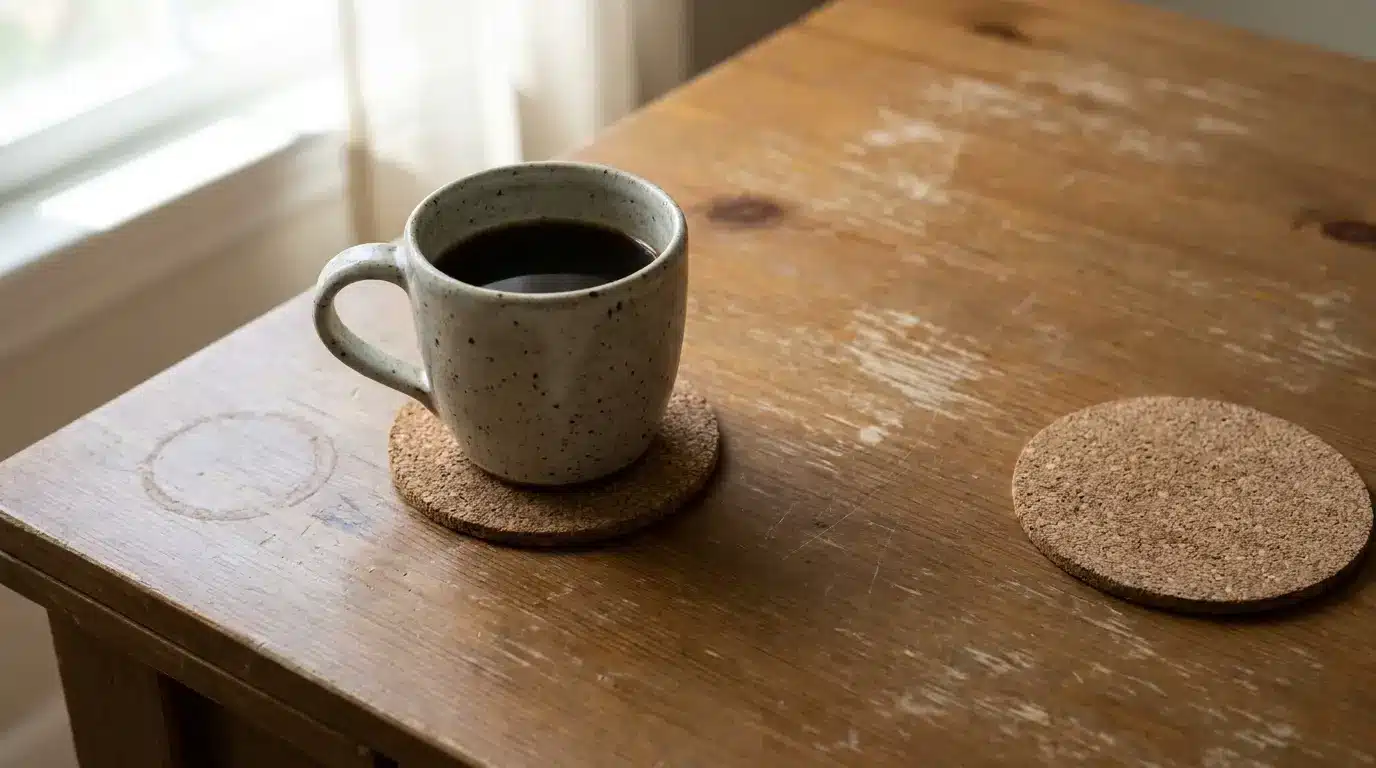
The same principle applies to small accessories. Dining tables and coffee tables face repeated contact with cups, glasses, and serving dishes. Using cork coasters helps protect tabletops from moisture rings, minor spills, and heat transfer from everyday drinkware. Cork also introduces a natural texture that works with many interior styles.
Choose coaster sizes that accommodate the cups and glasses used most often. Keep them near seating and dining areas so they are easy to reach. Clean them according to the manufacturer’s care guidance and allow them to dry fully before storing them.
Make Lighting Work Harder
Lighting affects how a room feels and how easily people can use it. A single overhead fixture may leave corners dark or create glare on work surfaces. Combining different light sources provides greater flexibility.
Use ambient lighting for general illumination, task lighting for activities such as reading or food preparation, and accent lighting to highlight artwork or architectural features. Where practical, choose dimmable fixtures so brightness can change throughout the day.
Natural light also deserves attention. Keep windows clean and avoid placing bulky furniture directly in front of them. Light-coloured curtains can preserve brightness while offering privacy. Mirrors may help distribute existing light, although their effect depends on placement and room layout.
Use Reliable Guidance for Healthier Indoor Spaces
Home improvements are more effective when they address measurable conditions rather than appearance alone. The US Environmental Protection Agency provides practical guidance on indoor air quality, including ventilation, pollutant sources, and ways to reduce indoor exposure.
Use reliable guidance when deciding whether a room needs better ventilation, moisture control, or changes to household products. For persistent dampness, unexplained odours, or recurring mould, investigate the underlying cause and seek qualified help when necessary.
Build Improvements Into Everyday Life
A healthier, more welcoming home does not require changing everything at once. Start with the areas that create the most difficulty, such as a cluttered entryway, a poorly ventilated bathroom, or a kitchen that takes too long to clean.
Thoughtful home design is ultimately about making daily activities easier. When cleanliness, ventilation, organization, lighting, and durable accessories receive equal attention, the home becomes more functional and comfortable over time.