What to Wear on Boat Tours Seychelles. A Capsule Wardrobe for Days on Deck
I used to think packing for an island trip meant bringing a different sundress for every evening. Then I started paying attention to how a beach holiday actually unfolds.
You end up living in the same five pieces, and everything else rides home folded and unworn. A day on a boat makes that even clearer, because the deck leaves no room for anything that can’t handle sun, salt spray and a splash of seawater.
Anyone researching boat tours Seychelles quickly finds three main formats: two- to three-hour sunset cruises, half-day trips of about four hours and full-day island hopping that runs around eight. Each one asks something slightly different of your wardrobe. A sunset cruise wants something you would happily be photographed in. A full day of snorkeling and beach landings wants fabrics that dry fast and shoes you can wade in.
The conditions behind all of this stay fairly steady. Air temperatures in the Seychelles usually sit between the high 70s and mid-80s Fahrenheit, the islands lie a few degrees south of the equator, and the sea is warm enough to swim in all year. What changes is wind and rain, and those two decide which layer you bring along.
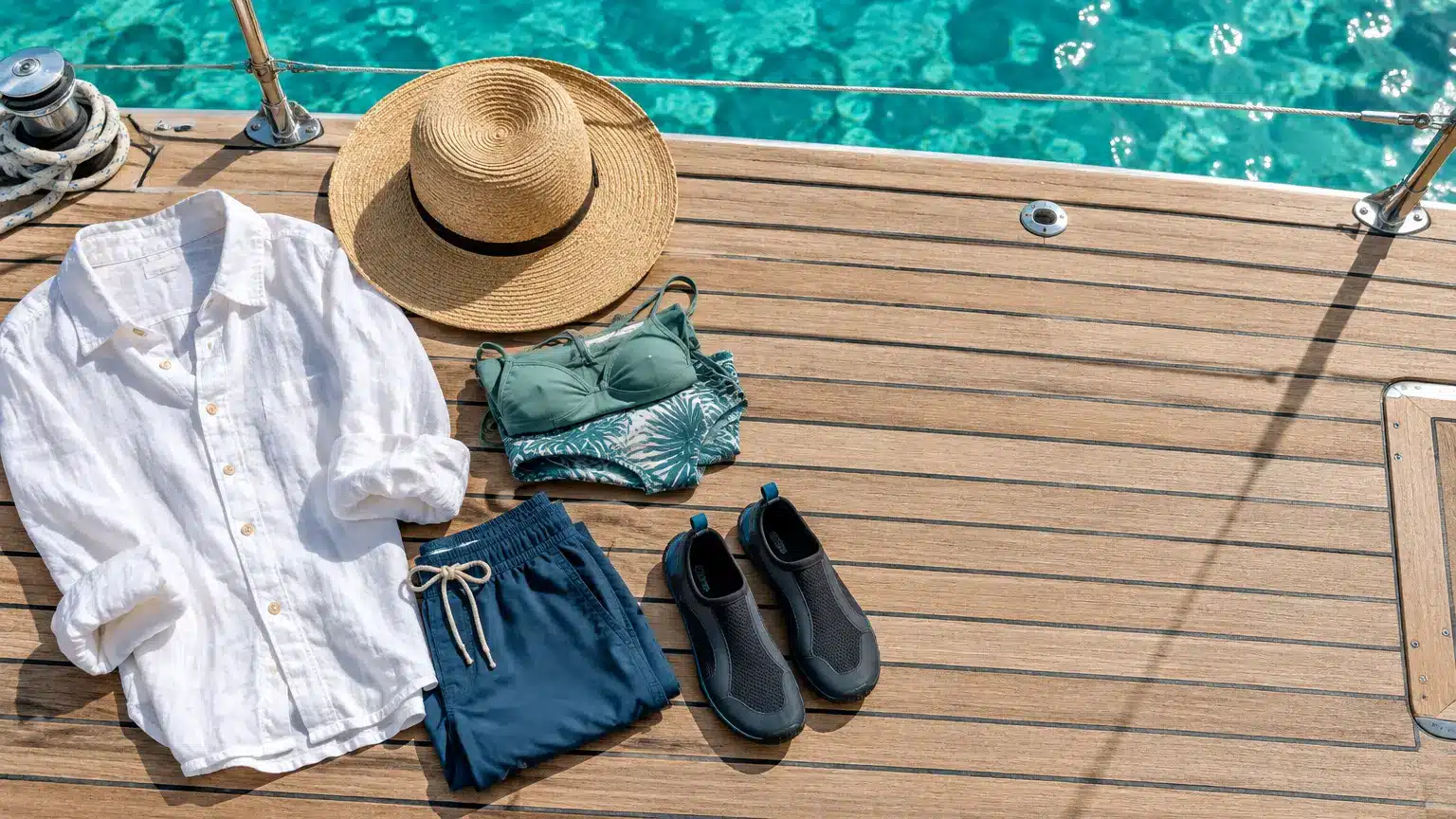
The Ten-Piece Boat Capsule
A capsule works on a boat because storage is tight and nothing should need ironing. Every piece below mixes with the others, and the whole set fits into a carry-on with room left for toiletries.
- Two swimsuits, so one dries while you wear the other
- A long-sleeve swim shirt rated UPF 50+
- A loose linen button-down in white or sand
- Lightweight shorts or a sarong
- A midi slip dress or wide linen trousers for sunset
- A packable wide-brim hat with a chin strap
- Polarized sunglasses on a cord
- Water shoes or rubber-soled sandals
- A thin, packable rain shell
- A waterproof tote or roll-top dry bag
The linen shirt earns its place more than anything else here. It covers your shoulders between swims, it turns a swimsuit into an outfit for lunch at a beach restaurant, and it goes over a slip dress when the breeze picks up after sunset. If you only buy one new item for the trip, make it this one.
Dressing for Each Tour Format
The length of the tour decides how much you need to change during the day. Here is how I would dress for each format.
| Tour format | Typical length | What to wear | What to add |
|---|---|---|---|
| Sunset cruise | 2 to 3 hours | Slip dress or linen trousers, flat sandals | Light shirt for the breeze after dark |
| Half-day trip | About 4 hours | Swimsuit under a linen shirt and shorts | Hat, sunglasses, water shoes |
| Full-day island hopping | About 8 hours | Swimsuit, long-sleeve swim shirt, sarong | Second swimsuit, rain shell, dry bag |
| Overnight charter | 24 hours | Full capsule | A warmer layer and pajamas that can get damp |
On a full day the second swimsuit matters more than it sounds. After three snorkel stops, sitting through lunch in a wet suit gets uncomfortable fast. Changing into a dry one before you sit down to eat makes the afternoon far more pleasant.
Shoes, Bags and the Wet Landing Problem
Footwear causes more trouble on boat days than anything else. Many of the best beaches are reached by dinghy, which means stepping out into shallow water and wading the last few meters onto the sand.
Anse Lazio on Praslin and Anse Source d’Argent on La Digue, two of the most photographed beaches in the country, are often visited this way on yacht tours. Leather sandals and canvas sneakers do not survive that routine well.
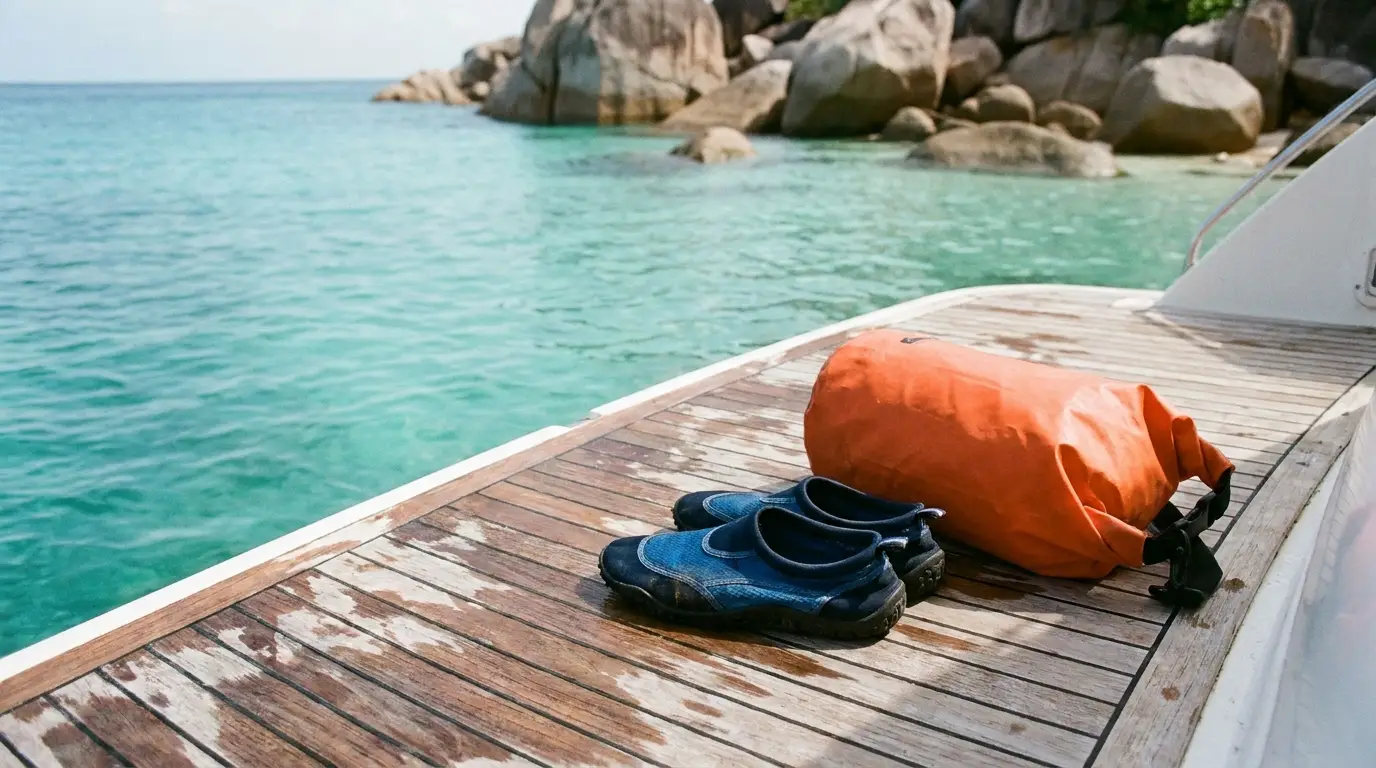
Water shoes or rubber-soled sandals with a heel strap handle both the wade and the rocky patches near granite boulders. On deck, many yacht crews prefer guests to go barefoot to protect the teak and keep the surface less slippery, so pick a pair you can kick off and slip back on in seconds.
Bags follow the same logic. A straw tote looks lovely in photos and soaks up seawater on the dinghy ride. A roll-top dry bag keeps your phone, passport and camera safe, and a light waterproof tote can carry the bulkier things.
Some operators include towels, drinking water and soft drinks on board; CharterClick lists all three on its tours. That frees up space in your bag, since you can leave the heavy beach towel at the hotel.
Fabrics That Handle Salt and Sun
Natural fabrics and technical ones both belong in a boat wardrobe, for different reasons. Linen and cotton gauze breathe well in humid heat and dry quickly once the wind hits them. Quick-dry nylon and polyester blends are better for anything that will get properly wet, like shorts you might swim in or a swim shirt.
A few materials are worth leaving at home. Denim stays heavy and damp for hours once it gets splashed. Silk spots and stains with salt water. Leather stiffens and cracks after a soaking. Thin white fabrics can also turn sheer when wet, so if you love a white cover-up, check it under a running tap before the trip.
Color plays a role too. Light shades reflect heat, and dark ones absorb it, which you notice quickly on an open deck at noon. Bright colors photograph beautifully against turquoise water, while soft neutrals mix more easily with everything else in the capsule.
Sun Protection Counts as Part of the Outfit
Close to the equator, the sun is strong even on hazy days, and water reflects it back at you from below. A long-sleeve swim shirt rated UPF 50 lets through only about 2 percent of ultraviolet radiation, which makes it more reliable than sunscreen alone during long snorkel sessions on your back.
A wide-brim hat protects the face, ears and neck, but only if it stays on. Trade winds and boat speed will take a loose hat overboard within minutes, which is why the chin strap matters. Polarized sunglasses cut the glare off the water, and they also make it easier to spot the reef and the turtles below the surface from the deck.
For the skin you leave uncovered, choose mineral sunscreen based on zinc oxide. Hawaii banned the sale of sunscreens with oxybenzone and octinoxate in 2021 because of concerns about coral reefs, and the Seychelles marine parks you will snorkel in protect exactly that kind of reef. Apply it before you board so it has time to settle, then reapply after each swim.
Adjusting the Capsule by Season
The same ten pieces work all year, though the emphasis shifts a little with the weather.
April and May, and October and November, are the calm transition months between the two trade-wind seasons. The sea is often flat and the air feels hot and humid, so lean on the lightest linen and the swim shirt.
From June to September the southeast trade wind blows harder and evenings feel cooler on the water, so keep the linen shirt or the rain shell within reach on sunset cruises. December through February brings the wettest weather, usually as short tropical showers, which makes the packable rain shell worth its small space in your bag.
Making the Most of a Sunset Cruise
The sunset cruise is the one tour where looking polished makes sense. The light turns soft and golden in the last hour before dark, and the deck becomes a natural photo set. Sunset in the Seychelles falls close to 6:30 p.m. throughout the year, so plan to board in the late afternoon with your outfit already on.
A midi slip dress or wide linen trousers move nicely in the breeze and look good in photos without feeling overdressed. Pair them with flat sandals that grip a wet deck, and keep jewelry minimal.
Rings and thin bracelets slip off easily when your hands are cool and wet, and anything that goes overboard stays in the Indian Ocean. A simple pair of studs and a straw hat, held in your hand once the sun drops, give you a finished look with nothing to lose.
What to Leave in the Suitcase
Some favorites simply do not fit a day at sea. Heels are a hazard on a moving deck, and wedges fare only slightly better. Fine jewelry and anything sentimental should stay in the hotel safe. Heavy beach bags, multiple outfit changes and bulky towels take up space a boat does not have.
The real benefit of a ten-piece capsule shows up on the day itself. When everything you brought can get wet, dry quickly and match everything else, you stop thinking about clothes and spend the hours watching the water. That is the part of a Seychelles boat day you will remember, and none of it depends on how many outfits you packed.