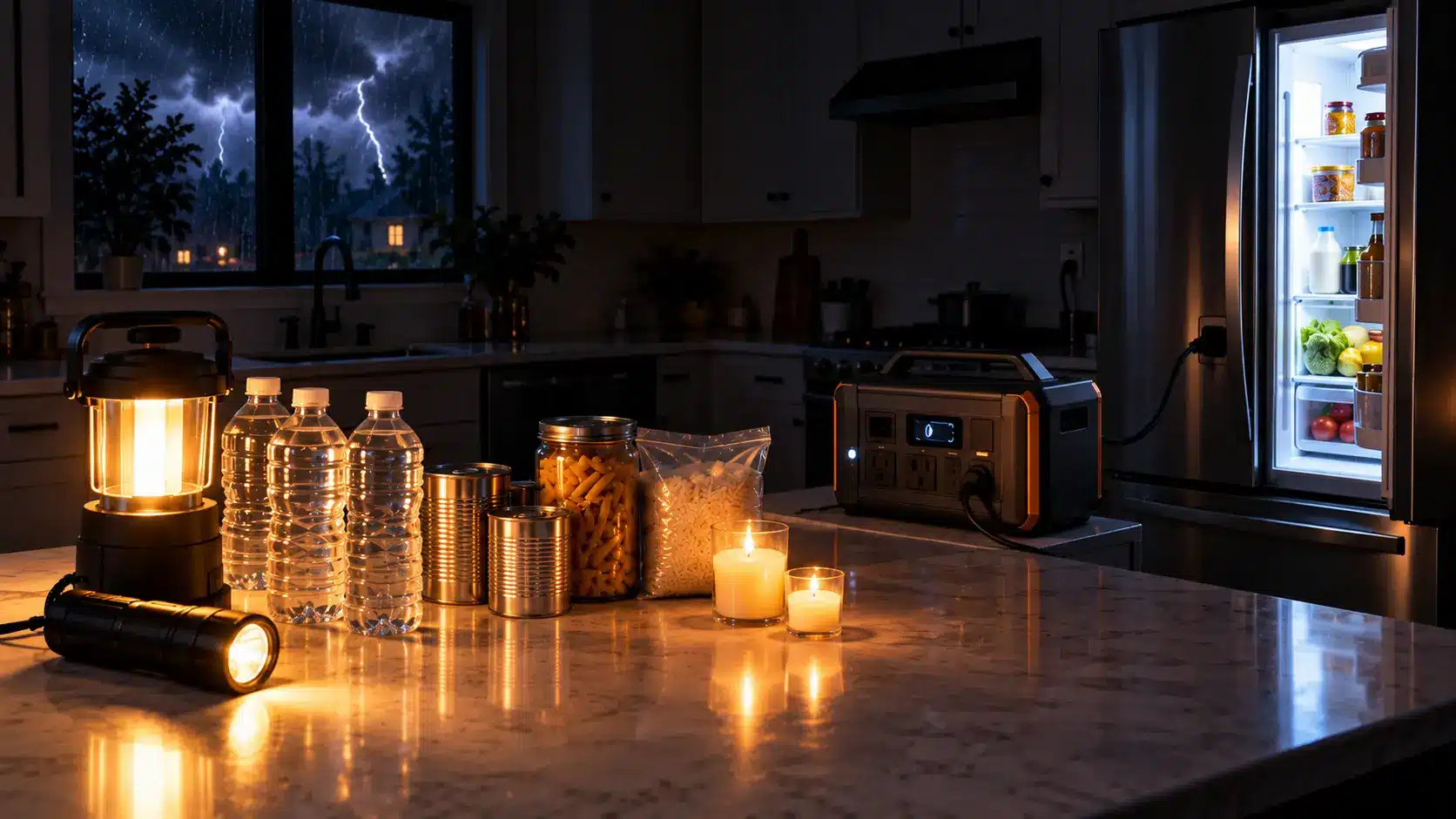
A kitchen power outage checklist should prioritize food safety, emergency lighting, drinking water, and essential appliance power. Preparing these supplies in advance helps households respond efficiently when refrigeration, cooking equipment, and electrical lighting become unavailable.
According to the U.S. Food and Drug Administration (FDA), an unopened refrigerator generally keeps food safely cold for approximately four hours.
Longer interruptions require additional precautions, including ice-filled coolers or suitable backup power. A reliable plan should address preparation, safe food handling, and recovery after electricity returns.
Before an Outage: Prepare Your Kitchen Essentials
Effective outage preparation begins with checking temperatures, organizing supplies, and identifying which household functions depend on electricity. A few preventive measures can reduce uncertainty when an unexpected interruption occurs.
Check Refrigerator and Freezer Temperatures
The FDA recommends keeping refrigerators at or below 40°F (4°C) and freezers at or below 0°F (-18°C). Place an appliance thermometer inside each compartment to monitor temperatures accurately rather than relying exclusively on adjustable temperature settings.
When severe weather is expected, verify that both appliances are operating within these recommended limits. Freeze containers of water or reusable gel packs to provide additional cooling capacity if electricity becomes unavailable.
Assemble a Practical Emergency Supply Kit
Keep frequently needed supplies together in an accessible kitchen cupboard. Essential items include:
- A manual can opener and shelf-stable food.
- Drinking water appropriate for household needs.
- Battery-powered flashlights, lanterns, and replacement batteries.
- An insulated cooler and frozen gel packs.
- Refrigerator and freezer thermometers.
- A charged power bank for essential communication devices.
Food Storage: Keeping Refrigerated and Frozen Items Safe
Maintaining safe food temperatures is one of the most important kitchen responsibilities during an outage. Refrigerators and freezers retain cold air for limited periods, making unnecessary door openings particularly wasteful.
Understand How Long Food Stays Cold
The FDA provides the following approximate timeframes when appliance doors remain closed:
| Appliance | Approximate cold-storage duration |
|---|---|
| Refrigerator | 4 hours |
| Full freezer | 48 hours |
| Half-full freezer | 24 hours |
Use a Cooler When an Outage Lasts Longer
When an interruption approaches four hours without refrigeration, transfer perishable food into a properly insulated cooler containing sufficient ice or frozen gel packs.
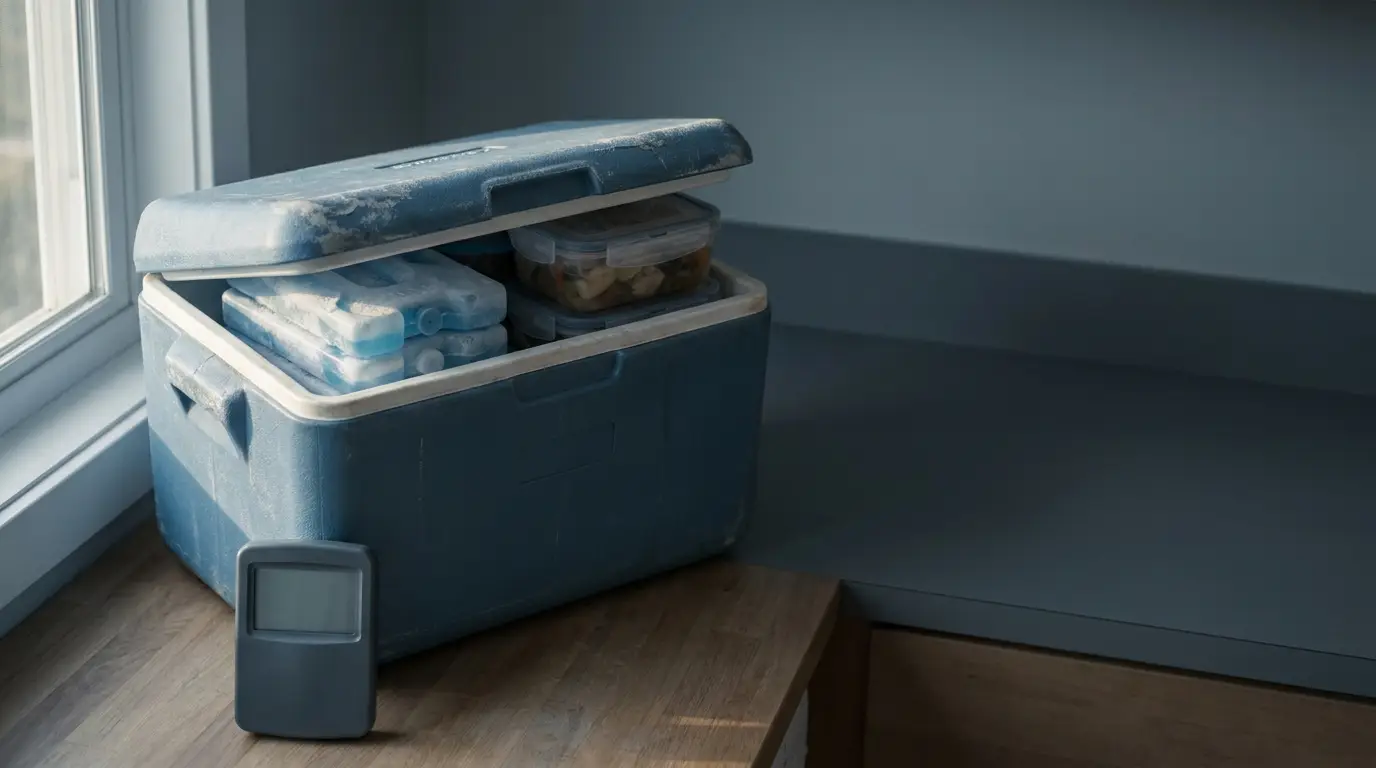
Arrange cold sources around food containers, close the cooler securely, and monitor its internal temperature with a thermometer.
The Centers for Disease Control and Prevention (CDC) recommends keeping perishable food at or below 40°F (4°C). Add replacement ice when necessary, and discard perishables that cannot be maintained at a safe temperature.
Avoid placing raw meat directly against ready-to-eat foods. Use sealed containers to prevent leakage and cross-contamination.
Check Food Safety After Electricity Returns
Restoring electricity does not automatically make improperly stored food safe to consume.
Check appliance thermometers and assess individual food items against official safety guidance. Refrigerated perishables without a functioning cold source for four hours should generally be discarded.
Frozen food may be safely refrozen or cooked if ice crystals remain or its temperature is 40°F (4°C) or below.
Never taste food to determine whether it is safe. Appearance and smell alone cannot reliably establish whether harmful bacteria have developed.
Emergency Lighting for Safer Kitchen Activities
Emergency lighting should provide sufficient visibility for essential tasks without introducing unnecessary fire hazards. Selecting independent, battery-powered lighting helps maintain a functional kitchen when electrical outlets become unusable.
Battery-powered lanterns are particularly practical because they illuminate larger working areas without requiring a continuous electrical supply. Position one near the kitchen entrance and another close to the main food preparation area.
A headlamp offers additional convenience when carrying supplies, organizing a cooler, or opening containers. Its hands-free design reduces the need to balance a flashlight while performing household tasks.
Battery-powered cabinet lights can illuminate cupboards, pantry shelves, and frequently used drawers. However, confirm that the selected lights operate independently of household electricity, since some cabinet lighting systems require a mains connection.
Avoid using candles near curtains, paper towels, or other combustible materials. Keep emergency lighting readily accessible rather than storing it behind equipment that may be difficult to reach in darkness.
Choosing Battery Backup for Essential Kitchen Appliances
A kitchen backup system should match the household’s actual electricity requirements rather than attempting to power every appliance indiscriminately.
Refrigeration may be important for preserving groceries, but electricity-dependent medical equipment, communication devices, or other critical household needs may take precedence.
Compare Backup Options Using Practical Selection Criteria
When exploring home backup battery options, consider how much energy the appliances consume and whether the proposed system can operate them safely.
The following specifications deserve particular attention:
- Battery capacity: Measured in watt-hours (Wh), this indicates the energy stored.
- Continuous output: The maximum electrical load a system can sustain during normal operation.
- Peak output: Its ability to accommodate brief power surges, including refrigerator compressor startup.
- Transfer capability: Whether the system switches automatically during an outage or requires manual reconnection.
- Installation requirements: Whether equipment connects directly to appliances or requires additional electrical work.
The LiTime Lares K1 as a Refrigerator Backup Example
The LiTime Lares K1 illustrates a dedicated approach to supporting refrigeration and selected kitchen equipment. Its specifications provide a practical example of how battery storage, electrical output, and switching performance influence appliance compatibility.
The system uses LiFePO4 battery storage and includes an uninterruptible power supply function designed to transfer connected appliances to battery power during a utility interruption.
For households exploring a Battery backup for fridge, the LiTime Lares K1 provides a useful example of a dedicated system. Before purchasing, users should verify appliance compatibility, startup-power requirements, installation instructions, and realistic operating duration.
Calculate Expected Refrigerator Runtime
Battery capacity provides a useful starting point for estimating how long a refrigerator might operate during an outage.
Suppose a refrigerator consumes 2,000Wh of electricity daily, equivalent to approximately 83.3W averaged across 24 hours.
For a conservative planning example, assume that 85% of the Lares K1’s 2,304Wh rated capacity remains available to power the refrigerator after accounting for system losses.
Estimated usable energy = 2,304Wh × 0.85 = 1,958Wh
Estimated runtime = 1,958Wh ÷ 83.3W = approximately 23.5 hours
Actual duration depends on battery condition, ambient temperature, refrigerator efficiency, compressor cycling, and additional connected equipment. Importantly, refrigerators require brief bursts of electricity when their compressors start. Therefore, both continuous output and startup-power requirements must be checked, even when average electricity consumption appears modest.
Conclusion
Preparing your kitchen for an unexpected power outage begins with a few essential precautions. Check refrigerator and freezer temperatures using appliance thermometers, maintain a supply of shelf-stable food and drinking water, and keep battery-powered lighting accessible. An insulated cooler with frozen ice packs provides another way to protect perishables when refrigeration is interrupted.
If your household depends on backup electricity, confirm that the system is charged, compatible with essential appliances, and capable of meeting their power requirements. When electricity returns, assess food temperatures before deciding what remains safe to consume. Regular preparation and sensible precautions can help households manage outages more confidently while reducing avoidable food waste and safety risks.