How to Choose Rattan Pendant Lights: The Room-by-Room Proportion and Style Guide
Replacing a harsh overhead bulb with a woven pendant can change a room’s mood in seconds. Unlike solid metal or clear glass fixtures, woven fibers filter light into layered textures and cast soft shadows that add organic depth to clean, contemporary spaces. Rattan fixtures blend naturally into varied design aesthetics, working as well in breezy coastal interiors as in refined Japandi and minimalist homes.
Achieving a polished, designer-level look requires more than simply picking an attractive silhouette. Balancing light distribution with room scale hinges on three core factors: weave density, architectural proportions, and hanging clearance. Here is how to select and position the right woven pendant for every zone in your home.
Matching Color Finishes to Your Interior Palette
The finish of woven materials determines how the fixture interacts with your existing decor:
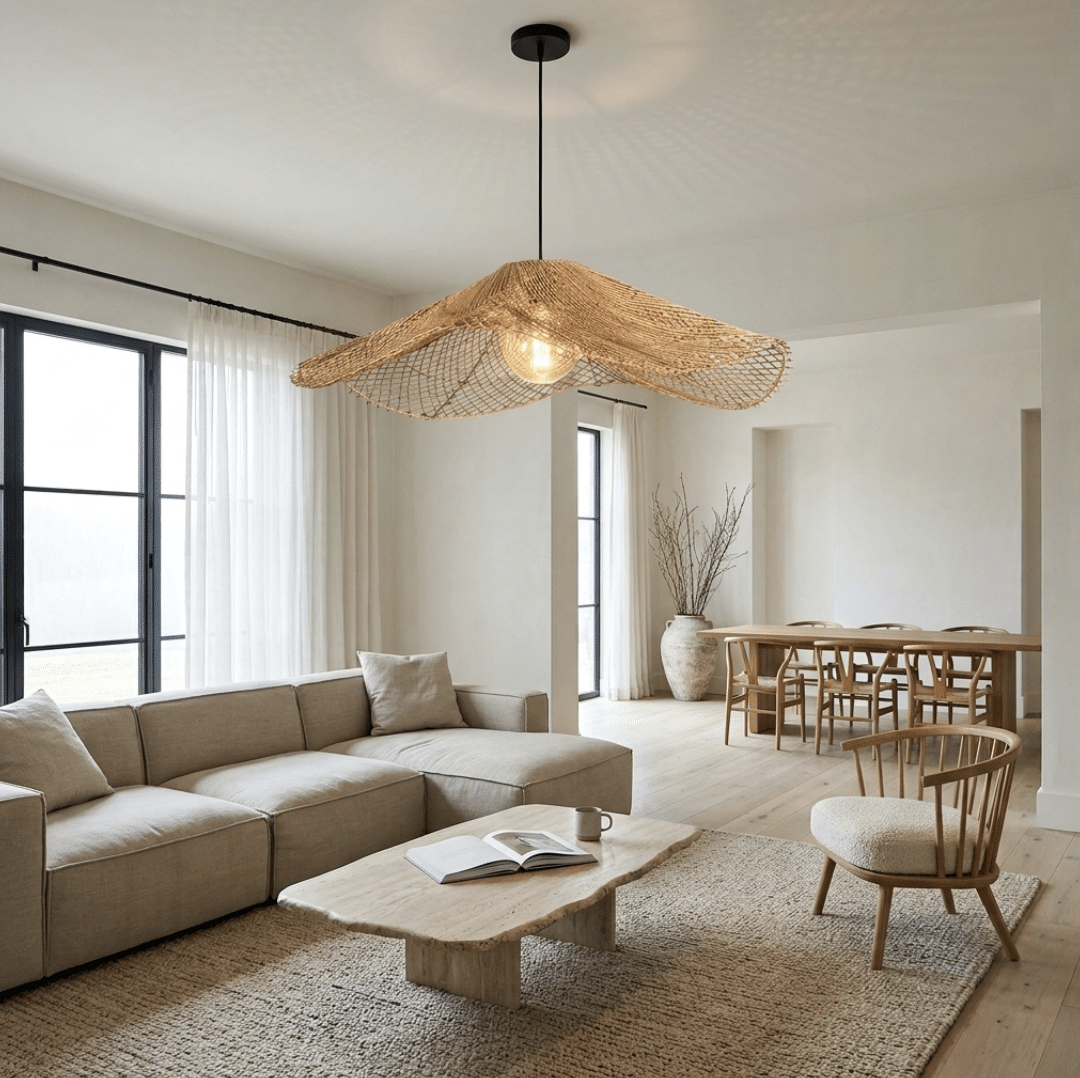
- Natural Blonde: A staple choice for Coastal, Scandinavian, and Japandi palettes, pairing naturally with pale oak, linen upholstery, and warm white walls.
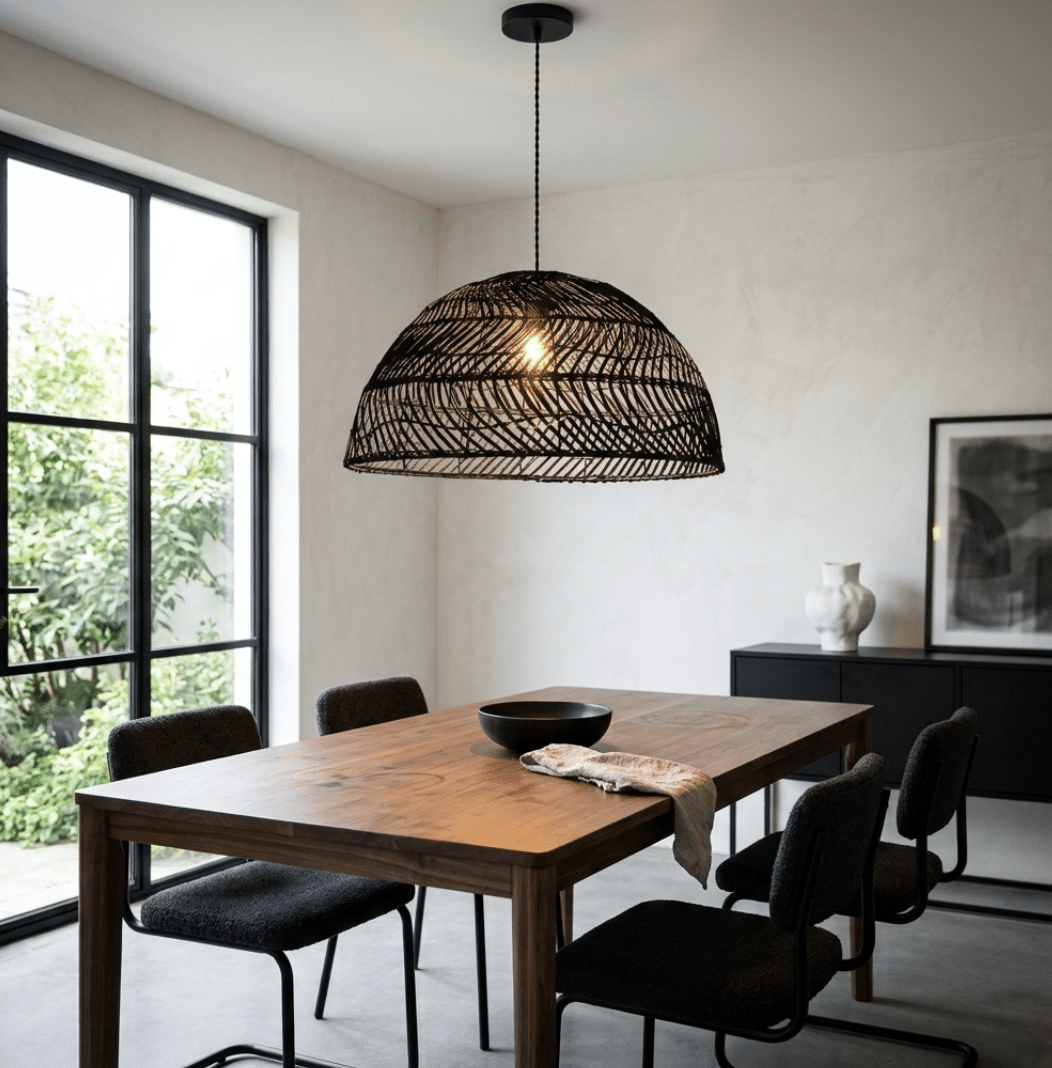
- Dark Stained or Charcoal: While natural cane feels inherently relaxed and bohemian, incorporating black rattan pendant lights introduces sharp graphic contrast to contemporary, modern, or industrial interiors. The dark finish grounds the airy weave, offering a tactile, matte alternative to cold powder-coated metal.
- Weathered Driftwood: A muted gray-brown wash that integrates smoothly into cottage, modern farmhouse, or coastal spaces without feeling heavy.
Selecting Woven Fixtures by Room
Every room serves distinct daily routines, requiring a thoughtful balance of direct task light and ambient warmth:
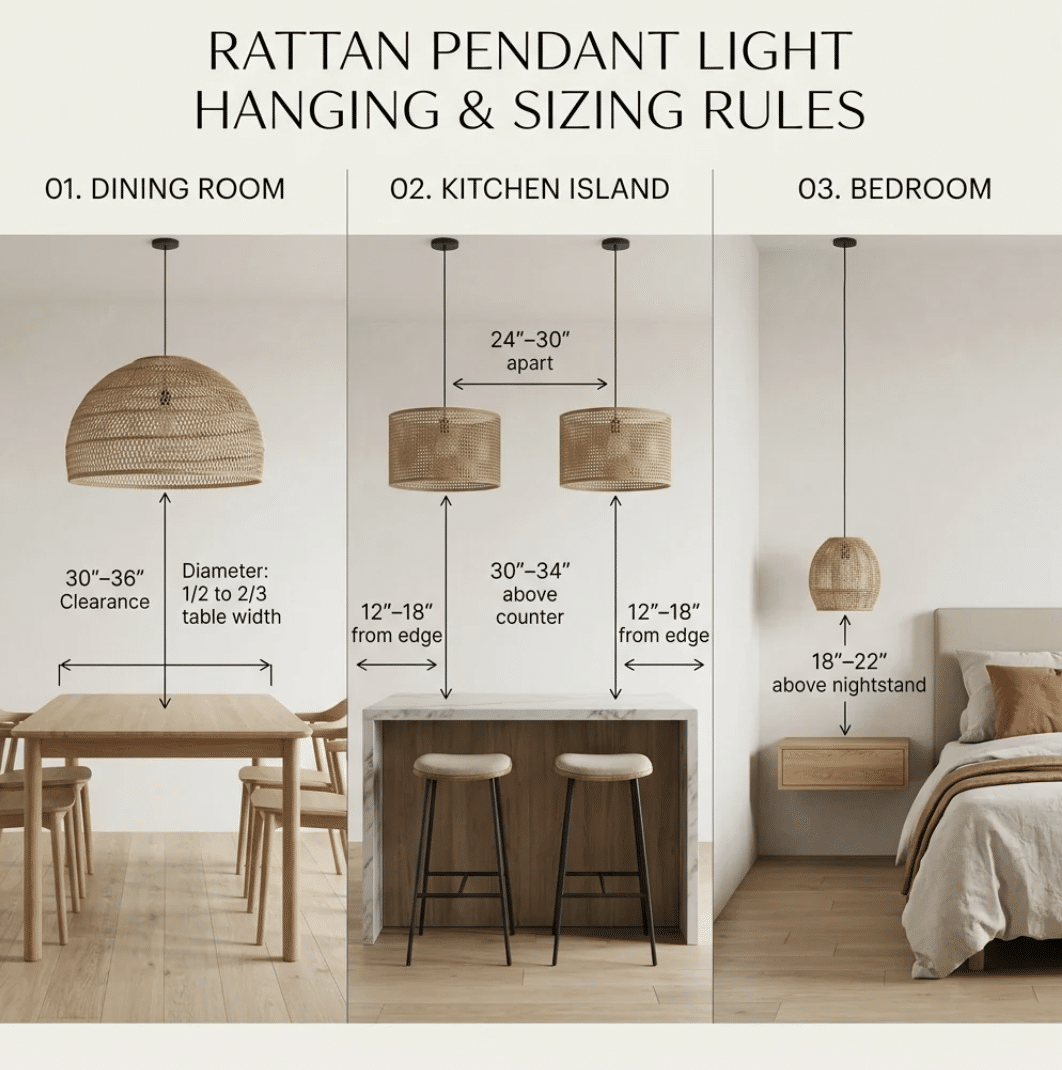
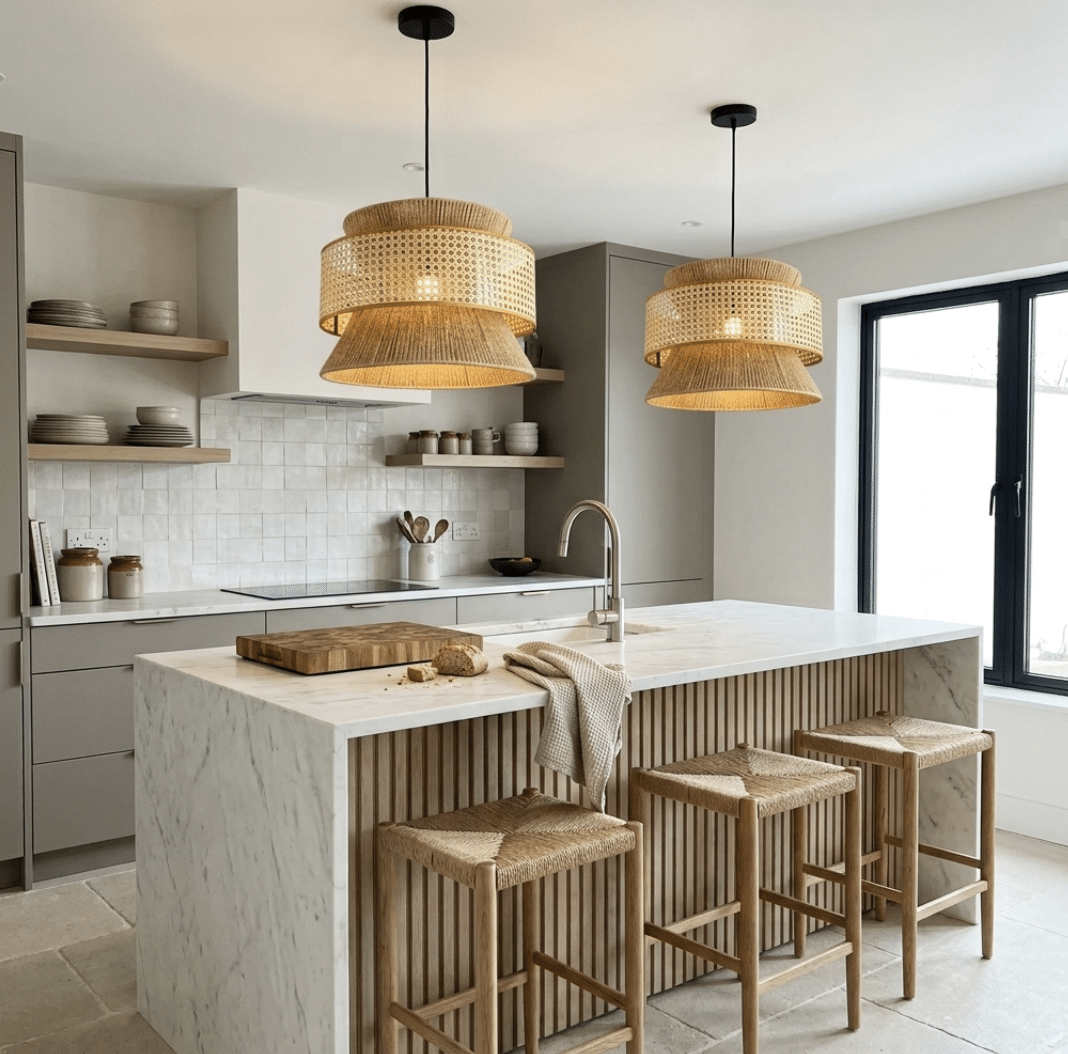
- Kitchen Islands: Heavy, opaque shades can crowd sightlines across an open kitchen layout. A row of two or three rattan hanging lights delivers targeted downward illumination onto prep surfaces while keeping the ceiling line open and uncluttered.
- Dining Rooms: A broad bell-shaped or shallow dome pendant suspended low over the table visually anchors the gathering area, framing shared meals beneath a warm, textured canopy.
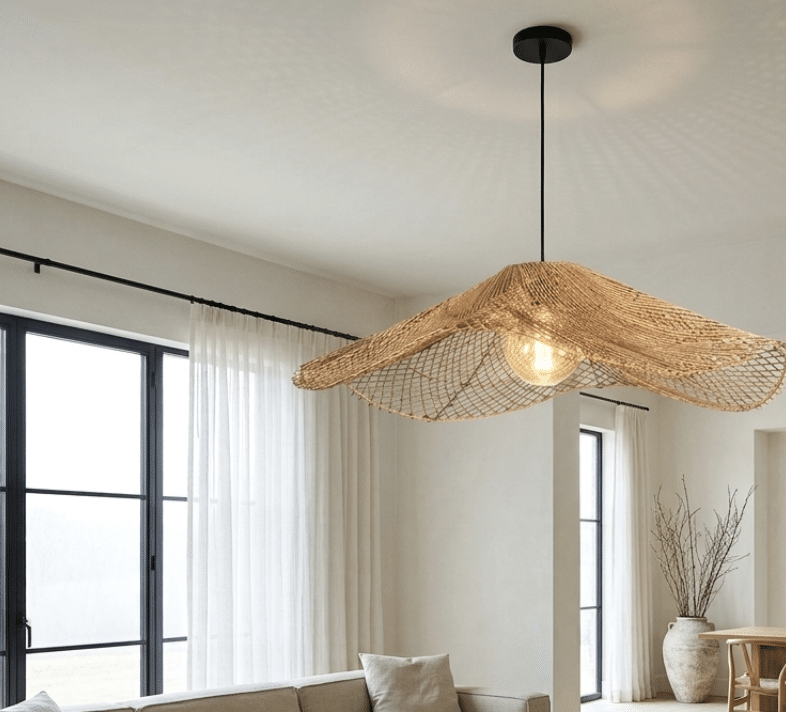
- Living Rooms: Use a wide, open-weave pendant as a sculptural centerpiece to soften the rigid geometry of sectional sofas, coffee tables, and media consoles.
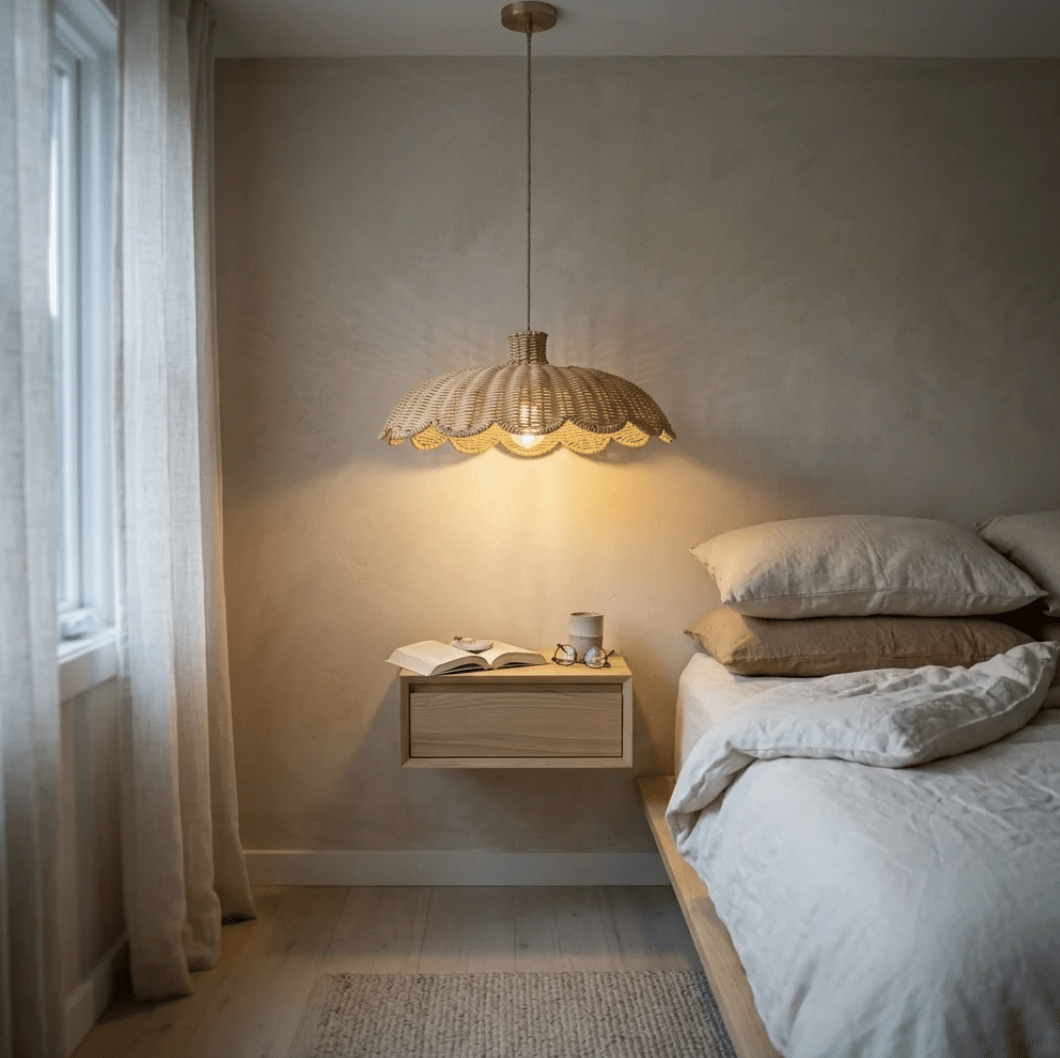
- Bedrooms: Suspending compact woven pendants on either side of the headboard frees up precious nightstand surface area while casting a gentle, low-glare glow well suited for unwinding at the end of the day.
- Powder Rooms: While raw, untreated plant fibers should stay away from high-humidity showers, a treated rattan pendant adds natural warmth and a calm, spa-like feel to a well-ventilated powder room or half-bath.
Calculating Size and Hanging Clearance
An undersized pendant looks lost under high ceilings, while an oversized fixture blocks sightlines and dominates the space. For central ceiling placement, interior designers use a straightforward sizing formula: add the room length and width in feet, then convert the total to inches to find the target fixture diameter.
Room Length (ft) + Room Width (ft) = Fixture Diameter (in)
For example, a living area measuring 12 feet by 14 feet totals 26. A 26-inch-diameter pendant provides balanced visual weight without overwhelming the room.
When suspending pendants over specific furniture surfaces, follow these placement guidelines:
| Placement Area | Sizing Guideline | Hanging Clearance |
| Room Center (Ambient) | Room length (ft) + width (ft) = shade diameter (in) | Hang base of fixture at least 7 feet above finished floor |
| Dining Table | 1/2 to 2/3 the total width of the dining tabletop | Suspend 30 to 36 inches above the tabletop surface |
| Kitchen Island | Leave 12 to 18 inches of inset from counter edges | Maintain 30 to 34 inches above countertop, spacing units 24 to 30 inches apart |
| Bedside Nook | Proportion shade diameter to nightstand width (typically under 12 inches) | Hang 18 to 22 inches above bedside tabletop |
Matching Weave Patterns and Bulbs to Everyday Lighting Needs
Before choosing a fixture profile, decide how you want the light to perform. Weave tightness determines whether a fixture functions as decorative accent lighting or focused task illumination.
- Open Weaves: Wide spacing between cane strands allows light to pass directly into the room, casting artistic shadow patterns across walls and ceilings. Open weaves serve best as ambient accent lighting in social areas or reading nooks where a moody, relaxed atmosphere is desired.
- Tight Weaves: Closely woven rattan acts like a solid, opaque lampshade, directing most lumens downward into a dedicated pool of light. This focused beam makes tight weaves well suited for prep islands, dining tables, or desks where clear downward illumination is needed.
- Diffusers and Fabric Liners: For spaces that need general ambient warmth without eye fatigue, choose shades with internal linen or parchment liners. The liner softens glare from the bare bulb while preserving the rich, woven texture visible on the exterior.
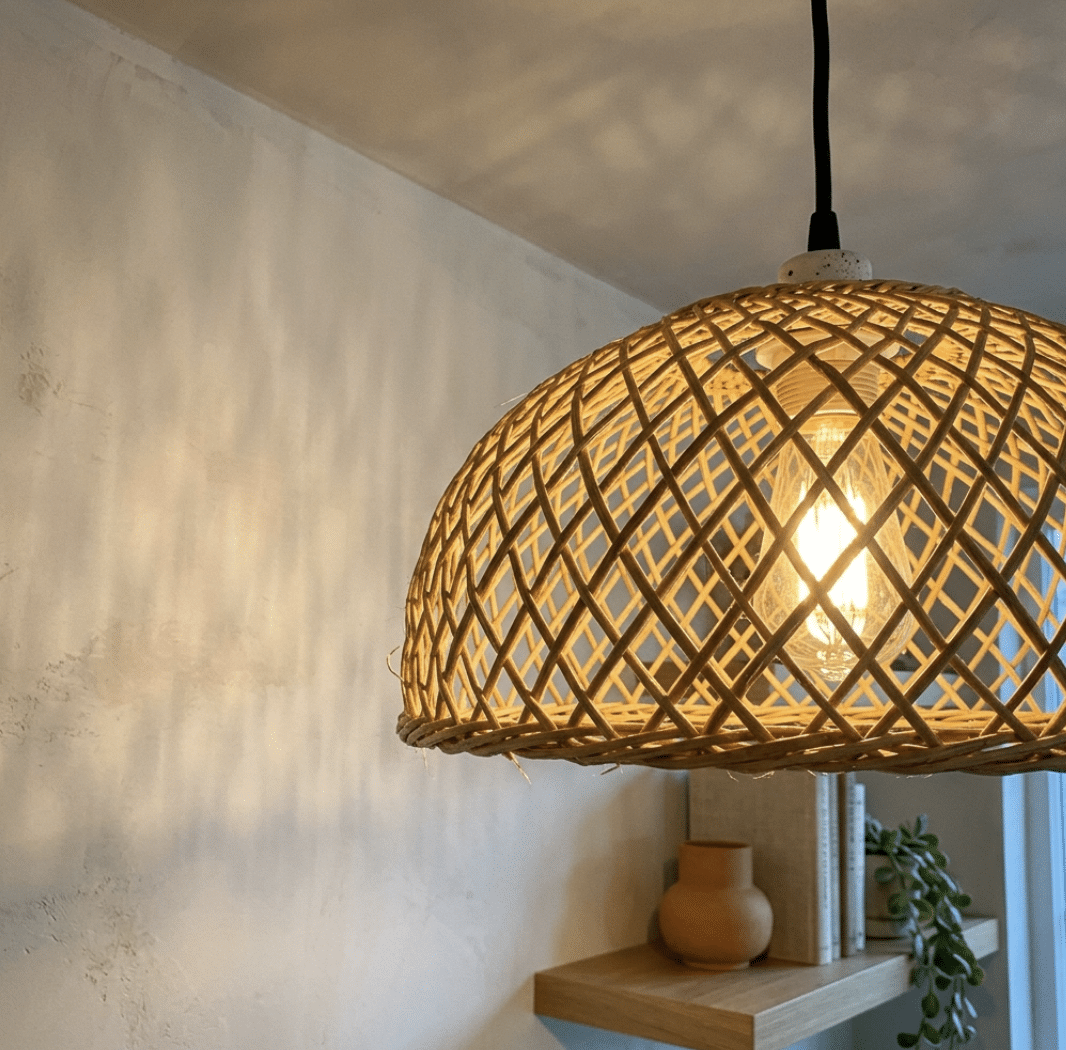
The bulb you pair with the pendant also affects the final look. Clear filament LED bulbs accentuate the graphic geometry of open-weave shadows, while frosted bulbs create an even, soft wash that prevents glare. Pairing the fixture with a wrapped fabric cord, such as natural jute, clean linen, or matte black cloth, creates a refined finish that beats standard plastic cordsets.
The Enduring Appeal of Artisanal Craftsmanship
Authentic woven lighting adds a tactile, human quality that mass-produced metal fixtures cannot replicate. Today, modern studios and makers like IndochinaLight help bridge this heritage with contemporary interior design by partnering directly with generational weaving communities across Southeast Asia. In historic hubs such as Vietnam’s Phu Vinh village, skilled artisans split, shape, and weave renewable botanical fibers into architectural silhouettes using time-honored, chemical-free techniques.
Incorporating handcrafted woven lighting does more than brighten an interior. It grounds modern living spaces with renewable textures, supports ethical artisan traditions, and adds a gentle, welcoming glow that stays timeless as design trends shift.