
Somewhere in your forties or fifties, a quiet job lands on your desk without a posting or an interview: looking after the people who used to look after you. Most women absorb it between careers, households, and everything else they already run. In Canada, 13.4 million people provided unpaid care in 2022, and the ones who manage it gracefully tend to share one habit. They treat finding good help as a project worth doing properly, not a favour to feel guilty about.
Start With What You Actually See
Your loved one might tell you everything is fine over the phone, but a visit often reveals things they haven’t mentioned. Notice how they get up from their favourite chair, whether they reach for the wall while walking down the hallway, or if there’s much food in the fridge. Unopened mail, missed medications or wearing the same clothes for several days are also worth paying attention to. These everyday details help you recognize where your loved one is struggling and where a little extra support at home would help.
Know What Good Help Looks Like Before You Shop
A cleaner once a week solves a different problem than a Caregiver who visits daily, and both differ from nursing oversight. Write down the week’s real gaps first: meals, laundry, the drive to appointments, company on quiet days, help with bathing.
The clearer you are about what’s needed, the easier it is to tell who can help. It’s also useful to know the three main kinds of help. Homemaking and companionship cover meals, laundry, errands, and company. A Personal Support Worker (PSW) helps with personal care like bathing, dressing, and moving around safely. Nursing looks after medications, wound care, and health changes that need a trained eye. In Ontario, Ontario Health atHome (310-2222) decides who qualifies for publicly funded home care, and Families often add private hours when the funded ones don’t cover the whole week.
What to Ask Before You Choose a Home Care Agency
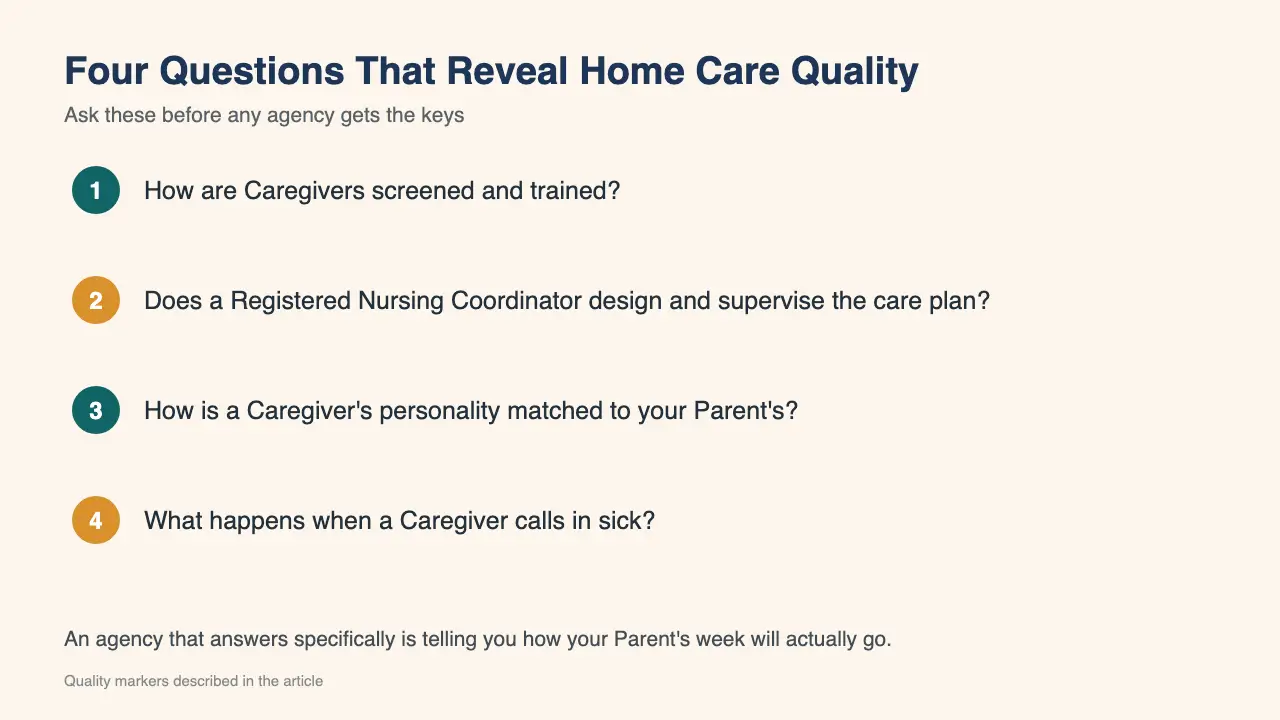
Once you know what to look for, good care is easier to spot. When you’re talking to a home care agency in Toronto, these are good questions to ask:
- How are your Caregivers screened and trained?
- Does a nurse, such as a Registered Nursing Coordinator, plan and oversee the care?
- How do you match a Caregiver to my loved one’s personality and routines, and will they see the same person each visit?
- What happens if a Caregiver calls in sick?
- Is there a minimum visit length, and what’s included in the hourly rate?
An agency that gives you clear, specific answers is showing you what your loved one’s week will actually look like.
Let It Start Small
It’s often easiest to start small, with a few hours a week. Choose something your parent will feel more open to, like a hand with the housework or a Caregiver who joins them for a weekly outing. Seeing the same Caregiver each visit gives your loved one time to get comfortable with them, and you can add more hours as their needs change. Starting with a full schedule and several new faces at once can feel like a lot, even when every Caregiver is excellent.
Guard Your Own Hours Like They’re Billable
Caring for an aging loved one takes time and energy, especially alongside work and responsibilities at home. In the 2025 National Caregiving Survey of more than 2,600 caregivers across Canada, 77% said caregiving had a negative impact on their well-being, including stress, fatigue, and burnout.
Think about the tasks you could pass along to a Caregiver, like laundry, preparing meals, or driving to appointments. That leaves more time to sit and have a coffee, catch up, or share a meal with your loved one. And try to set aside some time for yourself during the week. Your health and well-being deserve attention, too. In a 2022 survey, 74% of people caring for an adult with a long-term condition said caregiving affected their own health, often leaving them tired, worried or overwhelmed.
The same Statistics Canada data shows 56% of unpaid Caregivers report feeling tired because of their caregiving responsibilities, and 44% carry worry or anxiety through the year. Those numbers describe devoted daughters, not negligent ones. Hand off the tasks anyone could do, keep the visits only you can make, and book your own rest with the seriousness you bring to their appointments.
The Payoff Is the Relationship
Sometimes the entire visit with your loved one gets taken up with laundry, preparing meals and helping them get ready for the day. Having a trusted Caregiver take care of those daily responsibilities gives you a chance to enjoy each other’s company again. Maybe it’s going out for lunch, looking through family photos or sitting together over a cup of tea without watching the clock. According to the National Institute on Ageing’s 2024 survey, about 80% of older Canadians want to stay in their own homes as they age. With help at home, your loved one has support with daily routines, and you have more opportunities to be together as a Family.