
The problem is never just “moving to New York.” It is the sofa. The bookshelf that leans a little. The dining table nobody uses as a dining table anymore. The boxes in the closet that have followed you through two apartments already, still unopened, still somehow important.
A Boston-to-New-York move has a way of making all of that feel heavier. Literally, yes. Also mentally. Before calling Boston-to-New-York movers, it helps to decide what actually deserves the trip and what is only coming because making decisions is tiring. A local move lets people postpone those questions. Interstate moves are less forgiving.
Start With the New Apartment, Annoying as That Sounds
Most people pack by looking at the old place. Bedroom first, kitchen next, living room last, panic everywhere. That is normal. It is also how furniture ends up in rooms where it clearly does not belong. The better place to start is the apartment you are moving into. How wide is the bedroom? Where does the closet door swing? Is there an elevator, and if yes, is it actually useful or just technically present? New York buildings love technicalities.
Check the boring measurements:
- elevator size;
- stair turns;
- hallway width;
- doorway height;
- bedroom wall space;
- closet space;
- building move-in rules.
Then measure the furniture. Properly. Not “it should fit.” That phrase has ruined many moving days.
The Big Furniture Gets Judged First
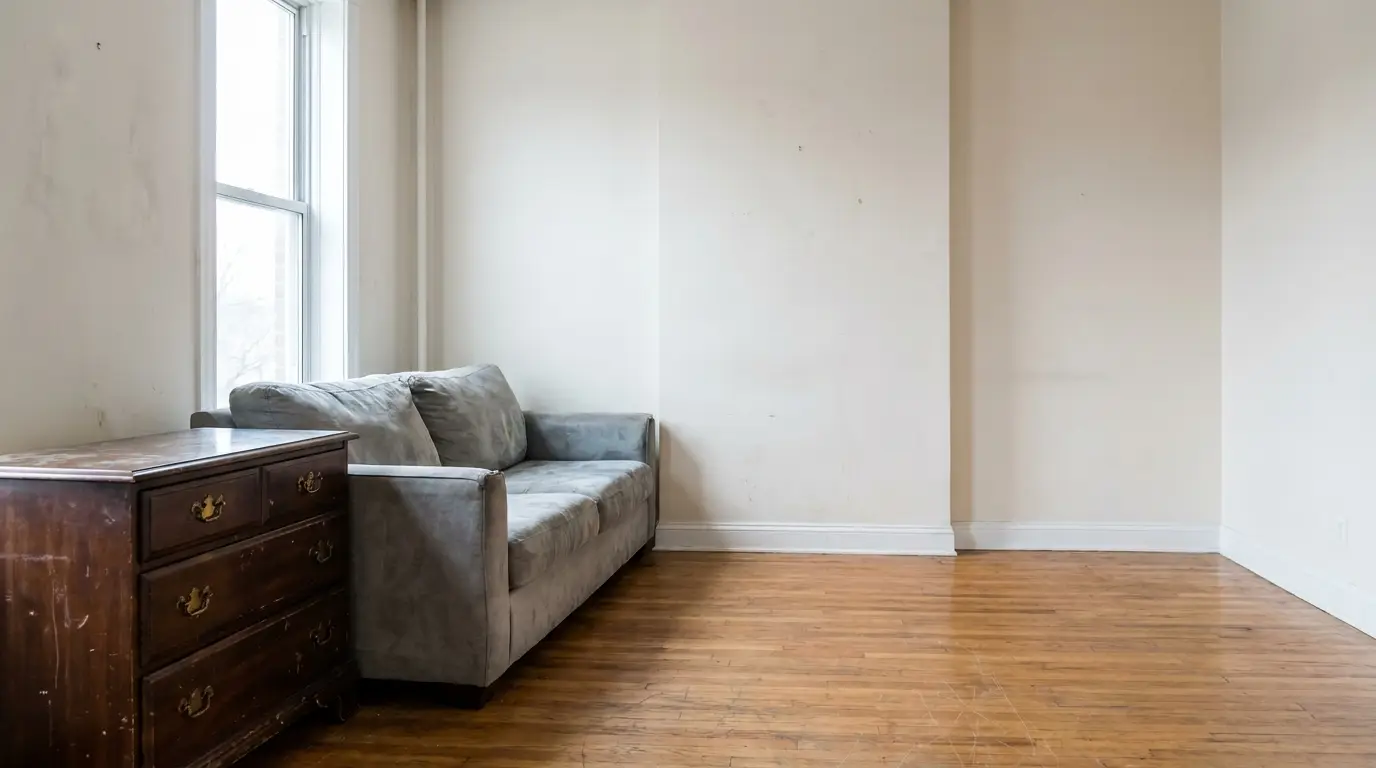
Large furniture needs the harshest review because it creates the biggest problem when it does not work.
Start with the things that take up real space:
- sofa;
- mattress and bed frame;
- dresser;
- dining table;
- desk;
- bookcases;
- wardrobe;
- exercise equipment.
The question is not “Can it be moved?” With enough effort, most things can be moved. The better question is this: will it make sense there?
A sofa that already felt too large in Boston probably won’t become charming in a smaller New York living room. A desk bought during a temporary work-from-home phase may not deserve half of the new bedroom. A bookcase that barely survived the last move may not need another chance.
Some furniture has done its service. Thank it quietly. Move on.
Some Things Are Cheaper to Replace Than Transport
This is where people get stubborn. Nobody wants to hear that the old rug, cheap lamp, or wobbly side table may cost more trouble than it is worth. Still true. A bulky item does not need to be expensive to become expensive during a move. It uses truck space. It needs carrying. It needs wrapping. It has to fit through both buildings. Then, after all that, it still might look wrong in the new place.
Good candidates for selling, donating, or replacing later:
- cheap shelving;
- worn rugs;
- extra chairs;
- basic lamps;
- plastic storage drawers;
- old office furniture;
- duplicate kitchen items.
Not everything needs a grand farewell. Some things can just leave.
The “Maybe” Pile Is Suspicious
Every move has a maybe pile. Maybe this will be useful. Maybe the new kitchen needs this. Maybe someone will finally use the air fryer. Maybe the broken lamp can be fixed. Maybe, maybe, maybe. That pile needs rules.
Try this:
- Keep: useful, valuable, fits the new space.
- Sell: still worth money, wrong for the next apartment.
- Donate: usable, just not useful to you.
- Replace later: bulky, cheap, worn, or awkward.
- Maybe: allowed for one week only.
After a week, “maybe” becomes a decision. Otherwise it becomes cargo.
Sentimental Things Are Different. Obviously.
A scratched table and a box of family photos do not belong in the same decision category. Replacement cost works for regular household stuff. It does not work for letters, old pictures, inherited items, handmade gifts, or the strange little object that means nothing to anyone else.
Keep the things that would actually hurt to lose. Still, sentimental does not have to mean unlimited. A whole box of college notebooks may be too much. One or two that make you smile? Fine. A full set of inherited dishes nobody uses may not fit the next kitchen. A few pieces might.
There is a middle ground. People forget that during packing.
Compare Moving Cost With Replacement Cost
For anything bulky and not emotionally important, do a quick comparison.
Ask:
- What would it cost to move this?
- What would it cost to replace it?
- Does it fit the new apartment?
- Is it in good condition?
- Would you buy it again today?
That last question is very useful. If you would not buy the item again, paying to move it starts to look strange. This does not mean throwing everything out and rebuying life in New York. Terrible plan. It means being honest about the things that are already halfway out the door.
Keep Travel Essentials With You
Some items should not go on the truck at all.
Keep a separate bag for:
- IDs and important documents;
- medication;
- chargers;
- laptop and work items;
- two or three days of clothes;
- toiletries;
- snacks and water;
- pet supplies;
- child necessities;
- keys, fobs, and access cards.
Make this bag look nothing like a moving box. Backpack, duffel, suitcase, anything obvious. A cardboard box marked “IMPORTANT” is still a cardboard box. Someone will load it.
Do Not Decide on Moving Day
Moving day has no patience and no wisdom. Someone is holding a chair. Someone else is blocking the hallway. The truck is waiting. Suddenly the chair is coming to New York because nobody wants to discuss it anymore. Bad system.
Decide earlier. Set donation items apart. Sell what needs selling before the final weekend. Label what is going. Label what is absolutely not going. Tell anyone helping with the move. Big ugly signs are acceptable. Elegant labels are overrated.
Less Stuff Makes the Whole Move Easier
Decluttering before an interstate move does not require a new personality. You can still own books. You can still have extra towels. You can even keep the weird mug. The point is not minimalism. The point is not paying to move things that already do not fit your home, your habits, or your next apartment.
A lighter move means fewer boxes, fewer awkward furniture debates, less unpacking, and fewer moments in New York where you stand in the middle of the room thinking, why did this come with us? Boston answers that question better.