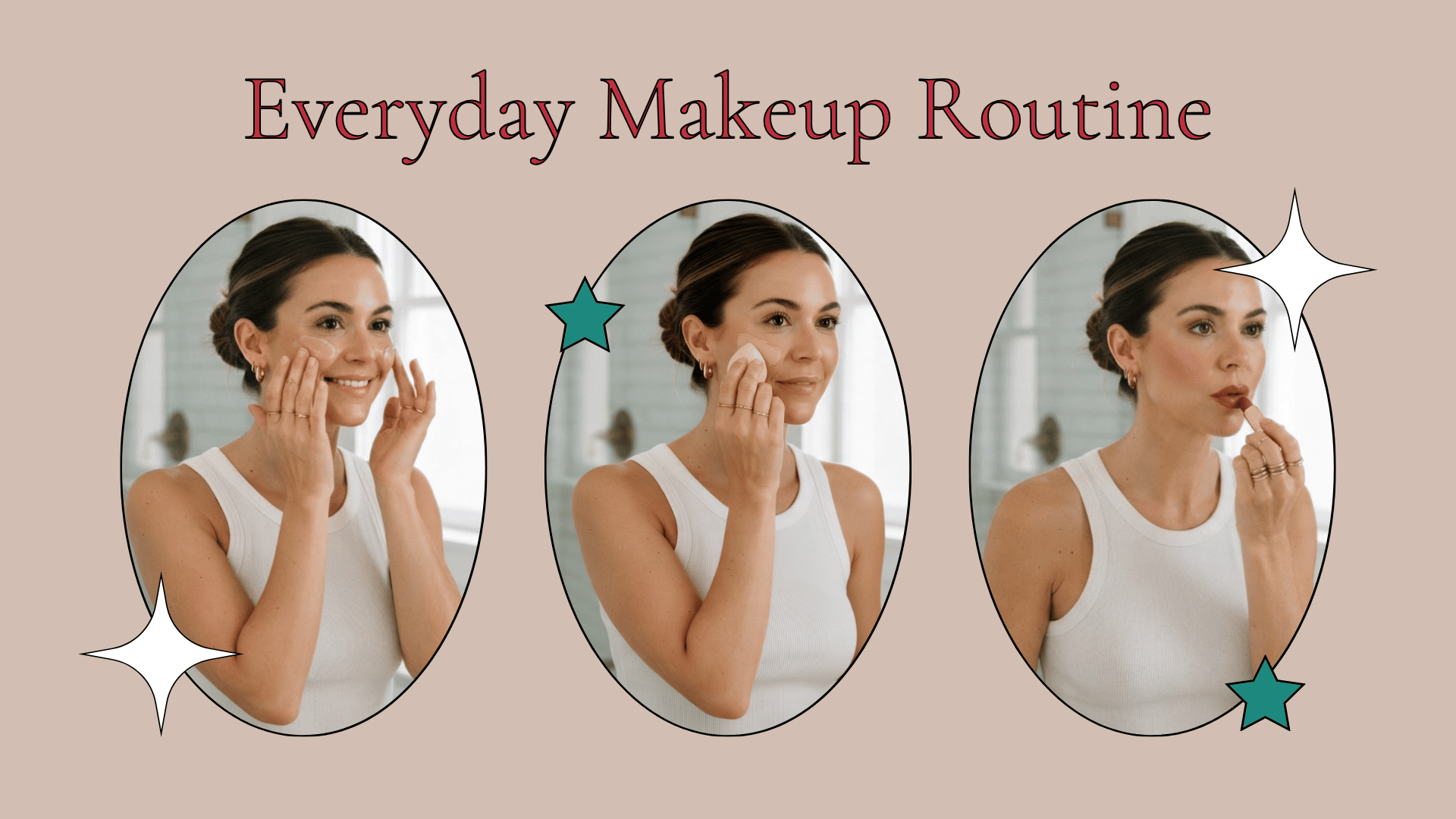
The first time I looked at a full makeup collection, I had no idea what went where. Between primers, concealers, powders, blushes, and countless brushes, even creating a simple look can suddenly feel complicated.
My favorite part of makeup, though, is that it doesn’t have to involve a crowded beauty bag or difficult techniques.
A simple makeup routine can make getting ready feel much more approachable, especially when you are just starting out.
Once the basics feel familiar, you can play with different products, finishes, and colors while slowly finding a look that feels completely your own.
What Do You Need for a Simple Makeup Routine?
You don’t need a large makeup collection to create an everyday look. Start with a few essential products, then add extras as your skills and preferences develop.
- Moisturizer: Prepares the skin and helps makeup apply more smoothly.
- Sunscreen: Protects skin during daytime makeup application.
- Primer: Optional; helps address specific texture or longevity needs.
- Foundation or skin tint: Evens out the complexion with light to medium coverage.
- Concealer: Covers blemishes, dark circles, or areas needing extra coverage.
- Blush: Adds a natural flush and brings color to the cheeks.
- Eyebrow product: Defines sparse areas and shapes the brows.
- Mascara: Adds definition and volume to the lashes.
- Lip product: Adds color and completes the everyday look.
- Setting powder or spray: Optional; helps manage shine or improve makeup wear.
Makeup Routine for Beginners: Step by Step
A simple makeup routine starts with prepared skin, builds an even base, and gradually adds definition. Follow these steps to understand what each product does, how to apply it, and which steps you can skip for a natural everyday look.
1. Prepare Your Skin and Apply Primer

Start with clean, moisturized skin for a smooth makeup base. If your skin becomes shiny quickly, this guide to skincare for oily skin can help you choose suitable products before makeup.
Apply sunscreen during the day, as the American Academy of Dermatology Association recommends using sunscreen before sun exposure and reapplying it as directed for continued protection.
Primer is optional, but it can help with excess shine, visible texture, or makeup longevity. Apply only a small amount where needed, rather than covering your entire face.
2. Apply Foundation or Skin Tint for Even Coverage

Choose a foundation or skin tint that matches your skin tone and desired coverage.
Apply a small amount with clean fingers, a sponge, or a brush, then blend outward in thin layers.
Build coverage gradually to maintain a natural, lightweight everyday finish. For more detailed application techniques, see this guide on how to apply foundation.
3. Add Cream Bronzer and Nose Contour

Apply cream bronzer to the cheekbones, forehead, and jawline to add warmth and definition.
Use a smaller brush to apply a little product along the sides of the nose. Blend carefully so the contour looks soft, not harsh or noticeable.
4. Apply Blush for a Natural Flush

Blush brings color back to the cheeks after applying complexion products. Smile gently and place a small amount on the apples or upper cheeks, depending on your preferred placement, then blend outward.
For more guidance on blush placement and blending, learn how to apply blush for a natural-looking finish.
5. Apply Concealer only on Areas that Need More Coverage

Concealer can cover blemishes, dark circles, or areas where you want extra coverage.
Apply a small amount and gently blend the edges with your finger, sponge, or brush. Use concealer under the eyes and on blemishes, redness, or other areas needing extra coverage. Blend gently without disturbing the foundation.
Tip: Let your foundation do most of the work, then use concealer only where you need extra coverage.
6. Define Your Brows

Brows frame the face and can add definition without requiring a complicated eye look. Use a brow pencil, powder, or gel to fill sparse areas with light, short strokes, then blend with a spoolie.
Tip: Start with less product and follow your natural brow shape rather than drawing a completely new one.
7. Apply Simple Eyeshadow

Choose a neutral eyeshadow shade for an easy everyday look and sweep it across your eyelids.
Add a slightly deeper shade to the crease, then blend the edges with a fluffy brush. Keep the color soft and build gradually to avoid a heavy or uneven finish.
8. Curl Your Lashes and Apply Mascara

Gently curl your lashes at the base and middle to create lift. Apply mascara from the roots to the tips, moving the wand slightly from side to side.
Add another coat if needed, focusing on even coverage and separating the lashes to avoid clumps.
Tip: A soft brown shadow or brown mascara can create a gentle finish.
9. Apply Lip Color

Complete your makeup routine with a lip product that suits your preferred level of color and shine. Tinted balm, gloss, lipstick, or lip liner can all work for an everyday look.
Tip: Start with a comfortable pink, berry, or neutral shade that is easy to apply and reapply without requiring precise techniques.
10. Set Makeup Where Needed

Setting powder can help reduce shine and keep makeup in place, especially around the T-zone. Apply a light layer only where needed, rather than covering the entire face.
Tip: If your base already looks comfortable and balanced, you may not need powder. Setting spray is an optional finishing step.
11. Finish with Setting Spray

Hold the setting spray a few inches away from your face and mist it evenly across your makeup. Let it air-dry without touching your skin.
This final step helps settle the layers together, reduce a powdery appearance, and support a fresh-looking finish throughout the day.
Basic Makeup Tools Beginners Actually Need
- Makeup Sponge: Blends foundation and concealer smoothly.
- Foundation Brush: Applies liquid or cream foundation evenly.
- Blush Brush: Blends blush and bronzer naturally.
- Eyeshadow Brush: Applies and blends eyeshadow.
- Eyelash Curler: Lifts lashes before mascara.
- Powder Brush or Puff: Applies setting powder where needed.
What Reddit Users Say About Minimal Makeup Routines?
In a Reddit discussion about minimalist makeup routines, many users described keeping their everyday look simple rather than using a long list of products.
Common choices included sunscreen, concealer, blush, mascara, brow products, and tinted lip balm or lipstick.
Some preferred multipurpose products, such as using the same blush on the cheeks and eyelids, to cut down on both products and application time. Others kept extra items like eyeliner or foundation only for work events or special occasions.
Overall, the discussion suggests that an everyday makeup routine can still look polished with just a few products chosen around personal needs.
5-Minute Makeup Routine for Beginners

Common Makeup Mistakes Beginners Should Avoid
- Using too many products: Start with essential makeup items and add new products as your skills improve.
- Ignoring product compatibility: Avoid layering products that pill, cause dryness, or create excess oil.
- Forgetting to remove makeup: Cleanse your face before bed to remove makeup, oil, and daily buildup. If you are unsure where to start, follow this guide on how to remove makeup properly to learn a gentle step-by-step routine.
- Using dirty tools: Clean brushes and sponges regularly to prevent product buildup and uneven application.
- Rushing between products: Allow skincare, primer, and cream products to settle before adding the next layer.
- Comparing your makeup to heavily edited looks: Focus on a comfortable, realistic finish rather than perfect-looking results.
Safety note: The U.S. Food and Drug Administration recommends keeping cosmetics clean, washing hands before use, and avoiding shared makeup to reduce contamination risks.
Conclusion
A simple makeup routine does not require a large collection or complicated techniques.
Start with prepared skin, apply products in a comfortable order, and build your look gradually with foundation, blush, brows, mascara, and lip color. You can add optional products like primer, powder, and setting spray as needed.
From my own experience, makeup feels much easier when I focus on a few reliable steps instead of trying everything at once.
With practice, you can create an everyday look that feels natural, comfortable, and confidently yours.
Frequently Asked Questions
How Often Should Beginners Replace Their Makeup Products?
Replace makeup according to its expiration period, smell, texture, and appearance. Discard products sooner if they change or irritate your skin.
Can Beginners Wear Makeup Every Day?
Yes, daily makeup is generally fine when products suit your skin, your tools stay clean, and you remove makeup thoroughly before sleeping.
How Can Beginners Prevent Makeup from Transferring onto Clothes?
Let makeup settle, avoid thick layers, and lightly set areas that rub against clothing, such as the cheeks, jawline, and forehead.
What Should Beginners Do if Makeup Causes Skin Irritation?
Stop using the suspected product, gently remove the makeup, and avoid applying additional products until the irritation settles. Seek medical advice if symptoms persist.
Can Beginners Apply Makeup without Using Every Step?
Yes, you can skip optional products such as primer, eyeshadow, bronzer, or setting spray. Start with the essentials, then add steps as you get more comfortable.