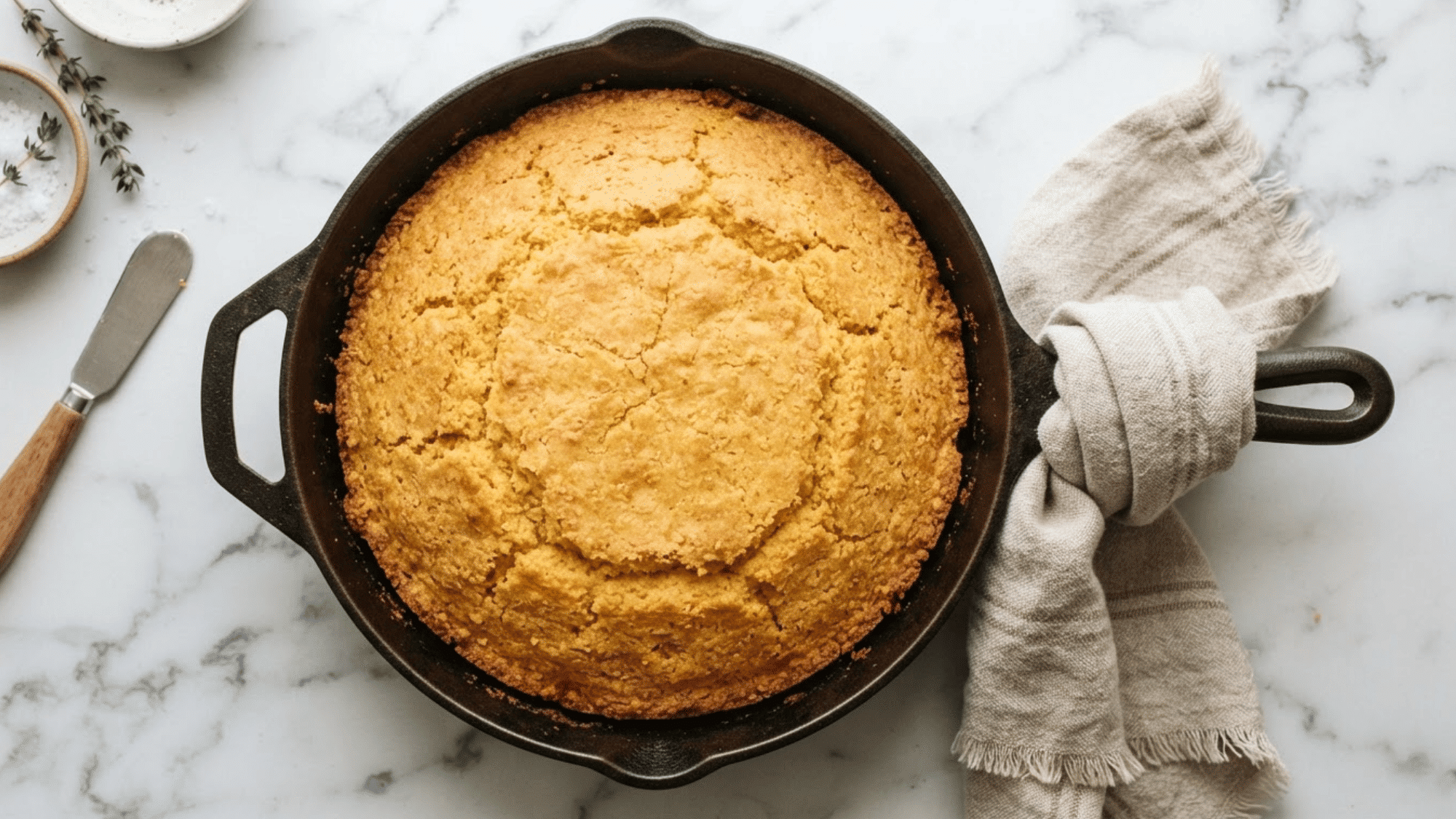
Nothing beats the comfort of warm, homemade cornbread straight from the oven.
I’ve made cornbread many times, and I’ve learned that simple ingredients and a few small techniques can make a big difference.
If you’re learning how to make cornbread, this recipe gives you clear measurements, easy steps, and practical tips for making it moist, tender, flavorful, and crisp around the edges.
The recipe covers mixing the batter, preparing the pan, and baking until golden, plus simple variations like sweet, Southern-style, and skillet cornbread. Serve it warm with butter, chili, soup, or your favorite comfort meal.
Ingredients You’ll Need
- 6 tablespoons unsalted butter, melted
- 1 cup cornmeal
- ¾ cup all-purpose flour
- 1 tablespoon sugar
- 1½ teaspoons baking powder
- ½ teaspoon baking soda
- ¼ teaspoon salt
- 2 large eggs, lightly beaten
- 1½ cups buttermilk
How to Make Cornbread from Scratch
|
Serve: 6-8 | Prep: 15 mins | Cook Time: 20-25 mins Total time: 55 mins |
|---|
Making homemade cornbread is simple when you follow the steps in the right order. Follow these steps to prepare a smooth batter and bake it into moist, tender cornbread with crisp, golden edges.
Step 1: Prepare the Oven and Pan
Preheat your oven to 425°F (220°C). Grease a baking dish or cast-iron skillet with some melted butter. For crispier edges, place the greased skillet in the oven while it preheats.
A hot pan helps the batter begin cooking immediately, creating a golden, crisp crust around the edges.
Step 2: Mix the Dry Ingredients
In a large mixing bowl, combine the cornmeal, all-purpose flour, sugar, baking powder, baking soda, and salt. Whisk everything together until evenly distributed.
Mixing the dry ingredients first helps spread the leavening agents and seasoning throughout the batter, giving the cornbread a consistent texture and balanced flavor.
Step 3: Combine the Wet Ingredients
In a separate bowl, lightly beat the eggs, then whisk in the buttermilk and melted unsalted butter. Let the melted butter cool slightly before adding it.
Combining the wet ingredients separately helps create an even mixture and makes it easier to incorporate them smoothly into the dry ingredients.
Step 4: Make the Cornbread Batter
Pour the wet mixture into the dry ingredients and gently stir until just combined. Avoid overmixing, which can make cornbread dense or tough.
The U.S. Food and Drug Administration (FDA) advises against eating raw flour or eggs, so avoid tasting the batter. The batter should be thick and evenly moistened, with a few small lumps.
Step 5: Bake the Cornbread
Carefully pour the batter into the hot, buttered skillet or prepared baking dish and spread it evenly.
Bake at 425°F (220°C) for about 20–25 minutes, or until the top is golden and a toothpick inserted into the center comes out clean or with a few moist crumbs. Let it cool slightly before slicing and serving.
What to Serve with Cornbread
Cornbread pairs especially well with hearty dishes, soups, and savory comfort foods. Try these easy pairings for a satisfying meal:
- Chili: Serve warm cornbread alongside chicken, turkey, or beef chili.
- Soups and stews: Pair it with minestrone, vegetable soup, or ladle it over a bowl of one-pot swamp soup for a true Southern comfort meal.
- BBQ dishes: Enjoy it with pulled pork, BBQ chicken, or saucy meatballs.
- Salads: Serve cornbread with fresh chopped or warm grain-based salads.
- Roasted meats: Pair it with roasted chicken, turkey, or other savory mains.
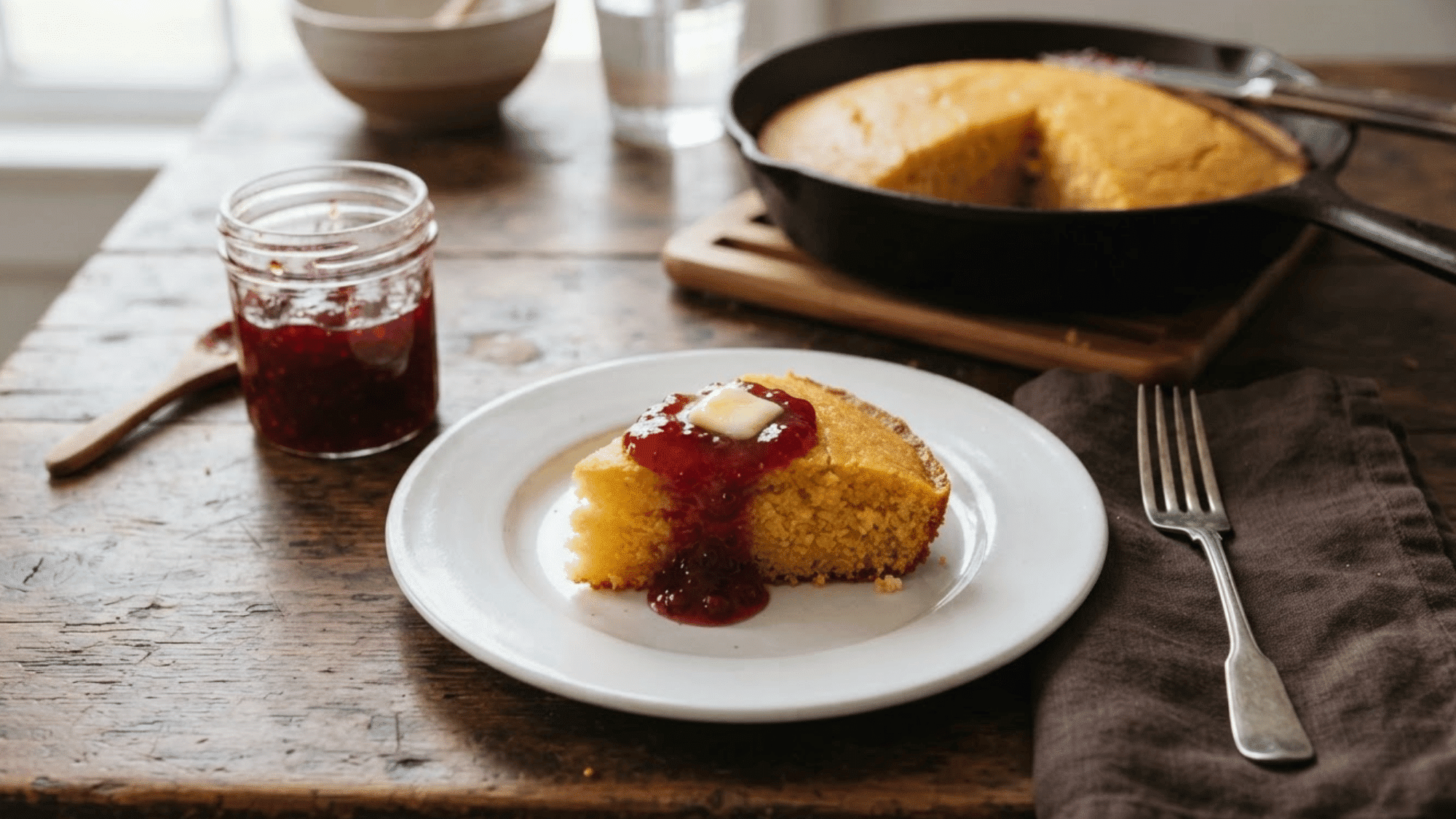
- Jam: Serve cornbread with butter and your favorite fruit jam for a simple sweet-and-savory combination.
Cornbread Variations
From classic Southern cornbread to sweeter and skillet-baked versions, a few simple changes can give the same base recipe a different flavor and texture.
|
Variation |
How to Make It |
|---|---|
|
Southern-Style Cornbread |
Use little or no sugar and keep cornmeal as the main ingredient. |
|
Sweet Cornbread |
Add more sugar for a sweeter, softer flavor. |
|
Skillet Cornbread |
Bake in a preheated cast-iron skillet for crisp, golden edges. |
|
Jalapeño Cheddar Cornbread |
Fold chopped jalapeños and shredded cheddar into the batter. |
How to Store and Reheat Cornbread
Proper storage helps keep leftover cornbread fresh and prevents it from drying out. Use gentle reheating methods to bring back its warmth and moisture without making it tough.
- At room temperature: Cool completely, wrap tightly, and store in an airtight container for up to 3 days.
- In the refrigerator: Wrap cooled cornbread tightly and refrigerate in an airtight container for a few extra days.
- In the freezer: Cool completely before wrapping and placing in a freezer-safe bag or container.
- To reheat: Briefly warm individual pieces in the microwave, or heat larger portions in a covered, oven-safe dish until warmed through.
Why Is My Cornbread Dry or Crumbly?
A few small adjustments can help fix common texture and baking problems. Use these quick solutions when your cornbread doesn’t turn out as expected.
|
Problem |
Likely Cause |
Quick Fix |
|---|---|---|
|
Dry cornbread |
Too long in the oven |
Start checking it near the lower end of the baking time. |
|
Crumbly texture |
Ingredient balance is off |
Measure the cornmeal, flour, and liquid carefully. |
|
Dense cornbread |
Too much stirring |
Mix only until the batter comes together. |
|
Pale edges |
Pan wasn’t hot enough |
Preheat the skillet before adding the batter. |
Conclusion
Learning how to make cornbread from scratch is simple when you have the right balance of ingredients and a few reliable techniques.
I’ve found that using buttermilk, avoiding overmixing, and baking in a properly heated pan helps create the moist texture and crisp, golden edges I enjoy most.
You can also adjust the recipe with sweeter, Southern-style, skillet, or jalapeño cheddar variations to suit your meal. With proper storage and a few troubleshooting tips, leftover cornbread can stay just as enjoyable.
I hope this recipe becomes one you return to whenever you want something warm, homemade, and comforting.
Frequently Asked Questions
Can I Make Cornbread without Buttermilk?
Yes. You can replace buttermilk with regular milk mixed with a little lemon juice or vinegar. Let it sit briefly before using.
Can I Make Cornbread without Eggs?
Yes. Replace each egg with a suitable substitute such as unsweetened applesauce, mashed banana, or a commercial egg replacer.
What Type of Cornmeal Is Best for Cornbread?
Medium-ground cornmeal works well for most cornbread recipes, providing a balanced texture without making the crumb overly coarse or gritty.
Can I Make Cornbread Ahead of Time?
This isn’t directly answered in your current blog and is a natural search query for someone making cornbread for a meal or gathering.
Can I Use Corn Flour Instead of Cornmeal for Cornbread?
Corn flour is more finely ground than cornmeal, so substituting it can produce a softer, finer texture and less of the traditional cornbread crumb.