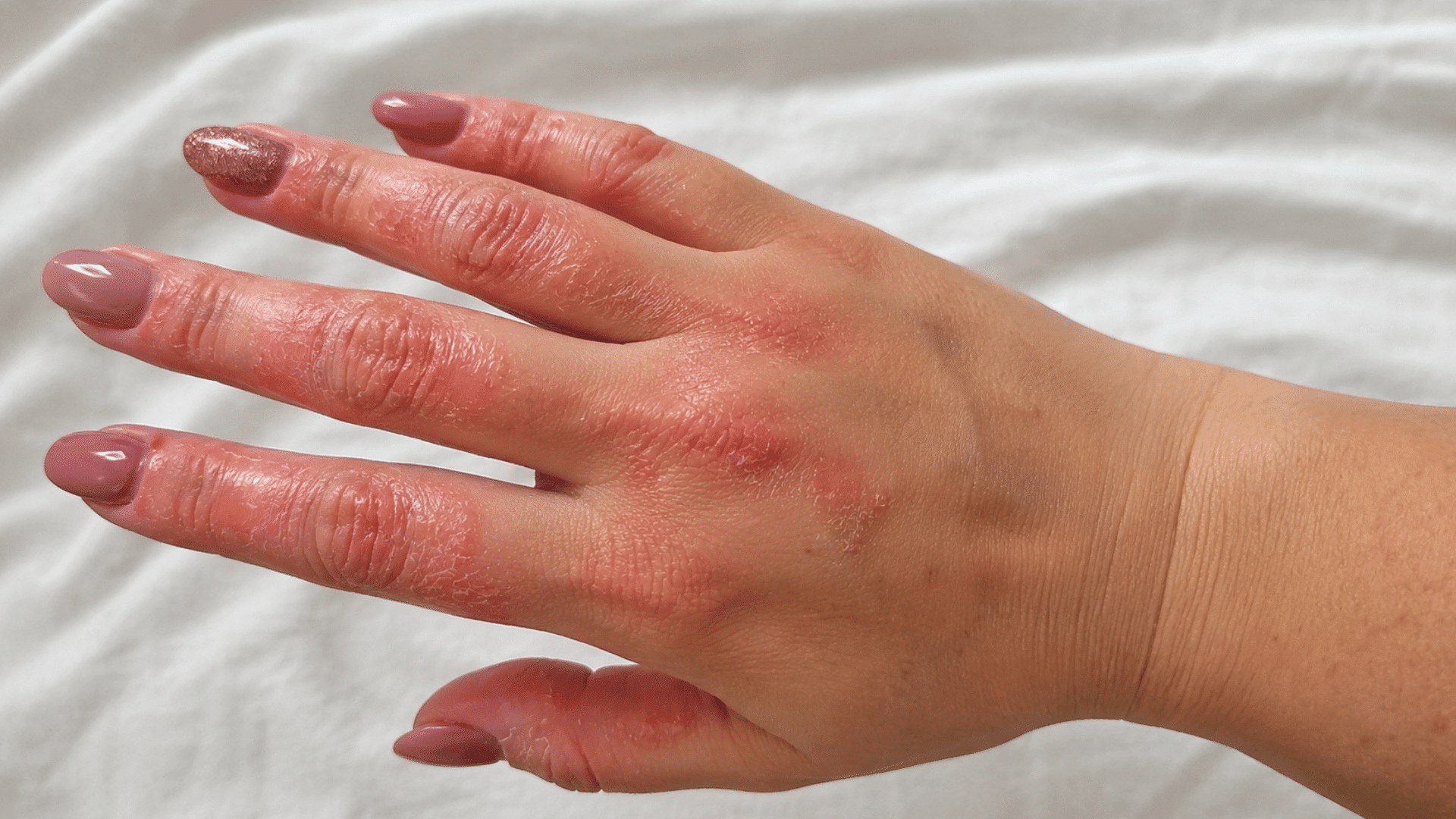
A glossy gel manicure can feel like a small treat until the fingertips start itching or the skin around the nails looks red and irritated.
I would probably question everything from the polish to the lamp if those symptoms appeared after a routine nail appointment.
An allergic reaction to gel polish can sometimes appear after repeated exposure to certain ingredients in gel nail products.
Symptoms may begin around the fingertips but can also show up elsewhere after contact with the hands. Knowing what those early changes mean can make a difference.
At a Glance
|
What Is Gel Nail Polish Made Of?
Gel nail polish is formulated with methacrylate and acrylate compounds, photoinitiators, stabilizers, and pigments that give it durability, flexibility, and color.
Methacrylate compounds, such as HEMA, help form the hardened polymer layer, while photoinitiators activate the curing process under UV or LED light.
Acrylic monomers and oligomers contribute to the polish’s strength and flexibility, while pigments provide its color and stabilizers help maintain its appearance.
When properly cured, these ingredients create the glossy, long-lasting finish associated with gel manicures.
Shellac shares some of the same acrylate chemistry as gel, so if you’re curious how Shellac compares to gel nails, the ingredient list matters more than the brand name on the bottle.
What Is an Allergic Reaction to Gel Polish?
A gel polish allergy happens when the immune system mistakenly identifies certain ingredients in gel nail products as harmful and reacts to them.
This response commonly affects the skin around the nails, fingers, and hands, causing irritation and discomfort.
Unlike temporary irritation, which may improve after removing the product, an allergic reaction can become stronger with repeated exposure.
Once sensitized, the body may trigger symptoms of allergic contact dermatitis, including itching, redness, swelling, and inflammation after future contact.
Common Symptoms of a Gel Nail Allergy
Gel nail allergies can cause skin and nail changes that appear within hours or days of exposure. Recognizing these symptoms early can help you avoid further irritation.
- Itchy skin around the nails: Persistent itching may develop around the cuticles, nail folds, and fingertips shortly after gel polish application or several days later.
- Redness and swelling: The skin around the cuticles, nails, and fingertips may become red, swollen, tender, or warm due to an allergic reaction.
- Dry, cracked, or peeling skin: The skin around the nail beds and fingertips can become dry, flaky, cracked, or sore as the reaction continues.
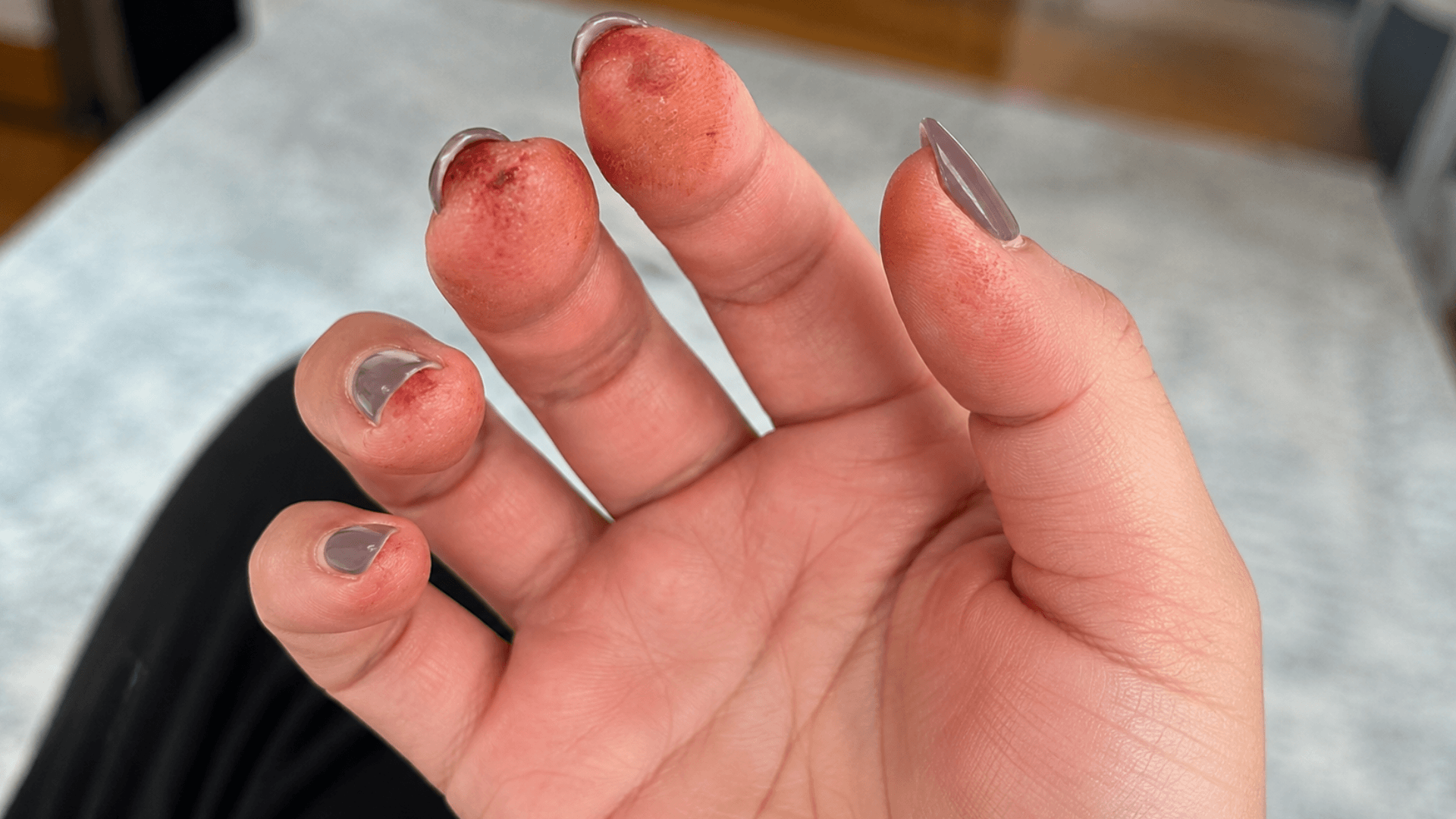
- Blisters and skin irritation: Small blisters, burning sensations, or irritated patches may appear around the fingers and nails, especially with continued exposure.
- Nail lifting and texture changes: Allergic reactions may cause nails to lift, become brittle or thin, or develop ridges and other noticeable texture changes.
- Reactions on the face, eyelids, or neck: Allergens can spread through touch, causing itching, redness, or swelling on areas such as the face, eyelids, and neck.
How Does a Gel Nail Allergy Develop?
A gel nail allergy usually develops in stages as the body becomes sensitive to certain ingredients over time.
During repeated exposure, small amounts of reactive chemicals from gel products may trigger the immune system to recognize them as harmful.
After sensitization occurs, future contact can lead to allergic contact dermatitis, causing symptoms like itching, redness, and swelling.
This is why someone may use gel polish several times without problems before suddenly developing a reaction. The timing and severity of symptoms can vary depending on the level of exposure and individual sensitivity.
What Causes an Allergic Reaction to Gel Polish?
Several factors can contribute to a gel polish allergy, from the ingredients used in the formula to how the product is applied and cured.
A clinical review from Amsterdam University Medical Centers identifies HEMA as a major cause of contact allergy and allergic contact dermatitis, with many reported cases linked to nail cosmetics.
1. Exposure to Acrylates and Methacrylates
Acrylates and methacrylates are common ingredients in gel nail products and are among the main substances associated with allergic reactions. They help the polish form a durable coating and adhere to the nail.
Sensitized individuals may develop allergic contact dermatitis after exposure to these compounds.
2. Contact with Uncured Gel Polish
Uncured gel polish contains reactive chemicals that can trigger sensitization when they contact the skin.
Accidentally touching wet gel during application or allowing it to spread onto the cuticles and fingertips increases direct exposure and may raise the risk of developing an allergic reaction.
3. Incomplete or Incorrect Curing
Gel polish needs the appropriate lamp and curing time to harden properly. If the product is under-cured, some reactive ingredients may remain in the coating.
Using an unsuitable lamp, incorrect curing time, or an overly thick layer can contribute to incomplete curing and greater exposure.
4. Gel Polish Touching the Surrounding Skin
Gel polish should stay on the nail, not the surrounding skin. When the product touches the cuticles, nail folds, or fingertips, the skin is exposed to ingredients that can cause sensitization.
Frequent skin contact during application may increase the chance of developing a reaction over time.
5. Repeated Gel Manicures
Regular exposure to gel nail products may increase the opportunity for sensitization, particularly when the skin repeatedly comes into contact with reactive ingredients.
Someone who has tolerated gel polish in the past can still develop an allergy after repeated applications, as sensitivity may develop after multiple exposures.
6. Improper Application Techniques
Application mistakes can increase skin exposure to gel polish and its reactive ingredients.
Applying layers too close to the cuticles, letting products pool around the nail edges, or failing to remove accidental skin contact before curing can increase repeated exposure and allergy risk.
Gel Polish Allergy vs Nail Irritation: What’s the Difference?
A gel polish allergy and nail irritation can feel similar, but they happen for different reasons. An allergy involves an immune response, while irritation usually comes from direct damage, harsh products, or nail techniques.
| Gel Polish Allergy | Nail Irritation |
|---|---|
| Caused by an immune reaction to ingredients. | Caused by harsh products or over-filing. |
| May cause itching, swelling, redness, or blisters. | Often causes dryness, soreness, or mild discomfort. |
| Symptoms may appear after repeated exposure. | Symptoms often appear soon after damage or exposure. |
| You may need medical advice or allergy testing. | Often improves with proper nail care. |
How to Treat an Allergic Reaction to Gel Polish?
Once you suspect an allergic reaction, the goal is simple: stop the exposure and calm the skin while it heals.
- Remove the polish: Have a technician soak it off or do it gently at home, since leaving the allergen on your nails keeps the reaction going.
- Wash and cool the area: Rinse hands with mild soap and cool water, then apply a cool compress to ease itching, swelling, and burning.
- Try an over-the-counter antihistamine: An oral antihistamine may help calm itching, and a low-strength hydrocortisone cream can soothe inflamed skin for some people.
- Avoid scratching and occlusive gloves: Scratching can break the skin and invite infection, and tight gloves can trap moisture against irritated skin.
- Watch for signs you need more than home care: Spreading rashes, oozing, pus, or swelling that reaches your face or throat call for prompt medical attention.
Disclaimer: Seek medical advice if gel polish allergy symptoms are severe, persistent or if irritation spreads beyond the nails to the face or other areas, along with painful swelling, or signs of infection, such as warmth or pus.
Can You Use Gel Polish Again After an Allergic Reaction?
Knowing if you can use gel polish again after an allergic reaction depends on the cause and severity of your sensitivity.
If a specific ingredient triggers a reaction, avoid that allergen because future exposure may bring symptoms back.
Some people may react again even after changing products, especially when similar ingredients are present. Before trying gel alternatives, consult a dermatologist for advice and possible allergy testing.
Identifying the trigger can help you choose safer nail care options and reduce the chance of another reaction.
If gel no longer feels worth the risk, look at other nail types at the salon to find a style that doesn’t rely on the same chemistry.
How to Reduce the Risk of Gel Nail Allergy
Simple precautions can help reduce exposure to potential allergens and protect the skin around your nails.
- Choose reputable, professional-grade gel nail products.
- Look for HEMA-free gel polish formulas.
- Keep gel polish away from the skin and cuticles.
- Consider dermatologist patch testing if you suspect allergens.
- Avoid using gel products on irritated or damaged skin.
- Make sure gel polish is cured correctly under the recommended lamp.
- Stop using the product if redness, itching, swelling, or blisters appear.
Conclusion
A gel nail allergy can cause uncomfortable symptoms, from itching and redness to swelling, peeling skin, and nail changes.
Understanding the causes, signs, and development of an allergic reaction to gel polish can help you recognize issues early and take steps to protect your skin.
Avoiding known triggers, using safe nail care practices, and seeking professional advice when needed can support healthier choices.
Your beauty routine should feel enjoyable and comfortable, so paying attention to how your skin responds can help you continue caring for yourself with confidence.
Frequently Asked Questions
How Long Does an Allergic Reaction to Gel Polish Last?
An allergic reaction to gel polish may last a few days to several weeks, depending on severity and exposure. Symptoms often improve after avoiding the trigger, but nail recovery can take longer.
Are Gel Nail Allergies Permanent?
A gel nail allergy may continue after sensitization, so avoiding the triggering ingredients is important to reduce the chance of future reactions.
Can You Be Allergic to Gel Polish but Not Regular Nail Polish?
Yes, gel polish allergies are often linked to specific ingredients like acrylates and methacrylates, which may not be present in traditional nail polishes.
Can a Gel Nail Allergy Happen Even with High-Quality Products?
Yes, a reaction can occur even with high-quality gel products because allergies depend on individual sensitivity to certain ingredients, not only product quality.
Does Removing Gel Polish Stop an Allergic Reaction Immediately?
Removing gel polish can reduce further exposure, but symptoms may take time to improve depending on the severity of the reaction and skin recovery.