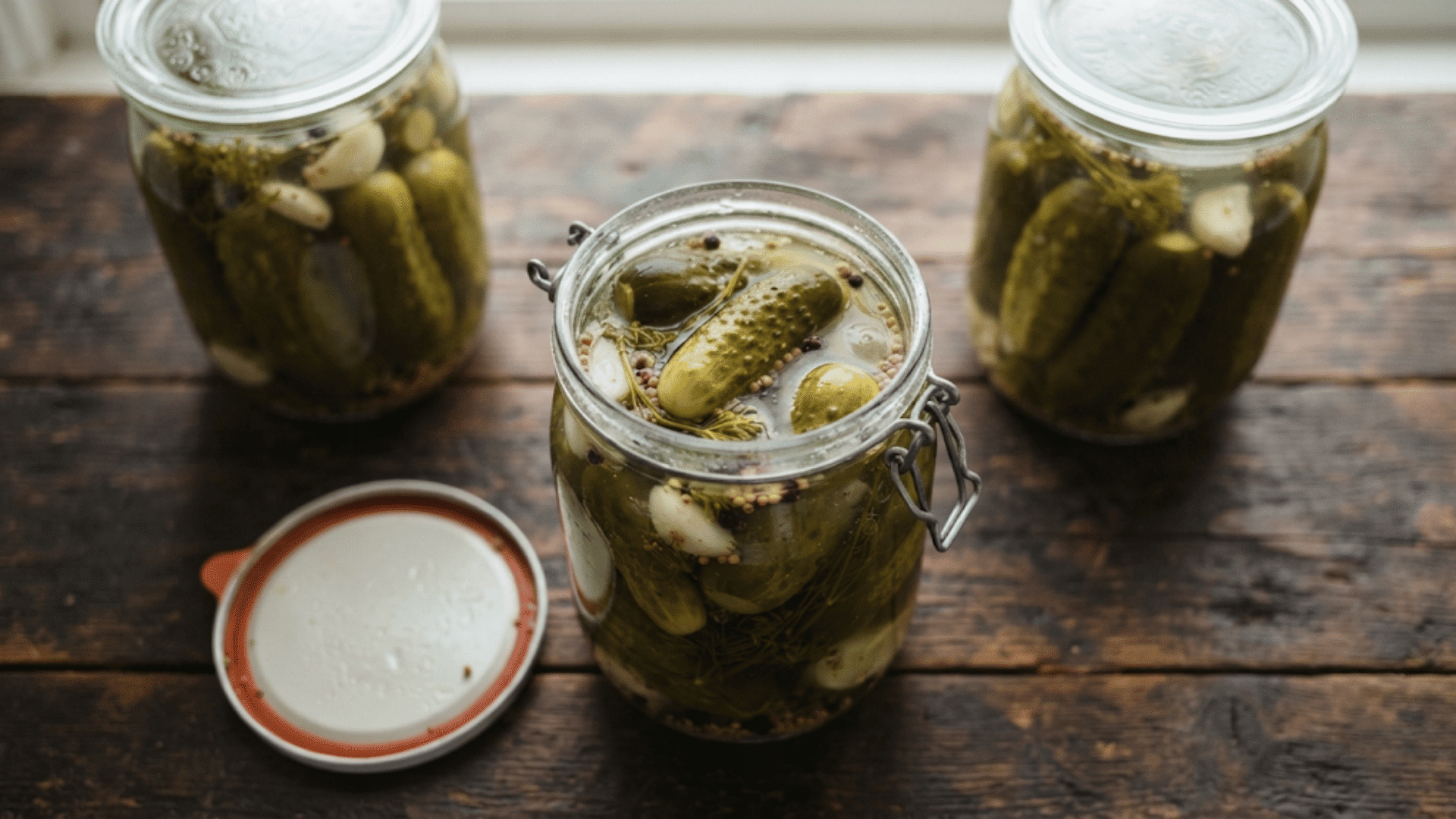
A good dill pickle recipe should taste crisp, tangy, and full of garlic and dill, not soft or overly salty, and the right cucumber-to-brine ratio makes all the difference.
As a registered dietitian who packs lunchboxes for her own picky eaters, I’ve found that homemade pickles are one of the easiest wins for stretching a grocery budget while still feeling like a treat.
You have two options: quick refrigerator pickles ready in a day or shelf-stable canned pickles that last for months.
Both methods, the best cucumbers, crunch tips, and canning safety basics.
Whichever method fits your kitchen and your schedule, you’ll end up with pickles that taste better than anything from a jar at the store.
Jump to Recipe
Refrigerator or Canned: Which Dill Pickle Method Fits You?
Both methods start the same way, with fresh cucumbers, garlic, dill, and a vinegar brine. The difference is what happens after you pack the jars.
| Factor | Refrigerator Pickles | Canned (Shelf-Stable) Pickles |
|---|---|---|
| Ready to eat | About 24 hours | Same day, but best after a few weeks |
| Storage | Refrigerator only | Pantry, unopened, until you’re ready to eat them |
| How long they last | Several weeks chilled | Up to a year unopened; refrigerate after opening |
| Effort | Low, no special equipment | More steps, requires a water bath canner |
Ingredients for Dill Pickle Recipe
These quantities work well for about 2 quart jars of homemade dill pickles.
- 2 pounds pickling cucumbers
- 6 to 8 sprigs fresh dill
- 4 peeled garlic cloves
- 2 cups white vinegar
- 2 cups water
- 2 tablespoons pickling or kosher salt
- 2 tablespoons sugar
- 2 teaspoons black peppercorns
- 2 teaspoons mustard seeds
- ½ teaspoon red pepper flakes (optional)
How to Make Refrigerator Dill Pickles?
| Serve: 4 to 6 | Prep: 15 mins | Cook Time: 5 mins | Chill: 24 hours |
Total time: 24 hours 20 minutes |
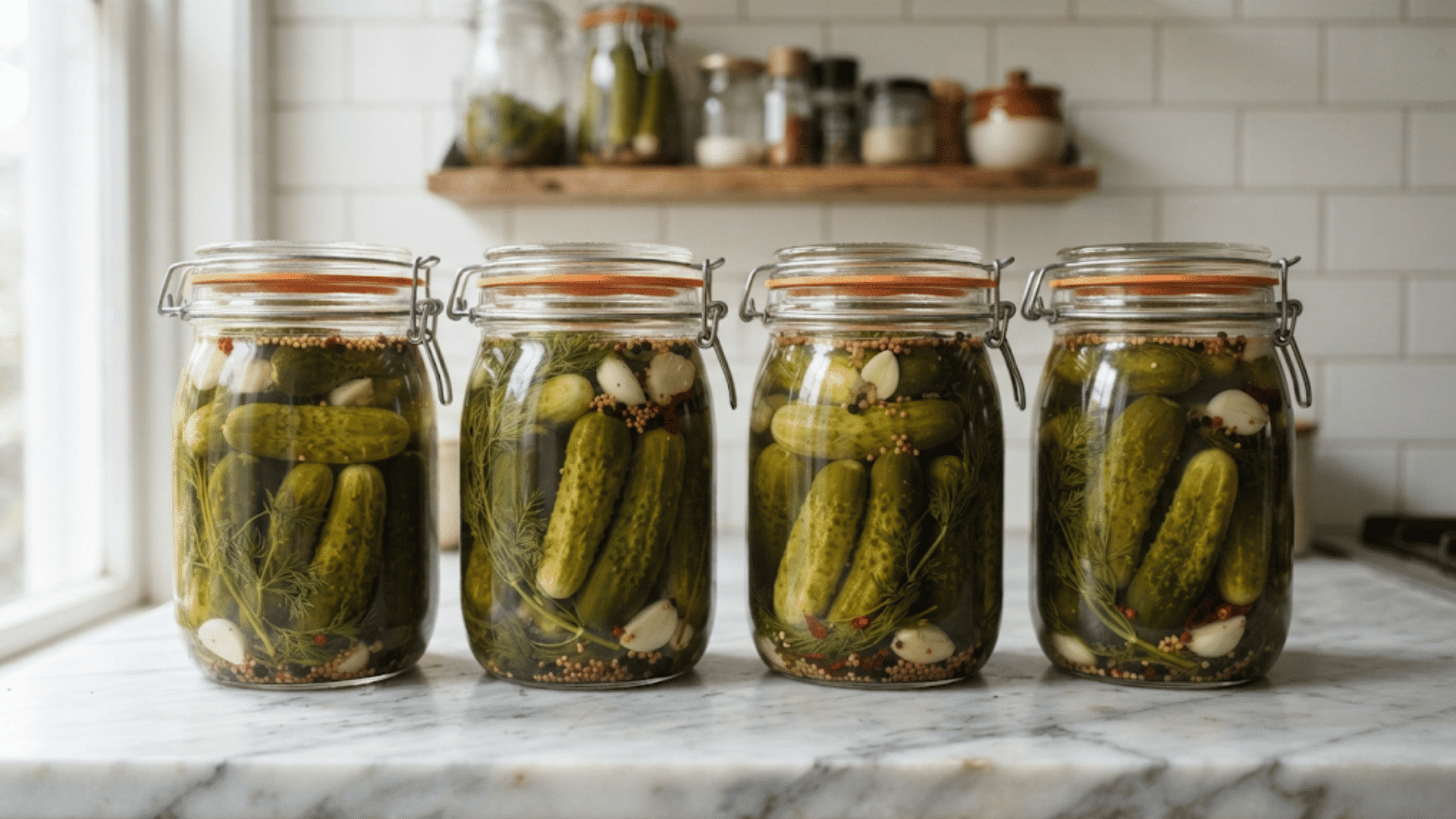
Making homemade dill pickles comes down to preparing fresh cucumbers, mixing a balanced vinegar brine, packing the jars, and letting them sit long enough in the refrigerator.
Step 1. Wash and Prepare the Cucumbers
Wash the cucumbers thoroughly under cool running water and pat them dry.
Trim a small piece from both ends, paying close attention to the blossom end since removing it can help the cucumbers stay firm.
Leave small cucumbers whole or cut larger ones into spears, halves, or round slices.
Tip: Choose small, firm pickling cucumbers with smooth skin and no soft spots. Kirby or other pickling cucumbers work well because they have fewer seeds and a dense texture.
Step 2. Prepare the Pickle Brine
Add white vinegar, water, pickling salt, and sugar to a small saucepan. Warm the mixture over medium heat and stir until the salt and sugar dissolve.
Remove the saucepan from the heat and allow the brine to cool slightly before pouring it into jars with the cucumbers.
Step 3. Pack Cucumbers Into Clean Jars
Place fresh dill, peeled garlic cloves, mustard seeds, and black peppercorns at the bottom of each clean jar.
Arrange the prepared cucumbers inside without pressing them together too tightly. Leave enough space near the top so the brine can flow around the cucumbers and spices.
Step 4. Pour Brine Over the Cucumbers
Slowly pour the prepared brine into each jar until the cucumbers are completely covered. Gently tap the jar against the counter to release trapped air bubbles.
Add more brine as needed, then wipe the jar rims clean and close each jar tightly with a lid.
Tip: Make sure every piece of cucumber stays submerged in the brine for even flavor and texture.
Step 5. Chill the Dill Pickles
Allow the filled jars to cool before placing them in the refrigerator. Let the pickles chill for at least 24 hours before tasting them.
Waiting two to three days gives the cucumbers more time to absorb the dill, garlic, vinegar, and spices, resulting in a stronger pickle flavor.
How to Can Dill Pickles for the Pantry?
Canning turns this dill pickle recipe into pantry stock that lasts through the year. The extra steps below are what make the jars safe to store at room temperature.
- Sterilize your jars: Wash wide-mouth pint or quart jars, lids, and rings, then keep them hot in simmering water until you’re ready to fill them.
- Prepare the cucumbers: Wash and trim the blossom end, just as with the fridge method above.
- Make the brine: Use vinegar with at least 5% acidity, since a weaker vinegar may not bring the jars to a safe acidity level. Bring the vinegar, water, and salt to a boil.
- Pack the jars: Add dill, garlic, and spices to the bottom, then pack in the cucumbers, leaving about ¼ inch of headspace.
- Pour in the hot brine: remove air bubbles, wipe the rims, and apply the lids.
- Process in a boiling water bath: Most tested USDA recipes call for processing pint jars for around 10 minutes and quart jars for around 15 minutes, adding time if you’re above 1,000 feet in elevation (its always better to double-check the processing chart on the specific recipe you’re using).
- Check the seal: Once the jars cool, the lid should curve down and not flex when pressed. Any jar that doesn’t seal should go in the fridge and get eaten first, rather than stored on the shelf.
Always follow a current, tested recipe, such as one from the USDA’s National Center for Home Food Preservation, and check with your county extension office if you have questions about canning safety.
Dill Pickle Recipe Flavor Variations
Try these simple additions and changes to create different flavors while keeping the same homemade pickle base.
| Variation | Quick Addition |
|---|---|
| Garlic Dill Pickles | Add extra garlic cloves for a stronger savory flavor. |
| Spicy Dill Pickles | Include sliced jalapeños or red pepper flakes for heat. |
| Sweet Dill Pickles | Add a little extra sugar to the brine for a mild sweet taste. |
| Lemon Dill Pickles | Add lemon slices for a fresh citrus note. |
| Herb Pickles | Mix in parsley, thyme, or extra dill for more herbal flavor. |
| Pepper Dill Pickles | Add crushed black peppercorns for a bold bite. |
Ways to Serve Dill Pickles
Dill pickles add a crunchy, tangy bite to many everyday meals and snacks.
- With Burgers and Sandwiches
- As a Snack
- On Appetizer Boards
- With Grilled Foods
- With Salads: Chopped dill pickles can add crunch and acidity to many summer salad recipes, especially potato, pasta, and creamy cucumber salads.
Wrapping Up
Making homemade dill pickles is a simple way to enjoy crisp cucumbers with fresh dill, garlic, and a balanced brine.
This recipe covers the key steps, from choosing the right cucumbers to preparing the jars and properly storing the finished pickles.
The tips for texture, flavor variations, and serving ideas help you create a batch that suits your taste.
With a little preparation and patience, homemade dill pickles can become a favorite addition to meals and snacks.
Try this dill pickle recipe at home, share your results with others, and enjoy the fresh flavor of pickles made in your own kitchen. Let us know which variation you liked most after making your batch.
Frequently Asked Questions
Can I Use Apple Cider Vinegar for Dill Pickles?
Yes, apple cider vinegar can work if it has 5% acidity. It gives the pickles a slightly sweeter, fruitier taste than plain white vinegar.
Can I Use Dried Dill Instead of Fresh Dill?
Yes, dried dill can replace fresh dill when needed. Use a smaller amount because dried herbs have a more concentrated flavor than fresh dill sprigs.
Can I Reuse Dill Pickle Brine?
Reusing brine for another fresh batch is not recommended because the acidity and salt balance may change. Leftover brine works better in dressings or marinades.
What Type of Vinegar Works Best?
White vinegar is a popular choice because it has a clean, sharp taste and clear appearance. Use vinegar labeled with at least 5% acidity.
Can I Make Pickles in Plastic Containers?
Glass jars are a better choice because vinegar can react with some materials over time. Food-safe plastic can work, but glass is preferred.
Why Do Homemade Pickles Taste Bitter?
Bitterness may come from older cucumbers, too much peel near the stem end, or certain spices. Fresh cucumbers and balanced seasoning usually give better results.