That musty towel smell can stick around even after a full wash, which makes freshly cleaned towels feel anything but fresh.
If you keep noticing the same odor, the cause may be trapped moisture, detergent buildup, or towels sitting damp for too long. I know how frustrating it is when regular washing does not fix the problem.
Learning how to remove mildew smell from towels can save you from replacing towels that still have plenty of life left.
Why Towels Develop a Mildew Smell?
Towels develop a mildew smell when moisture stays trapped in the fabric long enough for bacteria and mildew to grow.
Poor airflow, humid bathrooms, detergent buildup, excess fabric softener, and a dirty washing machine can also contribute to musty odors. Hanging towels to dry fully after each use can help prevent the smell from returning
Thick towels can hold moisture deep within the fibers, especially when they are folded or piled up while still damp.
Leaving wet towels in the washer or laundry basket for too long can also make musty smells more likely.
Persistent bathroom moisture can also come from plumbing problems, so learning how to replace a shower cartridge may help if a leaking shower keeps the area damp.
What You Need Before Washing?
Gather the right supplies before starting so you can treat the odor without interrupting the wash cycle.
- White distilled vinegar
- Baking soda
- Laundry detergent
- Oxygen bleach
- Borax
- Washing machine
- Drying space
How to Remove Mildew Smell from Towels?
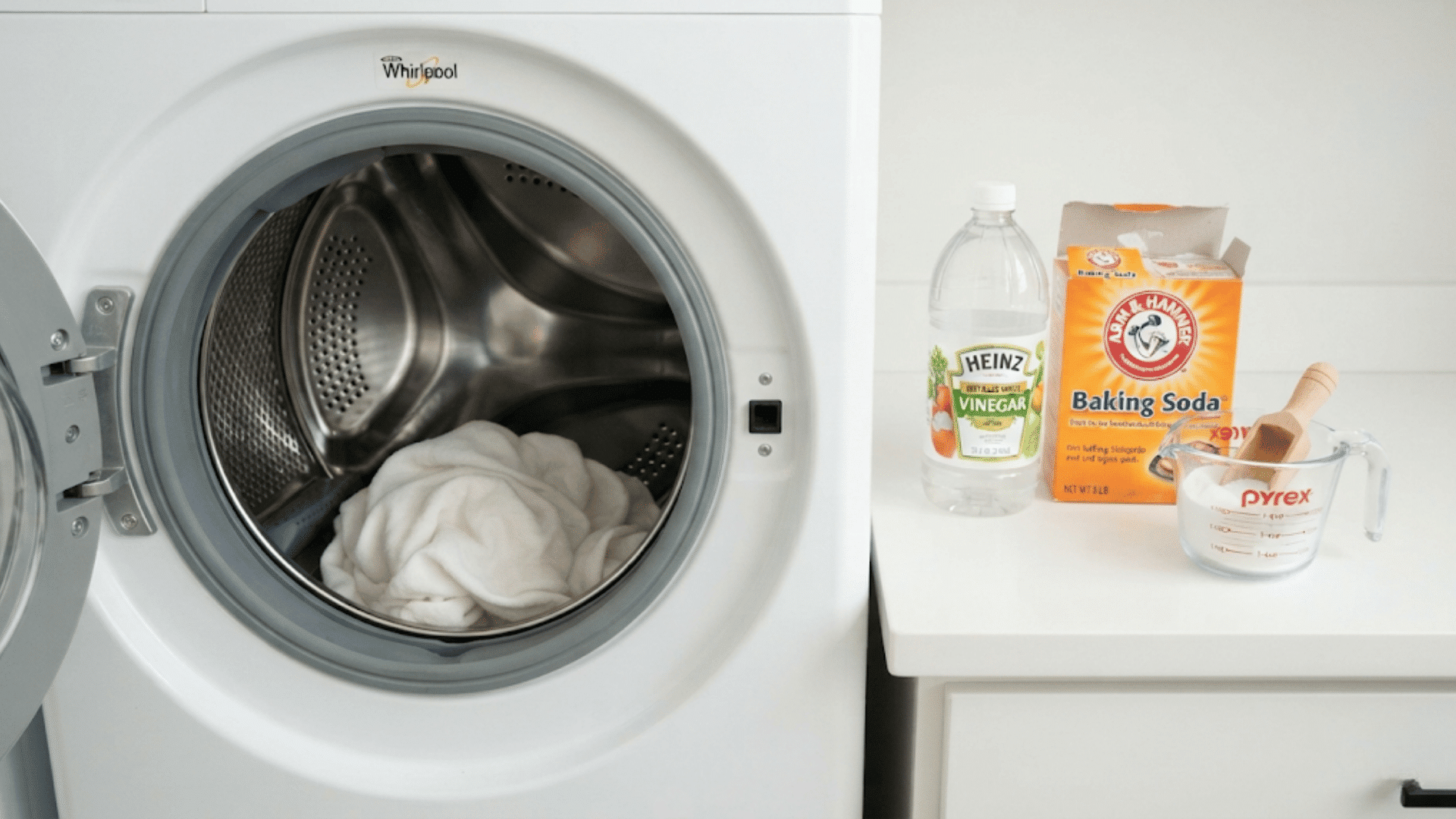
Removing a musty odor works best when you treat residue, wash the towels in separate cycles, and dry them fully before storing them.
1. Wash Towels with White Vinegar
Start by placing the affected towels loosely inside the washing machine so water can move through the fabric.
Add about one cup of white distilled vinegar to the washer and skip regular detergent for this cycle.
Choose the warmest water setting allowed on the towel care label. Vinegar helps break down detergent residue, body oils, and odor left inside the fibers.
Avoid pouring fabric softener into the load because it can leave another coating behind. Once the cycle finishes, leave the towels in the machine for the next washing step.
2. Run a Baking Soda Cycle
After the vinegar wash, run a second cycle with about half a cup of baking soda. Do not add vinegar during this wash.
Baking soda can help neutralize odors that remain after the first cycle and may also loosen residue still sitting within the towel fibers.
Use the same fabric-safe water temperature unless the care label says otherwise. Skip fabric softener again.
Separating vinegar and baking soda into different cycles gives each ingredient time to work on the towels rather than mixing them together before they reach the fabric.
3. Wash with Detergent if Needed
If the towels still feel oily or have visible dirt after the first two cycles, wash them once more with a small amount of regular laundry detergent.
More detergent does not mean cleaner towels, and excess soap can remain trapped in thick fabric. Follow the amount listed for your washer and load size. Choose an extra rinse setting when available to remove leftover soap.
Avoid adding fabric softener because the coating it leaves behind can reduce absorbency and trap residue.
This step is most useful for heavily used bath towels or towels that haven’t been washed thoroughly in a while.
4. Dry the Towels Completely
Move the towels out of the washer as soon as the final cycle ends. Leaving wet laundry inside the drum gives moisture more time to sit in the fabric, which can bring the musty odor back.
Dry the towels in a dryer on a setting approved by the care label, or hang them outdoors where air can pass around each towel. Make sure every part feels dry before folding.
Thick seams and edges may stay damp longer than the rest of the towel, so check those areas before putting anything away.
5. Check for Any Remaining Odor
Smell the towels only after they are completely dry, since damp fabric can make it harder to judge whether the treatment worked.
If a mild odor remains, repeat the vinegar and baking soda cycles rather than covering the smell with fragrance products.
Towels with persistent odor may need an oxygen bleach soak if the fabric care instructions allow it. Check for visible mold spots, worn fibers, or stains that remain after washing.
When repeated washing fails to remove the odor, replacing the towel may be more practical than continuing to wash it.
Ways to Remove Stubborn Odors
If the musty smell remains after regular washing, a stronger cleaning method may help treat residue deeper in the fabric.
- Soak with Oxygen Bleach: Follow the product label and towel care instructions, then wash the towels normally after soaking.
- Use Borax in The Wash: Add the recommended amount of Borax to the washer to help lift stubborn odor and residue from the fibers.
- Run an Extra Rinse Cycle: A second rinse can remove soap, minerals, and cleaning product residue that may hold unwanted smells.
- Clean the Washing Machine: Wipe the seal, detergent drawer, and drum if clean towels keep coming out with the same musty odor.
When to Replace Musty Towels?
Not every musty towel needs to be thrown away. However, if the same odor keeps coming back after proper washing and complete drying, the towel may be nearing the end of its useful life.
Use these signs to decide whether replacement makes sense:
| What You Notice | What to Consider |
|---|---|
| Musty odor returns quickly | Washing may no longer be enough to keep the towel fresh |
| Dark or persistent spots | Stains or mildew-related marks may be difficult to remove |
| Rough or stiff texture | Buildup or worn fibers may be affecting the fabric |
| Poor absorbency | The towel may no longer dry you effectively |
| Frayed edges or thinning areas | The fabric is showing clear signs of wear |
| Slow drying | Remaining damp for longer can encourage musty odors |
Before replacing a towel, wash, rinse, and dry it thoroughly. If the musty smell still returns after using vinegar or baking soda, it may be time for a new one.
How to Prevent Mildew Smell?
A few simple laundry and drying habits can keep towels smelling fresh and stop moisture from sitting in the fabric.
- Hang towels after every use
- Wash towels on a regular schedule
- Use the right amount of detergent
- Skip fabric softener often
- Keep the washer clean
- Dry towels completely before folding
- Avoid leaving wet towels in the washer
- Make sure towels have enough airflow while drying
Conclusion
No one wants to step out of the shower and reach for a towel that smells musty. Keeping towels fresh requires proper washing, less detergent and fabric softener, plus making sure they dry fully after every use.
If the odor has already settled in, vinegar and baking soda used in separate wash cycles can help tackle lingering smells and buildup.
We can also prevent the problem from returning by keeping the washer clean and giving damp towels plenty of airflow.
Have you dealt with stubborn mildew smells in your towels? Share what worked for you in the comments below.
Frequently Asked Questions
Can Hard Water Make Towels Smell Musty?
Yes. Hard water minerals can build up in towel fibers, trap detergent residue, reduce rinsing, and make unpleasant smells harder to remove over time.
Should I Wash Musty Towels Separately?
Washing musty towels separately can be helpful because it gives them more room to rinse properly and prevents unpleasant odors from transferring to other laundry.
Can Towels Smell Musty without Visible Mold?
Yes. Towels may develop a musty odor before visible mold appears, especially when moisture, body oils, and soap residue remain trapped inside the fibers.
Does Towel Material Affect Mildew Smell?
Yes. Thick cotton towels often hold moisture longer than lighter fabrics, so drying time, airflow, and washing habits can affect how quickly odors develop.