Rooms with large windows can create beautiful living spaces, but they also present unique challenges when it comes to maintaining comfort. Sunlight streaming through windows can cause significant temperature swings throughout the day, making mornings or afternoons uncomfortably warm. Glare and hot spots can affect daily activities, from reading to working at a desk, while furniture placement may amplify heat buildup near window areas. Traditional HVAC systems often struggle to respond quickly to these changes, leaving occupants frustrated with inconsistent temperatures. A 3 zone mini split provides targeted control in these spaces, and a mini split AC unit designed for zoning allows homeowners to maintain consistent comfort without overcooling other parts of the home.
The Impact of Sunlight on Indoor Comfort
Large windows can make a room feel bright and open, but they also let in substantial solar heat. Morning sun can warm east-facing rooms quickly, while west-facing areas may become overheated in the late afternoon. Furniture, such as sofas or desks near windows, can create localized hot spots, making some areas uncomfortable even if the room overall feels cooler. A system that can respond to these variations is critical for maintaining usable living space without running the central HVAC at full capacity.
How Zoned Mini Split Systems Adapt to Bright Rooms
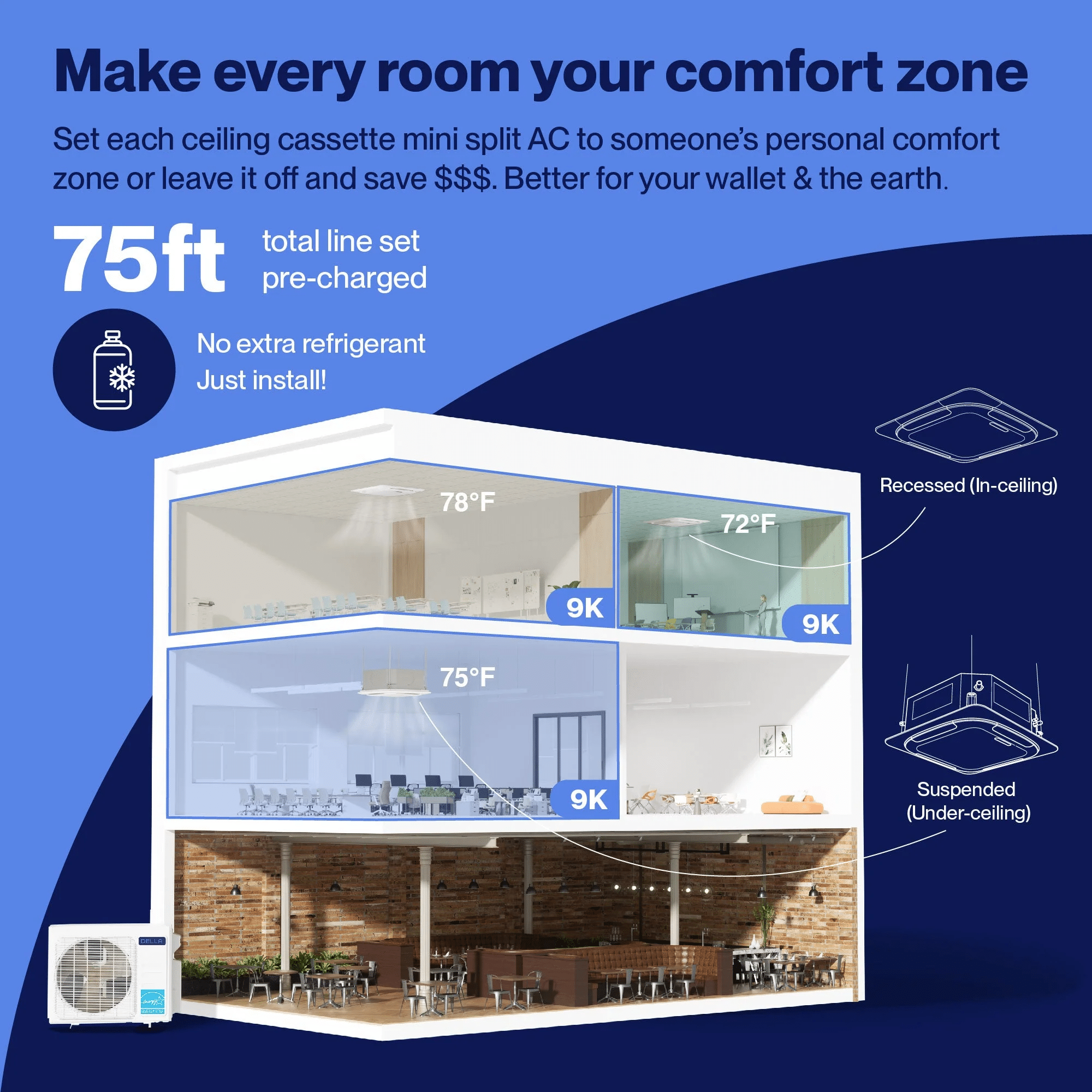
A 3 zone mini split adjusts dynamically to these temperature differences. Each indoor unit operates independently, allowing homeowners to cool sun-exposed areas while keeping the rest of the house at a comfortable baseline. With programmable schedules and smart controls, the system can anticipate peak sunlight hours, ensuring the room is pleasant when occupied. By focusing cooling where it is needed most, a mini split AC unit reduces energy waste and maintains quiet operation, even in spaces where sunlight causes rapid temperature changes.
Energy and Cost Benefits Specific to Window-Heavy Spaces
Targeted zoning offers clear energy advantages. Instead of overcooling the entire home to compensate for sunlit rooms, homeowners can direct power only to the affected zones, lowering electricity usage and utility costs. Seasonal adjustments are also easier; during summer, east and west-facing rooms can be scheduled differently, while during winter, sun-facing rooms may require less heating. By reducing unnecessary strain on the system, a zoned mini split also extends the life of both indoor units and the outdoor condenser, making it a cost-effective solution for window-heavy spaces.
Enhancing Indoor Comfort Beyond Temperature
Maintaining comfort in rooms with large windows goes beyond just adjusting temperature. Combining the mini split airflow with window treatments, such as blinds or thermal curtains, can reduce glare and prevent heat accumulation. Proper humidity control and air movement enhance the overall environment, preventing stale air and maintaining a pleasant feel. Smart thermostat settings can further refine comfort by gradually adjusting cooling based on occupancy, sunlight intensity, or time of day, ensuring a consistent experience.
Designing the Ideal Layout for Efficiency and Well-Being
The placement of indoor units is critical in rooms with large windows. Units should be positioned to distribute air evenly across the zone without blowing directly on furniture or occupants. Integrating natural ventilation with zoned mini split control can also improve efficiency and indoor air quality. By considering unit placement, airflow patterns, and interaction with sunlight, homeowners can achieve a consistently comfortable environment all year, highlighting why investing in a 3 zone mini split or a mini split AC unit is highly beneficial for these unique spaces.