The instinct that makes you reach for a dusty rose blouse over a grey one, or hang a botanical print above your sofa instead of something abstract, comes from the same place. It’s a visual sense – a quietly developed eye for color, proportion, and mood. Most of us assume we either have it or we don’t.
That’s not quite right. The eye gets trained. And one of the most direct ways to train it is to actually make art, not just consume it.
When you spend an hour mixing two shades of yellow to match a petal, you start to see color differently in every other context. You notice how the warm undertone in a living room wall reads against cool-toned furniture. You stop grabbing the first thing off the rail and start asking whether it actually works with everything else you’re building. That shift doesn’t happen from scrolling Pinterest. It happens from doing.
Why Picking up A Paintbrush Changes how You See Everything
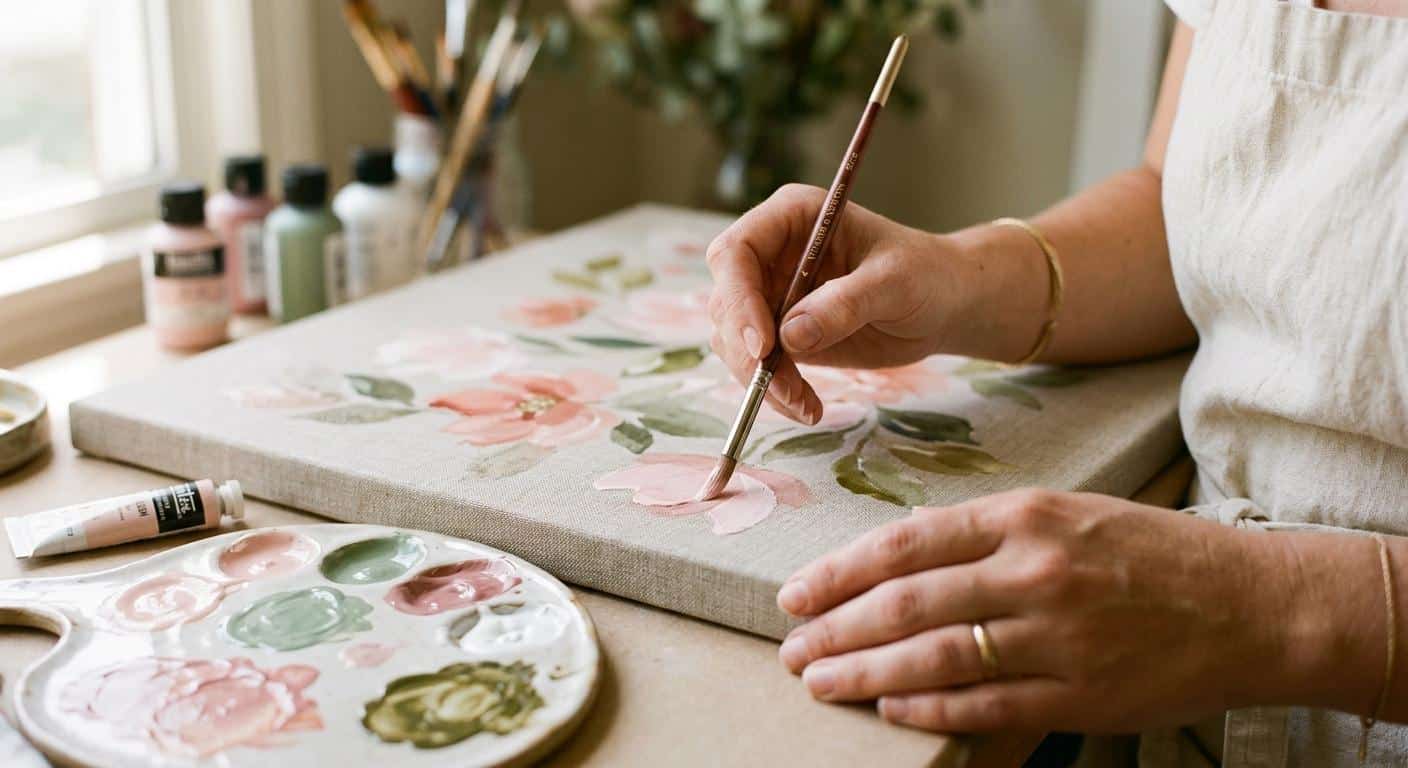 Painting from observation trains your eye to read color relationships in real space – the same skill that makes wardrobe and decor decisions click into place
There’s a reason artists tend to dress well. It’s not a coincidence or vanity. The practice of looking closely at how colors sit next to each other, how light changes a tone from morning to afternoon, how a single accent shifts the mood of a composition – all of that becomes second nature when you paint regularly. You carry the habit of looking everywhere you go.
According to Mintel’s US Arts and Crafts Consumer Report 2025, 71% of U.S. adults engaged in a craft project in 2024, and 86% of Gen Z identify as crafters. This isn’t a niche corner of the wellness world anymore – it’s a mainstream shift in how people spend intentional time at home.
If the idea of a blank canvas feels like too much to start with, paint-by-numbers kits from Number Artist offer a genuinely useful on-ramp. The numbered system removes the anxiety of “where do I even begin” and lets you focus entirely on color – what looks right, what feels off, where a section needs something warmer or cooler to work.
Paint by Numbers: The Beginner’s Route Into Color Confidence
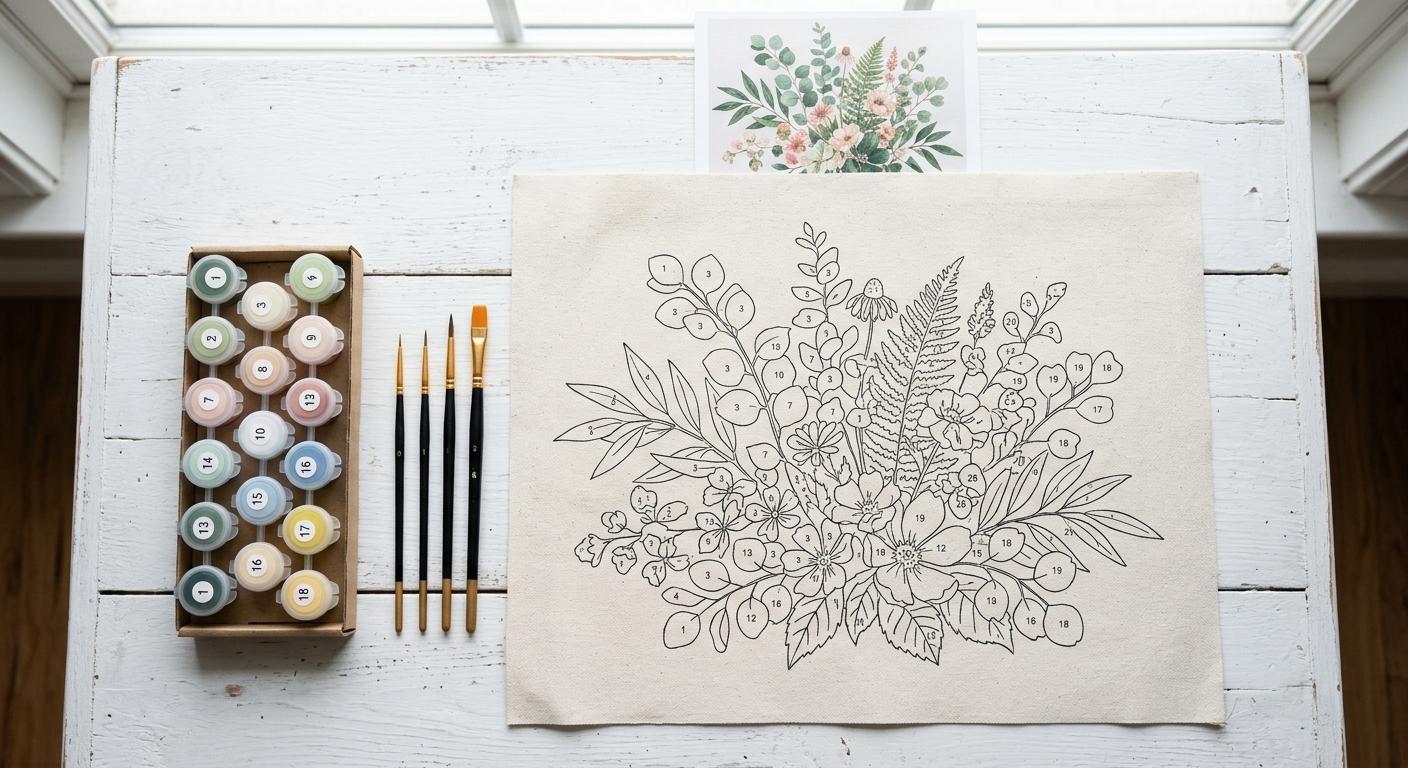
A paint-by-numbers kit gives beginners a structured way to explore color relationships without the pressure of an empty canvas
Paint by numbers gets dismissed sometimes as “not real painting.” That misses the point entirely.
The numbered format doesn’t do the creative work for you – it removes the obstacle of compositional anxiety so you can put all your attention on the one thing that actually matters for developing your eye: color. You’re still deciding how heavily to load your brush, how cleanly to separate two adjacent tones, and whether to add a second coat in a shadow area to deepen it. Those are real decisions, and they train real instincts.
According to ApsPsychology’s analysis of a 2024 JAMA Network Open meta-analysis, drawing on 69 studies and roughly 4,200 participants, visual art engagement was linked to meaningful improvements in self-esteem, anxiety, and quality of life across all age groups and skill levels. The act of making something visual changes how you feel, which changes how you see.
Think of it the way you’d think about building a capsule wardrobe. The constraints aren’t limitations – they’re structure. You learn what works and why within a contained system, and that knowledge becomes portable. The person who has deliberately curated ten items that work together understands color and proportion far better than someone with a bulging wardrobe of impulse buys.
Once you start working with color this deliberately, it quietly reshapes how color shapes your wardrobe and decor in ways that are hard to anticipate beforehand. Florals and botanicals are ideal subjects for a first kit – the forms are forgiving, the color ranges feel natural to most people, and the finished piece tends to work well in a real room rather than looking like a random exercise.
Flower Paintings as The Finishing Touch in A Styled Room
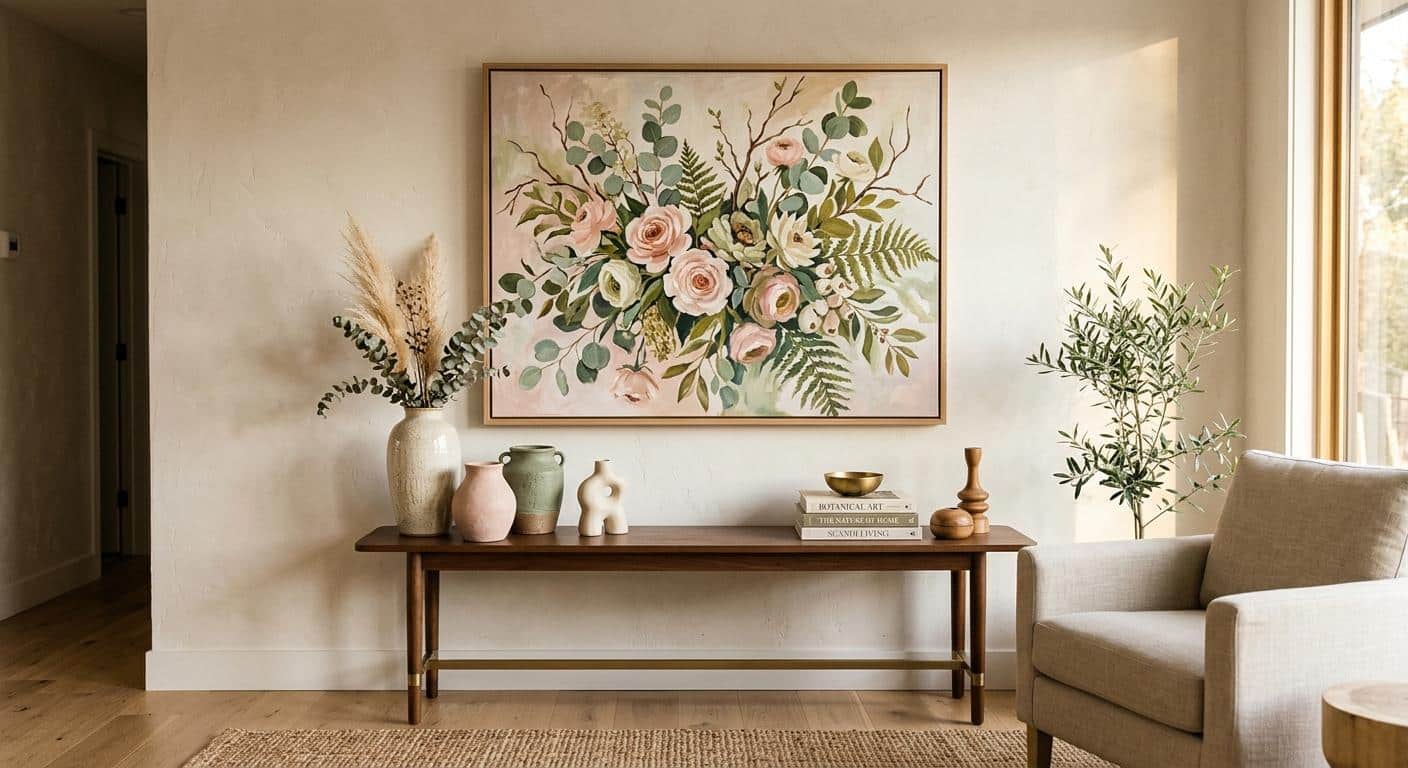
A statement flower painting anchors a room’s palette and ties together the colors already present in furniture, textiles, and smaller objects
Flower paintings earn their place in interior design because they do two things at once: they bring natural softness into a space, and they set a color reference point that everything else in the room can respond to. A printed floral dress works the same way in an outfit – it carries the palette, and everything else follows.
According to Redesign Daily’s 2025 roundup of floral trends in interior design, floral motifs are among the top directions in home decor this year, moving away from sparse geometric shapes toward something warmer and more personal. It’s not about literal botanicals everywhere – it’s about warmth, organic form, and color depth.
The wall art market reflects how seriously people take this. Fortune Business Insights valued the global wall art market at USD 66.89 billion in 2025, with North America accounting for 43.6% of that share. What people hang on their walls is not an afterthought – it’s a deliberate part of how they style a space.
For something to live with long-term, original paintings of flowers from working artists bring a depth and warmth that prints rarely match. The variation in brushwork, the layering, the way light catches textured paint – none of that translates to a flat print. When you’ve trained your eye through painting your own work, you start to notice those differences immediately.
The right flower painting doesn’t need to match your soft furnishings exactly. It needs to share a relationship with them – a common undertone, a repeated accent color, a sense of similar mood. That’s the same logic that makes a wardrobe work: not a uniform, but a coherent conversation between pieces.
The Loop Between Your Wardrobe and Your Walls
The connection between what you wear and how you style your rooms isn’t metaphorical – it’s the same visual intelligence applied to two different surfaces. Once you start developing it intentionally, through painting, through paying attention to what you actually respond to, it becomes consistent across everything. That consistency is exactly what drives the handmade decor and personalized style movement – making choices that reflect a coherent visual identity rather than filling space with generic pieces.
Researchers have used the term “enclothed cognition” to describe how the clothes we wear affect how we think and feel – not just how we’re perceived. The same logic extends to the spaces we inhabit. Art we look at every day shapes how we see and feel in a room, just as quietly as the clothes we put on each morning shape how we carry ourselves through the day.
If your wardrobe gravitates toward earthy, botanical, softly layered tones, and your walls are stark white with no art, there’s a tension there. Not a crisis – but a missed opportunity for your space to feel as much like you as the outfit you put on.
According to Who What Wear’s 2026 coverage of personal style, more people are deliberately thinking about style as a whole-life expression rather than something that stops at the wardrobe door. Making your own art – starting with something structured and working toward more freedom – accelerates that shift. The walls and the wardrobe start telling the same story.
Art Isn’t Decoration – It’s Practice
The eye that spots the right dress on a crowded rail and the eye that knows exactly where a painting belongs in a room are the same eye. They’re both reading color, scale, mood, and relationship. That eye gets better with use.
Starting with a paint-by-numbers kit isn’t a compromise – it’s a smart way to begin using the eye deliberately, without the pressure of generating everything from scratch. Finishing a painting and hanging it gives you immediate feedback: here’s what I made, here’s what it does in the room, here’s what I’d do differently. That loop is more valuable than a hundred hours of passive scrolling through style inspiration.
Flower paintings, whether you make them yourself or find them with a working artist, aren’t just something to fill a wall. They’re evidence of a developed taste – one you’ve earned by paying attention. The same is true of the clothes you choose with care. Style isn’t something you have. It’s something you practice.