Reed diffusers are favored for their longevity and ease of use. These small containers evenly disperse the aromatic benefits of essential oils and add a stylish touch to any space.
Once your reed diffuser is finished, it’s the best opportunity to experiment with new essential oils or use a favorite one. However, before you pour in an essential oil and stick the reeds in, you must dilute it with a carrier oil. There are many carrier oils that match well with certain essential oils, but some stand out as an all-rounder favorite.
In this article, we’ll list the best carrier oils for reed diffusers. Continue reading to know which base oils blend well with different essential oils, as well as what to avoid when using a reed diffuser and making your own at home.
What Is a Reed Diffuser?
Reed diffusers are one of the best home fragrance products that gradually release scent into the surrounding space. This type of diffuser works excellently with essential oils and uses only a few components. It typically comes in a glass container with reed sticks. These porous sticks absorb and gently release scent into the air.
Reed diffusers are a great alternative to electric diffusers. They don’t require any heat or electricity. You can easily maintain reed diffusers and adjust the strength of the scent by adding or removing sticks and flipping them from time to time to refresh the smell.
Why Do Reed Diffusers Need Carrier Oil?
It isn’t a good idea to pour in your favorite essential oil into a reed diffuser container and insert a few sticks. Essential oils are highly concentrated and may not work well with reed diffusers without dilution. You need to dilute them with a carrier oil to ensure the aroma is distributed evenly throughout your space.
Essential oils can also become overpowering without a carrier oil, which can cause irritation. Diluting essential oils with a carrier oil allows one to get the benefits of essential oils in a safe manner. It also prolongs the longevity of the scent. Considering how costly essential oils can get, carrier oils make reed diffusers cost-effective.
10 Best Carrier Oils for Reed a Diffuser
While carrier oils are necessary when using a reed diffuser with essential oils, you’ll have plenty of options. Here are some of our top picks for the best carrier oils for a reed diffuser you can use at home, work, and any indoor space. For even more picks, and to purchase the oils directly, check out Wholesale Botanics’ list of the best carrier oils for reed diffusers as well.
Argan Oil
Argan oil, the liquid gold of Morocco, is a light, nutty fragrance with a hint of sourness. It smells a lot like olive oil but carries a distinct sour, citrusy scent. Alternatively, you can use Moroccan argan oil. Some refer to this oil as argan oil with additives or argan oil sourced from Morocco. Regardless, both should work well as a carrier oil.
Argan oil is a 100% pure carrier oil and makes an excellent base with its light aroma, but it doesn’t blend well with every essential oil. Argan oil complements earthy oils like tea tree and turmeric essential oils the best.
Fractionated Coconut Oil
Fractionated coconut oil is different from the regular, solid coconut oil. It doesn’t become solid at room temperature, making it an appropriate carrier oil for a reed diffuser to use with essential oils. However, those with nut allergies should handle it carefully, though the coconut oil’s odor won’t trigger an allergic response.
Fractionated coconut oil has a thin consistency and doesn’t clog reed sticks. One of the most favored aspects of fractionated coconut oil is it’s pretty much odorless. Still, it has a slightly fruity aroma. Although you can use fractionated coconut oil with any essential oil, it pairs exceptionally well with lavender and peppermint essential oils.
Grapeseed Oil
Grapeseed oil – extracted from the seeds of grapes, as its name suggests, is a byproduct of winemaking. It’s used more for cooking applications, but it’s also a common carrier oil. Grapeseed oil has a high absorption rate despite its thicker consistency, which makes it last longer than thinner carrier oils.
It has a fruity, sweet scent and pairs excellently with citrus essential oils like orange peel and lemon essential oils. You can also use a citrus essential oil blend with grapeseed oil to increase mental alertness and reduce anxiety. Using such blends can help you get the benefits of various essential oils in one.
Rosehip Oil
Rosehip oil has a medium consistency and can be used with pretty much any reed stick. However, it needs to be diluted appropriately to ensure your reeds are saturated and maintain a steady release. Below, you’ll find our tips for diluting essential oils with carrier oils for a reed diffuser.
Rosehip oil is made from the fruit and the seeds of the wild rose bush. It’s a great base for essential oils, especially if you want a calming fragrance to take the day’s stress at home. Rosehip oil has a woody aroma that blends well with bergamot, palmarosa, and myrrh essential oils.
Safflower Oil
Safflower oil has a mild scent with a thin consistency. It can bring up the aroma of your favorite essential oils better than many other alternatives. The lightweight nature of safflower oil also complements this, making it one of the best carrier oils for a reed diffuser.
Safflower oil is an excellent base for all kinds of essential oils with its bland odor and thin consistency. You can use it just about with any essential oil, and the affordability of safflower oil makes it an economical option. This can help you save more when using it with luxurious aromas.
Sesame Oil
Sesame oil is another carrier oil with a nutty scent that blends well with earthy essential oils. However, not all sesame oil is the right type for a reed diffuser. There are light and dark varieties of sesame oil. For use as a base oil in a reed diffuser, you need the light variety. It’s the purest form of sesame oil with a golden color.
Sesame oil has a fairly high viscosity. It isn’t as lightweight as other carrier oils listed in this article. Although this may require flipping reeds more frequently, it won’t lead to weaker scent distribution with the right dilution ratio. Overall, sesame oil is an excellent carrier oil for a reed diffuser if you love an earthy aroma.
Tamanu Oil
Tamanu oil is mostly known for its anti-aging properties that hydrate the skin well. It’s rich in antioxidants and used in various skincare products, as well as products to repair damaged hair. While it’s perfect for hair and soothing dry skin, tamanu oil works exceptionally well as a carrier oil.
This carrier oil blends well with any essential oil but is known to complement thyme, lavender, and eucalyptus essential oils the best for use in a reed diffuser. However, tamanu oil has a strong aroma that makes it not so ideal for those looking for a neutral background scent.
Sweet Almond Oil
Sweet almond oil is a versatile carrier oil. It’s very light and has a mild nutty scent to it. Since it doesn’t have a strong scent profile, it blends well with any essential oil. However, many enjoy pairing sweet almond oil with spicy scents such as clove bud, nutmeg, and cardamom essential oils.
While it’s a favorite, the downside to sweet almond oil is it tends to spoil quickly. It’s best to use this carrier oil with a reed diffuser with a small opening. Also, it has a shelf life of about six to nine months once opened. Make sure to purchase sweet almond oil in small quantities and order as you need to avoid waste.
Calendula Oil
Calendula oil has a floral scent with a fairly thick consistency. It’s a ready-to-use topical oil that can also work as a great carrier oil that evokes a sense of calm and well-being. It can help you bring the best out of therapeutic aromas from essential oils like bergamot, chamomile, and eucalyptus.
One thing to note about calendula oil is that it’s slightly thicker than the carrier oils mentioned in this article. It’s best to blend it with essential oils with a light consistency. Other than the ones mentioned above, lavender, peppermint, and citrus oils are some of the best options for diluting calendula oil for a reed diffuser.
Avocado Oil
Avocado oil is the last carrier oil on our list that works well with reed diffusers. It’s affordable and widely available. Although it’s mainly used with peppermint oil to hydrate skin and promote hair growth, it has a subtle, nutty aroma that blends well with earthy essential oils.
The downside to avocado oil is it has a strong scent. It can overpower the aroma of your chosen essential oil. This can lead to not having the fragrance you want in your space as much. Although it’s accessible and works well as a carrier oil for reed diffusers, you might want to consider lighter alternatives.
What to Avoid
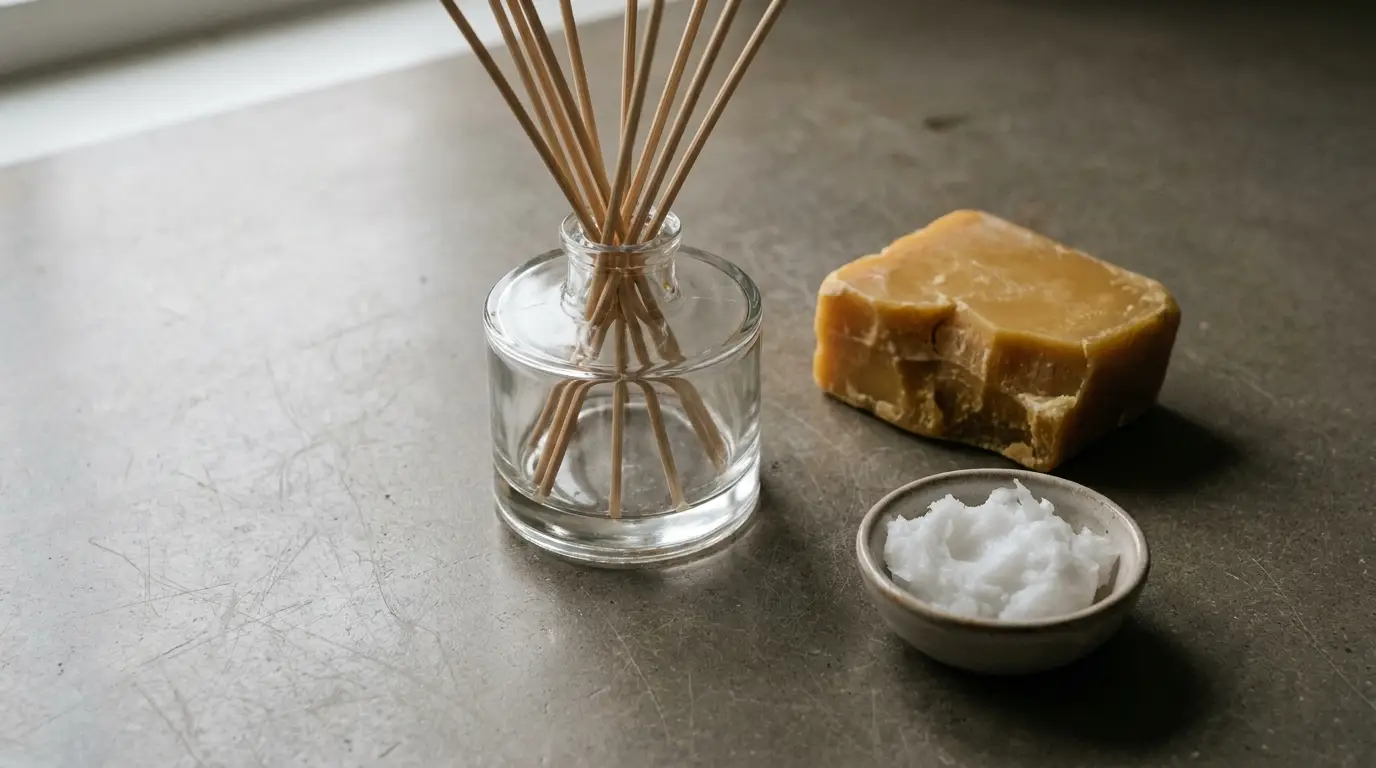
The carrier oil you’re using must be liquid at room temperature to travel up the reed sticks. Otherwise, the reeds may clog and won’t have an even scent distribution. This means you can’t use an oil that’s solid at room temperature, like butter, petroleum jelly (Vaseline), beeswax, or coconut oil in solid form.
Also, don’t forget about the furry animals in your family as you create the best mix for a reed diffuser. Many essential and carrier oils can be toxic to pets when diffused in the air. These include popular choices like tea tree oil and peppermint oil. If you have pets, make sure to research the pet-friendliness of the oils you plan to use.
Lastly, oils expire. You can see the expiration date on the packaging. If you suspect an essential or carrier oil has gone rancid, it’s best to avoid using them. While many essential oils have antioxidant benefits, this can take a U-turn once they expire and release toxic chemical compounds.
Make Your Own Reed Diffuser at Home
Making your own DIY reed diffuser at home is effortless. It only requires a few components you can find anywhere. To make your own reed diffuser at home, you’ll need:
- A container
- Reed diffuser sticks
- Your choice of carrier oil and essential oil
Preferably, get a container with a narrow opening to hold your carrier oil and essential oil. An old perfume or medicine syrup bottle should work excellently. If you’re out of all these options, get creative by using a jar with a lid. Simply poke holes in the lid about two times the width of the sticks, and you’re good to go!
Reed diffuser sticks are mainly sold in craft stores and shops that sell home goods. You can also purchase them from online retailers in bulk. If you want to go full DIY, you can use bamboo skewers. Trim off both ends of a thin bamboo skewer, and they should have enough porosity.
Mixing Essential Oils With Carrier Oil for Diffuser
Once you’ve got an appropriate container and reed sticks ready, it’s time to mix everything to create a nice aroma. Since carrier oils are thin enough to diffuse out of the reed sticks, there isn’t a magical ratio. It’s ultimately up to you to choose the ratio.
However, there are certain rules of thumb when mixing carrier oils with essential oils. You need to use more carrier oil per every drop of essential oil. A good blend ratio that works well with reed diffusers is 60 to 80 drops of essential oil per cup of carrier oil. That’s 15 to 20 drops of essential oil per 1/4 cup of carrier oil or 30 to 40 drops for 2/4 cup.
Still, this ratio may not be up to your liking. You can add in more or fewer drops of essential oil to have an aroma that pleases you. Perhaps the compatibility of the oils is more important than the ratio you’re using.
Here’s a quick recipe for your DIY reed diffuser that promotes a calming aroma – beneficial for sleep and reducing anxiety.
- Pour 1/4 cup of fractionated coconut or tamanu oil as your base for the reed diffuser into the container.
- Add 15 to 30 drops of lavender essential oil.
- Give the container a good mix.
- Stick in a few reed diffuser sticks and let them saturate.
- Once the sticks are half-saturated, flip them.
- Start enjoying the calming benefits of lavender!
Before you give this – or any – recipe a try, make sure to use a large enough container that won’t spill over when you stick in the reed diffuser sticks. Also, containers with a narrow opening for air work the best as the blend will evaporate at a steady pace that isn’t too quick and won’t waste its contents by becoming too strong.
Don’t Hesitate to Experiment and Try Different Blends
Our article listed some of the best carrier oils for a reed diffuser you can use to dilute essential oils. Since you’ll find a great variety of carrier oils appropriate for a reed diffuser, don’t hesitate to experiment and try different blends to find the perfect aroma for your preferences.