Why Less Is No Longer About Less
There’s a noticeable shift happening in interior design. For years, creating a “finished” space meant adding more: more furniture, more decor, more layers. But now, designers are approaching spaces differently.
Instead of asking what else can be added, the question has become: What actually deserves to be here?
This shift is subtle, but it changes everything. Interiors begin to feel calmer, more intentional and ultimately, more lasting. This is where timeless interior design starts to take shape.
The Move Toward Timeless Interiors
Trends come and go quickly. Materials don’t. That’s why more designers are stepping away from trend-driven styling and focusing on pieces that hold their value over time — both visually and structurally.
Wood plays a central role here. Not just because it feels warm, but because it carries variation. Grain, tone, and texture make each piece slightly unique. Over time, it doesn’t feel outdated, it settles into space.
This is one of the reasons minimalist wood furniture continues to define modern interiors. It doesn’t try too hard, but it never feels out of place.
Fewer Pieces, More Purpose

When a room has fewer elements, each one matters more. That’s why designers are becoming more selective — not just about how something looks, but how it functions within the space.
Instead of filling a room, they’re shaping it. Wall-mounted pieces are becoming especially important in this approach.
Why Floating Wall Shelves Are Becoming a Design Essential
One of the clearest examples of this shift is how designers are using floating wall shelves. What used to be purely functional is now part of the visual language of a space.
Instead of bulky storage units, designers are choosing floating wooden wall shelves by brands like EwartWoods for minimalist interiors that keep walls light, open, and structured at the same time.
The Appeal of Simple, Well-Made Shelves
There’s a reason why wood floating shelves for living room walls are used so often in modern homes. They offer:
- storage without taking up floor space
- structure without heaviness
- and material presence without unnecessary decoration
In smaller homes especially, space-saving floating shelves for small apartments can replace larger furniture pieces entirely.
When a Shelf Becomes the Focal Point
In more refined interiors, a shelf isn’t just a surface. It becomes a feature. That’s why designers gravitate toward natural wood floating shelves with visible grain — pieces where the material itself carries the aesthetic.
Instead of adding more decor, they simplify:
- fewer objects
- more spacing
- more intention
This works particularly well with minimalist wall shelves for modern interiors, where simplicity is not emptiness — it’s clarity.
Choosing Shelves That Actually Last
Not all shelves perform the same over time. Designers tend to look beyond appearance and focus on construction:
- handmade wooden floating shelves with hidden brackets for a clean look
- strong internal support that prevents sagging
- real wood surfaces that age naturally
EwartWoods focuses on this type of material honesty — using real oak and walnut that ages naturally while maintaining a clean, bracketless look.
Because when a piece is exposed — not hidden — every detail becomes visible.
Subtle Function, Strong Impact
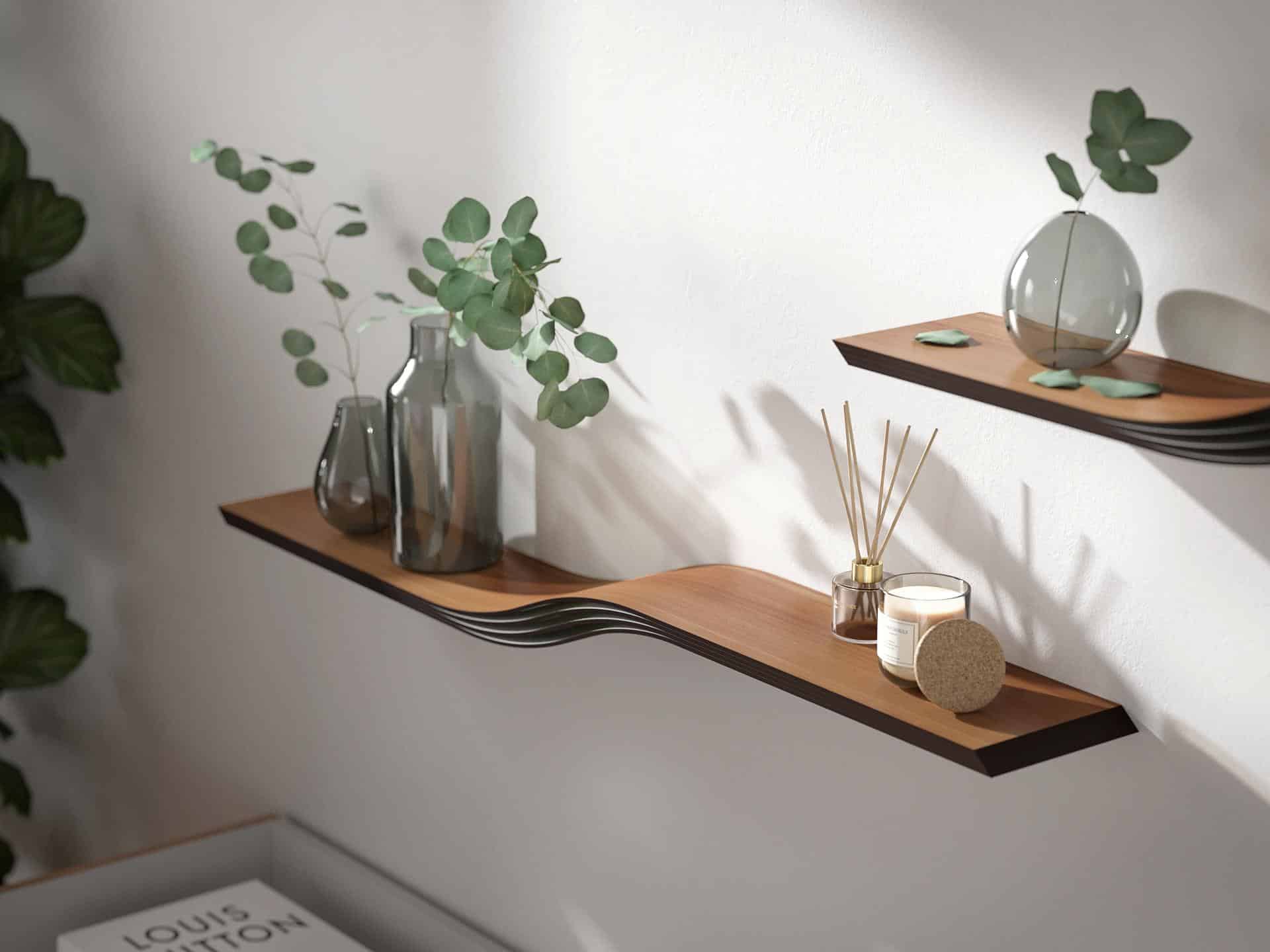
Floating shelves also bring flexibility. They can work as:
- decorative wood wall shelves in a living room
- floating wooden shelves for wall organization in an entryway
- or functional floating shelves for small spaces where traditional furniture wouldn’t fit
This adaptability is what makes them a natural fit for timeless interiors.
Floating Nightstands and the Shift in Bedroom Design
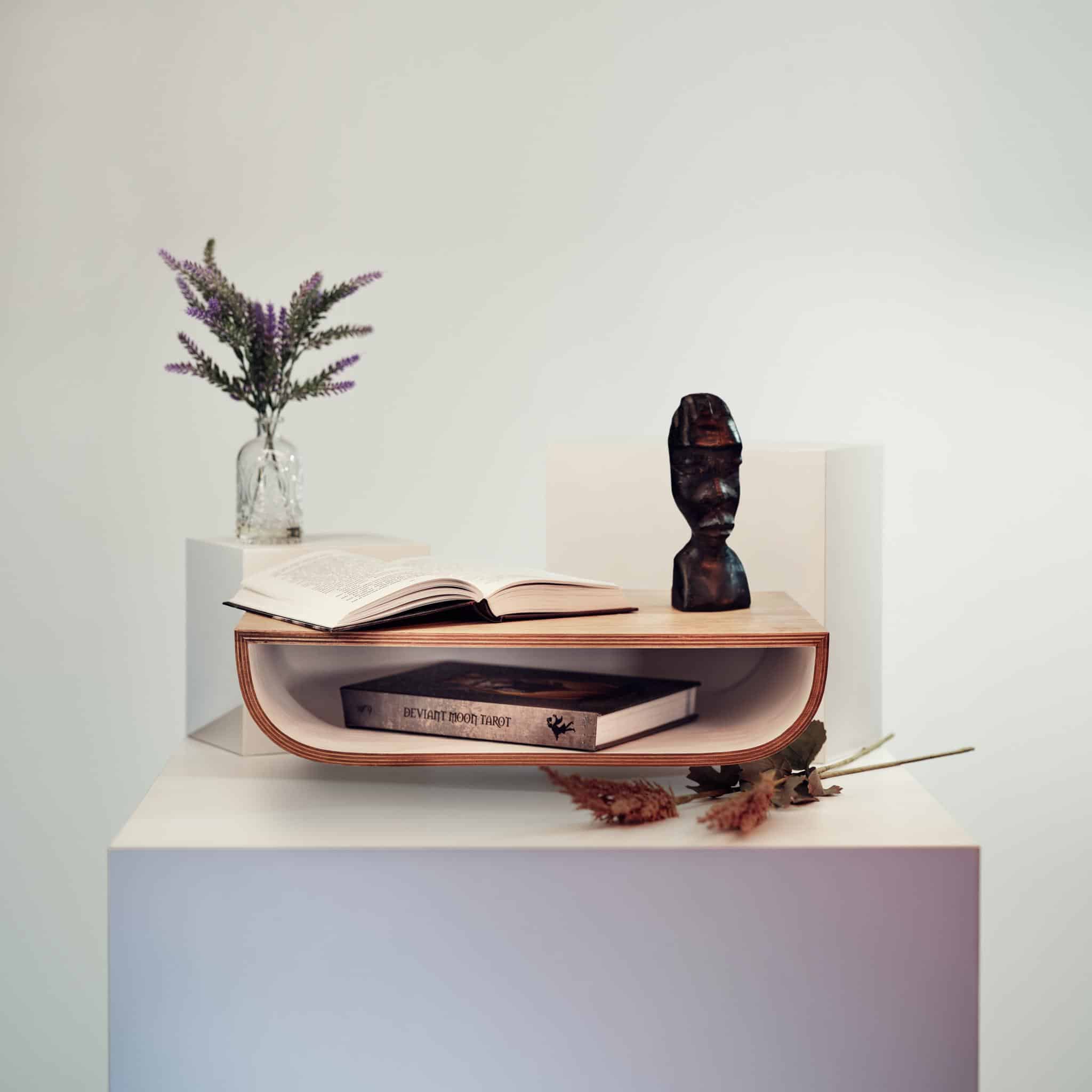
The same philosophy is now shaping bedrooms. Instead of traditional bedside tables, designers are choosing floating nightstands that keep the floor clear and the space visually lighter. This small change has a big effect.
Rooms feel:
- less crowded
- easier to maintain
- more balanced
Especially in smaller bedrooms, wall-mounted nightstands create breathing space without sacrificing function.
Even the Smallest Details Are Being Reconsidered
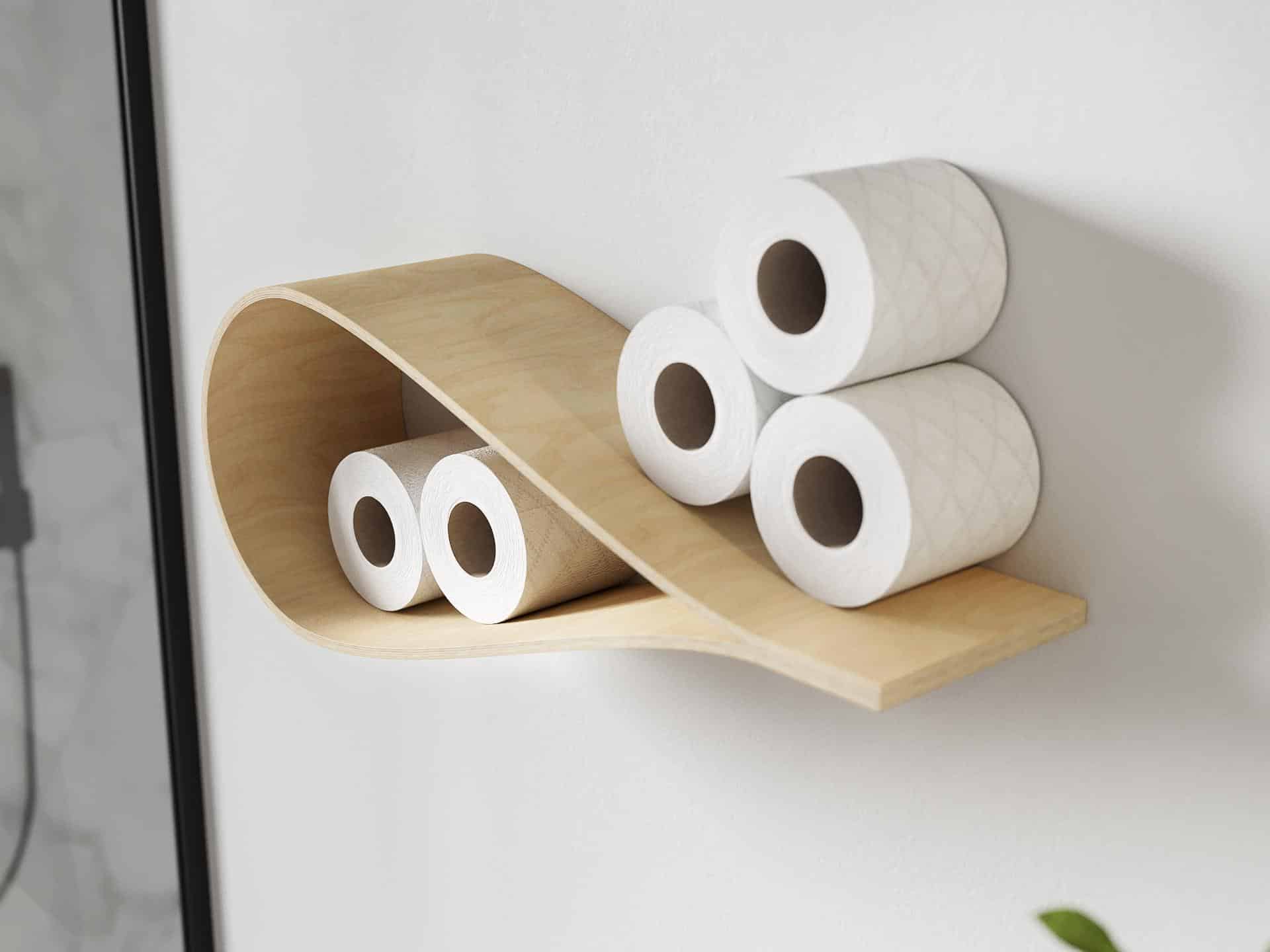
This approach extends beyond furniture. Even small elements — like bathroom accessories — are being treated more intentionally.
A wall mounted toilet paper holder might seem insignificant, but when designed in wood and aligned with the rest of the materials, it becomes part of the overall composition.
EwartWoods applies this to even the smallest fixtures, using geometric wood shapes to turn a basic bathroom essential into a quiet design accent. Instead of standing out, it blends in — in a good way.
Materials Over Decoration
Another shift is happening beneath the surface. Instead of relying on decor to create interest, designers are choosing materials that already carry character. This reduces the need to “fill” a space.
A well-crafted wooden surface — whether it’s a shelf, a nightstand, or a small detail — can stand on its own. The principle becomes simple: Let the material do the work.
Designing for Long-Term Value
Choosing fewer pieces isn’t just aesthetic — it’s practical. When each item is selected carefully, it tends to stay longer. Designers look for:
- durability
- honest materials
- forms that won’t feel outdated
This leads to spaces that evolve slowly, instead of being redesigned constantly.
What to Look For When Choosing Pieces
If you’re moving toward a more intentional interior, a few things make a difference:
- Construction — how it’s built matters as much as how it looks
- Material authenticity — real wood behaves differently over time
- Visual weight — wall-mounted pieces open up a room
- Versatility — pieces that work across different spaces last longer
And one simple test:
If this were the only piece on the wall, would it still feel enough? If the answer is yes — it’s likely a good choice.
A More Considered Way of Living
Minimalism today isn’t about having less for the sake of it. It’s about removing what doesn’t add value, so what remains can actually be appreciated.
Fewer pieces. Better materials. Thoughtful design. That’s the direction modern interiors are moving toward — quietly, but consistently.