Chrysanthemums bring bold seasonal colour to garden beds and borders, especially in late summer and autumn.
Chrysanthemums, often lovingly called mums, are among the most rewarding flowers for any garden. With their rich colours, layered petals, and long-lasting blooms, chrysanthemums bring freshness and character to outdoor spaces just when many other plants begin to slow down. They are cheerful, elegant, and incredibly versatile, making them a favourite for gardeners of all experience levels.
Whether you love cottage-style borders, neat potted displays, or colourful cutting gardens, chrysanthemums offer something special. Beyond their beauty, they also carry fascinating meanings and come in an impressive range of varieties. If you are looking for more floral inspiration for every season, chrysanthemums deserve a place in your garden.
What Are Chrysanthemums?
Chrysanthemums are flowering perennials from the daisy family, Asteraceae. They are known for their striking flower heads, which can range from simple daisy-like blooms to full, rounded pompons and dramatic spider forms. Originally cultivated in Asia, especially in China and Japan, chrysanthemums have been admired for centuries in both gardens and cultural traditions.
Today, they are grown around the world for their ornamental value. They bloom in an incredible range of colours, including white, yellow, pink, purple, red, bronze, and deep burgundy. Their flowering season, often peaking in late summer and autumn, makes them especially valuable when the garden needs a final burst of colour.
Why Gardeners Love Chrysanthemums
One of the reasons chrysanthemums are so popular is their reliability. They are generous bloomers, available in many shapes and sizes, and can be grown in garden beds, borders, raised planters, and decorative pots. They also make excellent cut flowers, often lasting well in vases.
Gardeners appreciate chrysanthemums because they:
- add brilliant seasonal colour
- suit formal and informal gardens
- attract pollinators such as bees
- work beautifully in containers
- offer a huge range of flower forms and plant sizes
With the right care, chrysanthemums can become a standout feature in the garden year after year.
Popular Chrysanthemum Varieties
One of the most exciting things about chrysanthemums is the diversity of varieties available. Their flower forms can look completely different from one another, which means you can create a garden display with lots of texture and interest.
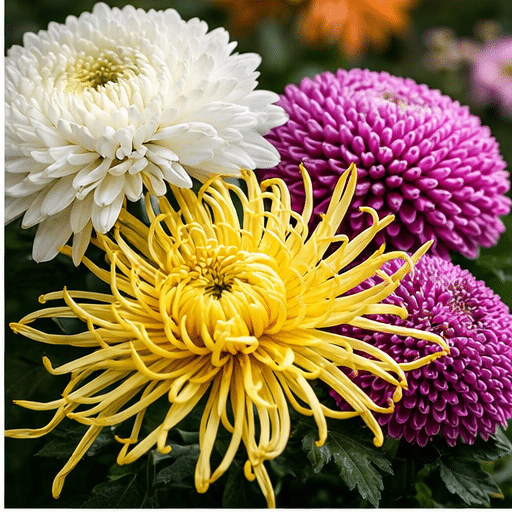
From spider chrysanthemums to pompon and decorative forms, these blooms offer remarkable variety in shape and texture.
1. Decorative Chrysanthemums
Decorative mums are among the most popular types for home gardens. They have large, full flower heads with many overlapping petals. These blooms look lush and rounded, creating a classic autumn garden feel. Decorative chrysanthemums are ideal for borders and statement pots.
2. Pompon Chrysanthemums
Pompon chrysanthemums produce neat, globe-shaped flowers made up of small, tightly packed petals. Their compact shape gives them a tidy and charming look, making them perfect for formal garden designs or container arrangements.
3. Spider Chrysanthemums
Spider chrysanthemums are dramatic and eye-catching. Their petals are long, narrow, and often curl or twist outward, giving the flower a bold, sculptural look. These are wonderful for gardeners who want something more unusual and artistic in the landscape.
4. Daisy Chrysanthemums
Daisy chrysanthemums have a simpler appearance, with a visible central disc surrounded by one or more rows of petals. They have a lighter, more natural feel and blend beautifully into cottage gardens and mixed flower beds.
5. Cushion Chrysanthemums
Cushion mums form dense, rounded plants covered in many blooms. They are ideal for edging paths, filling containers, or adding blocks of seasonal colour. Their compact growth makes them especially practical for smaller gardens.
6. Spoon Chrysanthemums
Spoon chrysanthemums have petals that widen at the tips, creating a spoon-like shape. They are delicate, distinctive, and often chosen by collectors or by those who want a less common flower form in the garden.
Chrysanthemum Colours and Their Meanings
Chrysanthemums are more than just pretty flowers. In many cultures, they carry symbolic meanings that can add a deeper layer of appreciation to the garden.
White Chrysanthemums
White chrysanthemums are often associated with purity, honesty, loyalty, and remembrance. In many cultures, white chrysanthemum cut flowers are used in funeral tributes, such as those featured in this collection. Their elegant simplicity makes them a calming and graceful addition to any outdoor space.

White chrysanthemums are widely associated with remembrance and are often chosen for elegant tribute arrangements.
Yellow Chrysanthemums
Yellow varieties are cheerful and uplifting. They often symbolise happiness, friendship, positivity, and warmth. These are excellent for brightening garden corners and creating a welcoming feel.
Pink Chrysanthemums
Pink chrysanthemums are linked to affection, gentleness, and love. Their soft tones suit romantic garden designs and pair beautifully with whites, mauves, and silver foliage.
Red Chrysanthemums
Red chrysanthemums symbolise deep love, passion, and strength. They bring richness and drama to flower beds and work wonderfully in bold planting schemes.
Purple Chrysanthemums
Purple shades are often associated with elegance, nobility, and creativity. They can add a more luxurious and sophisticated touch to the garden.
Depending on the region and culture, meanings can vary, but chrysanthemums are generally seen as flowers of beauty, respect, and enduring life.
How to Grow Chrysanthemums in the Garden
Chrysanthemums are not difficult to grow, but they do best when given the right conditions. A little attention to sunlight, soil, and watering will reward you with abundant blooms.
Choose a Sunny Spot
Chrysanthemums thrive in full sun. Aim for at least six hours of sunlight a day. The more light they receive, the better their flowering performance will be. In spots with too much shade, plants can become leggy and produce fewer blooms.
Plant in Well-Drained Soil
Good drainage is essential. Chrysanthemums dislike sitting in soggy soil, which can lead to root problems. Enrich the soil with compost or organic matter before planting to improve structure and fertility.
Water Consistently
Young plants need regular watering while they establish. Mature chrysanthemums prefer evenly moist soil, especially during warm weather and the flowering season. Water deeply rather than lightly and try to keep the foliage dry to reduce the risk of disease.
Pinch for Bushier Growth
A useful trick with chrysanthemums is pinching back the growing tips in spring and early summer. This encourages branching and helps the plant develop a fuller, bushier shape with more flowers later on.
Feed During the Growing Season
A balanced fertiliser applied during active growth can support healthy foliage and abundant blooms. Once buds begin to form, reduce heavy feeding so the plant can focus its energy on flowering.
Chrysanthemums in Pots and Containers
If you do not have a large garden, chrysanthemums are still a wonderful option. They thrive in pots, window boxes, and decorative containers, making them perfect for patios, balconies, and small courtyards.
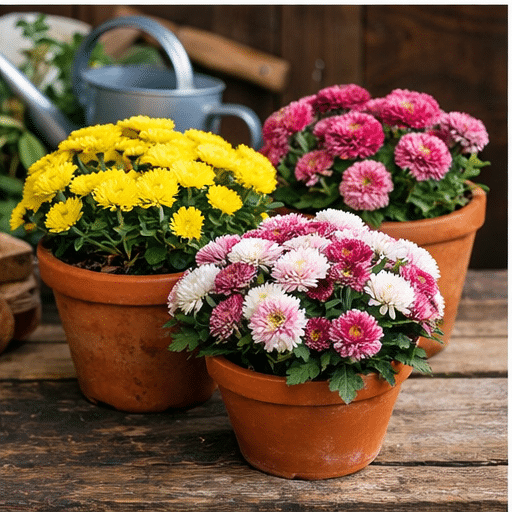
Compact chrysanthemum varieties are perfect for pots, patios, balconies, and smaller outdoor spaces.
Use a good-quality potting mix and choose a container with drainage holes. Place the pot in a sunny location and water regularly, as container-grown plants dry out faster than those in the ground. Cushion and pompon varieties are particularly well suited to potted displays because of their compact form.
Grouped together in complementary colours, chrysanthemums in containers can instantly brighten an outdoor entertaining area.
Seasonal Care Tips
To keep chrysanthemums looking their best, regular maintenance helps.
Remove spent flowers to encourage continued blooming and keep the plant tidy. At the end of the flowering season, cut back the stems once the blooms are finished. In cooler areas, adding mulch around the base can help protect the roots over winter. In warmer climates, many garden chrysanthemums return beautifully the following season.
Dividing established plants every few years is also a good idea. This refreshes the clump, improves vigour, and gives you extra plants to spread throughout the garden.
Great Garden Companions for Chrysanthemums
Chrysanthemums combine beautifully with many other garden plants. For a soft, romantic look, pair them with salvias, asters, and roses. For a more textured autumn display, combine them with ornamental grasses, sedum, and late-blooming daisies.
Their wide colour range makes them easy to coordinate with existing planting schemes. White chrysanthemums create a fresh, classic look, while bronze and burgundy shades add depth and seasonal warmth.
Why Chrysanthemums Deserve a Place in Every Garden
Chrysanthemums are more than just seasonal flowers. They are rich in history, meaning, and visual variety. From neat pompons to dramatic spider blooms, there is a chrysanthemum to suit every style of garden. Their long flowering period, vibrant colours, and relatively easy care make them one of the most satisfying plants to grow.
Whether you are designing a colourful border, refreshing your patio pots, or simply looking for a flower with both beauty and symbolism, chrysanthemums are an excellent choice. They bring joy, elegance, and a sense of abundance to outdoor spaces, reminding us that the garden can still be full of life and colour even as the seasons begin to change.
For gardeners who want reliable blooms and timeless charm, chrysanthemums truly are a classic worth celebrating.