For anyone new to cigars, one of the first terms you will encounter is the humidor. At its simplest, a humidor is a storage container designed to maintain the proper humidity level for cigars so they stay fresh and smoke the way they were intended. Because cigars are made from natural tobacco leaves, they are extremely sensitive to the environment around them. Without the right humidity, they can dry out, crack, or lose their flavor surprisingly quickly.
Today, humidors are not just practical storage tools. Many collectors treat them as part of the overall design of their home. From compact desktop boxes to large cabinet units, humidors often sit in home offices, lounges, or living spaces where they serve both a functional and decorative role.
Why Cigars Need a Humidor
Cigars are hygroscopic, which means they absorb and release moisture depending on the surrounding air. If the air is too dry, the cigar loses its natural oils and becomes brittle. If the air is too humid, cigars may swell, burn unevenly, or even develop mold.
A humidor creates a controlled environment that keeps humidity stable. Most cigar experts recommend storing cigars between roughly 65 percent and 72 percent relative humidity. Within that range, cigars maintain the proper moisture level needed to preserve flavor, structure, and burn quality.
Without a humidor, cigars stored at normal household humidity levels will usually begin drying out within days.
How a Humidor Works
A humidor works by creating a sealed space where humidity can be carefully regulated. Most humidors include three main components: a tight seal, an interior lining designed to manage moisture, and a humidification system.
The seal is important because it prevents outside air from constantly entering the box. If outside air can freely move in and out, it becomes difficult to maintain consistent humidity levels.
Inside the humidor, the lining helps regulate moisture. This material absorbs and releases humidity slowly, creating a more stable environment for the cigars. The humidification system adds moisture to the air when needed, helping maintain the ideal humidity range.
When these elements work together, the humidor becomes a small climate-controlled environment specifically designed for cigar storage.
Choosing the Right Humidor
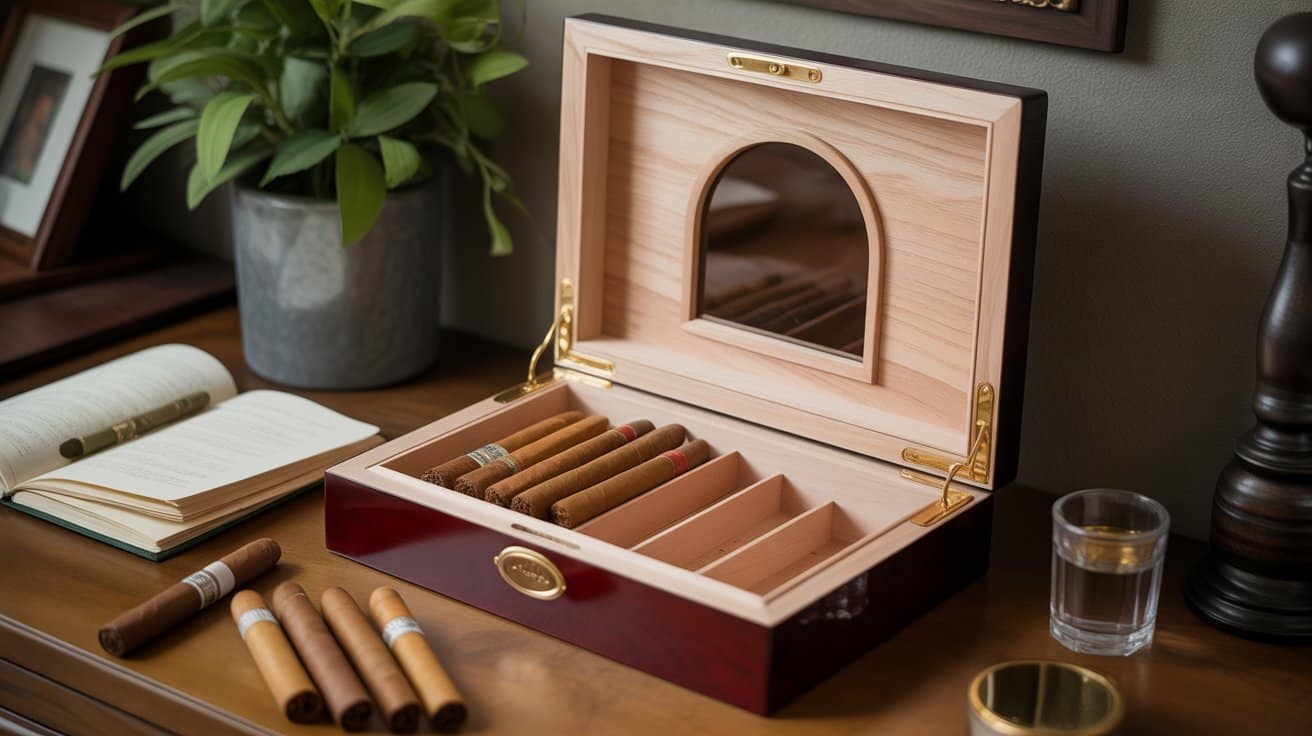
Choosing the right humidor comes down to a few key factors. While style and size are often the first things people notice, long-term performance depends much more on build quality, seal integrity, and how the humidor fits into your daily routine. Taking a few minutes to understand these elements can help ensure you choose a humidor that works well for years.
Construction Quality
The most important factor in any humidor is how well it is built. A properly constructed humidor should close evenly and create a tight seal that prevents outside air from constantly entering the interior. If a humidor leaks air, it will struggle to maintain stable humidity levels no matter how good the humidification system is.
Higher-quality humidors are typically made with precise joinery, sturdy hinges, and interior linings designed to support humidity stability. When the construction is solid, the humidor becomes much easier to maintain and far more reliable over time.
Capacity and Room to Grow
Many beginners underestimate how quickly a cigar collection can expand. What starts as a handful of cigars can quickly turn into several dozen once someone begins exploring different brands and styles.
For this reason, it is usually wise to choose a humidor with slightly more capacity than you currently need. Extra space allows air to circulate more evenly and prevents the humidor from becoming overcrowded as your collection grows.
Placement in the Home
Where you place a humidor can have a major impact on its performance. Humidors should be kept in a stable indoor environment, away from direct sunlight, heating vents, and large temperature fluctuations.
Many collectors place their humidors in home offices, lounges, or living areas where conditions remain relatively consistent. When the surrounding environment is stable, the humidor can maintain humidity levels more easily and require less frequent adjustment.
Types of Humidors
Humidors come in several different sizes and styles, depending on how many cigars someone wants to store and where the humidor will be placed.
Desktop Humidors
Desktop humidors are the most common starting point for new collectors. These compact boxes typically hold between 25 and 100 cigars and are designed to sit on a desk, shelf, or table, making them a convenient option for personal use at home.
Travel Humidors
Travel humidors are built for portability and short-term storage while you are on the move. They are usually smaller and constructed with durable materials to protect cigars during travel while still maintaining a stable internal environment.
Cabinet Humidors
Cabinet humidors are much larger units that often resemble furniture pieces. Designed for serious collectors or commercial environments like cigar lounges, these humidors can store hundreds or even thousands of cigars while providing excellent long-term humidity stability.
Electric Humidors
Electric humidors use powered systems to regulate humidity and sometimes temperature automatically. These units are particularly useful for larger collections or in climates where humidity levels fluctuate throughout the year, offering a more automated storage solution.
Humidors as Part of Home Design
While humidors are built for function, they also tend to look quite beautiful. Many are crafted with polished wood finishes, glass panels, and detailed hardware that make them feel more like fine furniture than simple storage boxes.
Because of this, humidors often become part of a room’s décor. A desktop humidor might sit on a writing desk in a home office, while a cabinet humidor could become a centerpiece in a lounge or study.
For collectors who enjoy cigars as part of a relaxing evening routine, the humidor often becomes part of the ritual itself. Opening the lid, selecting a cigar, and appreciating the aroma inside the humidor can be just as enjoyable as the cigar that follows.
Final Thoughts
So what is a humidor? In simple terms, it is a climate-controlled storage environment designed to protect cigars from the effects of dry or overly humid air. But for many cigar enthusiasts, it is also much more than that.
A humidor becomes part of the experience of cigar collecting. It preserves the cigars themselves while also adding a touch of craftsmanship and personality to the space where it sits.