I remember standing on my patio with a stack of pots, wondering if peppers really belonged there. You see bell peppers in gardens all the time, but containers feel like a different game.
Growing bell peppers in pots sounds simple, yet the moment you try it, doubts creep in. Will the plant get too big? Will it dry out too fast? Will you end up with leaves and no peppers? That uncertainty is why this topic matters.
When you understand how bell peppers behave in containers, small changes make a big difference.
This post breaks down what actually works, what usually goes wrong, and how growing bell peppers in pots becomes more practical with the right approach.
Do Bell Peppers Really Grow Well in Pots?
The first time you think about growing bell peppers in pots, the questions pile up fast.
That’s exactly how many gardeners introduce the topic in community discussions, especially in places like r/gardening, where beginners and experienced growers share what worked and what didn’t.
The concern always sounds the same. Bell peppers look heavy, demanding, and a bit risky for containers.
What consistently comes up in those conversations is reassurance. Yes, bell peppers grow well in pots, just not in the way most people expect at first.
Container plants may stay slightly smaller, take longer to settle in, and produce fewer peppers overall. But the peppers themselves are often larger, thicker, and easier to manage.
The disappointment usually comes from comparison. Bell peppers are less forgiving than hot peppers, something gardeners on r/vegetablegardening point out often.
Containers amplify care habits quickly. When watering, feeding, and space are right, growth is steady. When they’re not, stress shows early. Once gardeners adjust expectations, pots stop feeling limiting and start feeling practical.
Why Bell Peppers Act Differently Than Other Peppers in Containers

Many gardeners notice that hot peppers thrive in pots while bell peppers struggle. This isn’t a coincidence.
Bell Peppers vs. Hot Peppers in Pots
Bell peppers produce large, heavy fruit. Each pepper requires more water, calcium, and overall energy from the plant. Hot peppers usually produce smaller fruit, which places less strain on the root system and stems.
In containers, where root space and nutrient reserves are limited, this difference matters.
Bell peppers also react faster to:
- Inconsistent watering
- Nutrient imbalance
- Temperature swings
That doesn’t mean bell peppers are difficult. It means they demand consistency.
What This Means for Expectations
Because bell peppers invest more energy per fruit, container-grown plants usually produce fewer peppers overall. That is normal.
Many gardeners expect dozens of peppers and feel disappointed with five or eight fruits, even though the peppers are large and healthy. In containers, bell peppers focus on quality rather than quantity.
Once gardeners accept this trade-off, they stop overcorrecting and allow plants to settle into a steady rhythm that leads to better late-season harvests.
Choosing the Right Container
Choosing the correct container plays a significant role in how well bell peppers grow in pots. Bell pepper plants develop deep roots and produce heavy fruit, so the container must support both steady root growth and plant stability.
A container that is too small dries out quickly and causes stress during hot weather. Poor drainage can lead to waterlogged soil and root problems. The most reliable containers are deep, sturdy, and allow excess water to drain freely.
Many gardeners find that larger containers reduce daily maintenance and make watering more forgiving. Container material also matters, since some pots heat up faster in the sun or tip over once peppers begin forming.
Common Container Mistakes Gardeners Admit Making
After a season or two, many gardeners say they would change the same things if starting again.
Some of the most common regrets:
- Choosing a pot that seemed “big enough at the time.”
- Underestimating how often containers dry out in summer
- Waiting until branches break before adding support
- Placing pots in windy areas without protection
These mistakes are common because bell pepper plants often look fine early on. Problems usually appear once the fruit sets.
Sun, Heat, and Placement: What Matters Most
Bell peppers grow best when you place them where light, warmth, and airflow stay balanced.
Most plants need long hours of direct sunlight to flower and set fruit. A bright, open spot outdoors usually works better than shaded corners or filtered light. Indoors, light is often the limiting factor, even near windows.
Heat matters as much as the sun. Containers warm up faster than garden soil, which can stress roots during hot afternoons. In very warm weather, light afternoon shade can help prevent flower drop.
Placement also affects wind exposure. Strong wind dries the soil quickly, damage leaves, and reduce pollination. Many gardeners see better results when pots sit near walls, fences, or other structures that block wind while still allowing good airflow.
Soil Choices That Make or Break Potted Bell Peppers
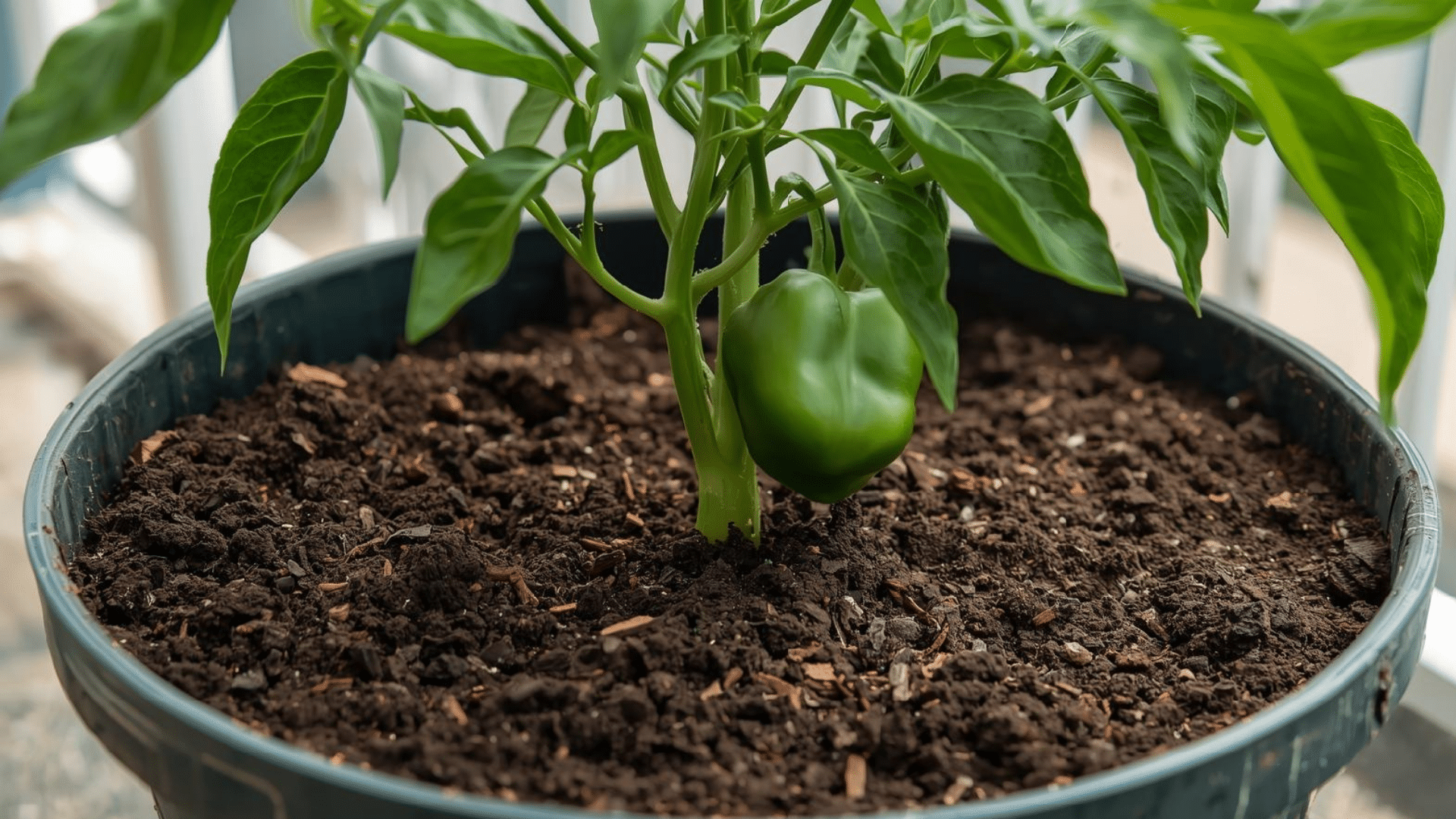
Soil choice matters more in containers than in garden beds. The right mix supports healthy roots, steady moisture, and nutrient balance, while poor soil quickly leads to stress.
1. Avoid Using Garden Soil in Containers
Garden soil becomes compacted when used in pots, which limits airflow to the roots. Water tends to drain unevenly, creating soggy pockets that stress plants.
Many gardeners notice slow growth, constant wilting, or poor fruit development when using soil taken from the yard. Containers need soil that stays loose and breathable, something garden soil cannot maintain over time.
2. Use a Light Potting Mix Designed for Containers
A quality potting mix is built to drain well while still holding enough moisture for consistent root hydration. These mixes prevent water from pooling at the bottom of the pot and reduce the risk of root stress.
Gardeners who switch to proper potting mixes often see healthier leaves and better fruit set within weeks.
3. Add Organic Matter for Nutrient Stability
Compost or other organic matter helps improve nutrient availability and moisture balance. In containers, nutrients wash out quickly with regular watering.
Organic material acts as a buffer, releasing nutrients slowly and keeping soil conditions more stable throughout the growing season.
4. Make Sure the Soil Drains but Does Not Dry Too Fast
Soil that drains too slowly causes root problems, but soil that dries too fast creates constant stress. Bell peppers prefer evenly moist conditions. A balanced mix prevents rapid drying while still allowing excess water to escape, especially during hot weather.
5. Refresh or Amend Soil During the Season
Container soil breaks down over time. As roots grow and watering continues, the soil can compact or lose nutrients.
Many experienced gardeners top off pots with fresh compost or lightly amend the soil mid-season to restore structure and feeding support, which helps maintain steady growth and fruit production.
Feeding Bell Peppers in Containers
Feeding bell peppers in containers requires more attention than feeding plants grown in the ground.
Because containers hold a limited amount of soil, nutrients wash out quickly with regular watering. This often leads to healthy-looking plants that struggle to produce fruit.
Bell peppers are heavy feeders, especially once flowering begins, and they need a steady supply of nutrients to support fruit growth.
Most gardeners find success by starting with nutrient-rich soil and then feeding lightly but consistently through the season. Slow-release nutrients help provide a stable base, while occasional liquid feeding supports ongoing growth.
Too much fertilizer, especially nitrogen, can cause excessive leaf growth and fewer peppers. A balanced approach keeps plants productive without stressing them.
Pruning, Staking, and Support: What Actually Helps
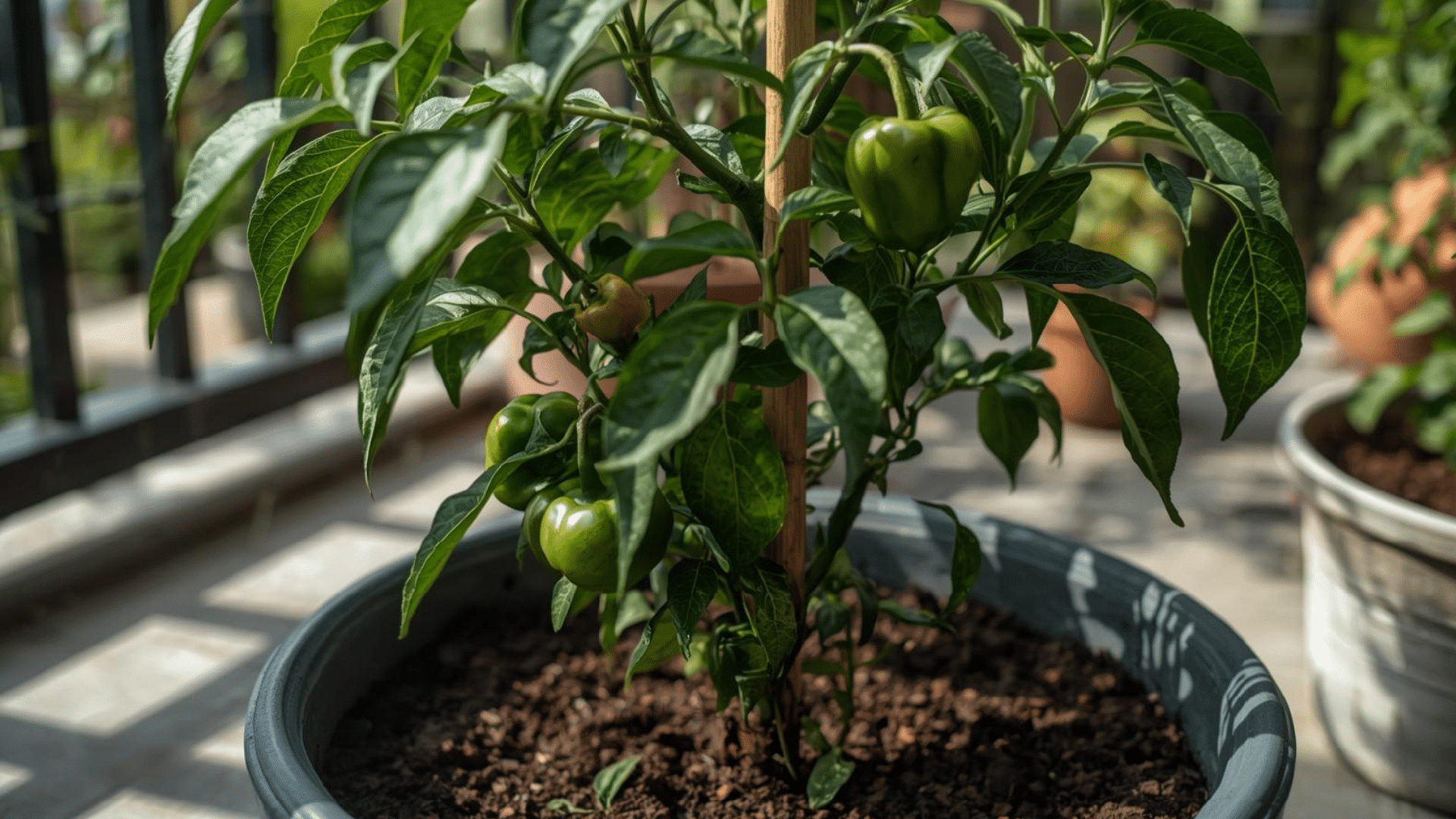
Bell peppers need very little shaping, but they do need physical support as they grow. Knowing when to prune lightly and when to add support prevents damage and improves long-term plant health.
Pruning Myths vs. Reality
Many gardeners assume pruning will push bell pepper plants to produce more fruit, but heavy pruning often does the opposite.
Bell peppers rely on their leaves to produce energy, and removing too many slows growth and delays flowering. Most experienced growers only remove damaged leaves, yellowing growth, or leaves touching the soil, which helps reduce disease risk.
Cutting back healthy branches rarely increases yield and can stress container plants. Leaving the plant mostly intact allows it to balance leaf growth and fruit production naturally.
When Staking Becomes Necessary
Bell pepper plants often stand upright early in the season, but once fruit develops, weight becomes a real issue. Large peppers pull branches downward, especially after watering or rain.
Wind can worsen the problem, leading to snapped stems or tipped containers. Adding stakes or cages early provides gentle support before damage happens.
Simple supports help plants stay upright, reduce stress, and allow energy to go toward fruit growth instead of recovering from breakage.
Flowers, Pollination, and Fruit Set in Pots
Flowering is an important stage for bell peppers, but it often causes concern for container growers. Seeing flowers fall off without turning into peppers is common, especially early in the season.
Bell peppers are sensitive to stress, and small changes in temperature, watering, or nutrients can interrupt fruit set. Containers heat up faster than garden soil, which can affect pollen quality during hot weather.
Limited airflow on patios or balconies can also reduce natural pollination. Once conditions stabilize, plants usually begin setting fruit more reliably.
Gentle movement from wind or light handling helps pollen transfer, while steady moisture and balanced feeding support consistent fruit development throughout the growing season.
Realistic Yield Expectations for Bell Peppers in Pots
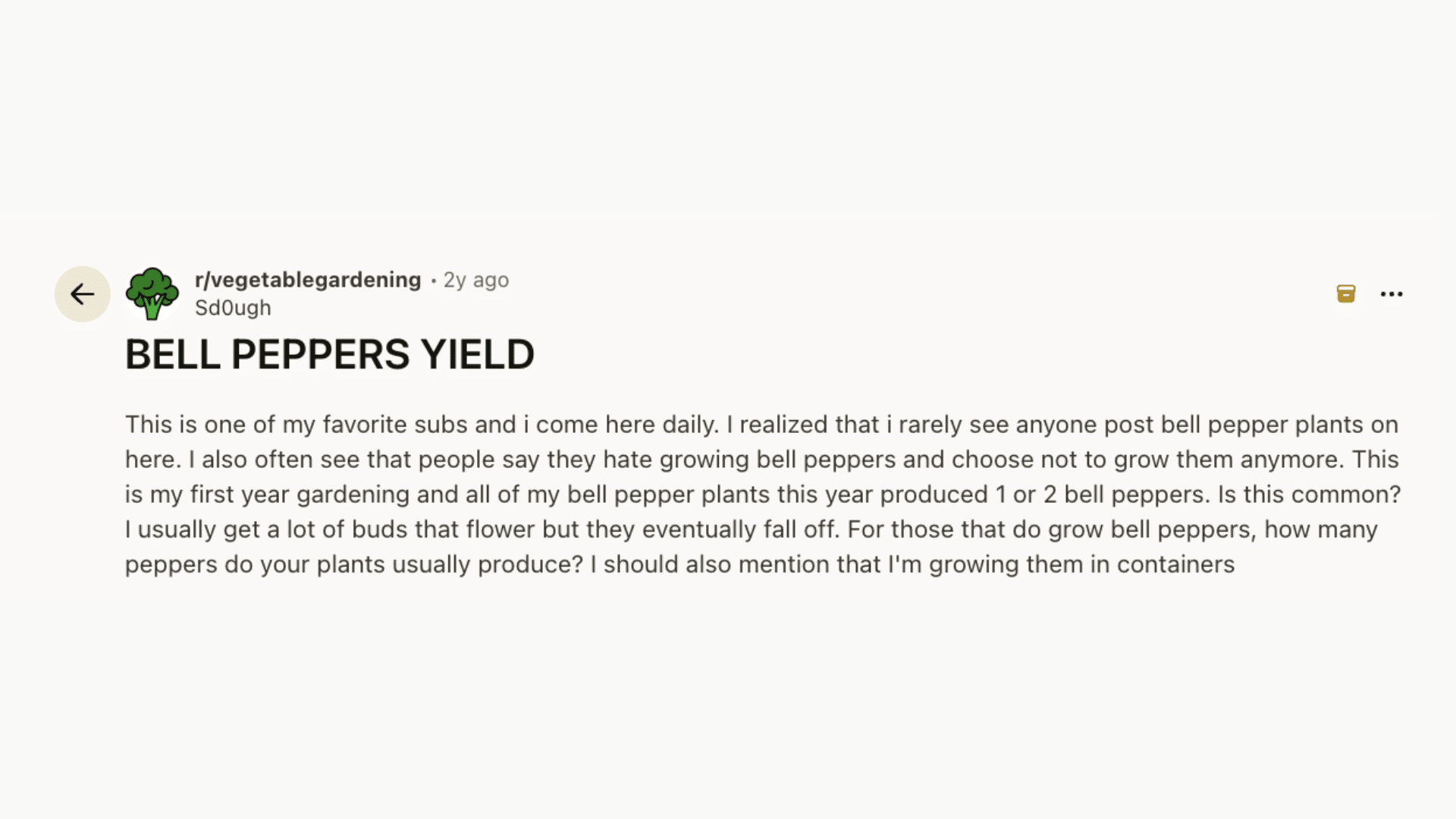
Understanding yield expectations helps prevent frustration when growing bell peppers in containers. Container size, climate, and consistency all influence production, and fewer peppers can still mean healthy, successful plants.
What Most Gardeners Actually Harvest
In a long-running discussion on r/vegetablegardening, many container growers shared that producing one to three peppers per plant is common during the first year.
Several gardeners mentioned seeing lots of flowers that dropped before setting fruit, especially in hot weather or when nutrients ran low.
Others noted that once fertilizing improved or watering became more consistent, plants began setting multiple peppers late in the season. A recurring theme was that bell peppers often take much longer to hit their stride in pots compared to other pepper types.
Why Fewer Peppers Does Not Mean Failure
Experienced growers in r/vegetablegardening frequently pointed out that bell peppers are heavy feeders and slow starters.
Plants grown in containers often pause fruiting once a few peppers begin developing because the soil nutrients are quickly depleted.
Gardeners who increased feeding, picked peppers earlier, or overwintered plants reported stronger yields in the second year.
Many agreed that steady care, rather than pushing plants early, led to thicker walls, better flavor, and improved late-season production instead of burnout.
Harvesting Bell Peppers: Green or Fully Colored?
Harvesting bell peppers at the right time depends on how you plan to use them and what you expect from the plant. Bell peppers can be picked once they reach full size, even if they are still green.
At this stage, the peppers have a firm texture and a mild flavor. Leaving peppers on the plant longer allows them to change color, which increases sweetness and softens the flesh.
However, fully colored peppers take more energy from the plant, which can slow new flower production. Many gardeners choose a mix of both approaches during the season.
Harvesting some peppers early encourages continued growth, while letting others fully ripen improves flavor and color.
Conclusion
By now, you’ve seen that success comes down to understanding the plant, not chasing perfection.
Container size, steady watering, balanced feeding, and realistic expectations shape your results more than any single trick. When you work with the plant’s pace instead of against it, problems feel easier to manage, and harvests feel more rewarding.
For me, the biggest shift was learning to stay consistent and patient, especially during slow early growth.
If you’re adjusting your setup or starting fresh, growing bell peppers in pots can become a dependable part of your garden routine.
What has worked best for you so far, or what are you planning to try next? If you want more practical growing tips, take a look at the other blogs and keep finding what fits your space best.