If you’re planning a driveway, walkway, or garden base, knowing how much a yard of gravel weighs can make your project go a lot smoother.
The weight affects how much you’ll need to order, how stable the surface will be once it’s compacted, and how easy it is to move and spread. Gravel comes in all kinds, from fine crushed stone to rounded river rock, and each one weighs a little differently.
In this guide, I’ll go over average gravel weights, the factors that change them, and a few simple ways to calculate what you need before delivery day. It’s a small detail that can save you time, effort, and a few extra trips later on.
How Much Does a Yard of Gravel Weigh on Average?
I’ve learned that a cubic yard of gravel doesn’t have one fixed weight; it really depends on the mix. The size, density, and type of rock all make a difference.
On average, most gravel you’ll find falls between 2,400 and 3,000 pounds per cubic yard, or roughly 1.2 to 1.5 tons.
Lighter types, like pea gravel, have more air gaps between the stones, so they weigh less. Crushed stone or road base packs tighter and usually hits the heavier side of that range.
Whenever I order gravel, I double-check the type first. A small change in texture can shift the total weight more than you’d expect.
Average Weight of a Cubic Yard of Gravel
When you buy gravel, you’re usually charged by the yard or by the ton. The numbers can shift a bit depending on the type of stone, how tightly it’s packed, and even how damp it is.
I’ve noticed that freshly delivered gravel often feels heavier, especially after a rain. Here’s a simple breakdown of average weights for different types of gravel I’ve come across:
| Gravel Type | Approx. Density (lb/yd³) | Weight per Yard (lb) | Weight per Yard (tons) | Notes |
|---|---|---|---|---|
| 3/4″ Crushed Stone | 2,500–2,900 | 2,500–2,900 | 1.25–1.45 | Angular, dense, ideal for driveways |
| Road Base (3/4″ Minus) | 2,400–3,200 | 2,400–3,200 | 1.2–1.6 | Includes dust and fines, packs tightly |
| Pea Gravel | 2,400–2,700 | 2,400–2,700 | 1.2–1.35 | Rounded, lighter than crushed gravel |
| River Rock | 2,400–2,700 | 2,400–2,700 | 1.2–1.35 | Smooth surface, less compaction |
| Limestone Gravel | 2,600–3,000 | 2,600–3,000 | 1.3–1.5 | Dense and commonly used in base layers |
| Granite / Basalt Gravel | 2,700–3,000 | 2,700–3,000 | 1.35–1.5 | Heavier due to high density |
| Decomposed Granite | 2,400–2,800 | 2,400–2,800 | 1.2–1.4 | Fine texture, weight varies with moisture |
| Sand (for comparison) | 2,700–3,200 | 2,700–3,200 | 1.35–1.6 | Heavier when damp |
From experience, I always check with the local supplier before ordering; even small differences in the quarry or region can change the total weight by a few hundred pounds.
Factors That Affect Gravel Weight
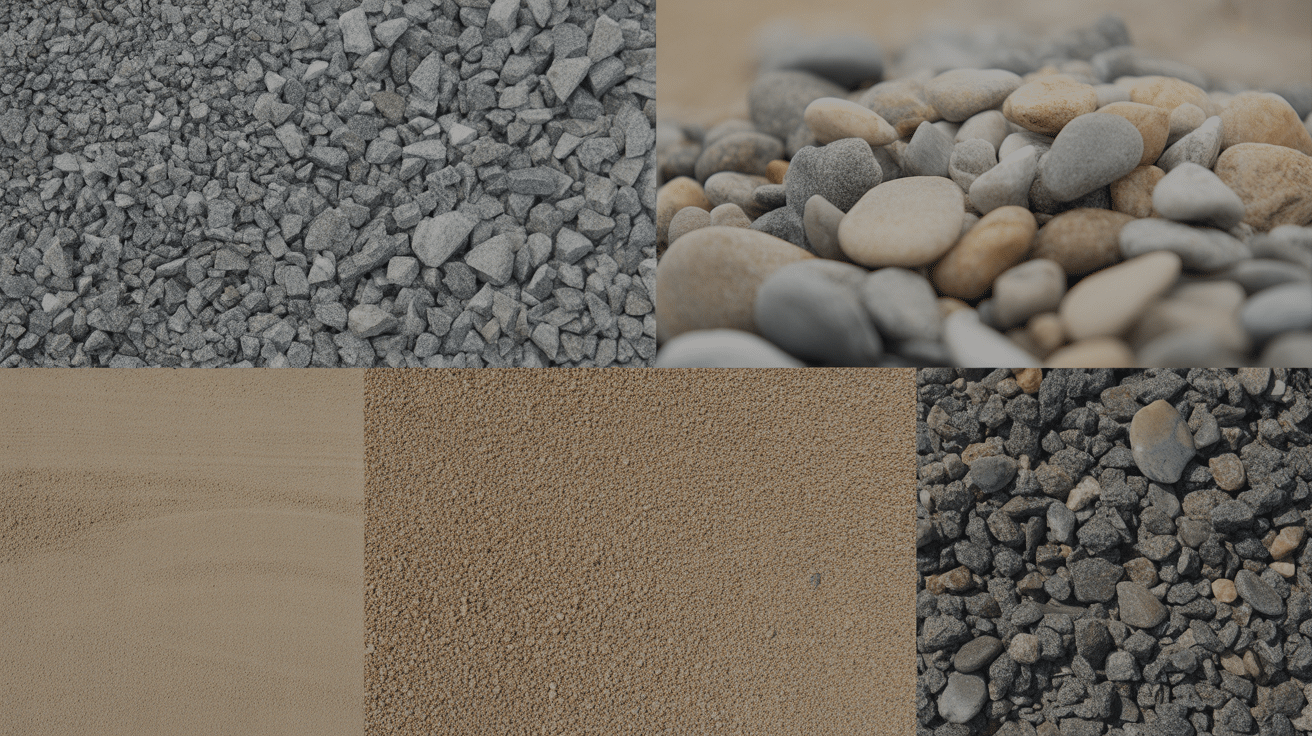
A few key things can change how heavy a cubic yard of gravel turns out to be.
Knowing these ahead of time helps you estimate weight more accurately and avoid hauling surprises when you place your order or load your trailer.
1. Rock Type
Not all gravel comes from the same kind of stone. Dense rocks like granite, basalt, and limestone naturally weigh more because their mineral structure leaves less empty space.
Lighter stones, such as river rock or sandstone, have more air gaps between particles, which makes them easier to move but less stable under pressure.
Useful tip: Go for pea gravel or rounded stones for lighter decorative work, and use crushed limestone or granite when you need a firm, lasting base.
2. Size and Shape
The way gravel pieces fit together changes how dense a load becomes. Angular gravel locks tightly, reducing air space and creating a heavier, more compact yard.
Rounded gravel, on the other hand, rolls and settles loosely, which makes it lighter and better for drainage. Smaller particles also increase total mass because they fill more space per yard.
Useful tip: Use angular gravel for driveways or paths that need stability, and rounded gravel where water drainage is a priority.
3. Fine Content
Fines are the small dust and sand particles mixed with larger stones. The more fines a blend has, the heavier it gets; they fill the spaces between rocks and create a denser material.
Mixes like road base or crusher run contain plenty of fines, which makes them heavier but also sturdier once compacted.
Useful tip: Choose gravel with fines for a strong, stable base and washed gravel when you want a cleaner, lighter surface that drains easily.
4. Moisture
Water can make a big difference in gravel weight. When moisture fills the gaps between stones, it adds several hundred pounds per cubic yard.
Freshly washed or rain-soaked gravel will always weigh more than dry material. This can also affect hauling limits if you’re moving it yourself.
Useful tip: Always ask your supplier whether the gravel is dry, damp, or freshly washed before estimating weight, as it helps you avoid overloads or short orders.
5. Compaction
Once gravel is spread and pressed, air escapes, making it denser and heavier. Compacted gravel can weigh significantly more than loose gravel, especially in larger projects like driveways or foundations.
This difference matters when calculating how much to order since the surface settles after installation.
Useful tip: Plan for 10–20% extra material to account for compaction and natural settling; it ensures full, even coverage once everything’s packed down.
How to Calculate Gravel Weight
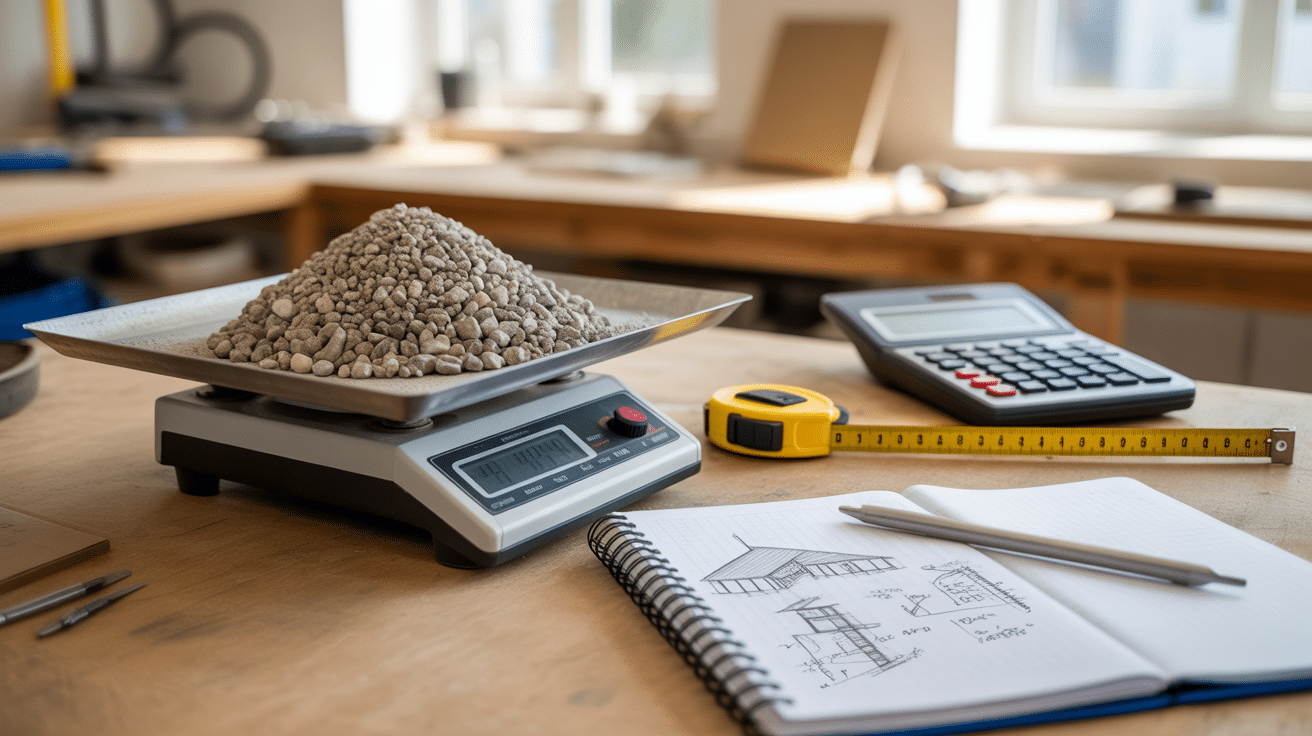
Knowing how to calculate gravel weight helps you plan deliveries, stay within limits, and order the right amount for your project.
Step 1: Find your volume in cubic yards: Measure your area in feet (length × width × depth) and divide by 27. This converts space into cubic yards for pricing. Example: 10 × 10 × 0.5 = 50 ÷ 27 = 1.85 yd³.
Step 2: Check the gravel density: Different gravels have different densities. For instance, 3/4-inch crushed gravel averages about 2,700 lb per cubic yard. This helps you estimate more accurately.
Step 3: Use the formula: Weight (lb) = Volume (yd³) × Density (lb/yd³). This gives the total pounds of gravel needed.
Step 4: Convert pounds to tons: Divide the total pounds by 2,000 to find tons. Example: 3 yd³ × 2,700 lb/yd³ = 8,100 lb = 4.05 tons.
It’s always smart to order 5–10% more gravel than you calculate; it’s better to have extra than to run short mid-project.
Why Supplier Data Gives the Most Accurate Weight
I’ve learned that supplier data is the most reliable source when estimating gravel weight. Each region uses different materials and processing methods, which can change density quite a bit.
- Local quarries often work with limestone, granite, or mixed aggregates, which vary in density.
- Some suppliers post exact product weights, such as 2,410 lb per cubic yard for 3/4-inch driveway gravel.
- Using supplier figures helps you plan transport safely, avoid overloads, and estimate delivery costs correctly.
- Weather conditions or how long the gravel has been stored can also change its weight slightly.
These details can seem minor, but they make a big difference when estimating costs or scheduling deliveries for larger projects.
Planning Truck and Trailer Loads
Knowing how much gravel weighs helps you plan safe and efficient transport. Overloading a vehicle can strain the engine, brakes, and tires, leading to damage or unsafe driving.
| Vehicle Type | Average Payload Capacity | Approx. Gravel Load (Cubic Yards) | Notes |
|---|---|---|---|
| Half-ton pickup (e.g., F-150, Silverado 1500) | 1,000–1,500 lb | 0.5 yd³ | Safe for small garden or walkway projects |
| Three-quarter-ton pickup (e.g., F-250, Ram 2500) | 2,000–3,000 lb | 0.75–1 yd³ | Handles light driveway or base work |
| One-ton pickup (e.g., F-350, Silverado 3500) | 3,000–3,500 lb | 1–1.25 yd³ | Can carry close to a full yard of dry gravel |
| Dump trailer (light-duty) | 3,000–5,000 lb | 1.25–2 yd³ | Ideal for bulk hauling with proper balance |
| Heavy-duty dump trailer or flatbed | 5,000–10,000 lb | 2–4 yd³ | Best for contractors or large-scale jobs |
Note: Wet gravel weighs more than dry gravel, so always reduce the load when it’s damp. Planning smaller, balanced trips helps protect your vehicle and keeps every haul safe and manageable.
Common Mistakes to Avoid
I’ve seen small oversights turn a simple gravel job into extra work and added cost. A little planning up front saves time and materials later. Here are a few mistakes to watch for:
- Skipping measurements: Estimating by eye often leads to overbuying or running short. Always measure area and depth.
- Ignoring compaction: Gravel settles after spreading. Order about 10–20% extra to keep coverage even.
- Forgetting about moisture: Wet gravel weighs more and can overload trucks. Ask if the material is dry before delivery.
- Overloading vehicles: Stay within your truck or trailer’s rated payload to prevent damage or unsafe hauling.
- Mixing materials: Combining different gravel types can cause weak layers. Use one consistent type per project.
- Skipping a base layer: Laying gravel directly on soil can cause sinking. Start with a compacted base for stability.
Taking a few minutes to plan and check these details helps your gravel project stay strong, even, and within budget.
Wrap Up
After a few gravel projects, I’ve learned that “how much does a yard of gravel weigh” isn’t a simple number; it changes with every mix. Moisture, density, and how tightly it’s packed can shift the total weight more than you’d expect.
Taking time to double-check supplier data and run quick estimates always pays off. It keeps orders accurate, deliveries smooth, and costs predictable, especially when you’re working with larger loads.
If this guide helped, take a look at my other blogs on gravel planning and outdoor materials; I’ve shared what’s worked best for keeping projects simple, steady, and budget-friendly.