Nothing ruins a carefully styled living room faster than a beige box bolted to the wall. You spent weeks picking the rug, the sofa, the exact shade of warm white, and then a machine showed up and took over the view. It happens in almost every home with central air or a window unit, and most people just live with it.
You don’t have to. The trick isn’t hiding your cooling equipment in a way that breaks it or calling in emergency denver ac repair experts because a decorative cover suffocated the vents. The trick is designing around it on purpose, the same way you’d design around an awkward radiator or an oddly placed outlet.
Below is the framework I use, plus the mistakes that cost people money every summer. By the end you’ll know exactly what to hang, what to leave alone, and where to spend your styling budget.
Why Does the Air Conditioner Always Win the Design Fight?
Because it usually arrives last and lives longest. Furniture gets swapped, paint gets redone every few years, but that wall unit or floor vent stays put for a decade or more. Designers call this the “permanent guest” problem, and it explains why so many otherwise beautiful rooms have one spot that looks like an afterthought.
Here’s the part I’ll defend every time: the equipment is not the problem. The problem is the room being styled as if the equipment weren’t there. Once you accept that the machine is a fixed object with a fixed size, styling it becomes a geometry exercise instead of an eyesore.
So before you buy a single new thing, measure the unit’s footprint, note where the airflow points, and photograph the wall straight on. That photo is your planning document. If you can’t stand looking at it in a photo, you already know the styling has to change.
The Bracket-and-Sightline Method
This is the little system I came up with after redoing three of my own apartments, and it works whether you have a window unit, a wall-hung mini-split head, or a plain floor register.
The bracket. Frame the unit with two tall objects, one on each side, roughly at the same height as the unit’s top edge. A tall plant and a slim floor lamp work. So does a bookshelf and a curtain panel. Your eye reads the frame, not the box inside it.
The sightline. Sit in the chair where you actually spend your evenings and look toward the unit. Whatever you see between you and it becomes your decoration problem. If the answer is “nothing but a blank wall,” that’s your cue to hang art slightly off-center so the piece pulls attention to the left or right rather than dead center where the unit sits.
Two brackets, one sightline, and the unit stops being the first thing anyone notices when they walk in. I’ve used this on a 1970s Denver rental with a rattling window unit and on a new build with a sleek wall head, and it holds up in both.
What You Can Safely Put Around the Unit
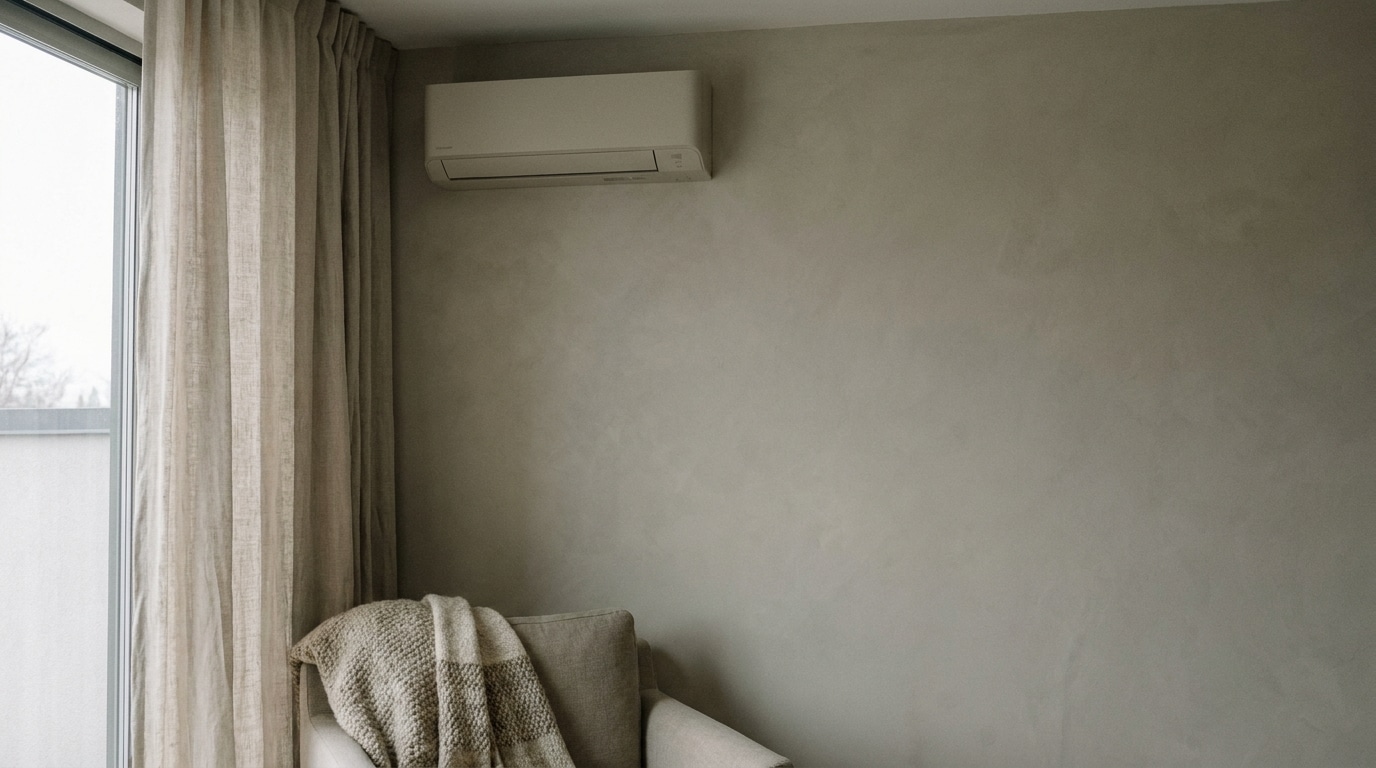
Some things are fine. Some will void your warranty or, worse, make your system strain. Here’s the short version.
- Curtains hung wide and long: yes, as long as the panel sits at least a hand’s width away from the vents and airflow is unobstructed.
- A tall plant beside, not in front: yes. Keep leaves clear of the intake so it doesn’t inhale foliage.
- A slatted or louvered screen: usually yes, if it’s open enough that you can feel airflow through it from a foot away.
- A fabric cover, a fitted box, or a decorative cabinet: no. That’s how you turn a small repair into a compressor problem.
The test I use is simple. Hold a tissue near the vent with the screen or curtain in place. If it flutters about as much as it did before, you’re fine. If it droops, back off.
Color, Texture, and the One Wall Move That Works
Paint is the cheapest disguise you have. Matching the trim and the wall to the unit’s casing, or going a shade or two darker behind it, makes the machine recede. A contrasting accent wall does the opposite. I’ve watched homeowners paint a bold accent wall, then wonder why the AC looks worse than before. It’s because they gave it a stage.
Texture helps too. A woven shade, a linen curtain, a wool throw over the arm of a chair near the unit: all of these give your eye something softer to land on. The one wall move I’d make in almost any room is a floor-to-ceiling curtain panel hung well outside the window frame. It costs less than most furniture and it hides more than any cover.
One caveat worth knowing. The U.S. Department of Energy has long noted that airflow restrictions and dirty filters hurt system performance, so any styling that blocks the intake is styling you’ll pay for later.
The Styling-Proof Maintenance Checklist
Good design and good maintenance share the same habit: check before the season starts. Here’s the checklist I run every spring, in this order.
- Vacuum the vents and swap the filter. Styled screens collect dust faster than bare walls.
- Pull back any curtain or furniture you moved closer during winter and re-test airflow.
- Look for water stains or frost near the indoor unit, which usually mean something is off.
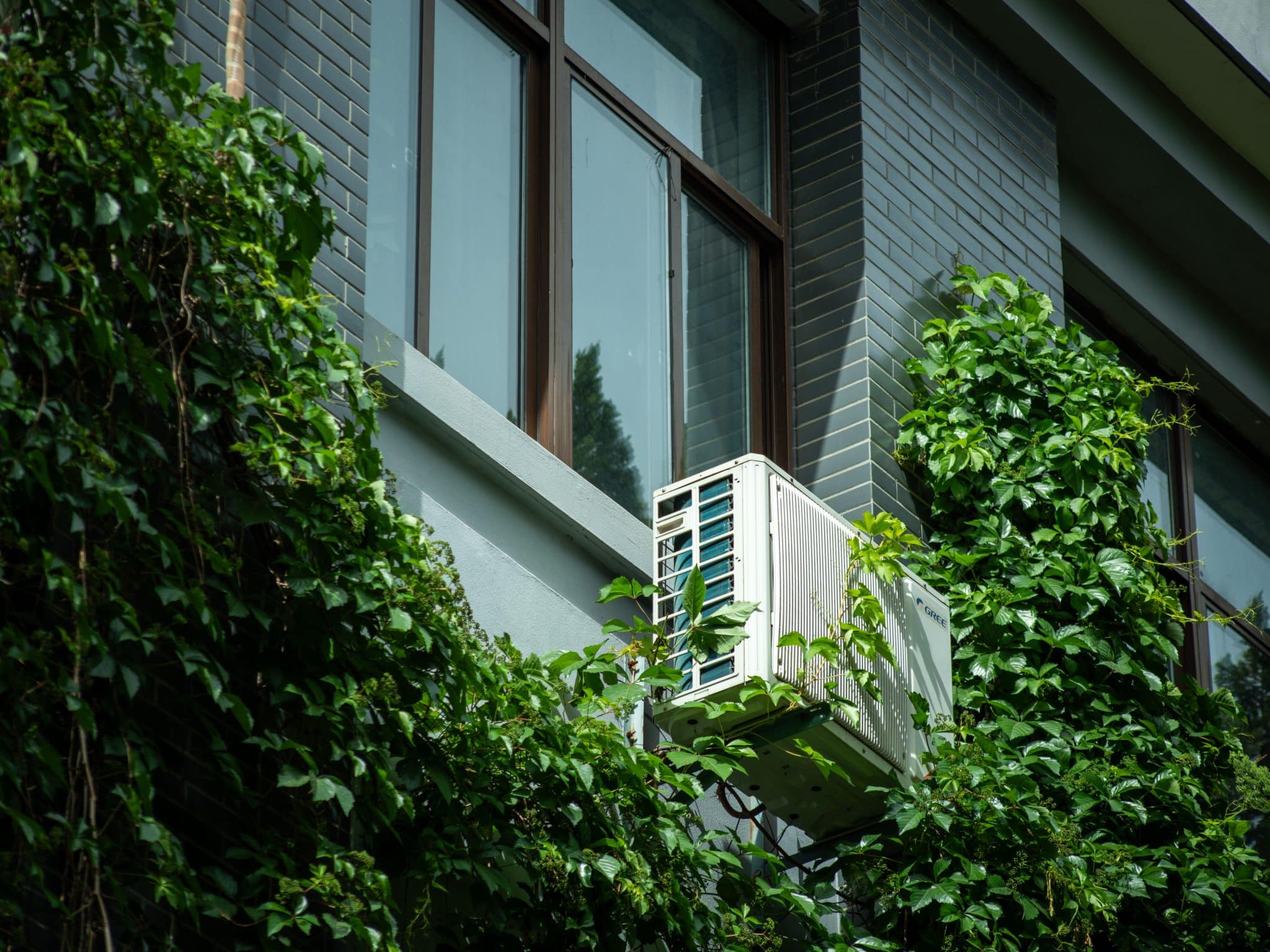
- Clear plants and decor from the outdoor condenser, with at least a couple of feet of breathing room on all sides.
- Listen. A new rattle or hum after you restyle is a hint that something is being crowded.
If you get to step five and hear something you don’t like, stop styling and get it checked before you keep going. The Environmental Protection Agency ties refrigerant handling to certified technicians, which is one more reason not to poke at the equipment yourself.
When the Unit Is Actually Failing
Styling can hide a lot. It cannot hide warm air coming out of a vent that’s supposed to be cold. If your room stays stuffy no matter what you do, the problem isn’t the curtain. It’s the system, and no amount of linen is going to fix it.
The honest rule is this. If your energy bill climbs and the room still won’t cool, call someone who knows the equipment. Styling is for the room, not for the machine’s problems.
Make the Room Win
You can design a room that feels finished even with a machine bolted to the wall. Measure the footprint, frame it with two tall objects, sit where you actually sit, and decorate the sightline rather than the box. Hang curtains wide, keep plants clear of the intake, paint the wall behind it into the background, and test airflow with a tissue before you commit.
Then do the boring part. Run the spring checklist so your styling never becomes the reason the system fails. When was the last time you looked at your vents with the same care you give your sofa?
Frequently Asked
Can I Build a Decorative Cabinet Around a Wall Unit?
Only if a professional told you the airflow is safe. Most cabinets trap heat, and I’d skip it.
Do Covers Make My Unit Look Better in Photos?
Sometimes. In real life, they almost always cost you cooling.