I used to think a small open-plan home meant everything in sight had to match.
Then I moved into one, and the first week set me straight. From the sofa I had a clear view of the kitchen and the dining table at once, and my plates, a mix of hand-me-downs and one chipped souvenir from a beach holiday, made the table look like it had wandered in from a different house, possibly one with strong opinions about gravy boats. Fixing it took very little money and a few repeated details.
Start With the Colors Already in the Room
Before I pulled the trigger on anything, I stood in the middle of the room with a cup of tea and looked slowly, like a very inept detective. White kitchen with pale oak; it can take cream and linen. Forest green cupboards; it can definitely take closer to ivory. A black rim around a white plate can match your appliances.
Then pick a small palette and repeat it here and there. A napkin can match a cushion, and a vase can borrow the backsplash color. It should not look catalog-identical, and it shouldn’t look department-store-matching, because if nothing in a room is fighting, you just moved into a Ready for Real Life Instagram photo that comes disassembled in a carton. Try in your own light. Cool white plates on display in the store made my warm white cupboards look like butter, thanks to shop lighting.
Choose Plates That Tie the Kitchen to the Table
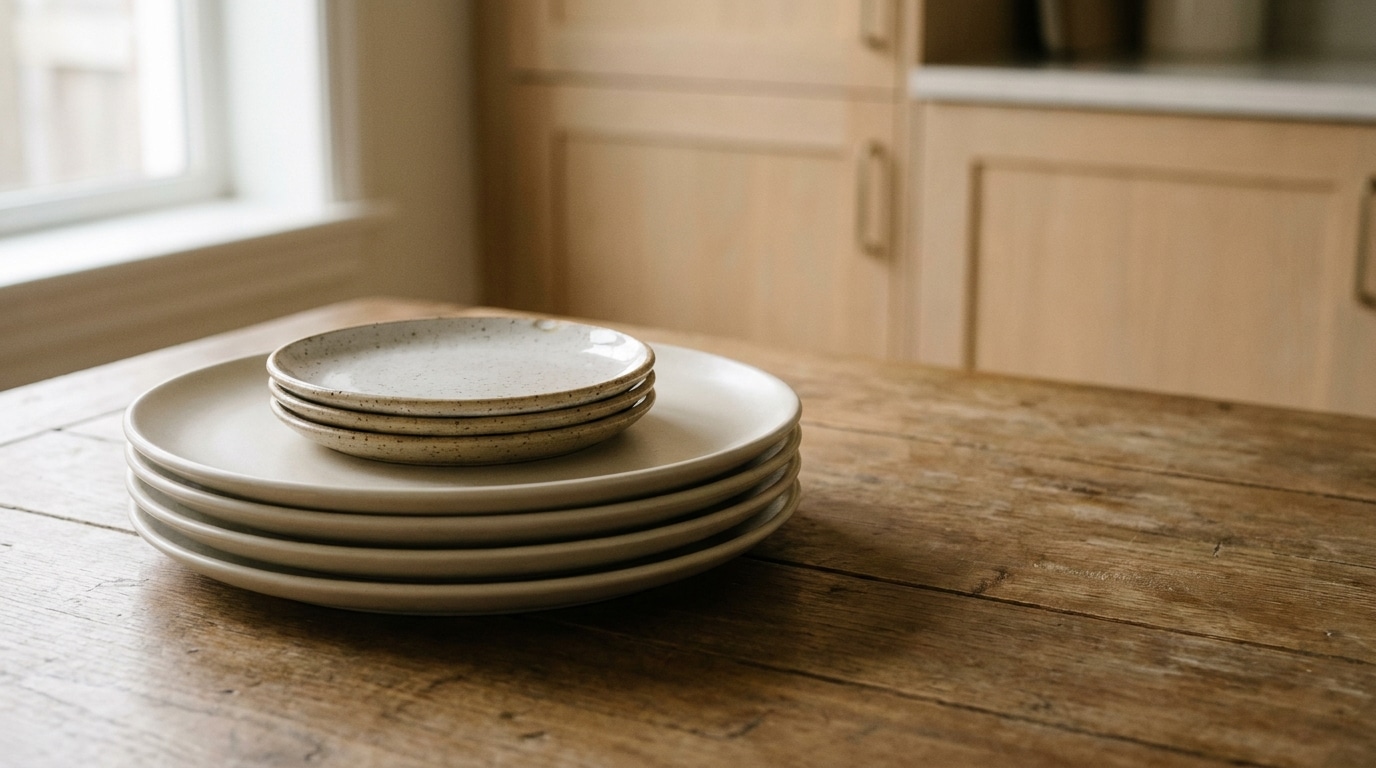
Plates are the cheapest way to change how a table looks, and nobody has to move any furniture. One evening I browsed plate sets for a coordinated table setting on Allegro, and it was a pleasant way to compare, because the product pages put shape, finish, color and piece count side by side. I could picture each set against my own cabinets, and the one I ordered arrived looking just like its photos.
White or ivory looks good against any countertop and lets the food shine. Flecked stoneware makes a spare room look warmer. Blue and white always plays well with an unadorned cupboard. If the tile is already all patterned or your walls are doing all the talking, say less with the plates and relate to something you can see with one detail, rather than copying with an echo. Who else but you can decide if you’d like something sculptural on the plates? If the cabinet has a bevel, a square looks super contemporary and focused.
Now the less-fun part. Think about how many dinner and side plates you really need, and add a few extras for guests. And find out if you will be allowed to machine wash the damn things, because no one wants to be washing beautiful dishes by hand, you know, for decor. Also research whether you can buy replacement pieces later, because a single dish falling off the drying rack shouldn’t totally ruin your collection. If you have a small space with hang space, oversized plates aren’t great because bowls and glasses take up real estate on the table.
Give the Dining Area Its Own Spot Without Walls
A room with walls needs areas designated, let’s be honest. And you can designate a space without a wall. Make sure there are about 36 inches behind each chair, enough room for someone to sit comfortably and for someone else to pass to the fridge, and plan on 18-24 inches of table width per person. In square rooms, round tables look beautiful and rectangles suit long ones, so measure twice because you can’t wish new furniture smaller.
A pendant light pulls its weight here. Hang it roughly 28 to 34 inches above the table, low enough to feel cozy and high enough that tall guests keep their foreheads. If you are stuck with overhead lighting, the runner or placemats can be down the center of the table. Even a rug can still denote the space if you lay it back under the table with at least 24 inches extending past the edge of the table; this will ensure that when your tipsy friends lean back in their chairs, their legs stay resting on it. I learned that one with a rug that was too small, and my guests’ chairs loudly protested when they stood up after dinner.
Bring in Texture So the Table Feels Warm
Fabric and natural materials soften a table fast. Linen napkins or woven placemats will play well with wood flooring or stools, glassware will look airy, and you can pick up on the color of those cabinet pulls with a little brushed metal. Nothing has to be exact; it will all work as long as the colors coordinate. If you’ve got a heavy grain on the floor or the counter, keep these elements solid.
On a small table, I skip the runner. A plate, cutlery and a glass leave room for serving dishes, and a runner only gives the crumbs a place to sit and feel bad about what they’ve done.
Keep the Centerpiece Low and the Clutter Lower
A bowl of fruit and a tasteful vase add some life to the table, as long as you can carry those projects all the way to the kitchen in one trip. Tall arrangements block the view between the kitchen and the sofa, which matters in a room built around sightlines, and nobody wants to chat with a eucalyptus bush. Keep it low, especially if the table doubles as a desk.
Make the Setting Work for Real Life
The best table suits your routine. For family dinners, sturdy plates and washable textiles beat delicate finishes every time. Neutral tableware is flexible too, since a seasonal napkin or a new centerpiece shifts the mood without another purchase.
An open-plan home doesn’t have to look styled around the clock. These days, when I glance over from the sofa, the plates echo the cabinets, the table sits quietly in its corner, and I no longer wince on my way to the fridge. That’s about as good as a Tuesday evening gets, and the gravy boat has no further comments.
*Sponsored article*