The living room is often shaped by a few dominant elements: seating, lighting, storage, artwork, and the architectural features that organize the space around them. Surfaces can play an equally important role. Living room tiles are no longer limited to flooring: they can also be used on walls and built-in elements to create focal points that feel integrated with the architecture.
The living room is often shaped by a few dominant elements: seating, lighting, storage, artwork, and the architectural features that organize the space around them. Surfaces can play an equally important role. Living room tiles are no longer limited to flooring: they can also be used on walls and built-in elements to create focal points that feel integrated with the architecture.
Living Room Tiles Are No Longer Limited to Flooring
Treating tiles as part of the wider interior composition opens more possibilities than simply choosing a practical floor finish. A tiled wall can introduce depth behind a sofa, frame a media area, or create a visual connection with the floor without repeating the same surface.
This approach is especially useful where decoration is more selective. Instead of adding several objects or contrasting materials, one carefully chosen ceramic surface can give a specific area greater presence while keeping the overall interior balanced.
Turning Walls Into Part of the Interior Composition
Walls can contribute to the structure of a living room as much as furniture does. A surface with a more pronounced texture can make one plane feel more substantial, while a quieter finish can create a refined backdrop for artwork, shelving, or lighting.
The relationship between horizontal and vertical surfaces also matters. Living room tiles used across both can create a stronger sense of connection, while changing tone or texture between them can introduce hierarchy without making the room feel fragmented.
Highlighting Fireplaces, Niches, and Architectural Volumes
Fireplaces, recessed niches, media walls, and built-in volumes are natural candidates for more expressive surfaces. Tiling these elements can help emphasize their shape and make them read as deliberate parts of the architecture.
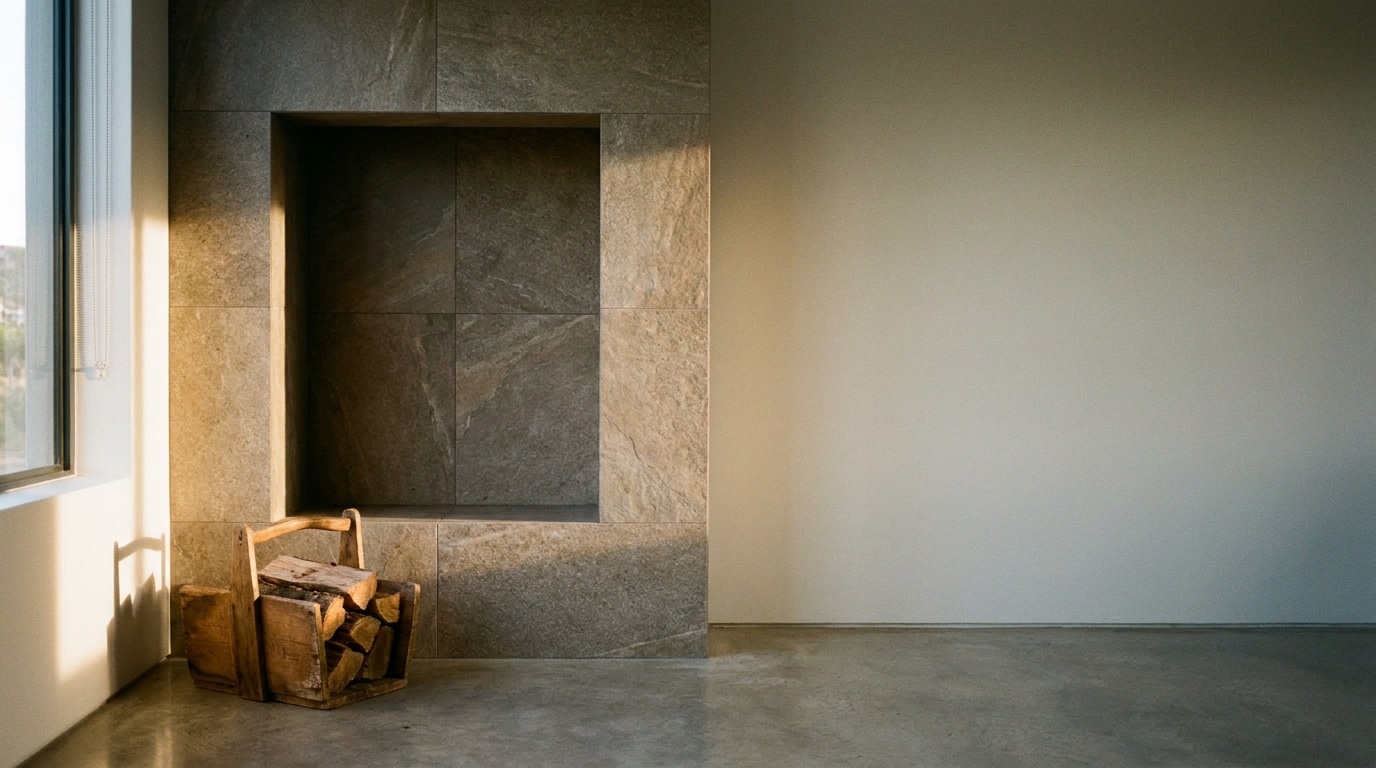
The effect does not need to be dramatic. A subtle change in texture or material interpretation may be enough to distinguish a fireplace from the surrounding wall. In the same way, a tiled niche can create depth through contrast while remaining connected to the rest of the room.
Using Texture and Material Effects to Create Visual Hierarchy
Material character strongly influences where the eye is drawn. Stone- and marble-inspired surfaces can introduce a stronger sense of depth, while concrete effects may support a more restrained architectural language. Wood-inspired interpretations can bring warmth without requiring another material category.
Texture also affects emphasis. A more structured surface catches light differently and may appear more prominent, while a smoother finish tends to create a calmer visual field. The right choice depends on whether the focal point should stand out clearly or work more quietly within the room.
Large Surfaces and Fewer Visual Interruptions
Large-format tiles can strengthen this architectural effect by reducing the number of visible joints. On a feature wall or fireplace surround, fewer interruptions can make the surface feel more continuous and allow its pattern or texture to read more clearly.
This does not mean larger formats are always preferable. Smaller modules can introduce rhythm or detail when the architecture calls for a more articulated composition. Scale should support the element being highlighted rather than compete with it.
Creating Focal Points Without Overwhelming the Room
A successful focal point gives the eye somewhere to settle without dominating every other part of the interior. Living room tiles can help achieve this balance because they allow emphasis to come from surface, texture, scale, and material character rather than from additional decoration. Used selectively, they can turn walls and architectural volumes into active parts of the design while leaving enough space for furniture, lighting, and artwork to retain their own presence.
Ceramiche Keope: Shaping Contemporary Spaces Through Material Innovation
Contemporary interiors ask surfaces to do more than complete a room: they are expected to support different functions, create continuity, and contribute to the identity of the space. Ceramiche Keope approaches porcelain stoneware from this perspective, combining Italian design culture with advanced manufacturing and industrial expertise.
Established in 1995 and part of the Concorde Group, the company develops porcelain surfaces for residential and architectural projects. Research into formats, finishes, colors, and material interpretations allows Ceramiche Keope to address different design languages while preserving the technical qualities of porcelain stoneware.
This versatility is particularly relevant in the living room, where relaxation, entertainment, work, and social life increasingly overlap. Ceramiche Keope living room tiles can be used on floors and walls, with stone-inspired options supporting mineral interiors and wood effects introducing the visual warmth of timber. A broad choice of shades, textures, and formats expands the possibilities.
ULTRAsilky offers an exceptionally smooth, velvety satin feel with enhanced slip resistance for wet interior areas, while ULTRAmatt combines a deep extra-matt appearance, soft uniform touch, easier maintenance, and R10 A+B performance for residential and commercial floor and wall applications.
Environmental responsibility is integrated into Ceramiche Keope’s production model. Process water is reused, fired ceramic waste is recovered, and raw-material residues are reintegrated through a closed-cycle system. Around 75% of the energy required is generated internally, while the remainder comes exclusively from certified renewable sources.
Ceramiche Keope’s environmental commitment is also supported by ISO 17889, WELL Building Standard V2, Declare, and the Environmental Product Declaration (EPD). Together, they reinforce the company’s focus on sustainability, material transparency, and verified environmental performance.
Design research, surface technology, and responsible production define a broader Ceramiche Keope vision: creating porcelain stoneware for residential and architectural contexts that balances expressive freedom, performance, and environmental awareness.