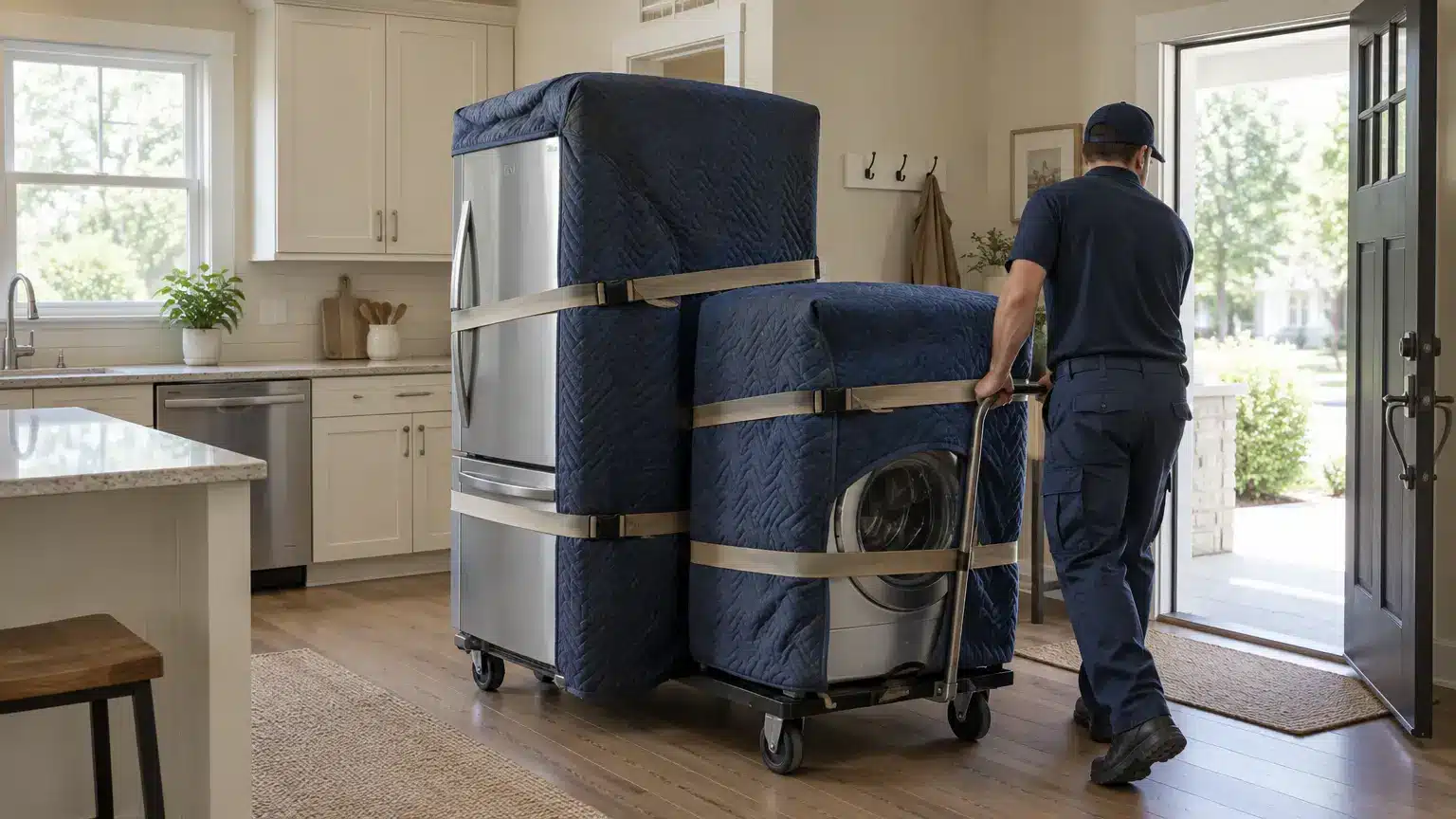
Big home appliances must be properly prepared since their weight, dimensions, electric wiring, and inner mechanisms may cause problems during their transfer. Preparation of refrigerators, washing machines, driers, dishwashers, stoves, and freezers is necessary in order to move them from one house to another. Proper appliance preparation will ensure that there will be no damage caused and everything will go according to plan on moving day. Proper preparation of appliances allows you to avoid any delays while disassembling, cleaning, securing, and transporting appliances.
Cleaning and Emptying Appliances
It is essential that all appliances be empty before their transportation. Homeowners need to empty all their refrigerators and freezers and allow enough time to defrost in case ice has formed inside them. They also need to dry their interiors thoroughly and empty all the water inside. Washing machines should also be emptied of any water, which may still be inside their hoses or pumps. Lint needs to be removed from the dryer, and ovens need to be cleaned to avoid grease being spread around.
Cleaning gives homeowners an opportunity to inspect their appliances before transportation. It is advised that any removable components, such as shelves, trays, racks, and others, be removed and packed separately since these movable parts could become the cause of scratches and other types of damage during the move. Smaller components need to be put into labeled bags for an easy reassembly. A homeowner who works with a Montreal moving company can ask for additional recommendations on appliance preparation.
Disconnecting and Securing Appliances
Large appliances must be disconnected appropriately based on their installation requirements. Water connections of refrigerators, dishwashers, and washing machines must be turned off and disconnected properly. The drums of washing machines must be secured based on the manufacturers’ recommendations so that they do not shake excessively during transportation. Special attention needs to be paid to gas appliances and gas connections. Disconnecting of electrical appliances must be done long before loading them so that no cords are dangerous during the process.
After disconnection of an appliance, its doors, cords, hoses, and other removable parts must be tied up carefully so that they will not apply excessive pressure to the appliance. The use of tape may harm some surfaces, so protective materials must be chosen wisely. The doors of the refrigerator might stay a little bit open in order to keep moisture out of it. In case of city-to-city moving, there might be special requirements of an Ottawa moving company.
Protecting Appliances During Transportation
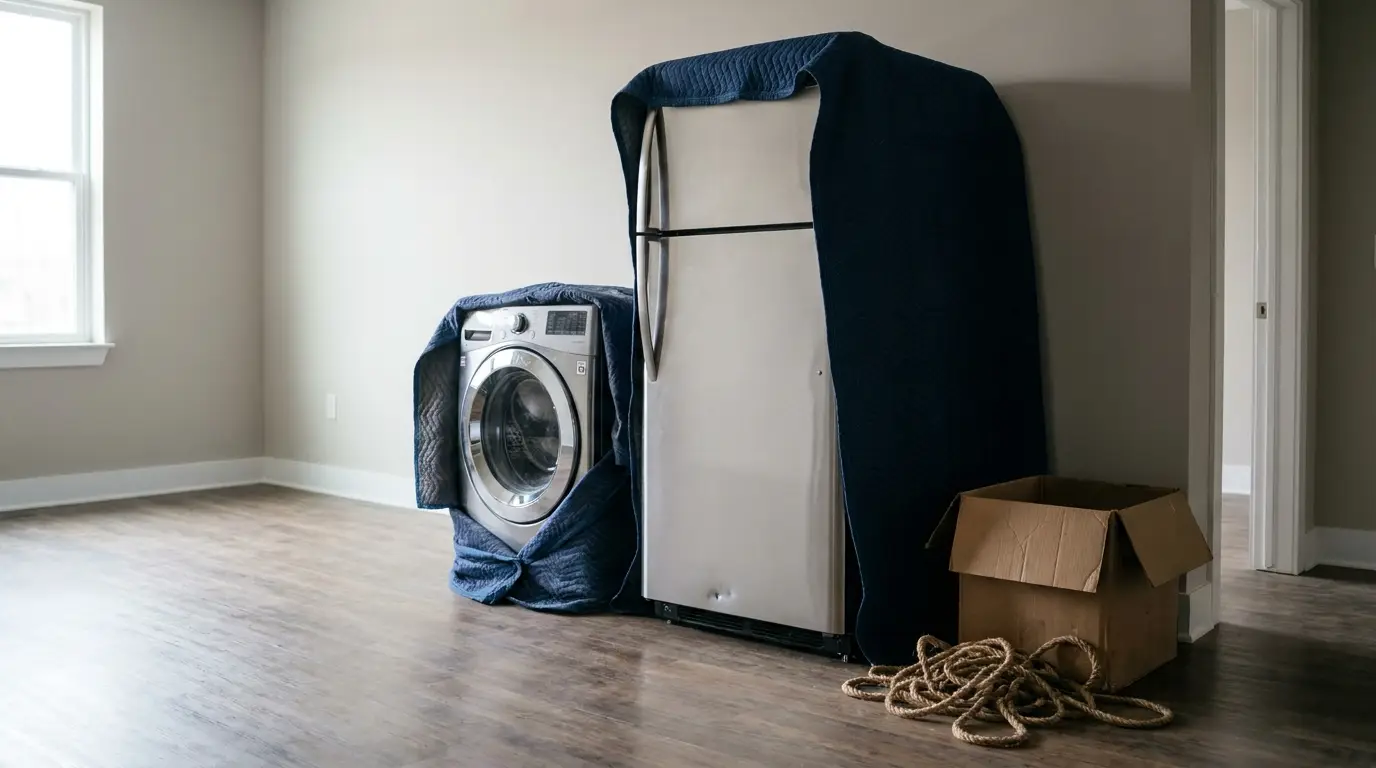
Appliances should be covered and protected against scratching, denting, and any impacts. Moving blankets, packing material, and proper wrapping materials may assist in protecting painted, stainless steel, or any other kind of finish. Appliances must stay upright whenever they need to be as instructed by the manufacturers, especially refrigerators and freezers. The weight of the appliances must also be considered when planning their transportation through doorways, stairways, and hallways.
The area leading from the appliances to the moving van should be cleared before lifting. Door sizes must be determined beforehand for big appliances and any obstructions must be cleared along hallways and entries. Professional movers have the right kind of equipment to transport heavy appliances with little stress on the floor and walls. Good preparations will ensure that loading becomes easier and the chances of damaging either the appliance or the house will be minimized.
Preparing for Appliance Installation
Appropriate care should be given to these appliances after they arrive at their new destination. Depending on how they were shipped, refrigerators and freezers may need to stand upright for a certain period before they can be plugged into sockets. Connections need to be inspected before the use of water connections while checking for leakage after installation of dishwashers and washing machines. Gas appliances need to be professionally installed where necessary.
It is important that the homeowner keeps manual guides handy during the entire process of moving. This will help the homeowner learn the appropriate procedure concerning positioning, connection, leveling, and starting up of the appliances. It may be useful to take photos of the connections before disconnection. This will make it easy to refer back to them during installation.
When it comes to transporting big appliances when you are moving out of your home, it is not just enough to unplug them and put them into your moving van. The removal of any debris, cleaning the appliance, disconnection from all utilities, securing loose parts, and protecting the outer surface of the appliance can make the whole process much easier. This can also help make sure that the appliances do not cause any problem while making their way inside your new home.