Three twenty-minute sessions add up to one hour on track. That’s short for a race weekend. It’s long enough, though, for the brakes and the transmission to show where the car stands. Here’s what to check, in order.
Know What the Brakes Start With
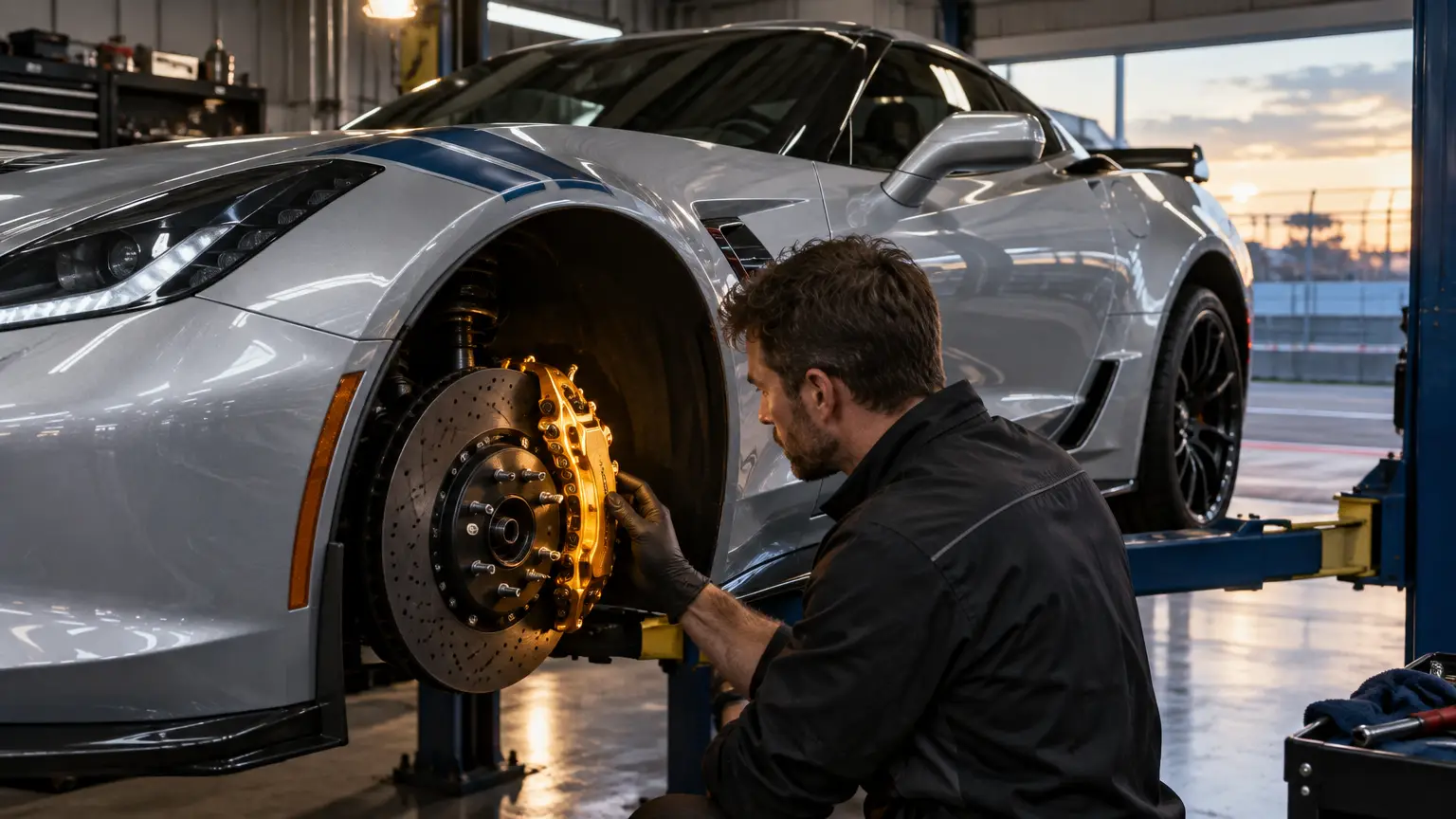
Every 2027 Grand Sport ships with eBoost-assisted Brembo brakes, with six-piston calipers up front and four-piston calipers in back. The $3,500 Z52 Sport Performance Package swaps in the Z06’s J56 iron brakes and adds Michelin Pilot Sport 4S tires. The $20,695 Z52 Track Performance Package goes further, with J57 carbon-ceramic brakes and Michelin Pilot Sport Cup 2R tires.
Edmunds bought a Grand Sport with the Sport package and stopped it from 60 mph in 105 feet. A Stingray matched that number, and a Z06 took 104. Stopping distance is not the issue on this car. Pedal feel might be. Edmunds’ testers said the brakes make it hard to judge how close they are to the limit. On a track, a pedal that says little gives you little warning. So lean on fluid and pad checks, not on feel.
Fluid Is the First Change
GM’s track guidance for the C8 calls for a high-temperature brake fluid with a boiling point of 310 degrees Celsius or higher. That advice dates to 2020, and the Stingray Z51 and the 2027 Grand Sport carry a different brake package. I’d follow it anyway. Hard braking heats the fluid on any of these cars.
GM said the 2020 car shows a message in the gauge cluster when the brakes start to overheat. A warning message is a last resort. Change the fluid before the first session, not after the third.
Pads Show Wear Early
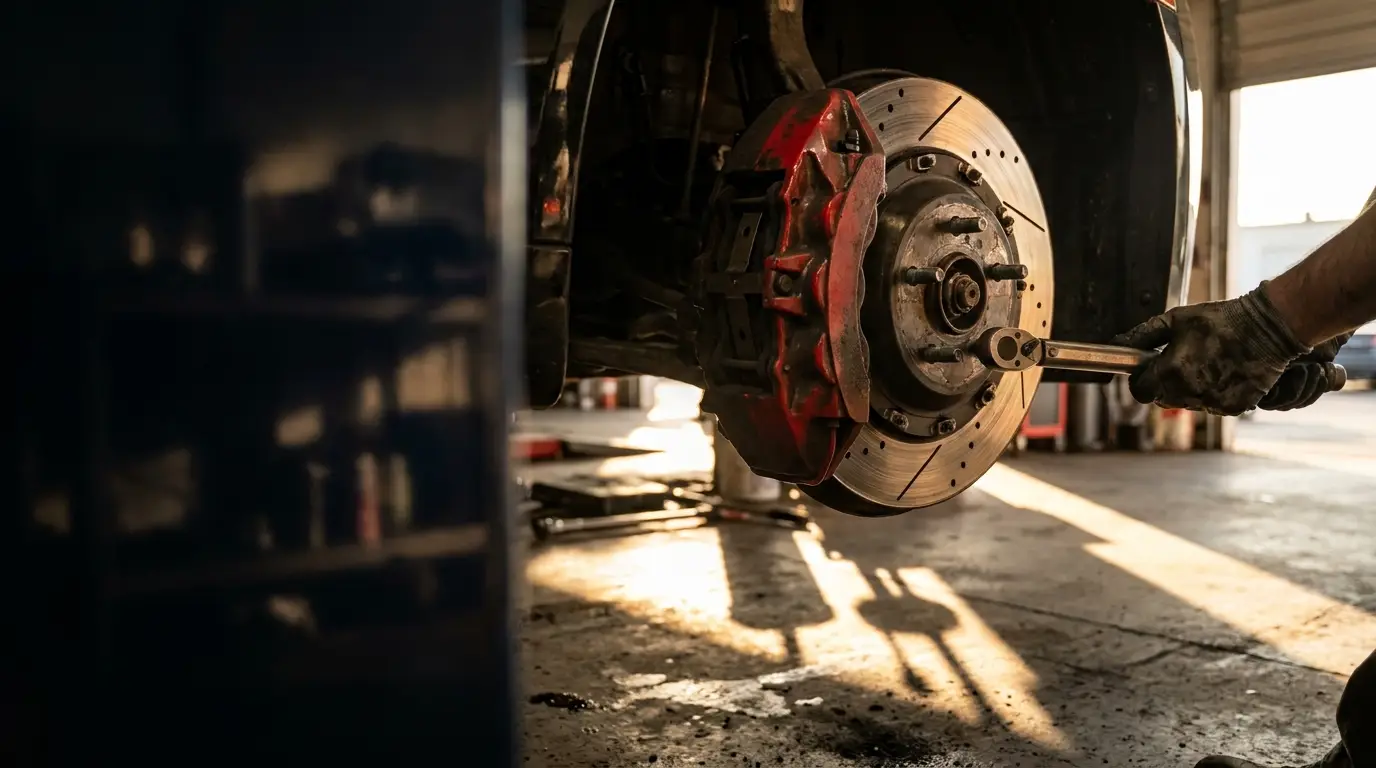
New pads need burnishing before track use, and GM points owners to the manual and its track prep guide for the procedure. Once they’re bedded in, measure what’s left at the end of the third session. Hawk says to replace its HP Plus pads when about 1/8 inch of friction material remains on the backing plate. It also warns that aggressive compounds bring more noise and dust than street pads.
Fitment needs a second look. Girodisc’s GP40 pads, for example, list 2020 to 2026 Z51 fitment. A Corvette C8 Grand Sport with the Z06’s J56 brakes should get its own fitment check before you order anything. One Z51 track day kit pairs racing fluid with track pads. It also adds braided brake lines and two quarts of transmission fluid.
The Transmission Wants Extra Fluid
GM tells C8 owners to add two extra quarts of transmission fluid for track use, and it suggests having a dealer handle that. It also calls for a fluid and filter change after every 24 hours of track use. At twenty minutes each, three sessions come to one hour, so no change is due yet. But the extra fluid should go in before the first session. Edmunds lists the Grand Sport’s gearbox as an eight-speed dual-clutch automatic, the same type of unit GM wrote that advice for.
Temperatures to Expect
The best published numbers come from a 2020 Z51 run at Spring Mountain Motor Resort in Nevada, where June highs average 95 degrees Fahrenheit. On lap eight of the last session, the car showed 230 degrees coolant and 237 degrees oil. Transmission oil read 216. No warning lights came on, and no car entered limp mode.
Those figures come from a Z51 with the older LT2 V8, and the 2027 Grand Sport runs the new LS6. Read them as a reference point. Write down the readings from each session, then look over the heat exchangers after the third. Schumacher Chevrolet recommends that check every two to three sessions, and it names underbody ducts and heat shields as places where debris collects.
Where the Money Goes
On a Corvette C8 Grand Sport that sees a few track days a year, brake fluid and pads cover the stopping side of that first hour. The extra transmission fluid covers the gearbox.
Carbon-ceramic brakes cost $9,000 as a standalone option on the Z06. On the Grand Sport, the Z52 Track package costs $17,195 more than the Sport package. If the iron brakes start to fade, fix fluid and pads first. Carbon-ceramics come last.