Every homeowner in America knows the feeling. You are enjoying a quiet Saturday morning, perhaps sipping coffee and planning a backyard barbecue, when you hear a strange gurgling sound from the kitchen sink. Or worse, you step into the basement only to find a puddle of water where it definitely does not belong. While a lush, green lawn and a blooming garden are sources of pride, the unseen network of pipes running beneath your property is what keeps your home functioning smoothly.
When those pipes fail, the results can be catastrophic for both your home’s foundation and your landscaping. Ignoring early warning signs is a gamble that rarely pays off. In fact, what starts as a slow drain can quickly escalate into a sewage backup that destroys your garden beds and requires thousands of dollars in remediation. To protect your investment, you need to understand the warning signs. Here are seven common drain line problems that homeowners should never ignore, along with actionable advice on how to handle them.
1. Persistent Clogs That Keep Coming Back
We have all dealt with a hairball in the shower or a grease clog in the kitchen sink. These are minor annoyances that usually respond well to a plunger or a store-bought cleaner. However, if you find yourself plunging the same toilet or snaking the same sink every few weeks, you are not dealing with a simple clog. You are likely dealing with a structural issue inside the pipe.
Recurring clogs often indicate that something is catching debris further down the line. This could be a buildup of scale, a foreign object lodged in the pipe, or even a “belly” in the line where water sits and collects sediment. Using harsh chemical cleaners repeatedly can actually damage your pipes, especially if you have older PVC or cast iron systems. Instead of fighting the same battle, it is wise to have a professional inspect the line to find the root cause.
2. Slow Drainage Throughout the House
If only one fixture is draining slowly, the problem is likely localized to that specific trap or fixture. But if you notice that the shower, the bathroom sink, and the toilet are all sluggish, the issue is in your main sewer line. This is a critical distinction to make.
A slow main line means wastewater is not leaving your property efficiently. This stagnant water creates pressure within the system. Eventually, that pressure will find a way out, often backing up into the lowest point of your home, such as a basement floor drain or a ground-floor shower. If you notice multi-fixture slowdowns, it is time to call in the experts for Drain Line Cleaning Services before a messy backup occurs.
3. Foul Odors Coming from Drains
A healthy drain line should be a closed system. You should not smell the inside of your pipes. If you catch a whiff of rotten eggs or sulfur coming from your sink, shower, or yard, take notice. This smell is usually hydrogen sulfide gas, which is a byproduct of decaying organic matter.
While a dry P-trap can cause a temporary smell in a guest bathroom, persistent odors indicate a deeper problem. It could mean that sewer gas is escaping through a crack in the pipe or that there is a significant blockage causing waste to sit and rot. In some cases, odors in the yard might suggest that your septic system or sewer line is leaking. This is not just unpleasant; it can be a health hazard for your family and pets.
4. Water Pooling in Your Yard or Garden
Your garden should be hydrated by rain and your sprinkler system, not by your sewer line. If you notice unusually green patches of grass or soggy, swampy areas in your yard—especially near the path of your main sewer line—you likely have a leak.
This problem is particularly concerning for homeowners because it affects both the plumbing and the landscaping. A leaking drain line releases nutrient-rich wastewater into the soil. While this might make your grass grow, it is contaminating the soil and potentially attracting pests. Furthermore, the moisture can soften the ground, leading to sinkholes that could swallow a lawnmower or cause structural damage to a driveway or patio. For landscaping repairs and garden restoration, you can get in touch with prolandscapingsydney.com for professional landscaping services.
5. Tree Root Intrusion
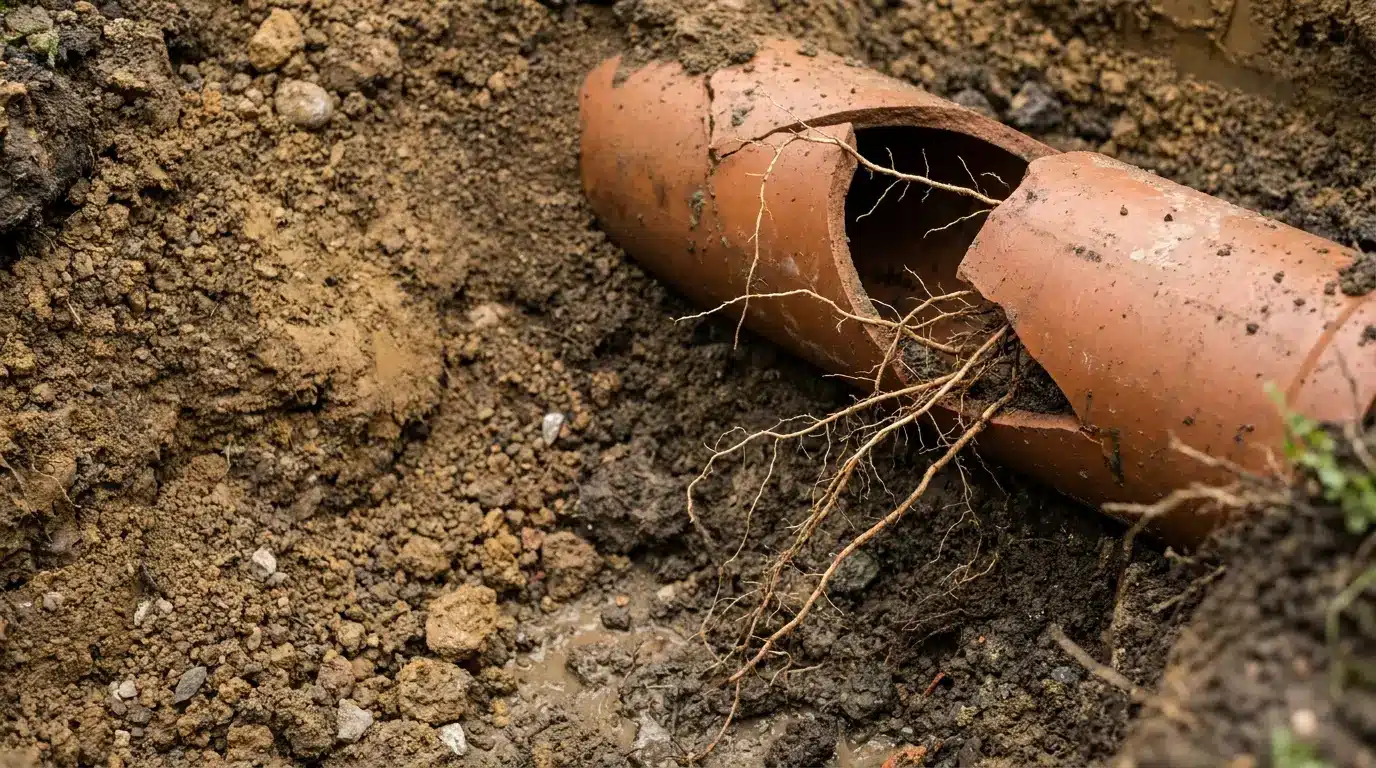
This is perhaps the most common and destructive enemy of your home’s plumbing system, particularly in older neighborhoods with mature trees. Tree roots are naturally attracted to the moisture and nutrients flowing through your sewer pipes. Even a tiny hairline crack in a pipe is an open invitation for roots to enter.
Once inside, roots act like a net, catching toilet paper, grease, and waste. They grow thick and expansive, eventually cracking the pipe or completely blocking the flow. In the United States, root intrusion is a leading cause of sewer line failure. If you have large trees near your property line or front yard, regular inspections are crucial. Ignoring this issue can lead to the complete collapse of the pipe, requiring a full excavation of your yard to fix.
6. Gurgling Toilets and Sinks
That gurgling sound you hear after you flush the toilet or drain the sink is not just a quirky noise; it is a cry for help from your ventilation system. Every plumbing system has a vent pipe that runs up through your roof to equalize air pressure. When a blockage forms in the drain line, it restricts airflow.
As water pushes down the pipe, it creates a vacuum behind it. To fill that vacuum, air is sucked through other traps, which creates the gurgling sound. This indicates that the water is struggling to flow freely. If left unchecked, the next step is usually a complete backup. Gurgling is the early warning system for a clog that is forming deep within the system.
7. Unexplained Increases in Water Bills
Sometimes the problem isn’t inside the house but shows up in your mailbox. If your water bill suddenly spikes without a corresponding increase in usage, you likely have a leak. While leaking toilets are a common culprit, a hidden leak in your main drain line can also cause this if you are on a metered system that detects constant flow.
A continuous leak forces your system to work harder and waste water. In drought-prone areas of the US, this is not only expensive but also environmentally irresponsible. Checking your water meter when no water is running in the house is a simple test. If the dial is still spinning, water is moving somewhere it shouldn’t be.
Why Professional Maintenance Matters
Many homeowners adopt a “wait and see” approach, hoping the problem resolves itself. Unfortunately, plumbing issues rarely fix themselves; they only get more expensive. A minor crack can turn into a collapsed pipe. A small clog can turn into a flooded basement.
Professional drain cleaning involves more than just clearing a blockage. It involves inspecting the interior of the pipe using high-tech cameras to assess the condition of the material. Technicians can identify weak spots, root intrusion, and buildup that a homeowner cannot see. They use specialized hydro-jetting equipment to scour the walls of the pipe, removing grease and scale that snaking misses. This preventative approach saves you money in the long run by extending the life of your plumbing system.
Protect Your Home and Garden Today
Your home is your sanctuary, and its plumbing system is its circulatory system. Ignoring the warning signs of a failing drain line puts your home, your health, and your wallet at risk. From foul odors to soggy lawns, the signals are usually clear if you know what to look for.
Do not wait until you are standing in ankle-deep water to take action. Addressing these seven common problems early can save you from a plumbing disaster. Whether it is a recurring clog or a suspected leak, prompt attention is key. Keep your garden thriving and your home dry by staying vigilant and calling a trusted professional at the first sign of trouble. Your pipes will thank you, and your peace of mind will be restored.