





We can all name the little things we’ve quietly mastered. The exact red that suits us. The perfect weeknight pasta. The knack for folding a scarf so it finally sits right. So here’s a gentle question: could you help someone who collapsed in front of you? A short course of Red Cross First Aid training can turn that panicky “I don’t know what to do” into quiet, grounded confidence. And unlike a trend, this is one skill that never dates.
Think of your personal toolkit. Not the one in a drawer, but the one in your head. It holds the things that make you capable. The ability to stay calm when a friend is hurt belongs right there, next to everything else you’re proud of knowing.
Why Do So Many of Us Freeze in An Emergency?
It isn’t a character flaw. It’s biology. When something shocking happens, your body floods with adrenaline, your thoughts scatter, and your hands can shake. In that moment, you don’t rise to the occasion. You fall back on whatever you’ve practiced.
That’s the whole secret. People who’ve trained don’t feel braver than you. They’ve simply rehearsed the steps enough that their hands remember what to do while their mind catches up. Training replaces guesswork with muscle memory.
And the moments that matter most are rarely dramatic scenes with sirens. They’re ordinary. A dinner guest who starts choking. A parent who clutches their chest. A toddler who swallows something small. A friend who faints at a crowded event. Everyday life, interrupted.
What Are the Few Skills that Actually Matter?
You don’t need a medical degree. You need a handful of calm, learnable responses that cover the situations most likely to land in your lap. Here are the ones worth having.
Hands-only CPR. If an adult suddenly drops and isn’t breathing normally, you can keep their blood moving with chest compressions alone. Push hard and fast in the center of the chest, about 100 to 120 pushes a minute, letting the chest rise fully between each one. No mouth-to-mouth required for the untrained. That’s it. Your steady hands become their heartbeat until help arrives.
Choking response. When someone can’t cough, speak, or breathe, quick back blows and abdominal thrusts can clear the blockage. It takes seconds to learn, and it’s the kind of skill you hope to never use, yet desperately want if the moment comes.
Stopping serious bleeding. Firm, direct pressure with a clean cloth does more than most people realize. Knowing to press and hold, rather than dab and panic, can genuinely change how a bad cut ends.
Using an AED. An automated external defibrillator is that wall-mounted device you’ve walked past a hundred times at the mall or the gym. It talks you through every step out loud. You switch it on, place the pads, and it decides whether a shock is needed. You truly cannot get it wrong, and it’s one of the most powerful tools a bystander can reach for.
Four skills. That’s the core of it. Everything else builds on them.
Does This Really Make a Difference?
It does, and the numbers are sobering in the best possible way. In Canada, roughly 60,000 cardiac arrests happen outside a hospital every year, and only about 1 in 10 people survive.
Here’s the part that should sit with you. CPR paired with an AED can double someone’s chance of making it. The catch is time. For every minute that passes without CPR or a shock, survival slips by roughly 7 to 10 percent. Paramedics are fast, but they can’t beat the clock from across the city. The person already in the room can.
That person could be you. Not a stranger, not an expert, just someone who took an afternoon to learn. When you understand that, first aid stops feeling like a chore and starts feeling like a kind of quiet power.
Isn’t Training a Big, Intimidating Commitment?
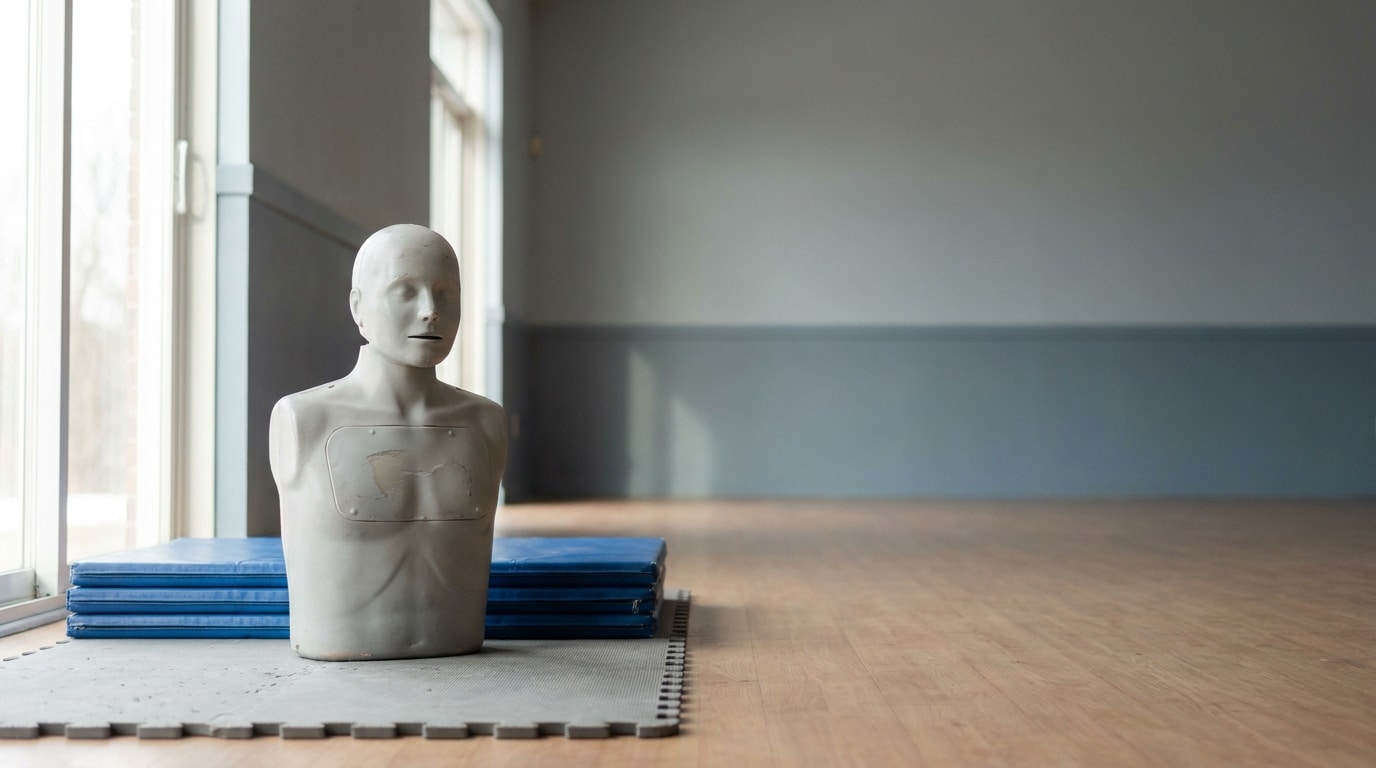
This is where a lot of people get stuck, and it’s worth clearing up. The picture in your head- long clinical lectures and stiff role-play- isn’t how modern training works.
Most courses now use blended learning. You do the theory online, at your own pace, in your own space. Pause it to make tea. Pick it back up after the kids are asleep. Then you come in for one short, hands-on skills session where you actually practice on a mannequin and get the feel of it in your hands.
So the dread melts away. You arrive already knowing the concepts, and the in-person time is spent doing, not sitting. CPR and AED training typically covers adults, children, and infants, so you leave ready for the people you’d protect first. If you want to go a step further, there are fuller first aid and CPR options too. Want to make a real afternoon of it? You can book a session through Coast2Coast First Aid near you and treat it like any other skill you’ve decided to master.
Why Learning It with People You Love Makes It Stick
Here’s a small reframe that changes everything. Don’t think of this as a solo errand to tick off. Think of it as something you do *together*.
Sign up with your sister. Bring a friend. Make it the slightly unusual thing your book club does one month instead of a brunch. There’s something genuinely bonding about learning to protect each other, and you’ll laugh more than you’d expect while practicing compressions on a dummy named after someone in the group.
It’s also quietly empowering in a way that lingers. You walk out standing a little taller, knowing you’re not helpless if the worst happens. That feeling doesn’t fade when the season changes. It becomes part of who you are.
Where These Skills Quietly Show Up in Real Life
Here’s what surprises people after they train: they start noticing how often the knowledge almost matters. Not every day, thankfully. But life has a way of testing you when you least expect it.
A grandparent who takes a tumble at a family dinner. A friend who has a bad reaction to something they ate at the restaurant. A kid at the playground who goes quiet in a way that doesn’t feel right. A stranger on the sidewalk clutching their chest while everyone else keeps walking, hoping someone else will step in.
You could be the one who steps in. That’s the thing about this toolkit. It’s not for some imagined future version of you who’s braver or more qualified. It’s for the you who’s already there, in the room, when it counts.
And the quiet confidence you gain spills into smaller moments too. A scraped knee doesn’t rattle you. A nosebleed doesn’t send you spiraling. You become the calm one, the person others instinctively look to when something’s wrong. That’s a lovely way to move through the world.
Why First Aid Beats Almost Any Other Self-Improvement Project
We spend money and energy on so many ways to feel more capable. New skincare. A fresh workout plan. A course on something we’ve always meant to learn. All worthwhile in their own way.
But few of those give back the way this one does. A single short course hands you something you’ll carry for years, something that costs little and asks less, and that could one day be the most important thing you ever learned. Measured against almost anything else on your self-improvement list, it’s hard to beat.
It also ages beautifully. The lipstick shade you love today might feel dated in five years. Knowing how to keep someone alive until help arrives? That never goes out of style.
A Few Honest Truths to Carry with You
Let’s put down a few reassurances, because fear is usually what holds people back.
- You won’t make it worse. Doing something, even imperfectly, beats freezing. A still heart has nothing left to lose from your help.
- You don’t have to be strong or sporty. Technique matters far more than muscle, and you’ll be shown exactly how to use your body weight.
- You won’t remember it alone. In a real emergency, you can call for help and put the phone on speaker; calm voices will guide you while your training kicks in.
- It stays with you. Certifications generally last a few years, and a quick refresher tops you right back up.
None of this asks you to become a different person. It just adds one more capable thing to the woman you already are.
So the next time you admire someone who seems to have it all handled, remember that composure under pressure is a skill, not a personality trait. It can be learned. And of all the things worth learning, few give back as much as knowing you could save a life.
If you are looking for first aid and CPR training in the Saskatoon area or surrounding communities, you may reach out to Coast2Coast First Aid & Aquatics in that area.
Frequently Asked Questions
Q: Do I need any medical background to take a first aid course?
A: Not at all. These courses are built for complete beginners. Everything is taught from the ground up in plain language, and you’ll practice each skill until it feels natural. If you can follow a recipe, you can learn first aid.
Q: What’s the difference between hands-only CPR and full CPR?
A: Hands-only CPR is chest compressions with no rescue breaths, and it’s recommended for untrained bystanders because it’s simple and effective. Full CPR adds rescue breaths in a 30-to-2 pattern and is taught to trained rescuers. Either way, acting quickly is what counts most.
Q: I’m nervous about using an AED. Is it hard?
A: It’s designed so that anyone can use it. Once you turn it on, it speaks every instruction out loud and even tells you whether a shock is needed. It won’t deliver a shock unless it detects one is required, so you can trust it to guide you.
Q: How long does training actually take?
A: With blended learning, you finish the theory online whenever it suits you, then attend one short in-person skills session. The hands-on portion is usually just a few hours, which makes it easy to fit around a busy week.
Q: Can I take a course with friends or family?
A: Absolutely, and many people prefer it that way. Learning together makes the day more relaxed and helps the skills stick. It’s a meaningful thing to do with the people you’d most want to be able to protect.














