Dark lenses were hiding faces long before anyone wore sunglasses to the beach. About 900 years ago, people in China looked through flat pieces of smoky quartz. London’s Science Museum notes that some historical accounts describe judges wearing them in court to hide their expressions during trials.
Centuries later, poker players took the same idea to the table, and dark glasses and hoodies became part of the look at big tournaments. Some pros wear them to stay focused, while one world champion first put on his famous pair as a joke.
The Tells Players Try to Hide
A tell, in poker, is any small action that gives away information about a hand they hold. In 2007, the Las Vegas Sun reported that some pros relied on dark glasses to hide their tells. The lenses also let them study opponents without anyone noticing where they looked.
Joe Hachem, poker’s 2005 world champion, told the same paper his reasons were more practical. He said the shades cut the glare from bright TV lights and eased the stress of traveling to Las Vegas from his home in Australia.
Hiding the eyes doesn’t save a weak bluff, though, since the bets still have to make sense. Poker pro Samantha Abernathy’s guide on how to bluff effectively in poker treats a bluff as a story that needs “the right image.” She also replays each hand in her head from the start, checking that every bet fits the story. Her three questions ask if the story makes sense, if the opponent can fold, and if there’s a backup plan.
Greg Raymer
Greg Raymer bought his famous glasses at Disney World in 2002, during a family trip, and planned to wear them only once as a joke. With 3D hologram lenses that showed a pair of lizard eyes, he expected the whole table to laugh.
Instead, one opponent nearly fell out of his chair before throwing his hand away. That reaction made Raymer think “there was more to the sunglasses than I had realized,” so he wore them again the next day. Several players asked the tournament directors to stop him, but the directors turned them down.
In 2004, Raymer won the World Series of Poker (WSOP) Main Event, poker’s world championship, while still working full time as a patent attorney. He outlasted 2,575 other players, the biggest field in poker history at the time, to win a record $5 million. A week later, he quit his job at Pfizer to play poker for a living.
Card Player magazine noted in a 2006 interview that he watched opponents through the glasses after making a raise. His nickname, Fossilman, comes from his fossil collection, with a small fossil often resting on his cards at the table.
Phil Laak
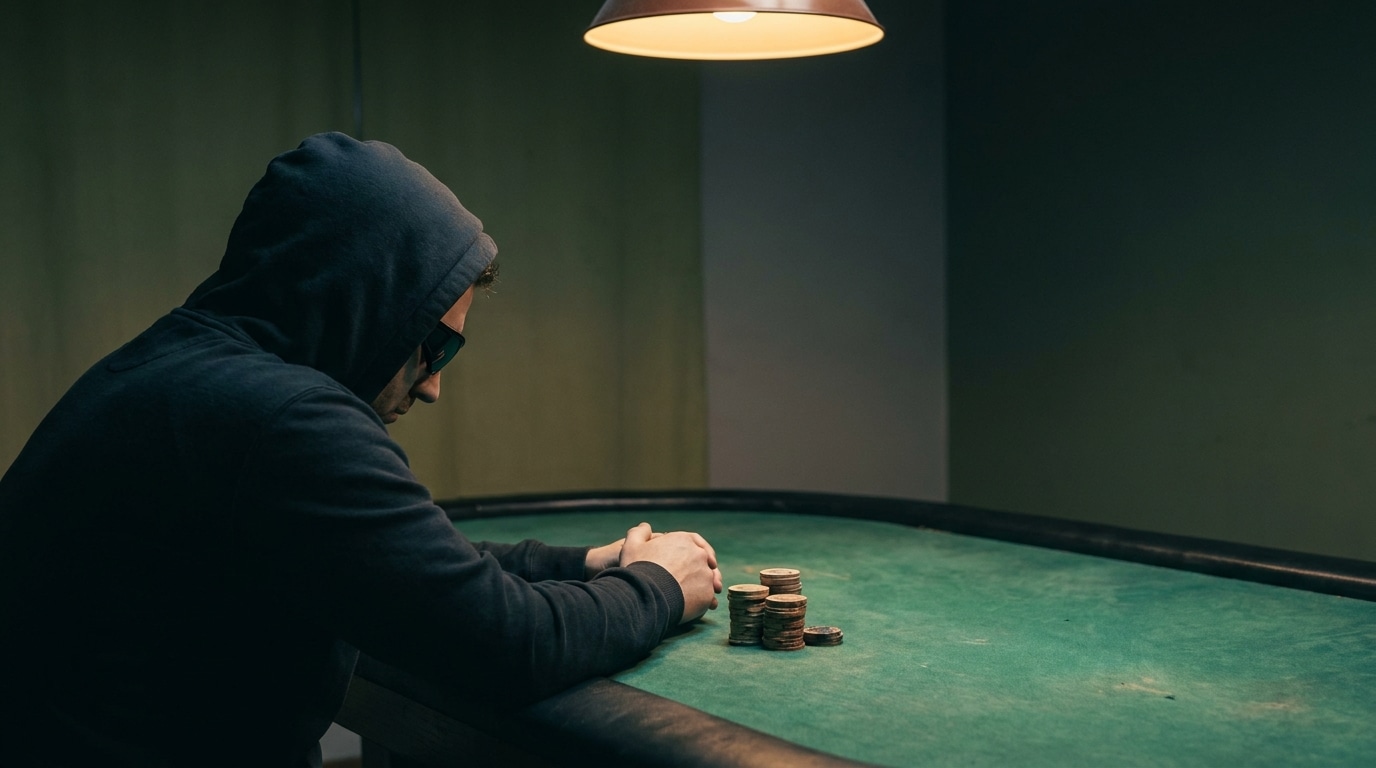
Phil Laak became famous for pulling a hooded sweatshirt over his head and wearing dark glasses at the table. In a 2007 interview with the Las Vegas Sun, he joked that poker should ban hoods and sunglasses. Then he laughed and admitted he liked wearing shades even at the supermarket late at night. He said they were mostly a way “to conserve energy and to keep focused,” which matters by the 10th or 12th hour of play.
At the 2008 WSOP Main Event, Laak hid a lot more than his eyes. He played the first day as an old man, in a latex mask, a wig, and makeup that took six hours to apply. The stunt led the WSOP to add a 2009 rule saying participants “may not cover or conceal their facial identity.”
Sunglasses stayed legal under the new rule, and in 2011 the WSOP even named Blue Shark Optics its official poker eyewear. Raymer himself later moved from his Disney lizard eyes to a pair from the same brand.
Daniel Negreanu
Daniel Negreanu, who had avoided sunglasses throughout his career, took the opposite view in 2007. He told the Las Vegas Sun that looking an opponent in the eye should be part of the game. Sunglass wearers were often easy for him to read anyway, he added, just from how they handled their chips.
Ted Forrest, another pro in that story, wanted big tournaments to ban sunglasses altogether. Even so, he wore a pair for parts of the 2006 National Heads-Up Poker Championship final to unsettle his opponent. Forrest won that final and the $500,000 top prize, though the paper couldn’t say if the shades or his tricky style made the difference.
In December 2024, Negreanu posted four rule changes he would vote for, starting with bans on face coverings and sunglasses. Face masks had become more common at the table since COVID-19, and top pro Isaac Haxton kept wearing one despite criticism.
The list also included a ban on card protectors, the small objects some pros rest on their cards, such as Raymer’s fossils. Poker pro Dylan Weisman pushed back, calling a sunglasses ban “brutal for venues that have bright lights.” That was the same point Hachem made about TV lights in 2007.
Faces, Arms, and Bets
Negreanu’s point about chips lines up with a 2013 study in the journal Psychological Science. Michael Slepian and his colleagues showed 78 college students two-second clips of pros placing bets at the 2009 WSOP. Each student saw only the players’ faces, only their arms, or their whole upper bodies, and had to guess how strong each hand was.
Students who watched only the faces did worse than random guessing, which suggests the pros used their expressions to mislead. Clips of the whole upper body led to guesses at about chance level, while the arm clips worked best. In a second experiment, ratings of the players’ confidence and the smoothness of their arm movements predicted the strength of their hands.
None of the students played poker regularly, though the ones with some poker experience read the arms best. In other words, sunglasses cover the part of the body that gave the least away in the study. For a bluff, the arms and the bets matter more than the eyes, which brings back Abernathy’s question about a story that makes sense.
Is a Blank Face Enough?
A blank face behind dark glasses hides only part of a bluff, since the arms and the bets stay in full view. Abernathy’s three questions don’t involve the face at all, which gives the glasses a smaller role than their reputation suggests.
The real value of the shades sits somewhere else, in comfort and in an image that opponents remember. Hachem wanted relief from TV glare and travel stress, Laak wanted to stay focused through long days, and Raymer turned a Disney joke into his trademark. Even Forrest, who wanted big tournaments to ban sunglasses, put on a pair when $500,000 was on the line.
Hiding a reaction still matters, much as it did for the judges in those old accounts from China. Their smoky quartz did the same job as a pair of Blue Shark lenses. At the poker table, though, a bluff works or fails on the bets, since those tell the story an opponent has to believe.