Cleaning makeup brushes can take more effort when standing, reaching, or gripping small handles is uncomfortable. A quality makeup brush set is easier to care for when the cleaning routine fits your mobility and energy level. A few changes to where and how you clean can make the job much more manageable.
Start With a Comfortable Setup
Before washing anything, choose a place where you can sit comfortably and keep your supplies nearby. Gather your brushes, cleanser, towels, a shallow bowl, and anything else you normally use. Having everything ready means fewer trips across the room once you begin.
A table near the sink can work well if reaching the faucet repeatedly is difficult. You can fill a bowl with clean water and bring it to the table rather than standing at the sink for the entire job. Place a towel underneath to catch spills and keep your supplies from sliding around.
Wash Only a Few Brushes at a Time
You do not need to clean every brush you own in one sitting. Separating them into smaller groups can reduce repetitive movement in your hands, wrists, and arms. Start with the brushes you use most often and leave the others for another day.
This approach can also make brush cleaning easier on days when your energy is limited. You might wash foundation and powder brushes during one session and tackle smaller eye brushes later in the week. Even a makeup brush set, Real Techniques or another collection, can be divided into smaller, more manageable groups.
Keep Your Movements Small
Brush cleaning does not require fast scrubbing or a tight grip on the handle. Hold each brush in whatever position feels comfortable and use small movements to work cleanser through the bristles. Let the water and cleanser loosen the makeup rather than relying on force from your hands.
If narrow handles are difficult to hold, try resting the handle against your palm instead of gripping it tightly with your fingertips. A removable grip made for pens or similar objects may also help with some brush handles. Experiment with different positions until you find one that puts less strain on your fingers.
Bring the Water Closer to You
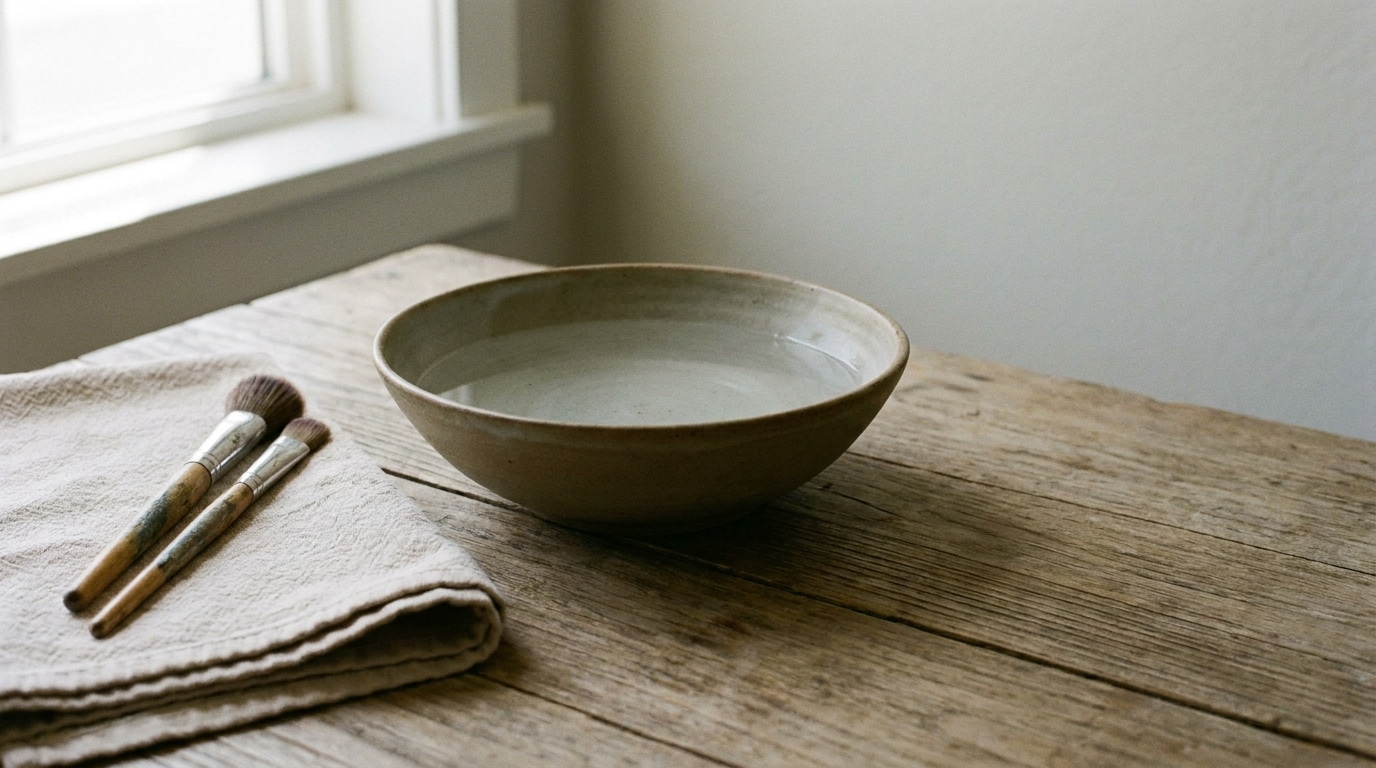
Repeatedly reaching toward a faucet can become tiring long before the brushes are clean. A shallow bowl of water within easy reach lets you do more of the job while staying seated. Replace the water when it becomes cloudy rather than working with water filled with old makeup.
Try to keep the handle and base of the brush out of the water. Soaking this area may allow moisture to reach parts of the brush that should stay dry. Focus the cleaning on the bristles, and rinse away the cleanser without submerging the entire brush.
Use a Towel Instead of Squeezing
Removing excess water can be difficult if squeezing or twisting makes your hands uncomfortable. Place the wet bristles against a clean towel and gently press another section of the towel over them. The fabric can absorb much of the moisture without requiring a strong grip.
There is also no need to twist the bristles to remove every drop of water. If comfortable, lightly shape the brush head with your fingers after pressing it with the towel. Gentle handling can help the brush keep its shape while reducing unnecessary work for your hands.
Keep the Drying Area Nearby
Have a clean towel ready before you start washing your brushes. Keep it close to where you are sitting so each brush can go straight onto the towel after it has been rinsed. That way, you are not making extra trips around the room when your hands or arms are already tired.
Leave the brushes lying flat while they dry instead of standing them upright. This helps keep water from running down into the area where the bristles connect to the handle. Once the brushes feel completely dry, you can put them back wherever you normally keep them.
Work With Your Energy Level
Brush cleaning doesn’t have to happen on a strict schedule or become one large weekly chore. Choose a time of day when you usually feel comfortable and have enough energy for the task. If your hands or arms become tired, stop and finish the remaining brushes another time.
Keeping your most frequently used brushes separate can make this routine even simpler. You can quickly see which ones need cleaning without sorting through an entire collection each time. Brushes you rarely use can wait until they actually need attention.
Final Thoughts
Brush care does not have to involve standing at a sink or cleaning an entire collection in one session. A quality makeup brush set can be maintained with shorter cleaning sessions, comfortable seating, and supplies placed within easy reach. Adjust the routine to your mobility and energy so brush cleaning stays a manageable part of your day.