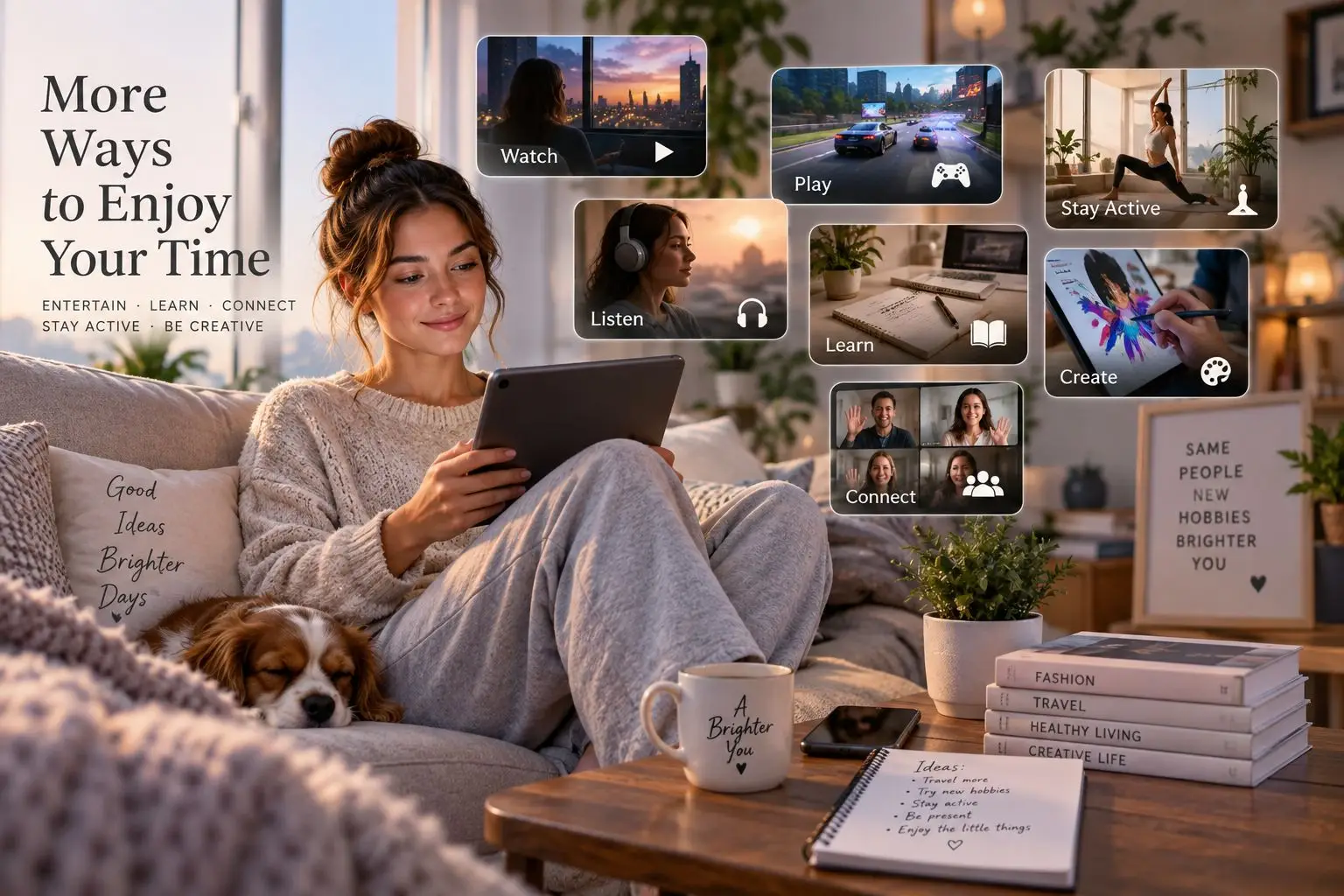
Free time once depended heavily on where people lived, what venues they could reach, and which activities fit their schedules. Technology has changed those conditions. A phone, tablet, television, computer, or connected device now gives people access to games, films, music, books, fitness sessions, social spaces, and creative tools within seconds. This shift does more than add new forms of entertainment. It changes when people relax, how they choose activities, and how much control they have over each leisure session.
Online gaming shows this change clearly. Someone who visits baxterbet casino, for example, can access casino-style entertainment through a digital device instead of planning a trip to a physical venue. The same principle affects many other leisure activities. People can watch a film at home, join a multiplayer game with friends in another country, follow a workout from their living room, or read a digital book during a commute. Technology has reduced the practical distance between a person and many forms of recreation.
Free Time No Longer Follows a Fixed Schedule
Traditional entertainment often required people to organize their day around a schedule. Television programs started at fixed times. Cinemas ran films according to published screenings. Shops and entertainment venues followed opening hours. Even meeting friends required more advance planning because communication moved more slowly.
Digital services changed that pattern. People can now choose entertainment when they have time rather than waiting for a specific hour.
This matters because leisure often comes in small periods. A person may have twenty minutes before leaving home, half an hour on public transport, or an hour after dinner. Digital devices make those periods easier to use for recreation.
Someone might listen to a podcast while walking, watch part of a documentary during lunch, play a short game before work, or read several pages of an electronic book before bed. These activities do not require an entire evening.
As a result, leisure has become more fragmented. People still spend long periods on hobbies, but they also fill short gaps with digital activities.
Smartphones Put Entertainment Within Reach
The smartphone has changed everyday leisure more than almost any other consumer device. It combines functions that once required several separate objects.
A single phone can act as a music player, camera, game system, television screen, reading device, communication tool, fitness tracker, and creative workstation. People carry all of these functions in a pocket.
This convenience affects behavior. When entertainment requires little preparation, people can start and stop an activity quickly. A five-minute wait can become time for a puzzle, an article, a short video, or a conversation.
Common mobile leisure activities now include:
- listening to music, audiobooks, and podcasts;
- watching short and long video content;
- playing mobile games;
- reading news, magazines, and digital books;
- messaging friends and joining group conversations;
- editing photographs and videos;
- following exercise sessions;
- learning languages or practicing other skills.
These options have also reduced the distinction between entertainment and other parts of daily life. A device used for work in the morning can become an entertainment screen during lunch and a fitness tool in the evening.
Entertainment Has Become More Interactive
Older media usually gave audiences a limited role. People watched television, listened to radio, or read printed material. They could choose what to consume, but they rarely affected what happened on the screen.
Digital entertainment often asks users to participate.
Video games offer the clearest example. Players make decisions, solve problems, communicate with other participants, and control events within the game. Interactive video formats can also let viewers select routes through a story or respond to live content.
Social features add another layer. Viewers can discuss a program while watching it. Players can communicate during matches. Fans can participate in live chats, polls, digital events, and community discussions.
This participation changes the character of leisure. People no longer spend all their recreational time simply consuming material. They often respond, create, compete, communicate, or make choices.
Streaming Changed Viewing and Listening Habits
Digital distribution has changed how people approach films, television, music, podcasts, and other media.
Viewers no longer need to build their evening around a broadcast schedule. They can start a program when they want, pause it, continue later, or watch several episodes during one session. Listeners can move between albums, podcasts, playlists, and audiobooks without carrying physical media.
These changes also affect the length of leisure sessions.
A person can watch ten minutes of a program and continue the next day. Another viewer might spend several hours finishing a series. The technology supports both patterns.
On-demand access also gives people more control over selection. Search tools, categories, viewing histories, and recommendation systems help users sort through large media libraries. That process has become part of entertainment itself, although too many choices can sometimes make selection harder.
Games Have Become Social Spaces
Gaming once carried a strong association with a single person sitting in front of a screen or several people sharing one machine. Internet connections expanded that model.
Many games now function as social spaces where people talk, cooperate, compete, and spend time together. Friends do not need to live in the same city or even the same country to play during the same session.
Voice communication strengthens this social element. For some groups, a game provides a reason to meet regularly online. The activity matters, but conversation can matter just as much.
This development also changes how people maintain relationships. A group that struggles to arrange frequent physical meetings can still spend an evening together digitally.
Games also support different levels of commitment. Some people play for ten minutes on a phone. Others schedule longer sessions with friends. Technology accommodates both habits.
Exercise Has Entered the Digital Home

Technology has also changed physical recreation. Exercise no longer requires a gym, sports club, or printed training plan in every case.
People can follow guided workouts through screens, track runs with wearable devices, record cycling distances, measure daily movement, and review training statistics. Digital tools can also help users organize routines and monitor personal goals.
This creates several practical options for leisure exercise:
|
Activity |
Digital role |
Typical use |
|
Running |
Tracks distance and pace |
Outdoor exercise |
|
Home workouts |
Shows guided sessions |
Exercise at home |
|
Cycling |
Records routes and statistics |
Outdoor recreation |
|
Yoga |
Delivers guided instruction |
Home or travel |
|
Walking |
Counts movement and distance |
Everyday activity |
Technology does not perform the exercise for the user. It changes access to instructions, records, and planning tools. That can make physical activity easier to fit around work, family commitments, or changing schedules.
Hobbies Have Gained Digital Components
Many hobbies that existed long before smartphones now include a digital element.
Cooking offers a simple example. People can search for recipes, watch demonstrations, create shopping lists, set timers, and save favorite dishes on the same device. Gardening enthusiasts can identify plants, record planting dates, check seasonal information, and document progress with photographs.
Creative hobbies have changed as well. Digital drawing tools, music software, photo editors, and video applications let people produce material without a large collection of specialist equipment.
Technology also helps beginners learn. Someone interested in sewing, drawing, cooking, photography, or playing an instrument can find instructional material quickly.
This does not remove the physical side of these hobbies. A person still cooks the meal, grows the plant, plays the instrument, or creates the garment. Digital tools simply support parts of the process.
Social Life Extends Beyond Physical Meetings
Communication technology has changed how people use free time with others.
Friends can talk through video calls, share photographs, exchange voice messages, watch content together, or play games without meeting physically. Families separated by long distances can maintain regular contact without relying on occasional visits.
Digital communication also makes informal contact easier. People do not always need to arrange a long phone call. A short message or photograph can maintain a conversation throughout the day.
However, this accessibility creates a new issue. Social interaction can continue almost constantly. Notifications may interrupt films, reading, exercise, meals, or face-to-face conversations.
For that reason, some people now manage digital leisure by turning off alerts, setting screen limits, or keeping certain periods device-free.
Personalization Shapes What People See
Modern entertainment systems often learn from previous activity. They can use viewing history, listening habits, searches, ratings, and other signals to suggest material.
This changes how people discover entertainment.
In the past, discovery often depended on television schedules, printed reviews, shop displays, recommendations from friends, or browsing physical collections. Those methods still exist, but automated suggestions now play a significant role.
Personalization can save time because users do not need to search through every available option. At the same time, repeated suggestions based on previous behavior may narrow what a person encounters.
Users can counter this effect by searching deliberately, exploring unfamiliar categories, or choosing material outside their normal habits.
Technology Has Made Creation Part of Leisure
Digital devices have turned many consumers into creators.
Photography provides a clear case. People once needed separate cameras, film, processing, and physical albums. Phones now allow users to take, edit, organize, and share photographs from one device.
The same pattern applies to video, music, drawing, writing, and audio recording.
People can spend their free time editing short films, producing digital illustrations, recording music, writing newsletters, making animations, or creating personal archives. These activities blur the traditional boundary between media consumption and creative hobbies.
For many users, creation offers a different kind of recreation because it requires active decisions. Instead of choosing what to watch, they decide what to make.
Remote Access Has Expanded Leisure Choices
Location once placed strong limits on recreation. A person living far from a large city might have limited access to cinemas, specialist classes, cultural events, or hobby groups.
Internet access reduces some of those limits.
A user can attend a virtual lecture, participate in an online book discussion, watch a live event, take a creative class, or join a gaming group from home. Someone travelling can continue many of the same activities through a portable device.
Physical location still matters. Internet quality, equipment costs, local regulations, language, and available services all affect access. Technology does not remove those differences.
Still, remote participation gives many people options that did not exist when leisure depended mainly on nearby venues.
Constant Access Creates New Challenges
More entertainment does not automatically create more satisfying free time.
Digital platforms compete for attention, and people can move from one activity to another without making a deliberate choice. A short check of a phone can turn into a much longer session. Notifications can also interrupt activities that require concentration.
This has encouraged greater interest in digital boundaries.
Some users set time limits for particular applications. Others keep phones away from the bedroom, disable nonessential notifications, or choose periods when they avoid screens.
These decisions reflect a broader change. People now need to manage not only how they find entertainment but also when they stop using it.
Technology gives users more control over access, yet constant availability can make self-management more important.
Physical and Digital Leisure Continue to Mix
Technology has not replaced traditional recreation. Instead, digital tools often accompany physical activities.
A runner may track a route with a watch. A traveller may use a phone to plan a museum visit. Friends may organize a dinner through a group chat. Someone attending a concert may store tickets digitally and take photographs during the event.
Even reading demonstrates this combination. Some readers prefer printed books, others use electronic devices, and many switch between the two depending on where they are.
The same person can enjoy digital gaming one evening, meet friends the next day, exercise outdoors on the weekend, and watch a film at home later. Modern leisure rarely belongs entirely to one category.
More Choice Requires More Deliberate Decisions
The main technological change in free time does not come from one device or one type of entertainment. It comes from access.
People can reach entertainment faster, use it in more places, and choose from more formats than previous generations could. They can also move between activities with very little effort.
That convenience changes expectations. Waiting for a scheduled program now feels unnecessary when on-demand viewing exists. Travelling somewhere solely to access certain forms of entertainment may seem less necessary when digital alternatives exist. Long periods of inactivity can quickly turn into short recreational sessions.
At the same time, greater access creates a reason to choose more carefully. Free time remains limited even when entertainment options seem almost endless.
Technology will continue to influence leisure through connected devices, interactive media, digital creation, remote participation, and new forms of communication. Yet the basic purpose of free time remains familiar. People still want to relax, enjoy hobbies, connect with others, exercise, learn, and have fun. Technology has changed the tools they use and the ways they fit those activities into everyday life.