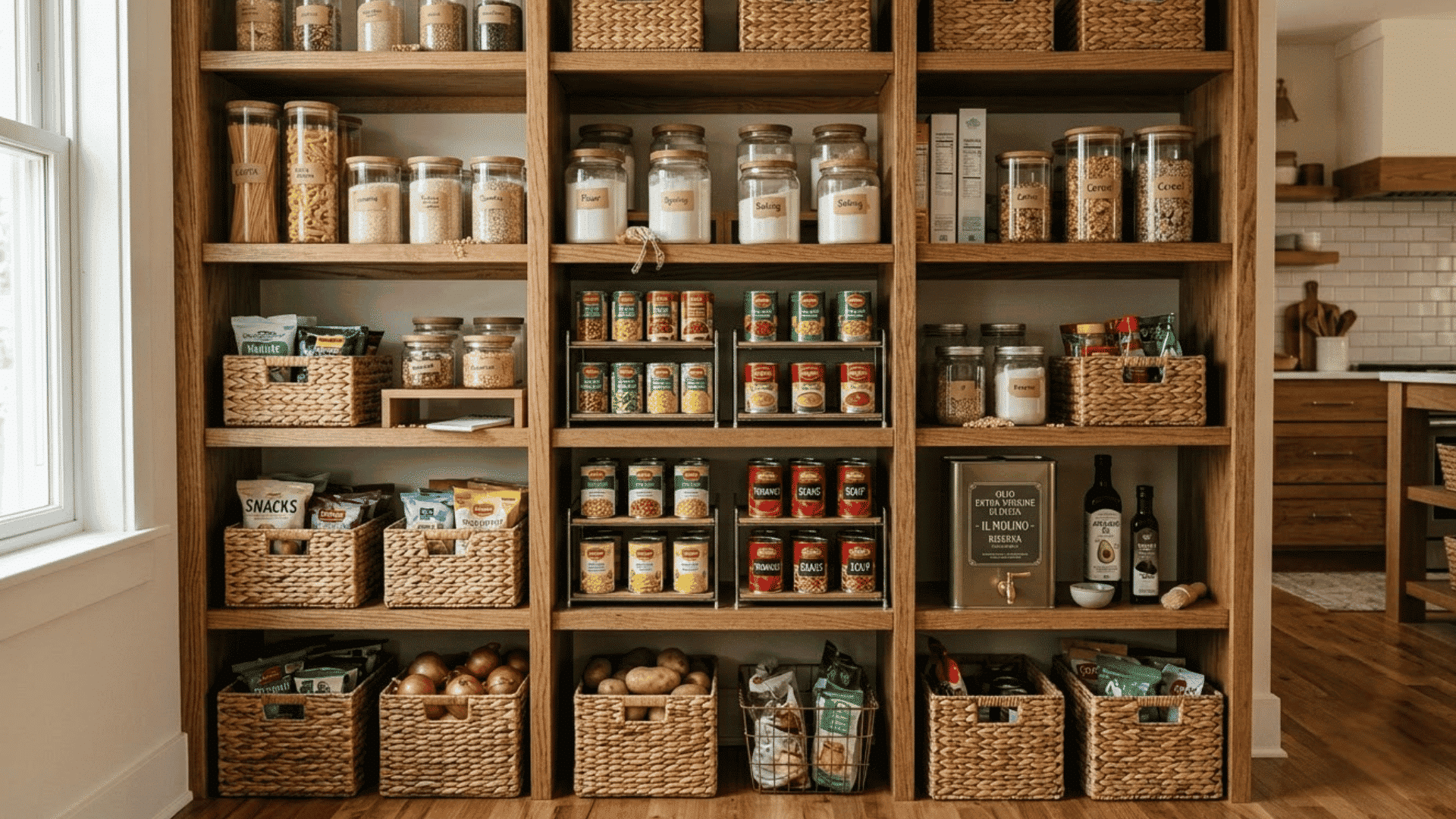
A tidy pantry can save you more time than you might think. I know how quickly mine can fill up after just one grocery trip, with snack bags hiding behind boxes and duplicate ingredients taking up valuable shelf space.
That is why the right pantry organization ideas should do more than make the space look attractive.
They should help you see what you already have, grab everyday ingredients easily, and put groceries away without creating another mess.
If your pantry is large or small, a few thoughtful changes can make it feel more practical, organized, and easier to maintain.
Pantry Organization Ideas that Work
Before buying organizers, look at what causes problems in your pantry.
1. Group Similar Pantry Items Together
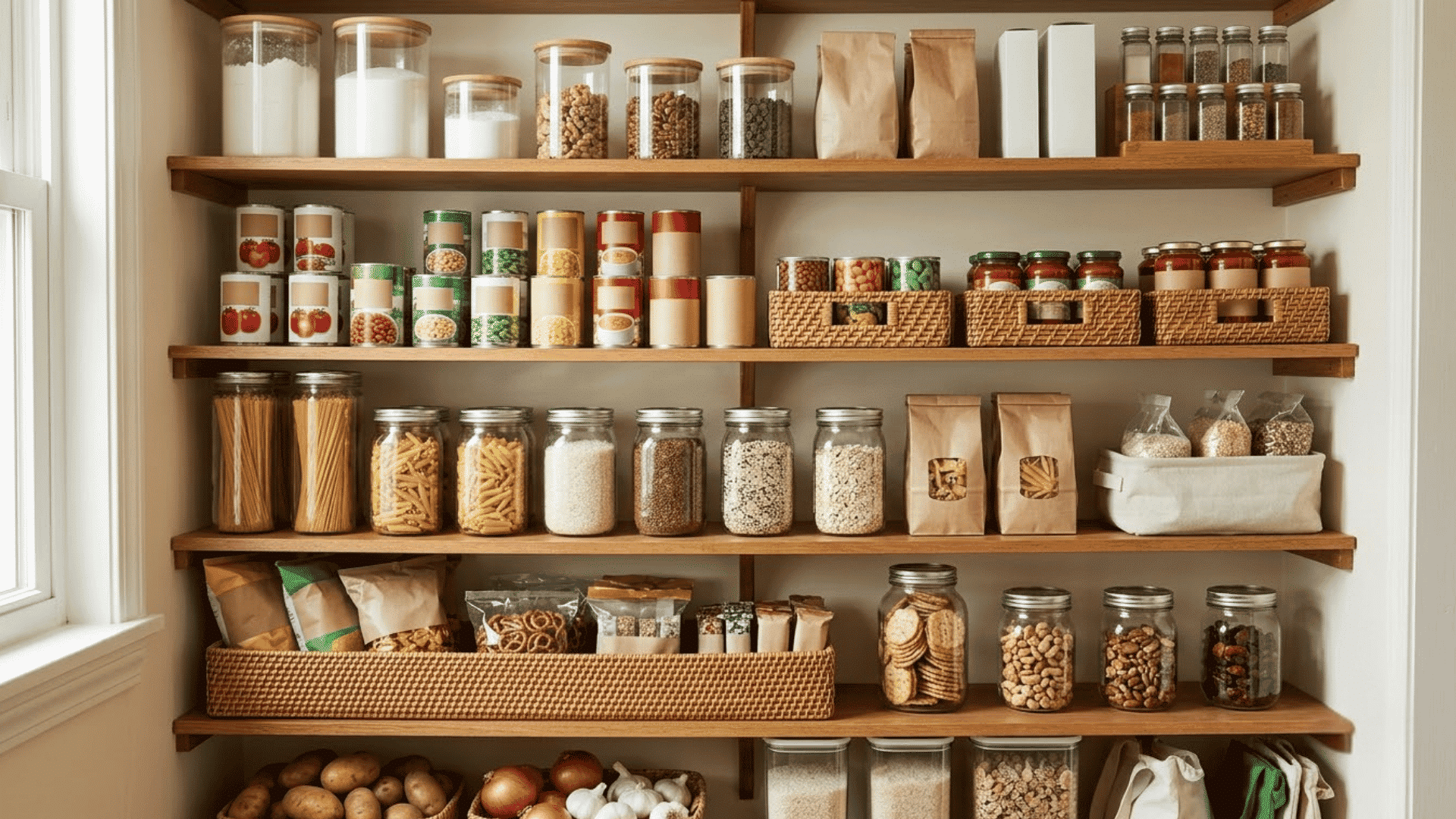
Keep similar foods in the same area so everything is easier to find. Store pasta with grains, baking supplies together, canned foods on one shelf, and snacks in another spot.
Use simple categories based on how you cook and shop. Broad groups are easier to follow and keep organized over time.
2. Use Pull-Out Drawers or Bins
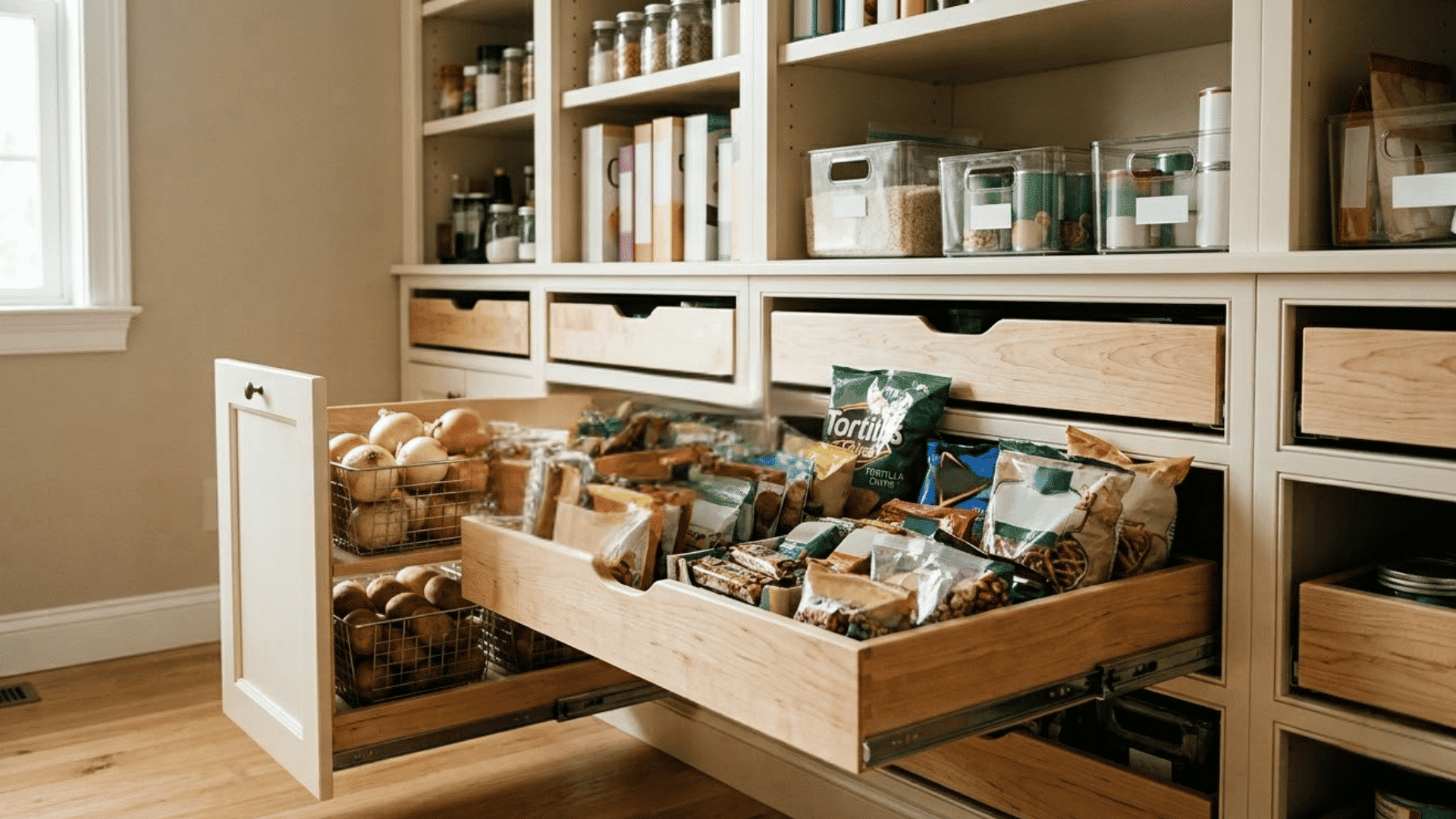
Deep pantry shelves can make items at the back hard to reach. Pull-out drawers or bins bring everything forward, so you can quickly see what is inside.
They work well for packets, snack bags, onions, potatoes, and other loose items.
Use them especially on lower shelves where reaching can be more difficult.
3. Store Dry Goods in Clear Containers
Clear containers make everyday staples easier to see and store.
Use them for flour, sugar, rice, oats, cereal, pasta, and similar foods. Since you can quickly check how much is left, grocery planning becomes easier too.
Choose containers that are large enough to hold the full amount you usually buy.
4. Add Clear Bins for Small Packages
Small packets can easily disappear behind larger pantry items. Clear bins keep them together while still letting you see what is inside.
Use separate bins for snack bars, seasoning packets, drink mixes, or small baking supplies.
Instead of searching through shelves, you can simply pull out the entire bin when needed.
5. Put Turntables on Deep Shelves
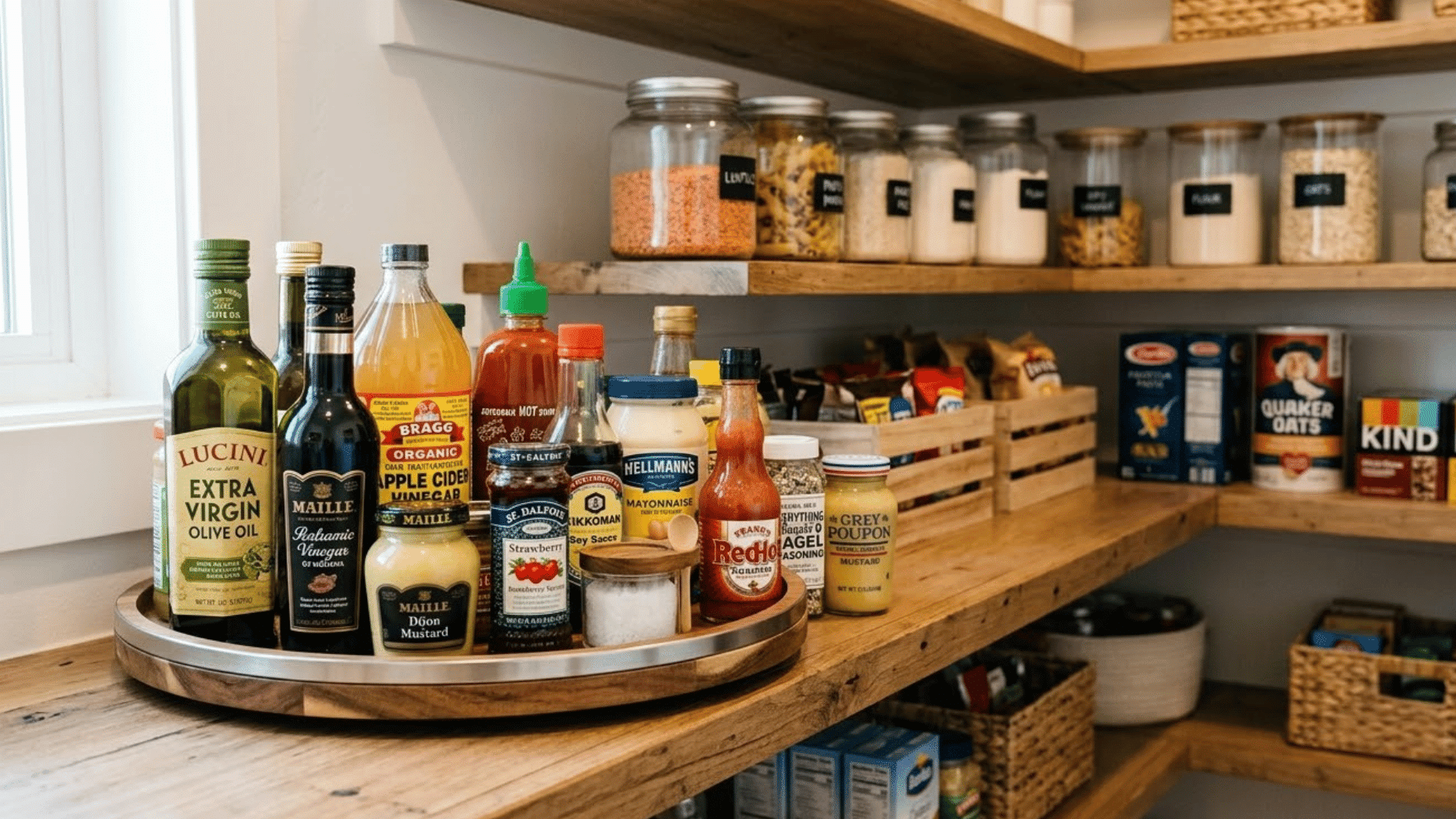
Turntables are useful for bottles and jars that often get lost at the back of deep shelves. Simply spin the tray to reach what you need. Use them for sauces, oils, vinegars, spreads, and condiments.
They also work well in pantry corners where regular rows of products can be difficult to reach.
6. Arrange Cans on Tiered Organizers
Tiered organizers help you see canned foods without moving several cans around.
The raised levels keep labels at the back visible from the front. Use them for canned vegetables, beans, soups, sauces, or fruit.
This setup makes it easier to check what you already have before cooking or grocery shopping.
7. Label Your Pantry Zones
Simple labels make it easier for everyone to know where pantry items belong.
Use clear categories such as snacks, breakfast, grains, baking, canned foods, or backstock.
Avoid overly specific labels because your groceries may change. Labels are especially useful on baskets and bins where the contents are harder to see.
8. Adjust the Shelf Heights
Adjustable shelves can help you use pantry space more efficiently.
Create taller sections for cereal boxes, bottles, and small appliances, while keeping shorter spaces for cans and jars.
This reduces unused gaps between shelves. Arrange each shelf by the size of the products you regularly store, rather than keeping every level equal.
9. Add Shelf Risers
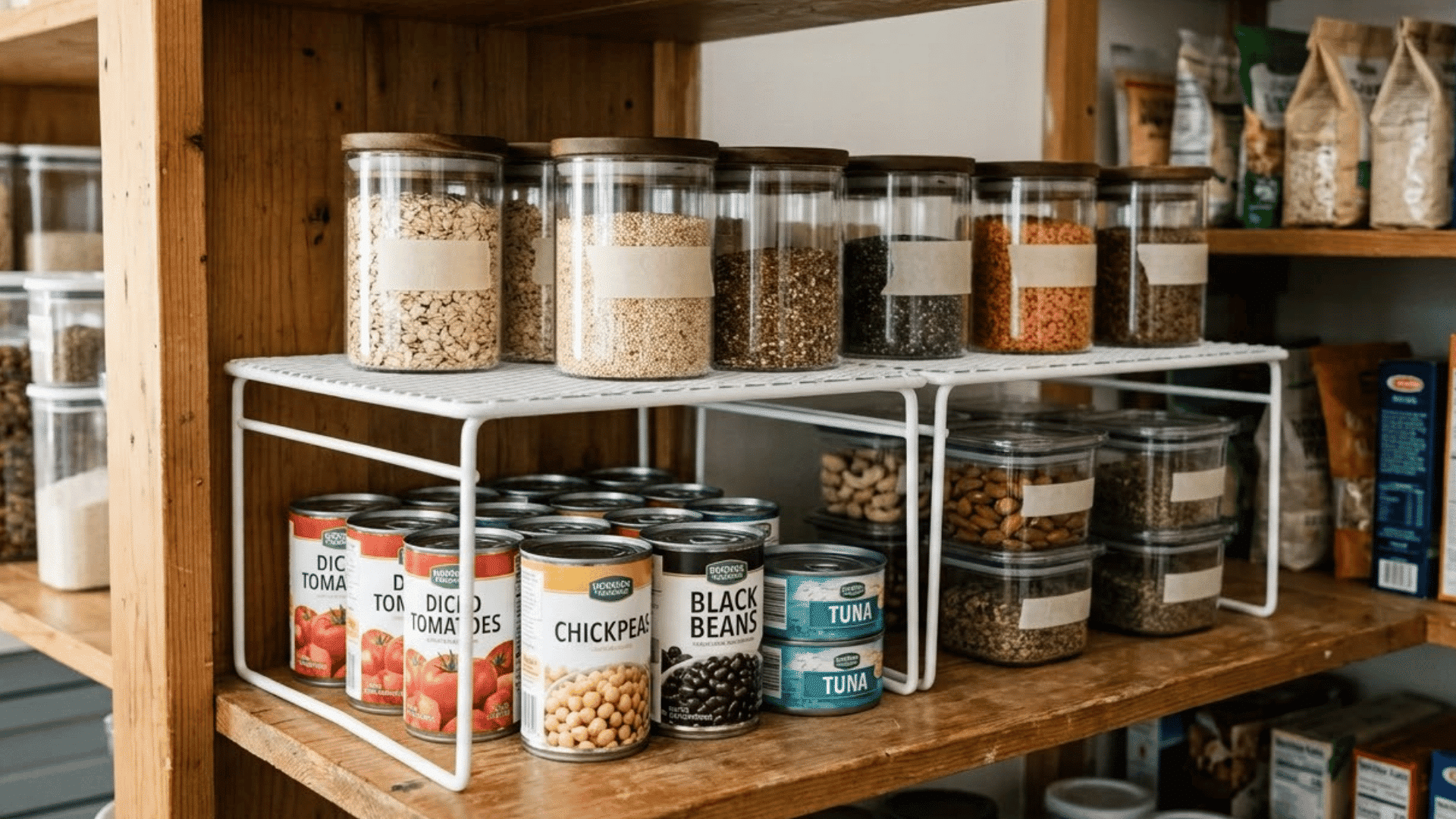
Shelf risers help when you can’t move pantry shelves. They create an extra level for shorter cans, jars, and containers, helping you use empty vertical space.
Place some products underneath and others on top.
Risers are especially useful on tall shelves where small pantry items would otherwise waste a lot of room.
10. Make Use of the Pantry Door
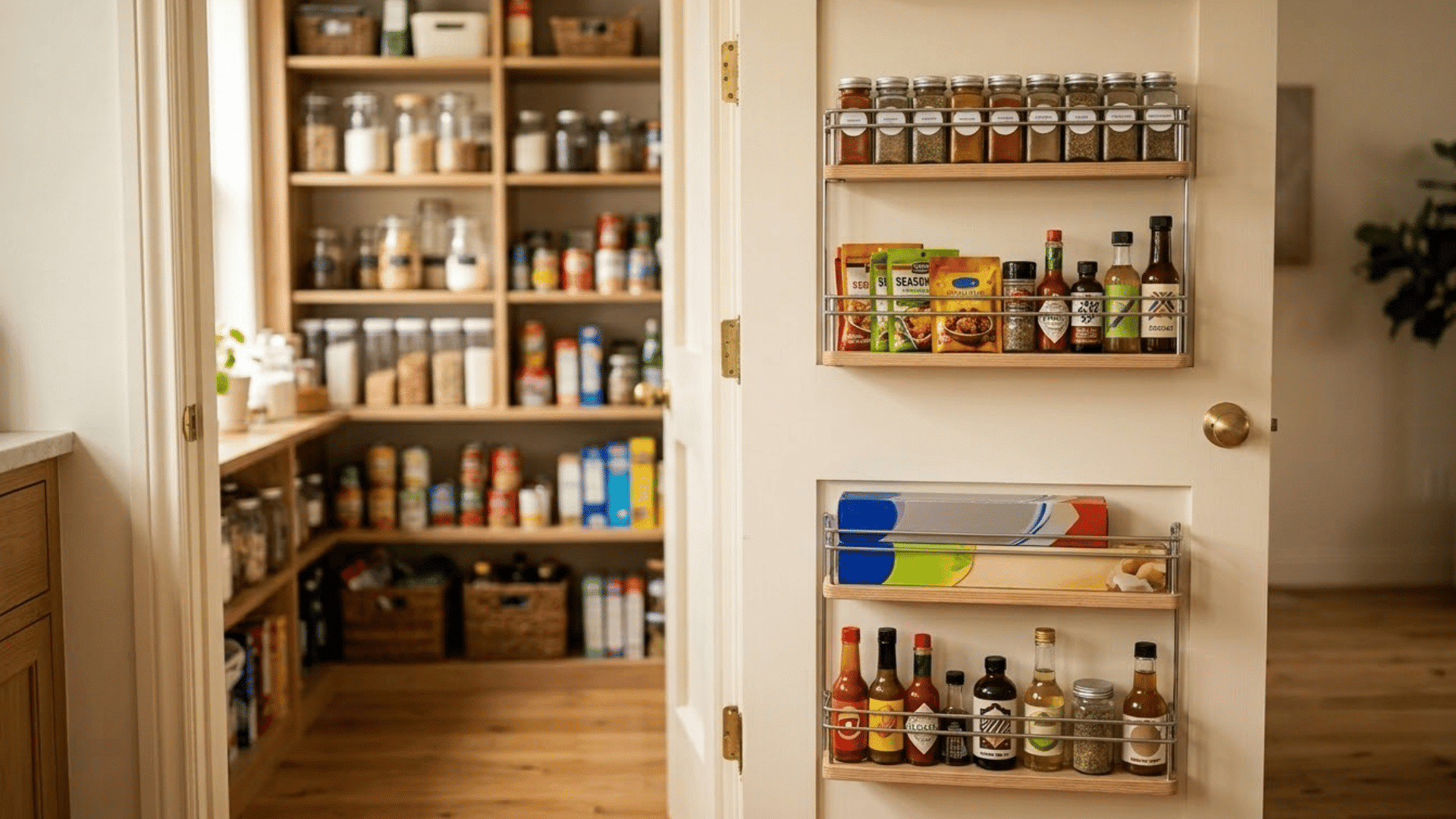
The inside of your pantry door can provide extra storage without taking up shelf space. Add a slim rack or over-the-door organizer for spice jars, seasoning packets, wraps, snack bags, and small bottles.
Keep it shallow enough to prevent items from hitting the shelves when you close the pantry door.
11. Create a Grab-and-Go Snack Zone
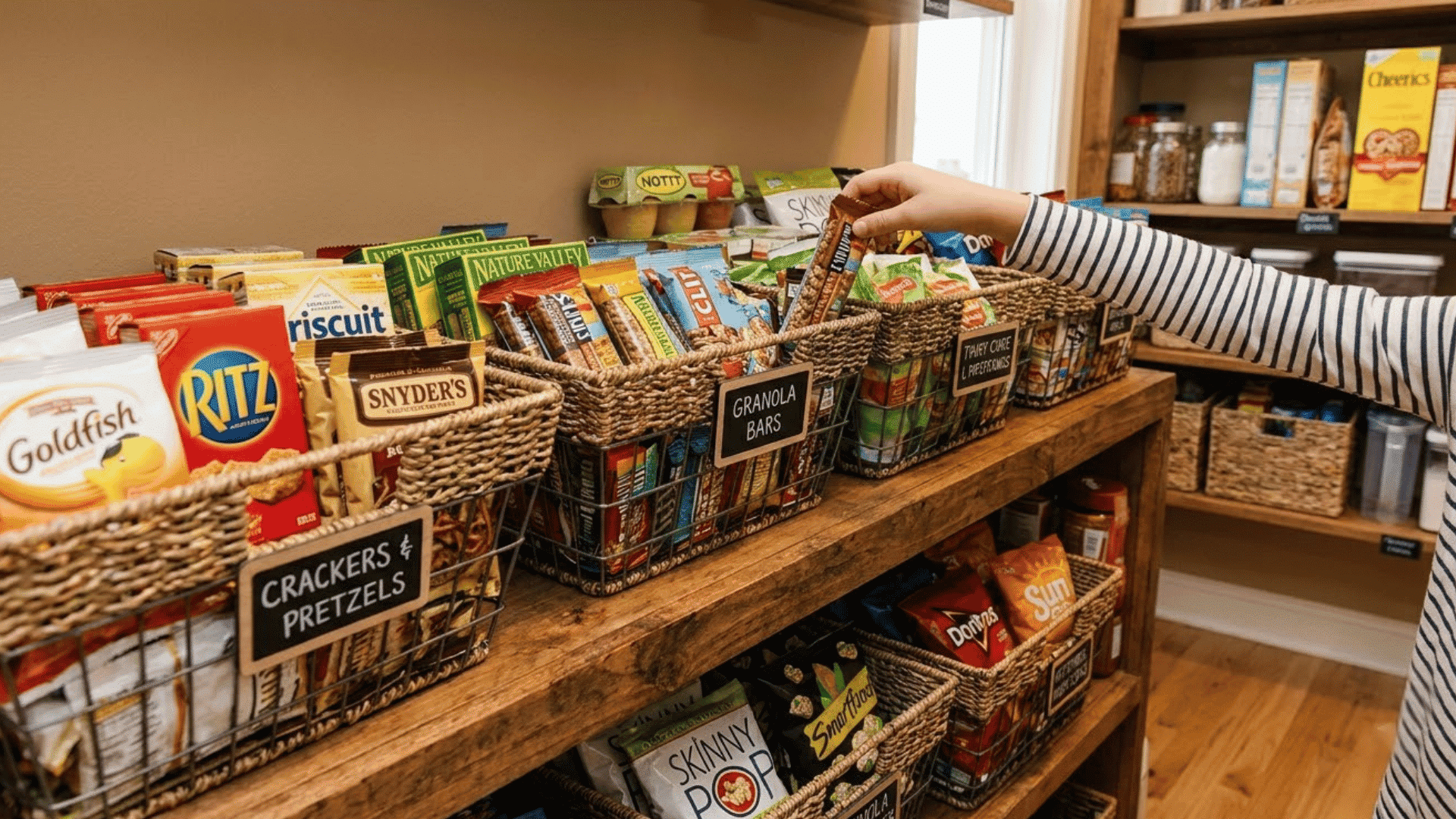
Keep everyday snacks together in one easy-to-reach section. Open bins can hold granola bars, crackers, fruit cups, pouches, and other individually packed foods.
If children regularly choose their own snacks, place suitable options lower down.
A clear snack zone also helps you quickly notice which items are running low.
12. Set Up a Breakfast Section
Keep breakfast foods together to make busy mornings easier.
Store cereal, oats, spreads, coffee, tea, pancake ingredients, and other regular choices in the same area.
Place the foods you use most often within easy reach. Smaller packets can go in a basket or bin so they don’t scatter around the pantry.
13. Keep Baking Supplies Together
Store your baking ingredients in one section so you can easily gather everything when you need it.
Keep flour, sugar, baking powder, baking soda, chocolate chips, extracts, and sprinkles together. A shelf, drawer, or large bin works well.
Place frequently used ingredients near the front, and put smaller packets in a separate container.
14. Separate Backstock From Open Products
Keep unopened extras away from products you are already using.
Choose one shelf or basket for backstock, such as extra pasta, cereal, sauces, canned foods, or snacks.
This keeps the main pantry less crowded. Check your backstock area before shopping so you do not accidentally buy another item you already have.
15. Create an Eat-First Bin
An eat-first bin helps prevent food from being forgotten at the back of the pantry.
Use it for opened packages, items nearing their best-quality date, or foods you want to finish soon.
Check this bin when planning meals or choosing snacks. Keep it small, so it stays useful instead of becoming another cluttered space.
16. Use Baskets to Hide Visual Clutter
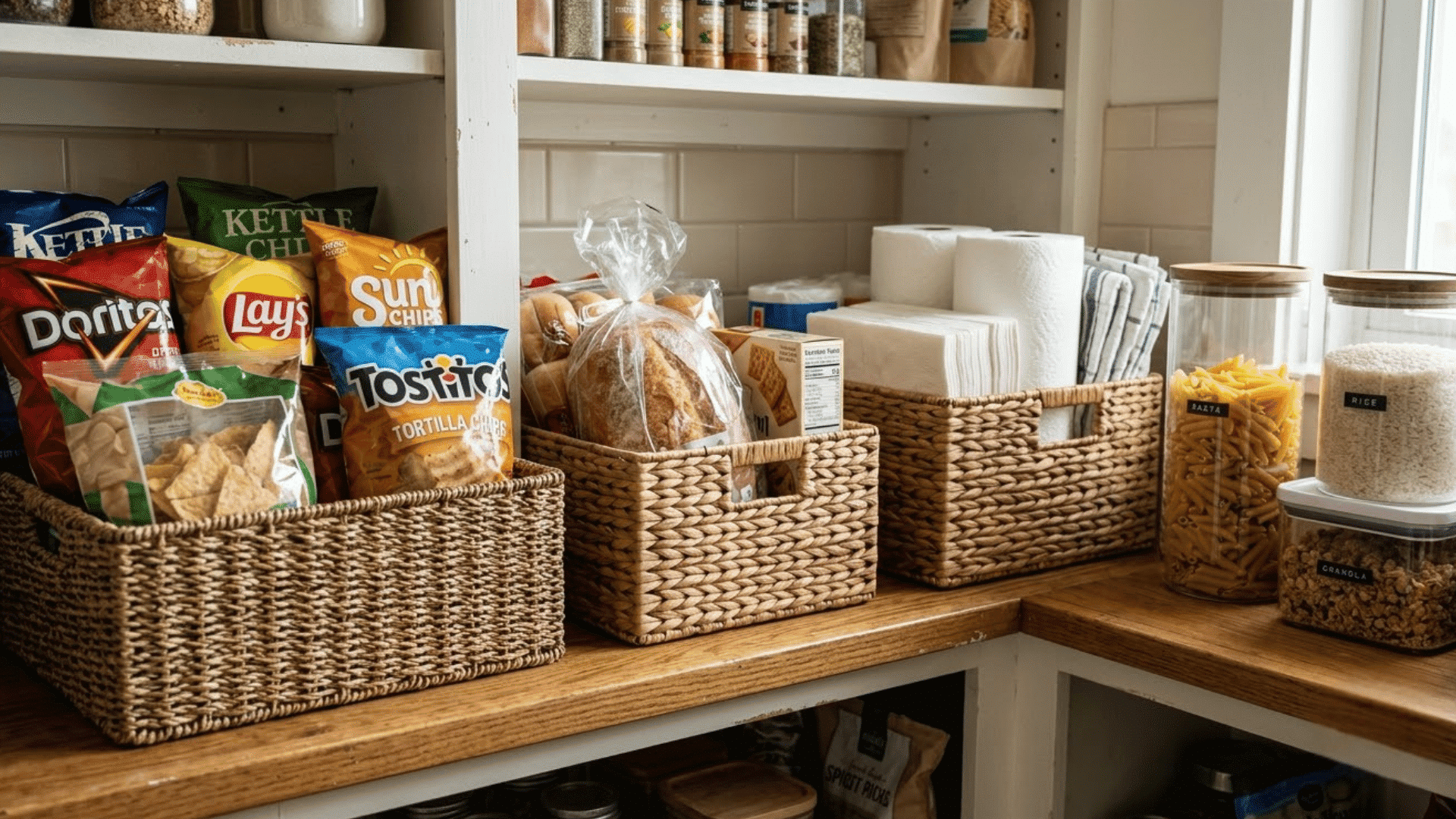
Baskets work well for pantry items that are hard to stack or arrange neatly. Use them for chip bags, bread, paper products, reusable bags, or other bulky packages.
They help shelves look less crowded without requiring you to transfer everything into containers.
Add simple labels to opaque baskets so you can still identify the contents.
17. Keep Heavy Items on Lower Shelves
Store heavy or bulky pantry items on lower shelves where they are safer and easier to lift. This includes large containers, bulk ingredients, beverage packs, and small appliances.
Keep lighter everyday foods on middle shelves for easier access.
Avoid overcrowding the lower area so you can remove heavier products without struggling.
How to Organize a Small Pantry?
To organize a small pantry, make every shelf and corner useful while keeping frequently used foods easy to reach. Place everyday staples at eye level and store less-used items on higher shelves.
Use shelf risers, slim bins, turntables, stackable containers, and door organizers to create extra storage without overcrowding.
Keep only necessary backstock, group similar foods together, and measure shelves before buying organizers so everything fits properly.
Where Should Things Go in a Pantry?
Placement should reflect how often you use an item, as well as its size and weight.
|
Pantry Area |
What to Store There |
|---|
|
Top shelves |
Backstock and occasional-use ingredients |
|
Eye-level shelves |
Everyday cooking staples |
|
Middle shelves |
Breakfast foods, snacks, and canned goods |
|
Lower shelves |
Heavy items, bulk foods, and appliances |
|
Pantry door |
Spices, packets, and lightweight products |
|
Deep corners |
Turntables or pull-out organizers |
Pantry Organization Mistakes to Avoid
Avoid these common mistakes to keep your pantry practical and easy to maintain:
-
Skipping measurements: Measure shelves before buying bins or organizers.
-
Using too many categories: Keep groups simple and easy to follow.
-
Overfilling shelves: Leave enough space to see and reach items.
-
Scattering duplicates: Store backstock together in one area.
-
Hiding everyday foods: Keep frequently used items within easy reach.
-
Choosing looks over function: Pick organizers that are useful and easy to access.
Conclusion
An organized pantry can make everyday cooking, grocery shopping, and meal prep feel much easier. I find that even small changes, such as grouping similar foods or clearing an overcrowded shelf, can make a noticeable difference.
The best pantry organization ideas are the ones that fit your space and daily routine. Keep frequently used items visible, make everything easy to reach, and avoid filling shelves with things you rarely use.
Start with one messy area, organize it in a practical way, and build from there until your pantry feels easier to use and maintain.
Pick a few ideas that fit your pantry, try them out, and adjust as needed. Which idea would you use first? Share your favorite in the comments.
Frequenly Asked Questions
What Is the Best Temperature for a Pantry?
A pantry should stay cool, dry, and away from direct sunlight or heat sources. Stable conditions help packaged foods stay fresh longer.
Can Appliances Be Stored in a Pantry?
Yes, you can store small appliances in a pantry if the shelves are sturdy enough.
How Can I Prevent Pantry Pests?
Store vulnerable foods in tightly sealed containers, clean spills promptly, inspect new packages, and regularly check grains, flour, cereals, and pet food for signs of pests.