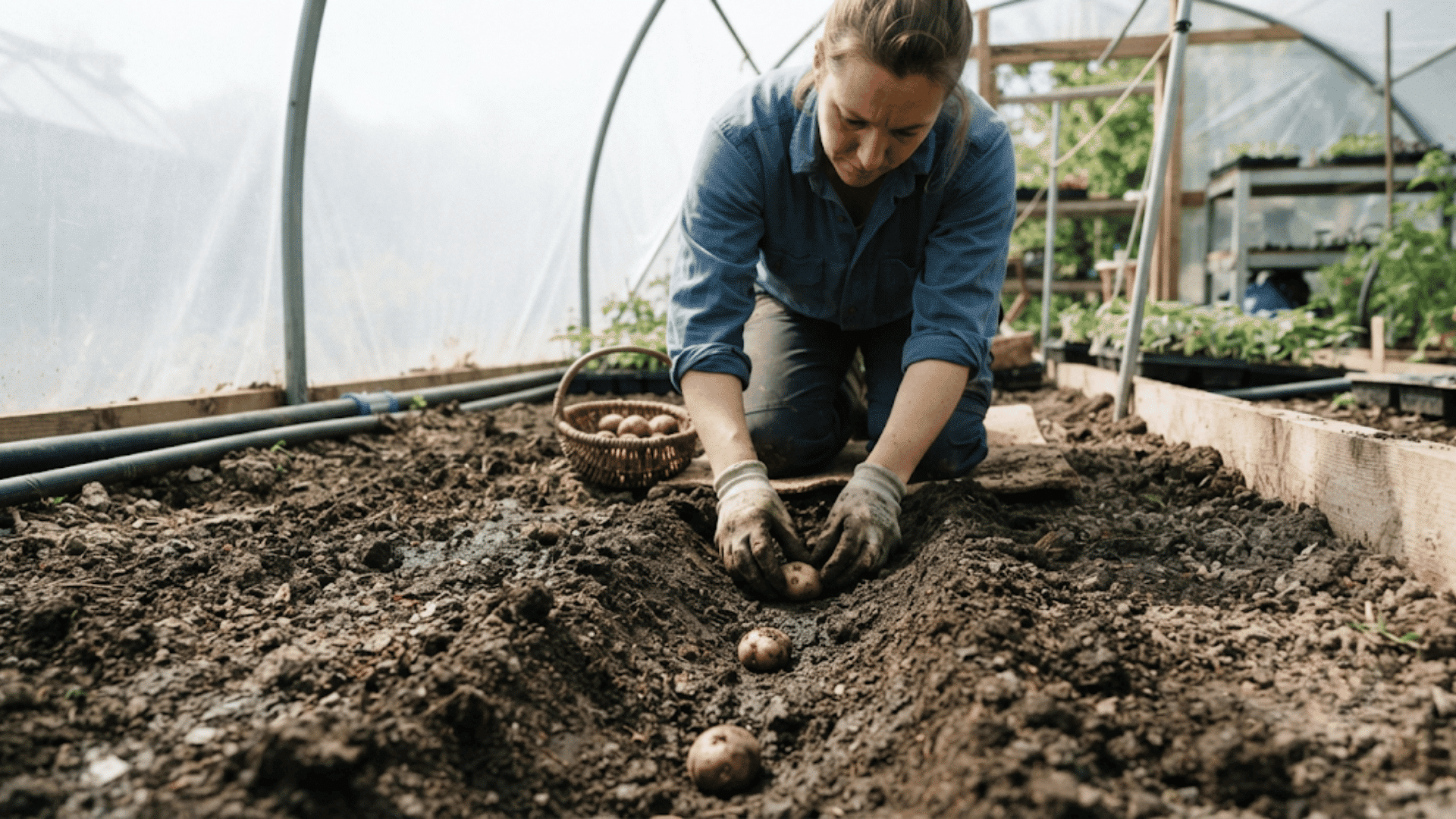
Planting potatoes has taught me that the calendar only tells part of the story. I’ve been tempted more than once to get seed potatoes into the ground as soon as spring starts looking promising, but cold, wet soil has a way of reminding you to be patient.
These days, I pay more attention to the soil itself than to a particular date.
Knowing when to plant potatoes gets much easier once you consider soil temperature, local frost patterns, and how quickly your chosen variety matures.
A few extra days of waiting can sometimes make a noticeable difference. This is how I decide when the conditions are right and how planting times change across potato varieties and growing regions.
When to plant potatoes?
The best time to plant potatoes is in early spring when the soil has warmed and is no longer waterlogged.
Planting at this stage gives seed potatoes cool conditions for sprouting and enough time to develop before summer heat arrives.
In many areas, this falls a few weeks before the last expected spring frost, although I would never use the frost date alone.
If I can squeeze a handful of soil and it stays in a wet, sticky lump, I usually give the bed more time before planting.
Ideal Growing Conditionsfor Potatoes
Potatoes grow best when several growing conditions work together, from soil temperature and sunlight to moisture and airflow.
|
Condition |
Ideal Range |
|---|---|
|
Sunlight |
6–8 hours daily |
|
Soil |
Loose and well-draining |
|
Soil pH |
5.0–6.5 |
|
Soil Temperature |
45–55°F (7–13°C) |
|
Air Temperature |
60–70°F (16–21°C) |
|
Water |
Consistently moist |
|
Spacing |
About 12 inches apart |
|
Planting Depth |
3–4 inches deep |
Research on planting potatoes at the University of Maryland Extension suggests waiting until the soil is workable and reaches a suitable temperature before placing seed pieces in the ground.
When to Plant Different Types of Potatoes?
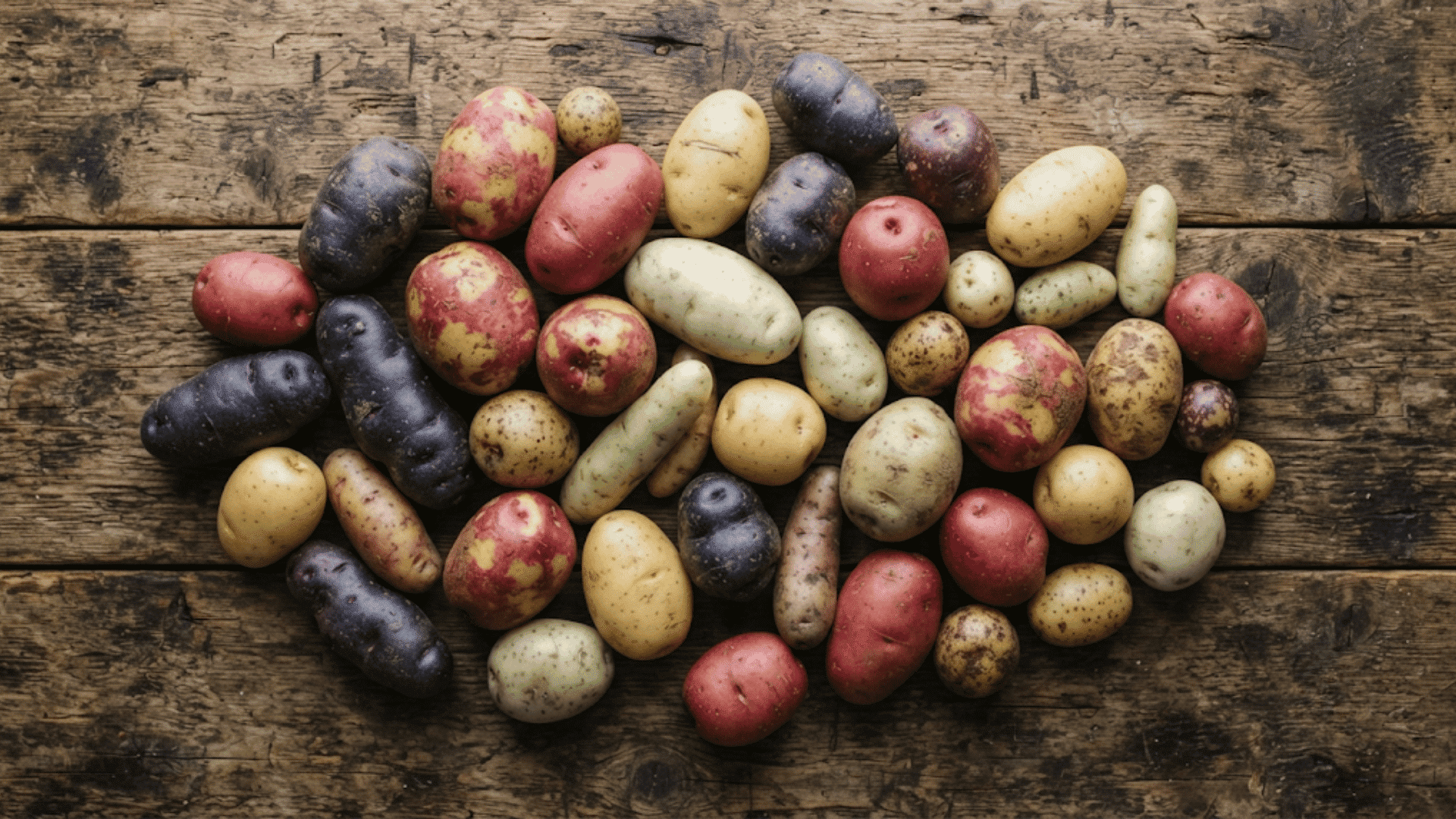
Potato varieties mature at different rates, so choosing the right planting time can help your crop finish before unfavorable weather arrives.
1. Early-Season Potatoes
-
Planting Time: Plant in early spring once the soil reaches about 45°F and can be worked without staying soggy.
-
Days to Maturity: Most early potatoes are ready in about 60–80 days, making them suitable for shorter growing seasons.
-
Varieties to Grow: Try Yukon Gold, Red Norland, Irish Cobbler, or Caribe for an earlier crop.
I like early varieties when I want to free up bed space later in the season. Getting a crop out sooner leaves room for another round of vegetables rather than tying up the same bed through late summer.
2. Mid-Season Potatoes
-
Planting Time: Plant in early to mid-spring when frost risk is lower, and the soil has started warming.
-
Days to Maturity: These potatoes commonly need about 80–100 days before they are ready for harvest.
-
Varieties to Grow: Kennebec, Red Pontiac, and Purple Viking are popular mid-season choices for home gardens.
3. Late-Season Potatoes
-
Planting Time: Plant in spring with enough frost-free days remaining for the potatoes to reach maturity before cold fall weather.
-
Days to Maturity: Late varieties often take about 100–130 days and work well when you want potatoes for longer storage.
-
Varieties to Grow: Consider Russet Burbank, German Butterball, or Elba for a late-season crop.
You can choose from early, mid-season, and late potato varieties given by Utah State University Extension based on your growing season and preferred harvest time.
Potato Planting Times by Region
Potato planting dates differ across the U.S. because spring temperatures, frost dates, and growing seasons vary by region.
|
U.S. Region |
Typical Planting Time |
What to Watch |
|---|---|---|
|
Northeast |
April to May |
Wait until the soil is workable |
|
Midwest |
March to May |
Check late spring frost dates |
|
Southeast |
January to March |
Plant before summer heat arrives |
|
Southwest |
January to March |
Choose a cool planting period |
|
Pacific Northwest |
March to May |
Avoid cold and waterlogged soil |
|
Mountain States |
April to May |
Wait for frozen soil to thaw |
|
Warm Southern Areas |
January to February |
Plant during mild winter weather |
These are general planting windows, so check your local frost dates and soil temperature before planting.
What Gardeners on Reddit Say About Potato Planting
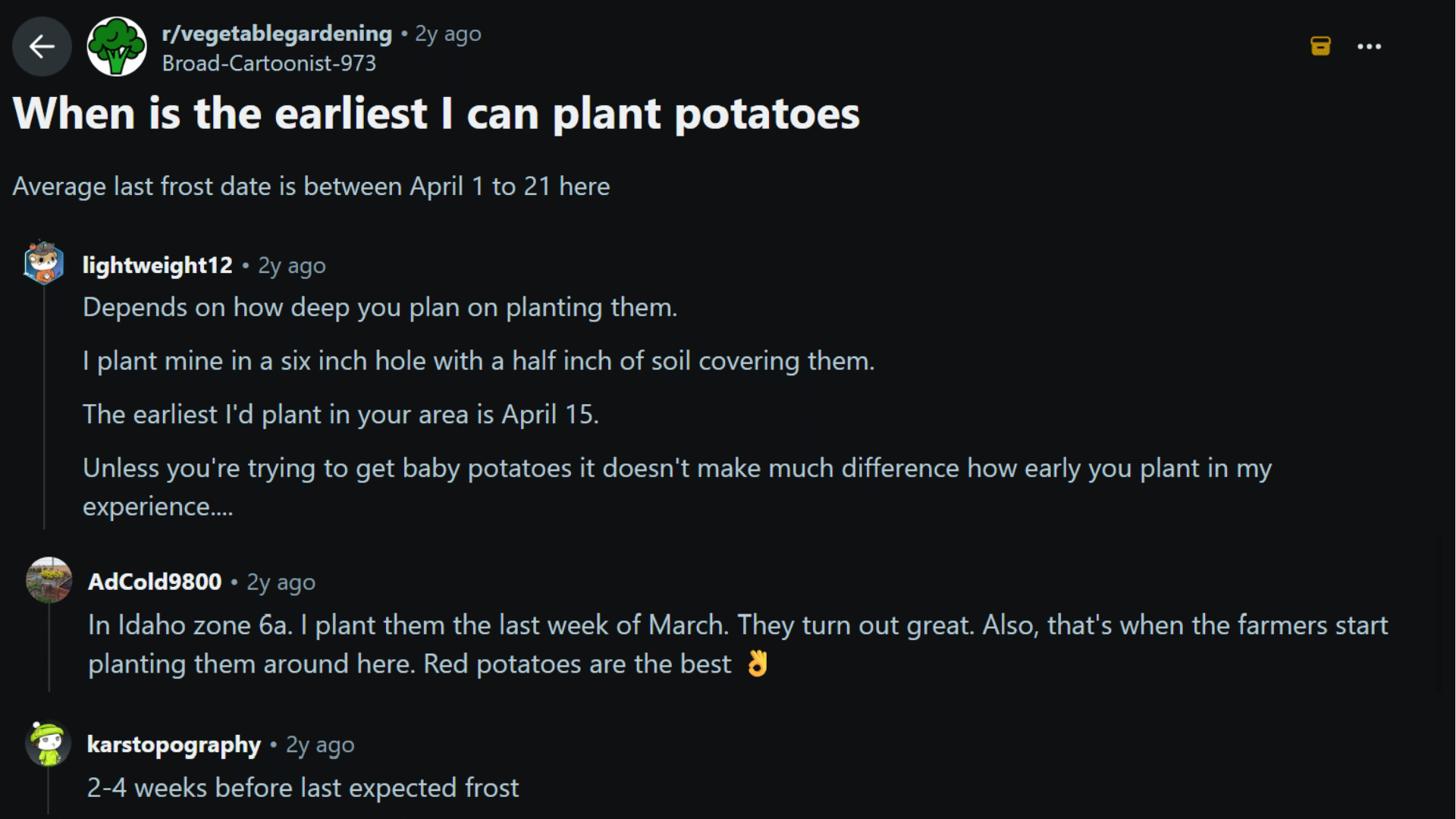
In a Reddit discussion about when to plant potatoes, gardeners shared how they choose planting dates based on local frost patterns rather than one fixed date.
One Zone 6a gardener in Idaho reported planting during the last week of March, while another gardener suggested planting two to four weeks before the expected last frost.
Others mentioned planting around St. Patrick’s Day or during the first week of April in central Indiana.
Some gardeners were comfortable with young shoots experiencing a light frost, though colder temperatures remained a concern.
I like comparing experiences like these because they show why gardening advice rarely comes down to one perfect date. Your own soil and weather still have the final say.
How to Plant Seed Potatoes?
Planting seed potatoes correctly gives the developing plants enough room, soil contact, and moisture to start growing well.
-
Choose Healthy Seed Potatoes: Use firm certified seed potatoes with visible eyes and no signs of rot or damage.
-
Cut Larger Potatoes: Cut large seed potatoes into pieces, leaving at least one or two healthy eyes on each section.
-
Let Cut Pieces Dry: Leave freshly cut pieces in a cool, dry place for a day or two so the cut surface can form a protective layer.
-
Dig Planting Holes or Trenches: Make holes or shallow trenches about 3 to 6 inches deep in loose, well-drained soil.
-
Place the Seed Pieces: Set each piece with the eyes facing upward and leave about 10 to 12 inches between plants.
-
Cover With Soil: Cover the seed potatoes gently with soil without packing it down too firmly.
-
Water After Planting: Water the area lightly so the soil stays evenly moist without becoming soggy.
When Potatoes Are Ready to Harvest?
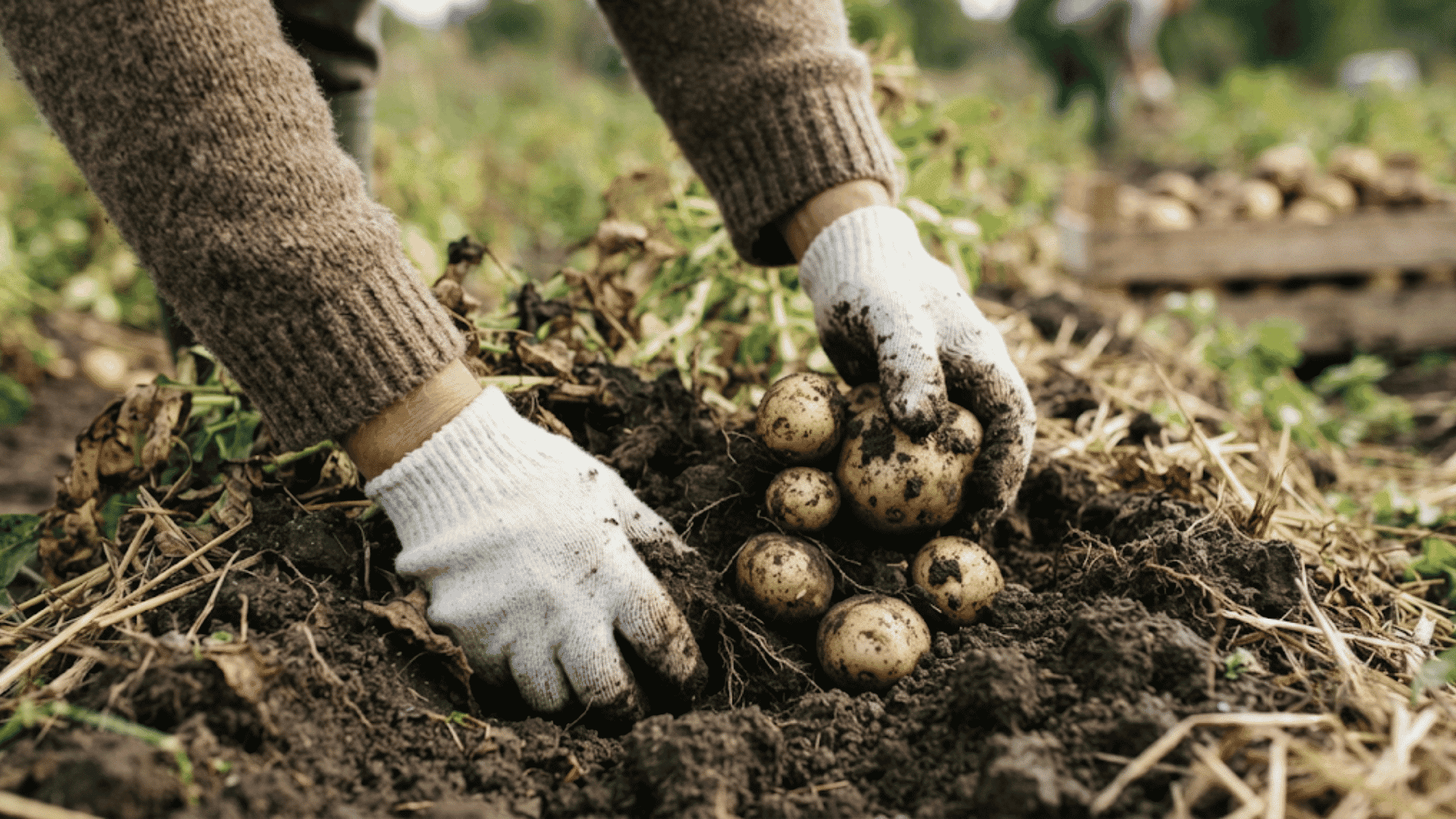
Potatoes are usually ready to harvest about 60 to 130 days after planting, depending on the variety.
For small new potatoes, you can start checking around the time the plants flower. For fully mature potatoes, wait until the foliage turns yellow, dries out, and begins to die back.
Leaving mature potatoes in the soil briefly after the tops die can help their skins firm up for storage.
Common Potato Planting Mistakes
A few planting errors can slow growth, reduce yields, or cause seed potatoes to rot before they sprout.
-
Planting in Cold Soil: Seed potatoes may sprout slowly or rot when the soil is too cold and wet.
-
Planting Too Deeply: Burying seed potatoes too far down can delay shoots from reaching the surface.
-
Spacing Plants Too Closely: Crowded plants compete for water, nutrients, and room for tubers to form.
-
Using Poor Seed Potatoes: Soft, damaged, or diseased seed potatoes may lead to weak plants or failed growth.
-
Overwatering After Planting: Soggy soil can reduce airflow around the seed pieces and raise the chance of rot.
-
Ignoring Local Frost Dates: Planting without checking frost timing can expose young shoots to damaging cold weather.
-
Skipping Soil Preparation: Hard or compacted soil can restrict tuber growth and produce smaller or misshapen potatoes.
These mistakes trip up plenty of beginners, which is also why starting with a few forgiving, easy vegetables to grow alongside your potato patch can take some pressure off while you get the timing right.
Conclusion
Timing matters more with potatoes than with most other vegetables in the garden.
Spring is still the main planting season almost everywhere, but as the regional breakdown above shows, that window can shift by weeks depending on where you garden.
Knowing when to plant potatoes really comes down to reading your own soil and calendar together, not just one of them.
Before you plant, check your local frost dates, test the soil with a simple thermometer, and pick a variety suited to your season length.
What’s your own planting rule of thumb, the one you trust over any calendar date? Drop it in the comments below.
Frequently Asked Questions
Can I Plant Potatoes From Grocery Store Potatoes?
You can, but certified seed potatoes are a safer choice because grocery potatoes may carry diseases or be treated to reduce sprouting.
Do Potatoes Need Full Sun?
Potatoes grow best with about six to eight hours of direct sunlight daily. Too much shade can reduce plant growth and lower tuber production.
How Many Potatoes Grow From One Seed Potato?
One seed potato can produce several tubers, though the final number depends on the variety, soil, weather, spacing, and overall plant health.
When to Plant Container Potatoes?
Plant container potatoes in early spring once the soil stays around 45°F or warmer. Containers can warm faster than garden soil, but young plants still need protection from frost.