Wash day should leave your hair feeling better, but sometimes mine has ended with oily roots, tangled lengths, or ends that feel rougher than before.
It can be frustrating when you put in the effort and still do not get the result you expected.
That made me look more closely at how to wash your hair properly and the little habits that can affect each wash.
From product buildup to the way hair is handled, small details can make a noticeable difference in how fresh, soft, and manageable your hair feels.
How to Wash Your Hair Properly
A good wash routine comes down to a few simple habits that help your scalp feel fresh and your hair stay soft and manageable.
Step 1: Detangle Your Hair Before Washing
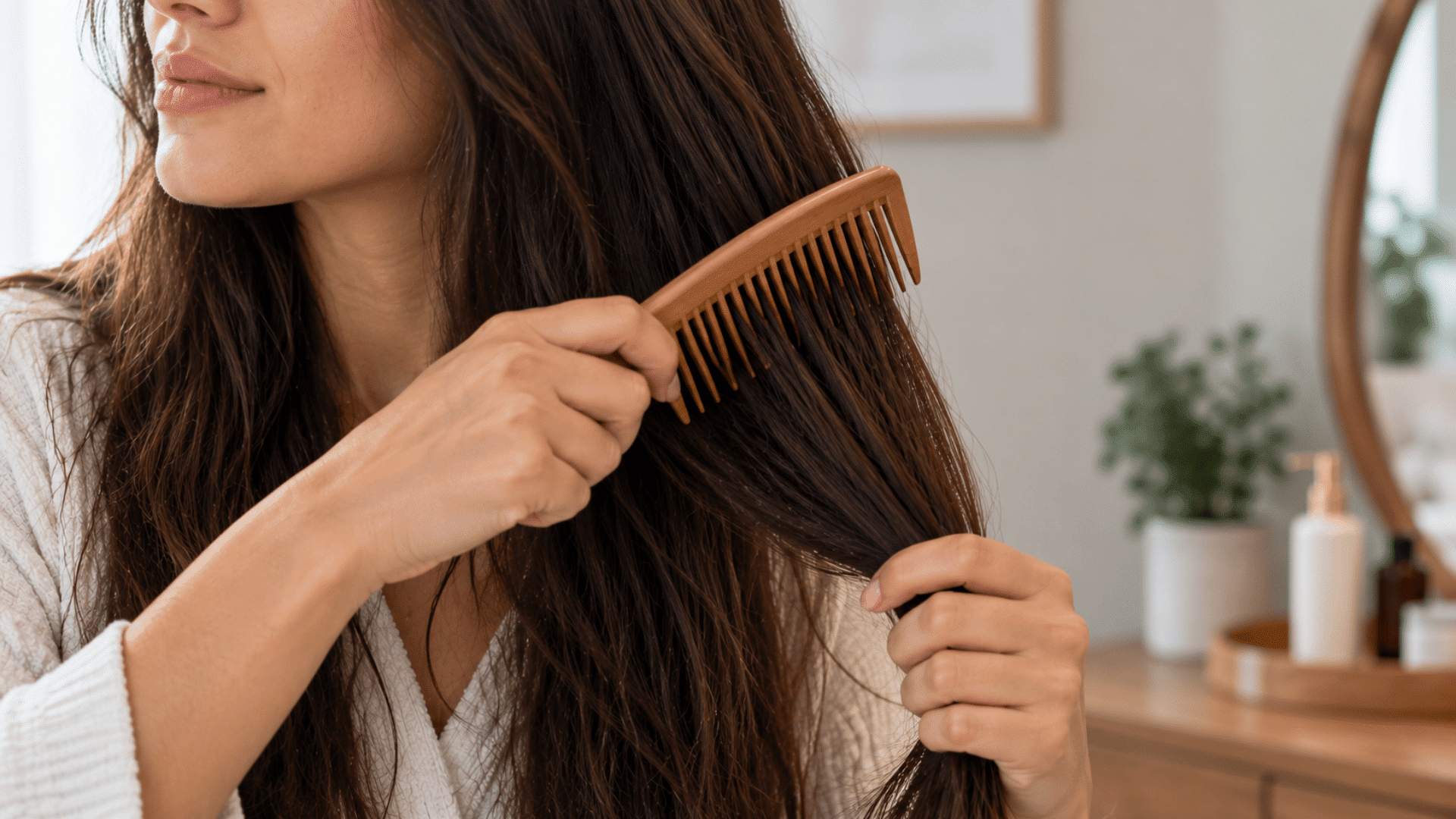
Gently detangle your hair before washing to remove knots and reduce pulling once it gets wet.
Start at the ends and gradually work upward with a wide-tooth comb or your fingers. For curly or coily hair, dry detangling may cause breakage or disrupt curls, so detangling damp hair with conditioner may work better.
Step 2: Wet Your Hair Thoroughly
Wet your hair thoroughly with lukewarm water, making sure both the scalp and strands are fully saturated.
Properly wet hair helps shampoo spread more evenly and reach the scalp with less product. If your hair is only partially wet, shampoo can be harder to distribute, leading you to use more than needed.
Step 3: Apply Shampoo to Your Scalp
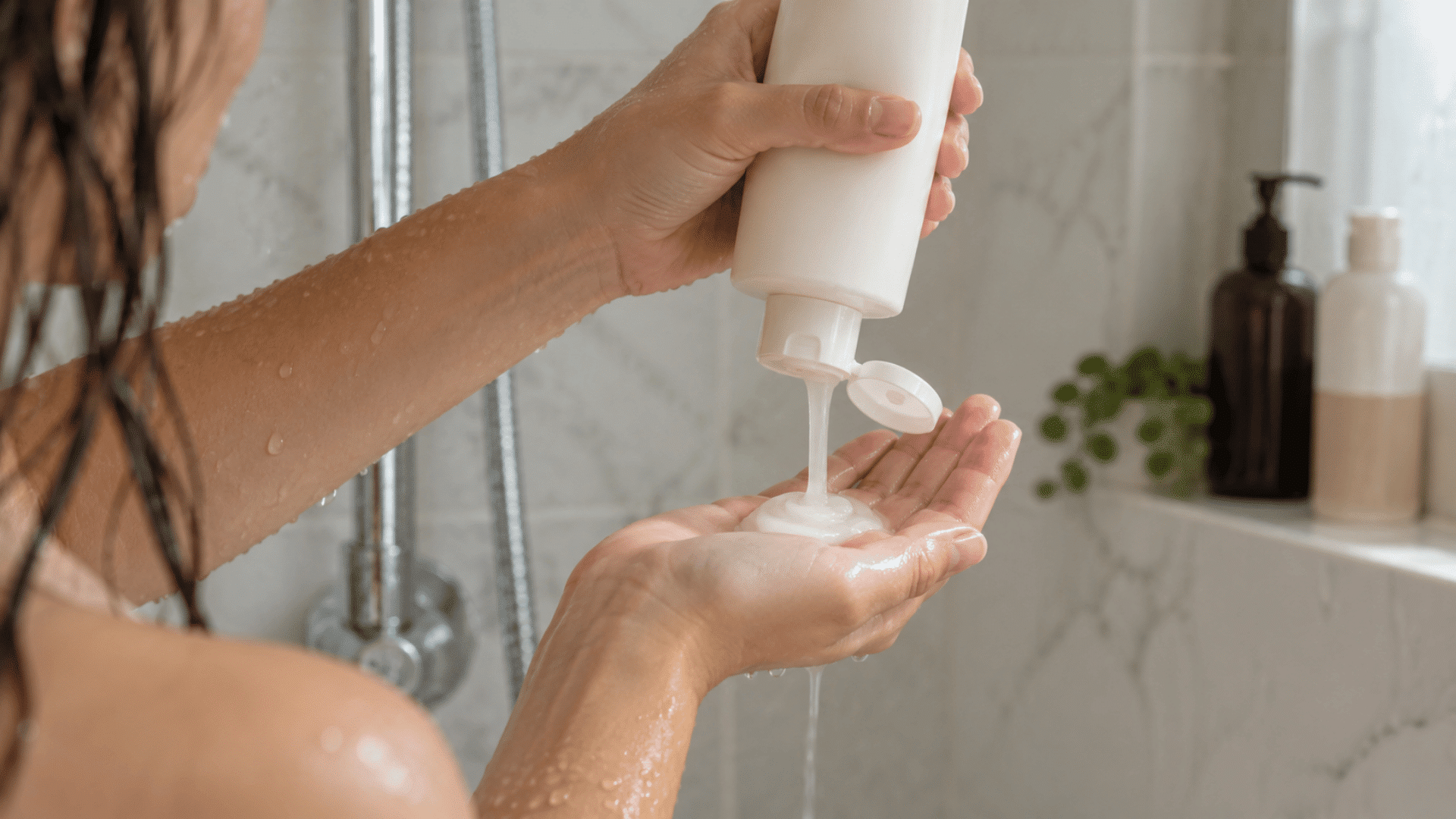
Apply a small amount of shampoo mainly to your scalp and roots, where oil and buildup tend to collect.
Use enough to cleanse without coating your hair excessively. There’s usually no need to scrub shampoo into the ends; as you rinse, the lather will naturally move through the lengths.
Step 4: Massage Your Scalp Gently
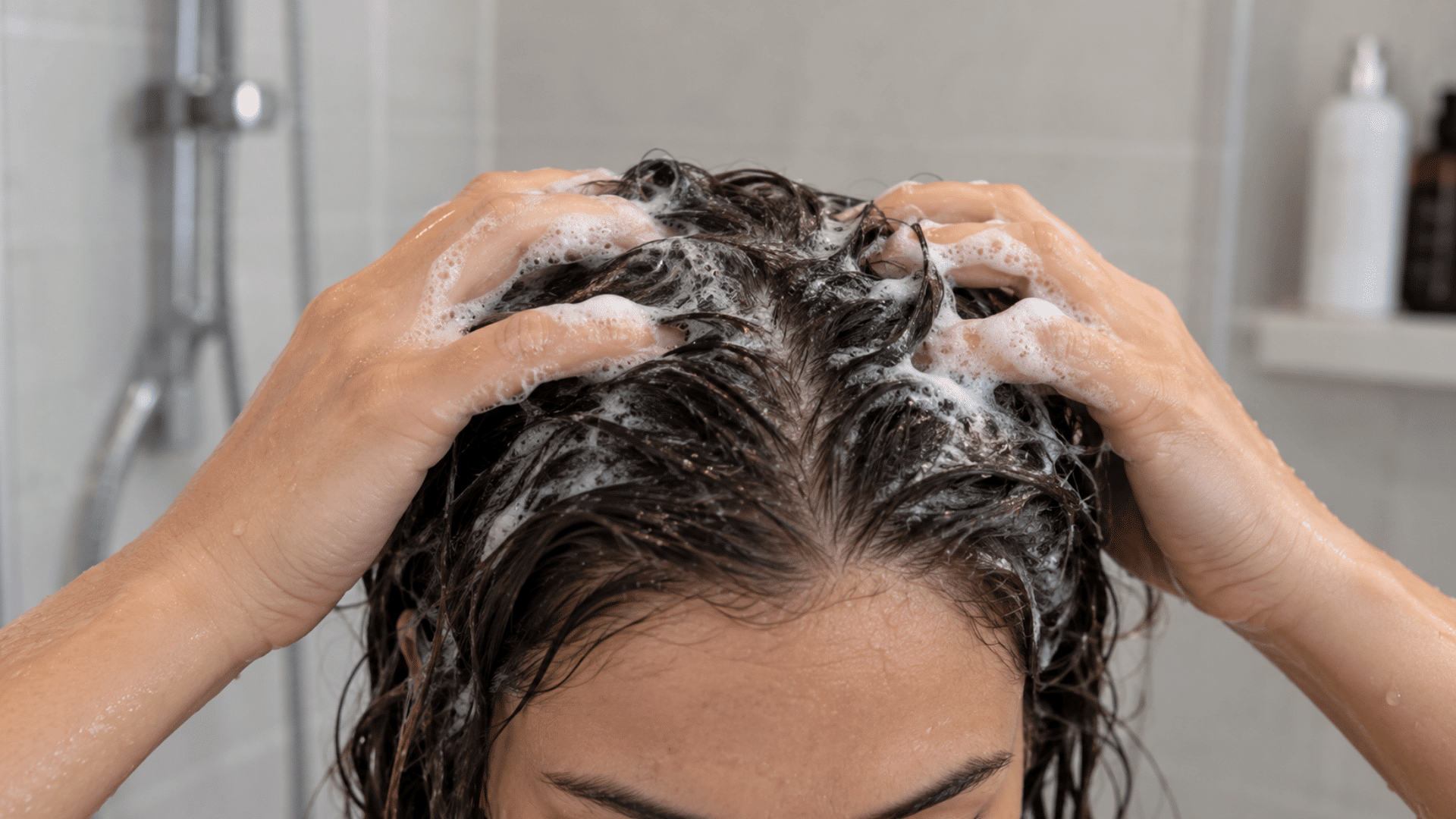
Use your fingertips to gently massage the shampoo across your entire scalp, including around the hairline and behind the ears. Work in small circular motions without pressing too hard.
Avoid using your nails or aggressive scrubbing, as this can irritate the scalp and create unnecessary friction.
Step 5: Rinse the Shampoo Completely
Rinse thoroughly with lukewarm water until all shampoo and lather are gone. Run your fingers through your hair to help water reach the scalp.
If you have thick or dense hair, pay extra attention to areas where shampoo can easily remain trapped.
Step 6: Shampoo Twice If Needed
A second shampoo isn’t necessary for every wash. It may be helpful when your scalp feels especially oily, you use a lot of styling products, or you go longer between washes.
If your hair and scalp already feel clean after one shampoo, there’s usually no need to repeat.
Step 7: Apply Conditioner Correctly
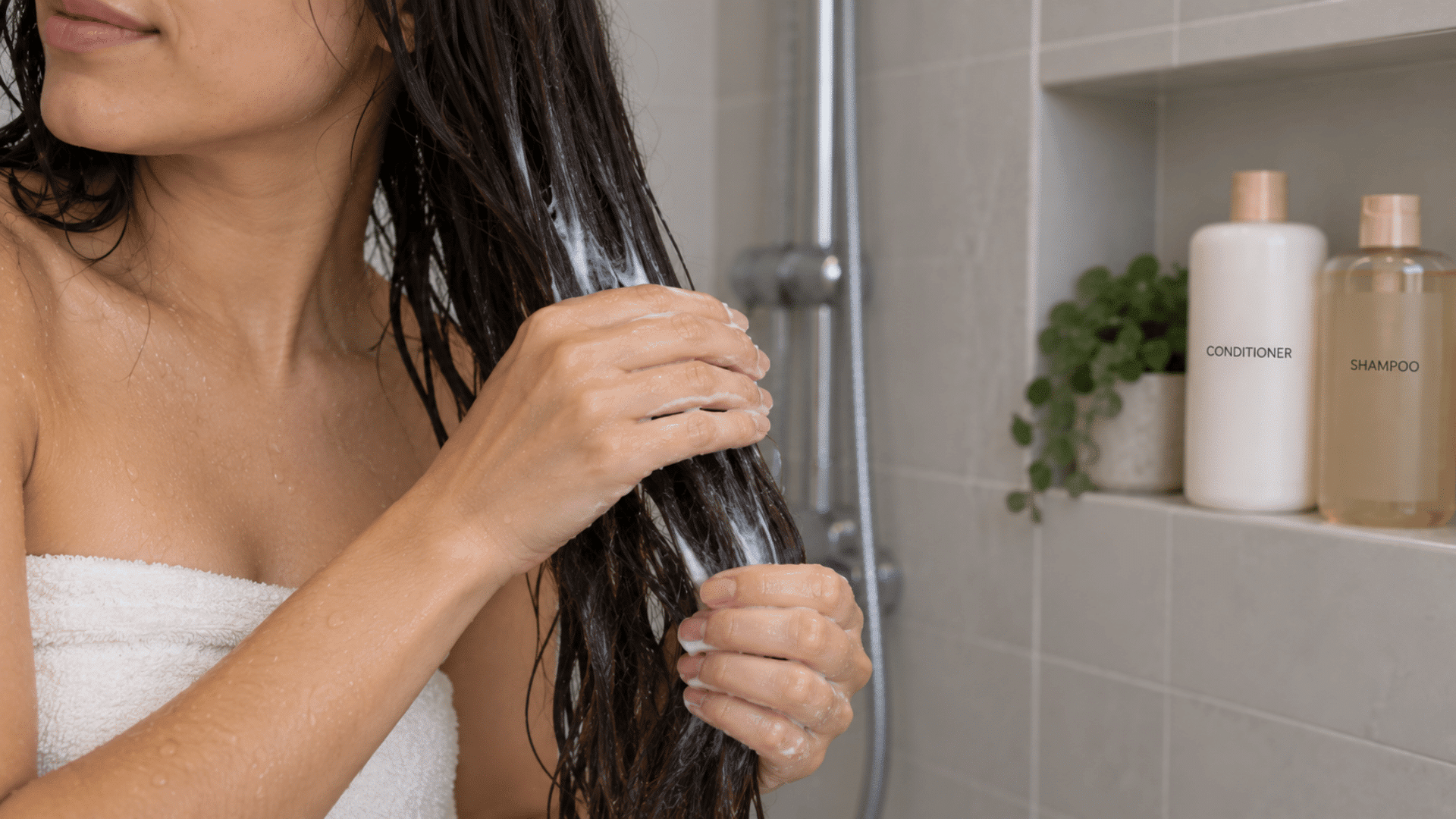
Apply conditioner mainly from the mid-lengths to the ends, where hair often needs more moisture. Placement may vary with your hair type and the product you use, so check the instructions.
Leave the conditioner on for the recommended time before rinsing.
Step 8: Rinse Your Hair Thoroughly
Rinse your hair thoroughly until the conditioner is fully removed and your strands no longer feel heavily coated. Pay extra attention to thicker sections where product can linger.
A complete rinse helps prevent unwanted residue that may leave hair feeling heavy or greasy.
Step 9: Dry Your Hair Gently
Gentle drying can also help minimize friction that may leave frizzy hair harder to manage. Blot the strands carefully to reduce unnecessary friction and tangling while your hair is wet.
A microfiber towel or soft cotton T-shirt can also absorb moisture without aggressive rubbing. These gentle drying habits can help reduce hair breakage, especially when your strands are wet and most vulnerable.
How Often Should You Wash Your Hair?
No single hair-washing schedule works for everyone. How often you should wash your hair depends on your scalp oiliness, hair texture, styling habits, and the products you use.
|
Hair/Scalp Type |
Suggested Washing Frequency |
|---|---|
|
Oily scalp |
Daily or every other day |
|
Fine hair |
Every 1–2 days |
|
Dry hair |
About 2–3 times a week |
|
Curly hair |
About 1–3 times a week |
|
Coily hair |
About once a week or every 1–2 weeks |
|
Color-treated hair |
About 2–3 times a week |
These ranges are only a starting point. Your ideal wash schedule can change depending on how quickly your scalp becomes oily or your hair feels dry.
What Reddit Users Have to Say About Morning Sickness
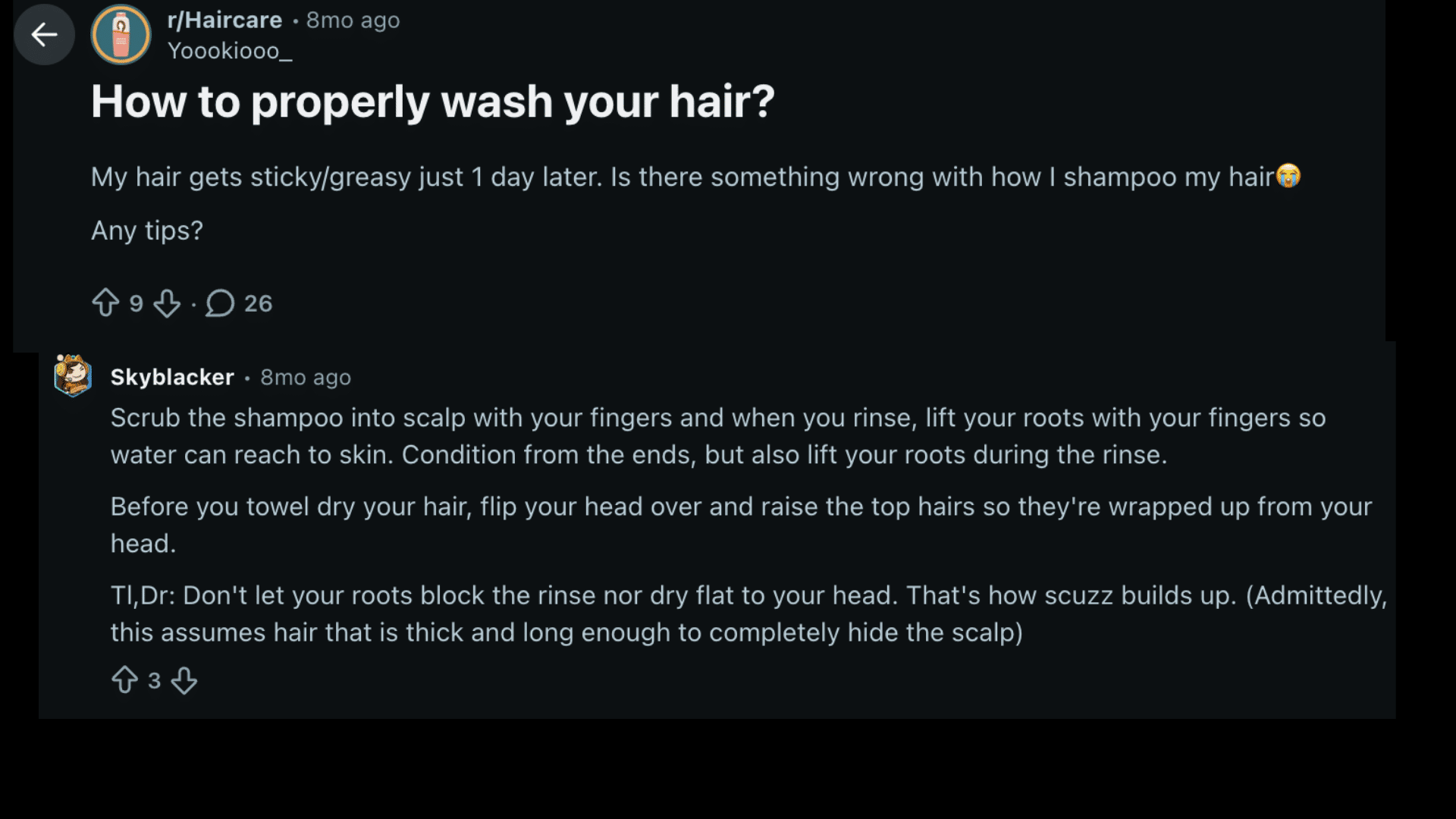
Reddit discussions about proper hair washing show that there is no single routine that works for every hair type or scalp. Some commenters report better results from daily washing, while others find that washing less frequently works better, especially for curly hair.
Several users recommend thoroughly soaking the hair before shampooing, focusing shampoo on the scalp, and rinsing longer than expected to prevent residue.
Double shampooing is another commonly mentioned technique when oil or product buildup remains after the first wash. For thick hair, lifting sections at the roots can help water and shampoo reach areas that are easy to miss.
Conditioner is generally recommended for the mid-lengths and ends rather than oily roots. Commenters also mention hard water, product buildup, and heavy styling products as possible reasons hair may continue feeling greasy or sticky after washing.
What is the Best Water Temperature for Washing Hair?
Lukewarm water is generally the best choice for washing your hair, between 96°F and 104°F.
It comfortably wets the hair and helps rinse away shampoo and conditioner without exposing your scalp to excessive heat.
Very hot water may leave the scalp and hair feeling dry, especially if dryness is already a concern. A cold-water rinse at the end is optional, not a necessary step for properly washed hair.
Dos and Don’ts of Washing Your Hair
A few extra habits can make wash day easier and help you avoid buildup, irritation, and other common hair-washing problems.
|
Do’s |
Don’ts |
|---|---|
|
Clean your hairbrushes and combs regularly |
Sleep with soaking wet hair |
|
Wash pillowcases and hair towels often |
Keep adding dry shampoo for several days |
|
Adjust your routine as your scalp changes |
Switch several hair products at the same time |
|
Follow the timing given on masks and treatments |
Ignore persistent itching, burning, or flaking |
|
Clarify occasionally if heavy buildup becomes noticeable |
Use clarifying shampoo too frequently on dry hair |
|
Pay attention to how your hair feels after each wash |
Assume an expensive product will suit your hair |
|
Keep styling tools and accessories clean |
Tie wet hair tightly immediately after washing |
|
Introduce new products gradually |
Copy someone else’s wash schedule without considering your hair type |
How to Choose the Right Shampoo and Conditioner for Your Hair
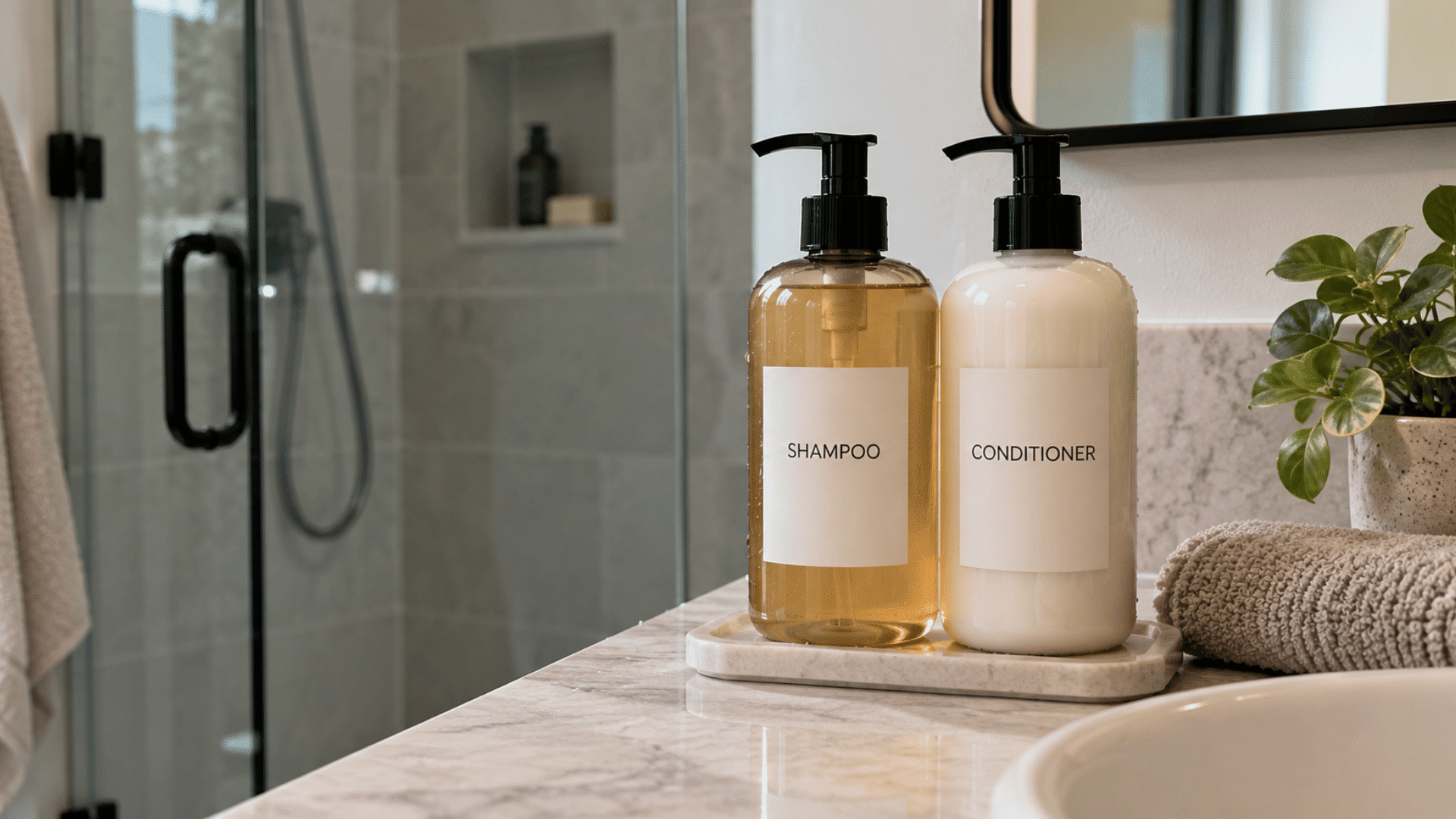
Choose shampoo and conditioner based on your scalp needs, hair texture, and condition. The right combination should cleanse effectively without leaving your hair overly dry or weighed down.
- Oily Hair: Use lightweight cleansing formulas to remove excess oil. Clarifying shampoo, like OUAI Detox Shampoo, may be useful.
- Dry Hair: Choose a moisturizing shampoo and richer conditioner to help dry strands feel softer and easier to manage. K18 Damage Shield Shampoo and Conditioner is one option designed for dry or damaged hair.
- Fine Hair: Look for lightweight formulas that provide enough moisture without leaving fine strands flat, greasy, or heavy.
- Curly or Coily Hair: A curly hair routine often benefits from gentle cleansers and moisture-rich conditioners that help maintain softness and make detangling easier.
- Color-Treated Hair: Use gentle formulas made for color-treated hair to help maintain moisture and color. Pureology Hydrate Shampoo and Conditioner is one option formulated for color-treated hair.
How to Know If You’re Washing Your Hair Properly
Your hair and scalp should feel clean and comfortable after washing. Good signs include:
- Scalp feels clean without tightness
- No shampoo or conditioner residue remains
- Roots feel fresh rather than weighed down
- Lengths don’t feel overly dry or tangled
- Scalp feels comfortable without irritation
Conclusion
A good hair wash doesn’t need a complicated routine. Focus on gently cleansing your scalp, conditioning where your hair needs it, rinsing thoroughly, and treating wet strands with care.
I’ve found that small technique changes can make the whole routine feel easier. Pay attention to how your hair and scalp respond and adjust from there.
What works best for your hair? Share your routine in the comments below!
Frequently Asked Questions
Is It Better to Wash Hair in the Morning or at Night?
Either can work. Morning washing may suit people who style afterward, while nighttime washing is convenient if your hair has enough time to dry before bed.
Why Does My Hair Feel Waxy After Washing?
A waxy feeling can come from product buildup, hard water, or formulas that are too heavy for your hair. Occasional clarifying may help remove residue.
Why Does My Hair Get Greasy So Quickly After Washing?
Fast oiliness may relate to an oily scalp, heavy products, frequent touching, or residue left near the roots. Your routine may need small adjustments.