Your sunscreen looked perfectly fine when you applied it. Then you added foundation.
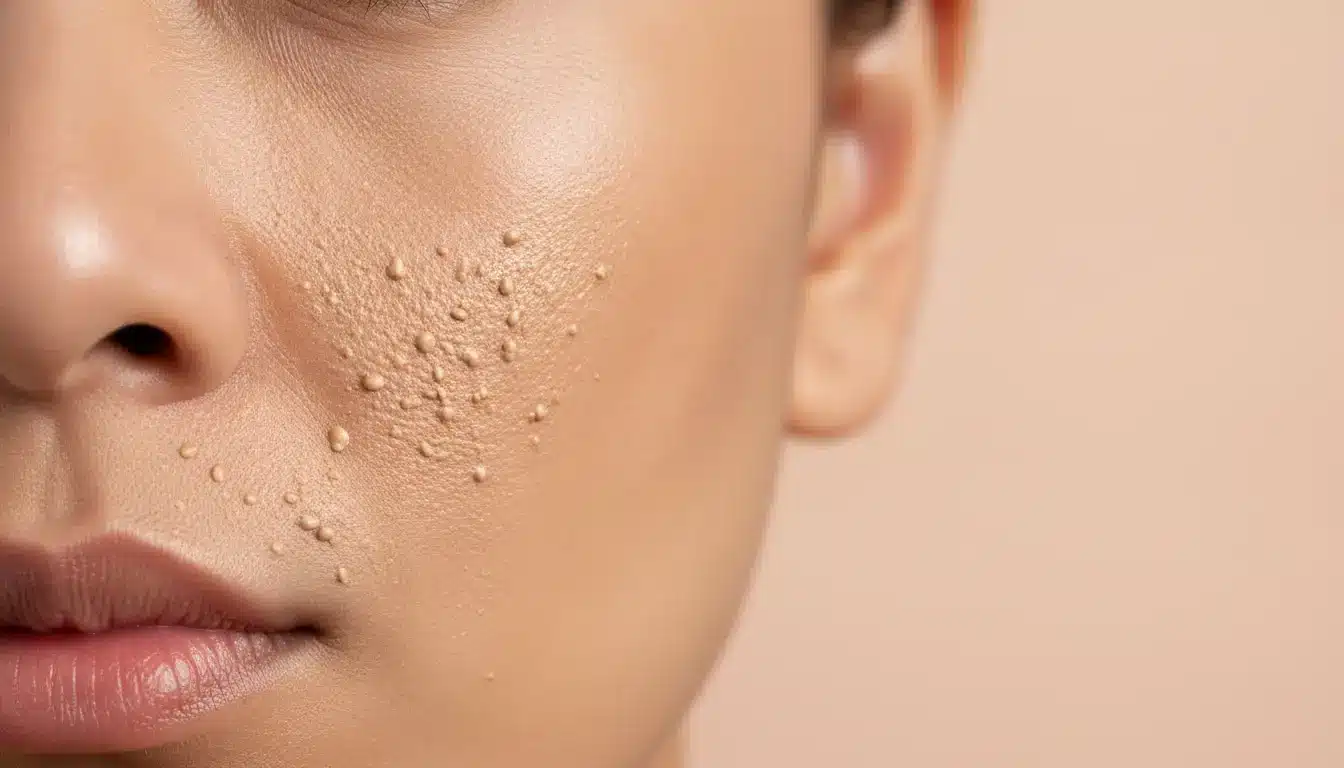
Suddenly, there are tiny flakes around your nose. Your foundation is separating on your cheeks. Maybe the whole thing starts rolling into little balls the moment you try to blend it.
It is tempting to blame the makeup. Or the sunscreen. Sometimes neither product is particularly bad on its own.
The problem can be what happens between them.
Sunscreen does more than disappear into your skin after application. It leaves behind a thin layer containing UV filters and other formulation ingredients. How that layer forms, and what you put on top of it, can have a surprisingly big influence on how the rest of your routine behaves.
Sunscreen Doesn’t Simply “Sink In”
We often talk about skincare as though everything gets absorbed.
Apply a serum. Let it absorb. Apply moisturizer. Let that absorb. Apply sunscreen and wait for it to disappear.
But sunscreen has a different job.
To protect exposed skin, a sunscreen needs to distribute its UV filters across the application area. The finished product contains much more than those filters, too. Depending on the formula, there may be emollients, emulsifiers, polymers, powders, film-forming ingredients, humectants, and other materials helping create the final product.
Once you spread sunscreen over your face, some ingredients may absorb or evaporate, while others remain behind. What is left forms the layer your makeup eventually encounters.
And that’s where things can get complicated.
Your Foundation Isn’t Landing on Bare Skin
By the time foundation goes on, your face may already have several layers on it.
There might be a hydrating serum, moisturizer, facial oil, primer, and sunscreen underneath. Each has its own ingredients and its own way of behaving on the skin.
Put compatible layers together and you might never notice them.
Put less compatible ones together and the evidence can appear almost immediately.
One of the most familiar examples is pilling. You start blending foundation or rubbing sunscreen and little rolls of product begin appearing on the skin.
This can happen when there is simply too much material layered on the surface. It can also involve polymers or other formulation ingredients interacting as products are rubbed together. Applying another layer before the previous one has had time to settle can make matters worse.
More product isn’t always better when several formulas need to coexist on the same patch of skin.
Then There’s Separation
Pilling isn’t the only problem.
Sometimes makeup goes on smoothly but begins separating later. Foundation might collect around the nose, become patchy on the forehead, or seem to slide away from certain areas.
The relationship between the layers underneath can contribute.
A rich, emollient sunscreen creates a very different surface from a lighter, faster-setting formula. Put foundation over either one and the makeup has to work with whatever surface has been created.
The same applies to your skincare underneath the sunscreen. A generous layer of facial oil or a rich moisturizer can change the overall feel of the surface before makeup even enters the picture.
This helps explain something frustrating about beauty routines: a foundation that looks beautiful over one sunscreen may behave completely differently over another.
Neither combination necessarily tells you which individual product is “better.” It tells you that formulas don’t exist in isolation once they reach your face.
Why Waiting Can Actually Help
You’ve probably heard the advice to wait a little between sunscreen and makeup.
There is a practical reason for it.
Immediately after sunscreen is spread, the formula is still settling into the layer it was designed to create. Applying foundation straight away means you’re manipulating that layer again through brushes, sponges, fingers, and the movement needed to blend makeup.
Giving sunscreen some time before applying makeup can reduce how much the two products are physically mixed during application.
That doesn’t mean there is one magical waiting time that works for every sunscreen. Formulas differ, as do the amount applied, the products underneath, the climate, and your skin.
The useful principle is simpler: give the sunscreen a chance to settle before disturbing it again.
Mineral Sunscreen Adds Another Interesting Layer
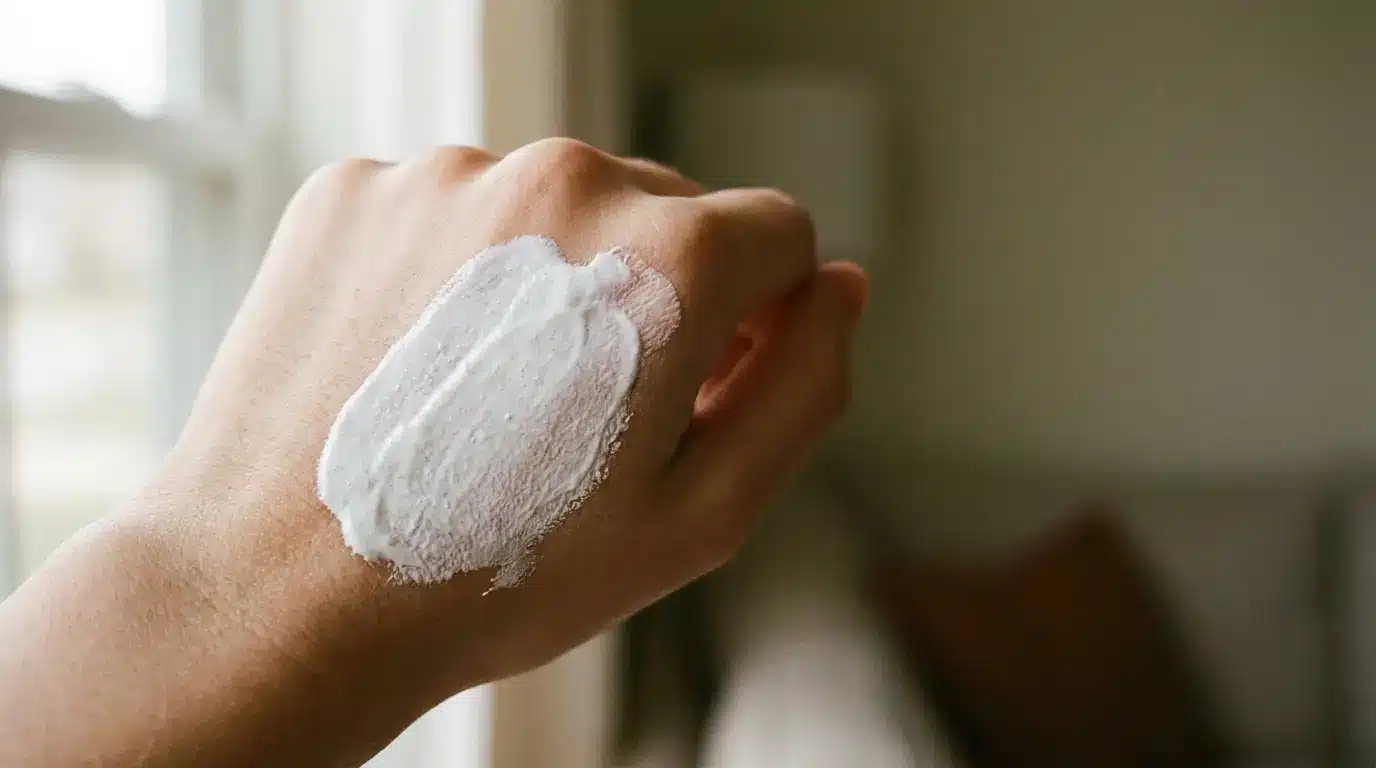
Mineral sunscreens bring their own formulation challenge because their UV filters are particles.
Zinc oxide, for example, needs to be distributed throughout the sunscreen formulation and then spread across the skin during application.
That makes dispersion especially important.
If particles are poorly dispersed, they can cluster together instead of remaining evenly distributed within the formulation. Formulators therefore pay close attention to characteristics such as particle distribution, surface treatment, the surrounding liquid phase, and how the material behaves inside the complete formula.
This is one reason the zinc oxide itself is only part of the story. Advances in zinc oxide technology and dispersion have given formulators greater control over how the mineral filter behaves within a finished sunscreen.
For someone applying makeup in the morning, all of this science is invisible.
But the layer sitting underneath their foundation isn’t.
Your Application Technique Matters Too
Sometimes we spend so much time comparing ingredient lists that we forget about our hands.
How you apply products can change what happens on your face.
Repeatedly rubbing sunscreen after it has started setting can disturb the layer. Aggressively working foundation into the skin can do the same. A brush, damp sponge, or fingers can also interact differently with the products underneath.
If pilling is a recurring problem, pressing or gently blending makeup over sunscreen may work better than repeatedly rubbing the surface.
The amount of skincare underneath matters as well. If your morning routine includes several serums, a rich moisturizer, facial oil, sunscreen, primer, and foundation, there is simply more material competing for space.
Before replacing your sunscreen or foundation, it can be worth simplifying the layers and seeing whether the problem changes.
Don’t Solve a Makeup Problem by Using Less Sunscreen
There is one fix that seems obvious but isn’t a good trade.
If sunscreen makes makeup harder to apply, using much less sunscreen might make the cosmetic problem disappear. It can also mean you’re no longer applying the sunscreen in the way needed to achieve the protection represented by its label.
A better approach is to adjust the rest of the routine.
Try reducing unnecessary layers underneath. Allow products time to settle. Experiment with application techniques. If necessary, look for a sunscreen whose texture works better with the makeup you regularly wear.
Your sunscreen shouldn’t have to become an occasional product just because you like wearing foundation.
Sometimes the Best Pairing Takes Experimentation
There isn’t a universal sunscreen-and-foundation combination that works for everyone.
Skin type matters. So does climate. So do the moisturizer, sunscreen, primer, foundation, application method, and amount of each product you use.
That’s why copying someone else’s perfect routine doesn’t always produce the same result.
If something repeatedly pills, separates, or slides, change one variable at a time. Try the sunscreen without primer. Use less moisturizer underneath. Give the sunscreen longer to settle. Try your foundation with a different application method.
You may discover that the problem wasn’t one terrible product.
It was the relationship between two perfectly good ones.
And that relationship is happening in a layer so thin you probably never thought about it at all.