Face shape can be a useful way to narrow an eyewear search, but it is not a rulebook. A frame with clean angles may add definition beside softer facial contours; a rounded rim can provide a softer counterpoint to a stronger jawline. That is visual balance, not a correction exercise.
Start there, then give equal weight to scale, bridge fit, prescription requirements, comfort, and the role glasses play in your wardrobe. The pair that works best is rarely the one that merely fits a textbook category. It is the one you will want to wear from morning to evening.
Find Your Approximate Face Shape
A mirror is often more revealing than a single front-facing selfie. Pull your hair away from your face, stand in good light, and trace its outer outline on the mirror with a washable marker. Step back and look at the overall contour rather than isolating one feature.
This is only an estimate. Expression, camera angle, hairstyle, and even where you focus can change the result. It is common to recognize parts of two shapes—for example, a face that appears round in a photo but has more prominent cheekbones and a narrower chin in the mirror.
- Oval: gentle curves, softly rounded edges, and a forehead that is slightly wider than the jaw. It is often a little longer than it is wide.
- Round: similar width and length, fuller cheeks, a rounded chin, and cheekbones that may be the widest point.
- Square: a broad forehead, a defined jawline, and more angular lines, with width and length that are relatively alike.
- Heart: a broader forehead and cheekbone area tapering toward a narrower, sometimes pointed chin.
- Diamond: cheekbones are the widest point, with a narrower forehead and chin.
- Oblong: an oval-like outline in which length is more visually pronounced than width.
Choose the one or two descriptions that feel closest. Once you have a direction, compare a small range of glasses frames for women rather than trying to shop by a single label.
Frame Directions to Compare
The following pairings are starting points. The useful question is not “What am I allowed to wear?” but “What changes when I put these two outlines beside each other?”
Oval Faces: Use Scale as the Deciding Factor
Oval faces are often considered versatile because their proportions can accommodate many frame lines. That does not mean every size works equally well. Try a softly rounded frame and a structured rectangle, then look at whether the width and lens depth feel in proportion to your features.
If your usual wardrobe is understated, a slim metal oval or neat acetate rectangle may be enough. If you want glasses to register more clearly as an accessory, a softened geometric shape can add character without relying on a strict face-shape formula.
Round Faces: Compare Definition With Softness
Rectangular and other angular frames are conventional options for rounder faces because their straighter lines create contrast with a softly curved outline. A frame does not need to be sharply square to have this effect; a gentle geometric rim can offer a less severe version.
The alternative is worth trying, too. A round or oval frame may feel lighter and more natural, particularly if a highly structured front competes with the rest of your wardrobe. Compare both before deciding which version looks and feels more like you.
Square Faces: Introduce a Curved Counterpoint
Round and oval frames are frequently suggested for square faces. Their curved rims can soften the visual contrast of a broad forehead, defined jaw, or angular features.
That said, a square or rectangular frame can be an intentional choice rather than a mistake. If you prefer a more architectural look, test one with softened corners, a lighter color, or a slimmer profile so the overall effect is not heavier than you want.
Heart-Shaped Faces: Watch Where Visual Weight Sits
For a heart-shaped outline, rectangle, square, and aviator styles are useful silhouettes to compare. They offer different ways to introduce structure across the frame front. Aviators are particularly distinctive: the classic version combines a double-bar bridge with a teardrop-shaped lens area.
If a strong brow line or a large lens front feels dominant, try a quieter interpretation of the same family—a slimmer metal aviator, for instance, or a moderate rectangle rather than an oversized square.
Diamond Faces: Use Cheekbone Width as a Reference
With a diamond-shaped face, the cheekbones tend to be the widest point while the forehead and chin are narrower. Rather than assume one “best” style, compare a curved frame with a frame that has a little more definition around the upper edge. This makes it easier to see whether you prefer softness, structure, or a balance between the two.
An oval rim or a restrained cat-eye can be useful options to test, but fit should settle the question. Pay particular attention to whether the frame width feels balanced at the temples and whether your eyes sit comfortably within the lenses.
Oblong Faces: Test Depth as Well as Width
On an oblong face, overall length is more prominent. This is a good reason to compare frames with different lens depths and front widths rather than defaulting to one narrow shape. A deeper round frame, a cat-eye, or a softly geometric design can change the visual balance in different ways.
Look beyond the front view. A frame that seems proportionate head-on may feel too wide at the temples or too visually slight in three-quarter view. A second mirror—or a few photographs taken from different angles—can be more useful than a single selfie.
A Few Current Silhouettes Worth Trying
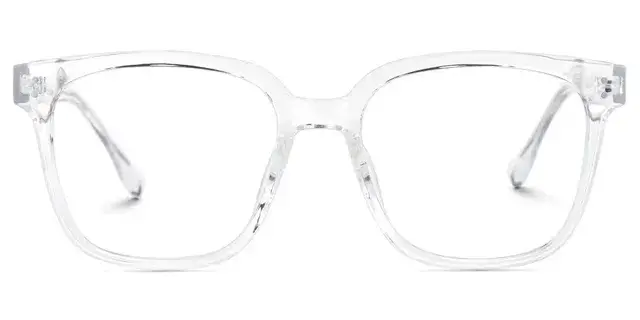
Trend-led frames are most useful as prompts, not instructions. Oversized acetate, softened geometric rims, slim metal frames, transparent or lightly tinted materials, and updated cat-eyes remain visible directions. Each can be adapted to a range of faces when the scale and fit are right.
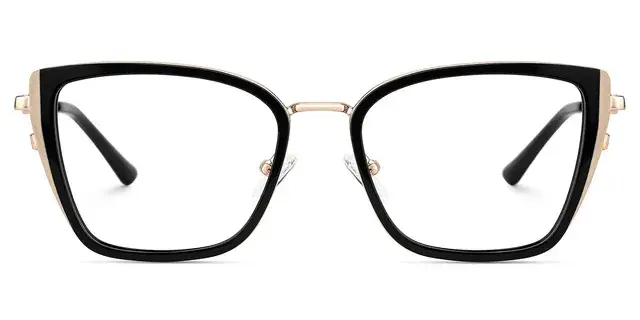
A translucent geometric frame can add interest to simple tailoring or knitwear without feeling overly formal. Slim metal can read quieter and more refined. A cat-eye provides lift at the outer corners, but the degree matters: a modest upsweep can feel very different from a pronounced vintage-inspired point.
If you are shopping online, use virtual try-on to compare color, silhouette, and apparent scale. It can be a sensible first filter, especially when you are choosing between two or three distinct shapes. It cannot show whether a bridge will stay put, whether the temples will press, or whether the lens position works for your prescription.
A retailer such as the ZEELOOL online glasses store may be useful for comparing expressive women’s frames across cat-eye, geometric, translucent and oversized styles. ZEELOOL offers prescription lens customization, along with 30-day exchanges and returns and a 365-day warranty; shoppers should review the current terms and lens requirements before ordering.
Let Fit Make the Final Decision
Frame markings can help with comparison. A sequence such as 52 17 145 commonly refers, in millimeters, to lens width, bridge distance, and temple length. Use those numbers as a reference against glasses that already feel good, not as a guarantee that every frame with similar markings will fit the same way.
Before committing, check the practical details in person where possible, or arrange professional adjustment after purchase:
- Width: The front should look proportionate and should not feel tight at the temples or unstable on the face.
- Bridge: The frame should sit securely without frequent slipping, pressure, or the need to push it back into place.
- Temple comfort: The arms should rest comfortably without pinching at the sides of the head or behind the ears.
- Eye placement: Your eyes should sit comfortably within the lens area rather than appearing crowded at an edge.
- Lens depth and prescription: If you need prescription lenses, confirm that the frame shape and lens area suit your requirements before treating appearance as the final criterion.
- Lash clearance: Blink normally. Lashes that repeatedly touch the lenses are a practical sign to reassess the fit.
- All-day wear: A quick mirror check is not the same as comfort through a workday, commute, or evening out.
Frames designed for low-bridge fit may use larger nose pads to help the frame rest in a more stable position. It is a feature worth comparing, but individual adjustment and comfort still matter more than the label.
The most successful frame is not necessarily the textbook match for a face shape. It is the one that sits securely, supports your vision needs, remains comfortable through the day, and still looks intentional from more than one angle. Readers who want to browse options online can review styles through ZEELOOL, then use the fit checks above before making a final choice.