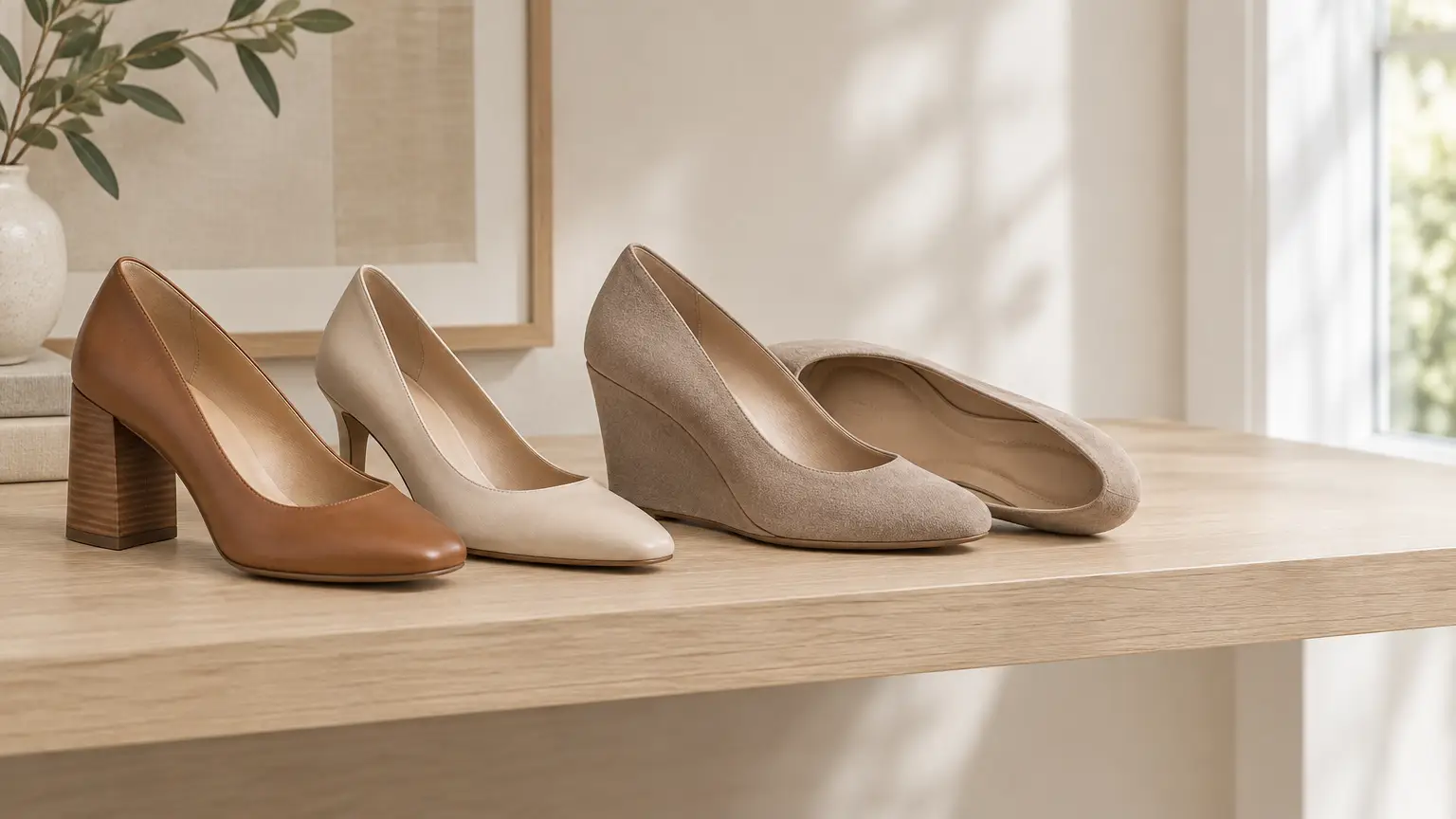
White shoes can lose their fresh, clean look after just one outdoor trip. Dirt, grass stains, and muddy marks quickly turn bright sneakers into a worn-out pair that looks older than it really is.
Scuffed soles, yellow patches, and dingy laces make even new sneakers look worn out fast.
The right way to clean white shoes depends on the shoe material, stain type, and cleaning products used.
I recommend matching the cleaning method to each shoe material it keep the texture and appearance intact across different types of shoes without wearing down the material over time.
Cleaning white shoes effectively requires the right tools and tailored treatments for each stain and material.
What You Need Before Cleaning White Shoes
Properly cleaning white shoes begins with the right supplies to remove dirt and stains and handle daily wear, ensuring they stay clean and looking new.
Tools Needed:
- Soft Bristle Brush
- Medium Bristle Brush
- Stiff Bristle Brush
- Shoe Cleaner Solution
- Shoe Tree
- Microfiber Towel
- Laundry Bag & Sheet
- Fabric Shaver
- Dry Brush
- Cleaning Bowl/Dry Rack
Having these supplies readily available before starting makes cleaning much smoother and helps restore white shoes to a fresh, even finish without leaving any missed spots.
Cleaning Methods for Different White Shoe Materials
Each shoe material reacts differently to water, brushes, and cleaning agents, so the method used should match the fabric to avoid damage or discoloration.
| Material | Cleaning Method | Alternatives to Cleaner |
|---|---|---|
| Canvas | Scrub with a soft brush, mild soap, and warm water. Wipe with a damp cloth and air-dry. | Use a baking soda and water paste to scrub gently. |
| Leather | Wipe with a damp microfiber cloth, use leather cleaner, and condition after drying. | Clean with mild dish soap and warm water on a soft cloth. |
| Mesh | Use diluted soap and a soft brush with gentle pressure. | Apply a diluted vinegar-and-water solution as a mild alternative. |
| Suede | Brush with a dry suede brush, then spot-clean with suede cleaner. | Use a pencil eraser or dry toothbrush for stains. |
Using the right cleaning method for each shoe material helps maintain the surface and prevent issues such as cracking, tearing, or water damage.
Note: Avoid soaking shoes, harsh chemicals, aggressive scrubbing, and improper brushes to prevent fading, cracking, and other damage.
How to Clean White Shoes: Step-by-Step Process
White sneakers can lose their shine fast, but with the right process, they’re easy to restore. From removing dirt to properly drying them, these steps help transform worn white shoes into a cleaner, fresher pair.
Step 1: Remove Loose Dirt & Prep the Shoe
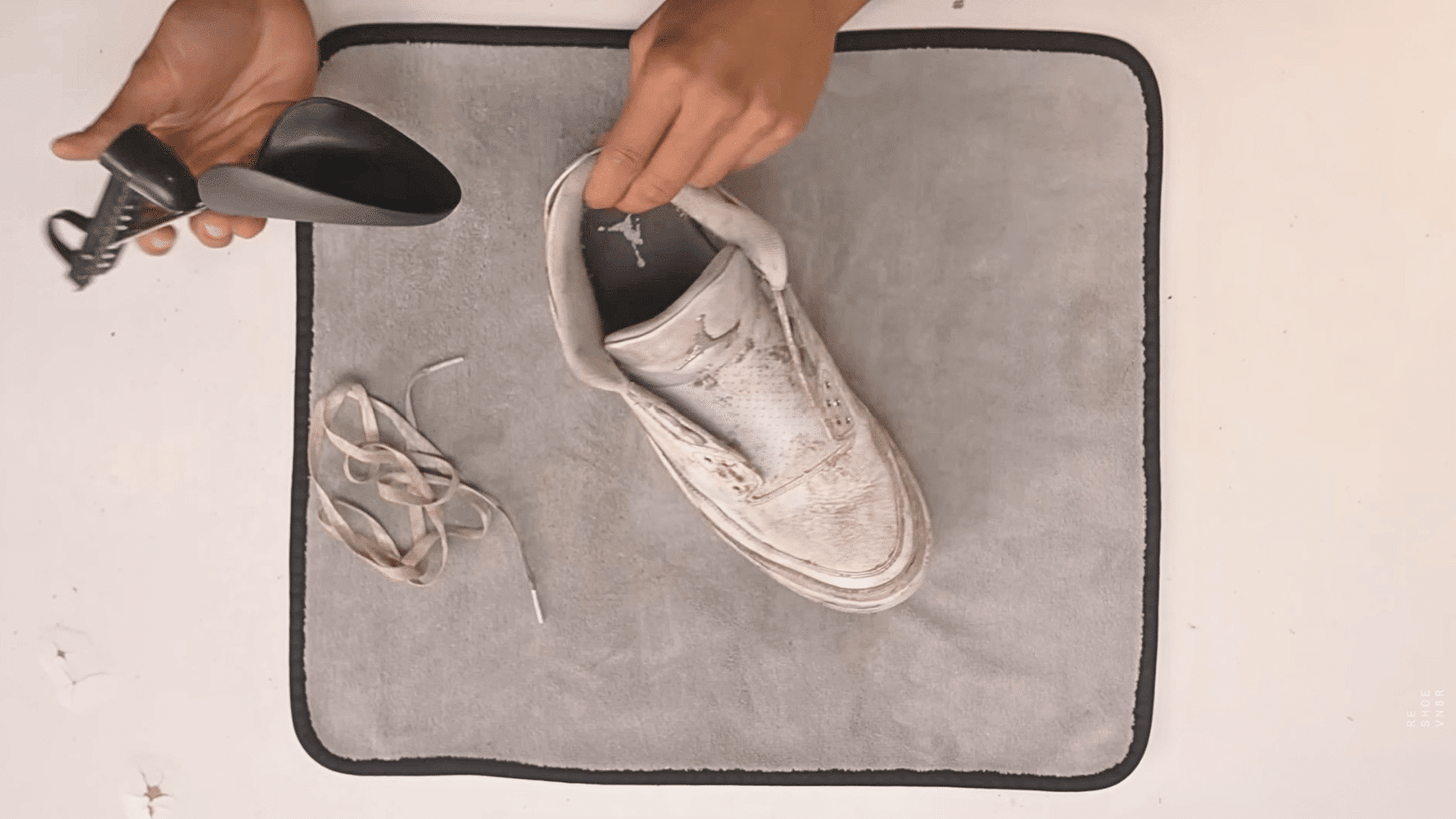
Start by removing laces, inserting a shoe tree to maintain shape, and gently pulling out creases. Then dry-brush the entire shoe, uppers, midsole, and insole, to knock off loose dirt and dust before adding any water.
This simple pre-cleaning step prevents grime from spreading and makes the deeper clean far more effective.
Step 2: Prepare a Cleaning Solution
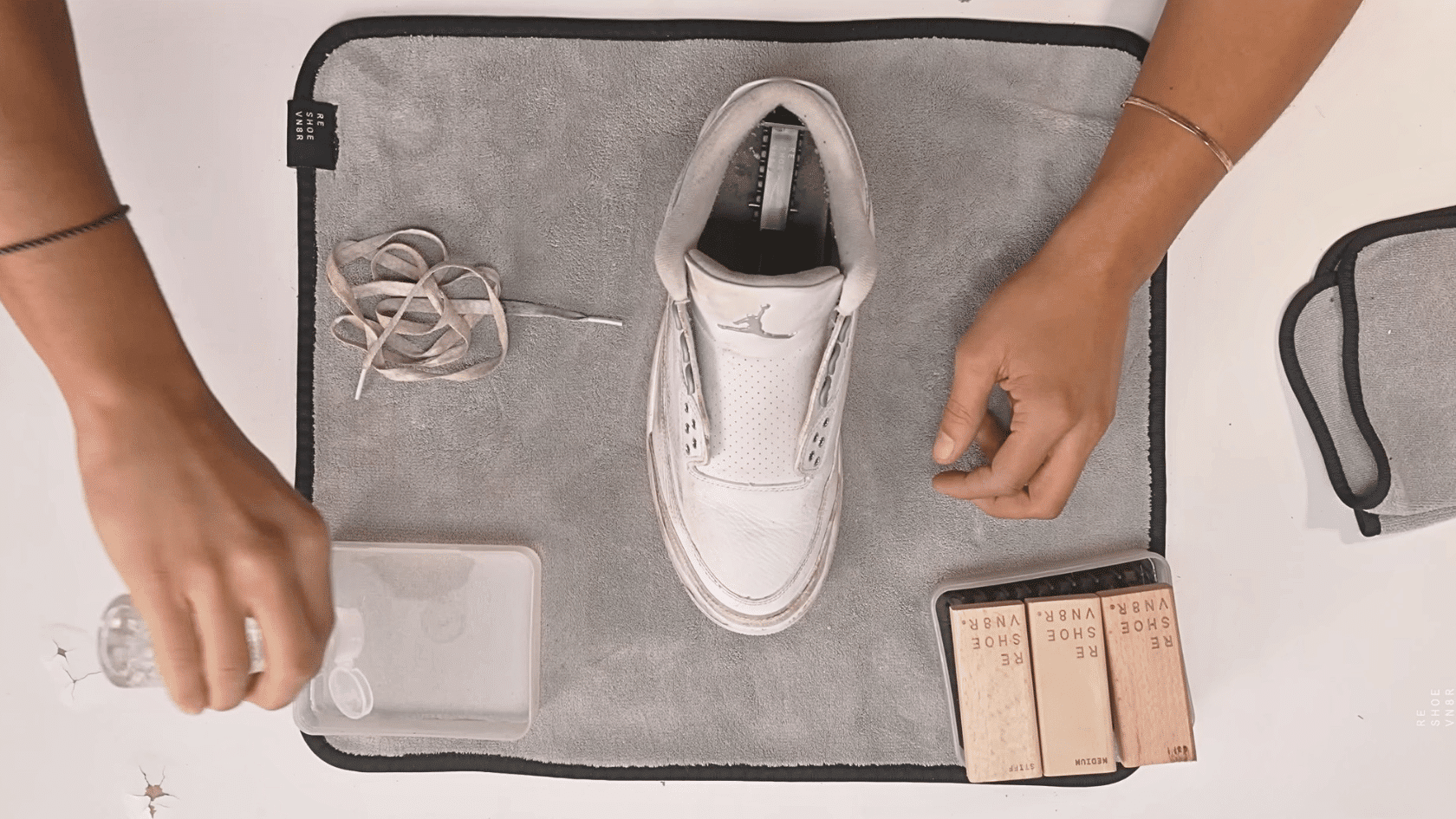
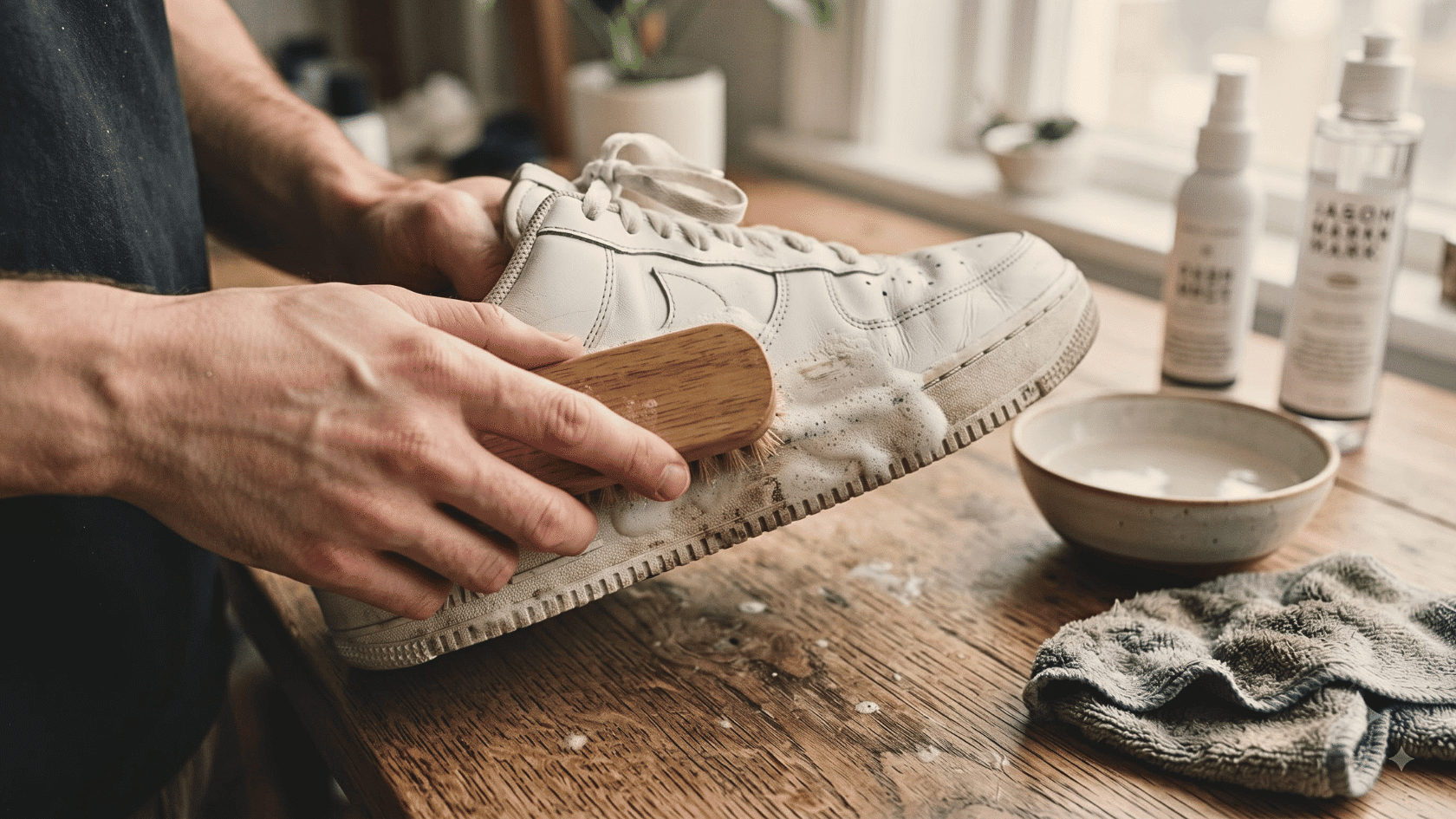
Set up a proper cleaning station with soft, medium, and stiff-bristled brushes, a bowl of water, and a shoe cleaner solution; just two squirts mixed with water are enough.
Having everything ready before you start, including a microfiber towel nearby, makes the process smoother and ensures you don’t miss any dirty spots along the way.
Step 3: Scrub the Shoes, Soles & Edges
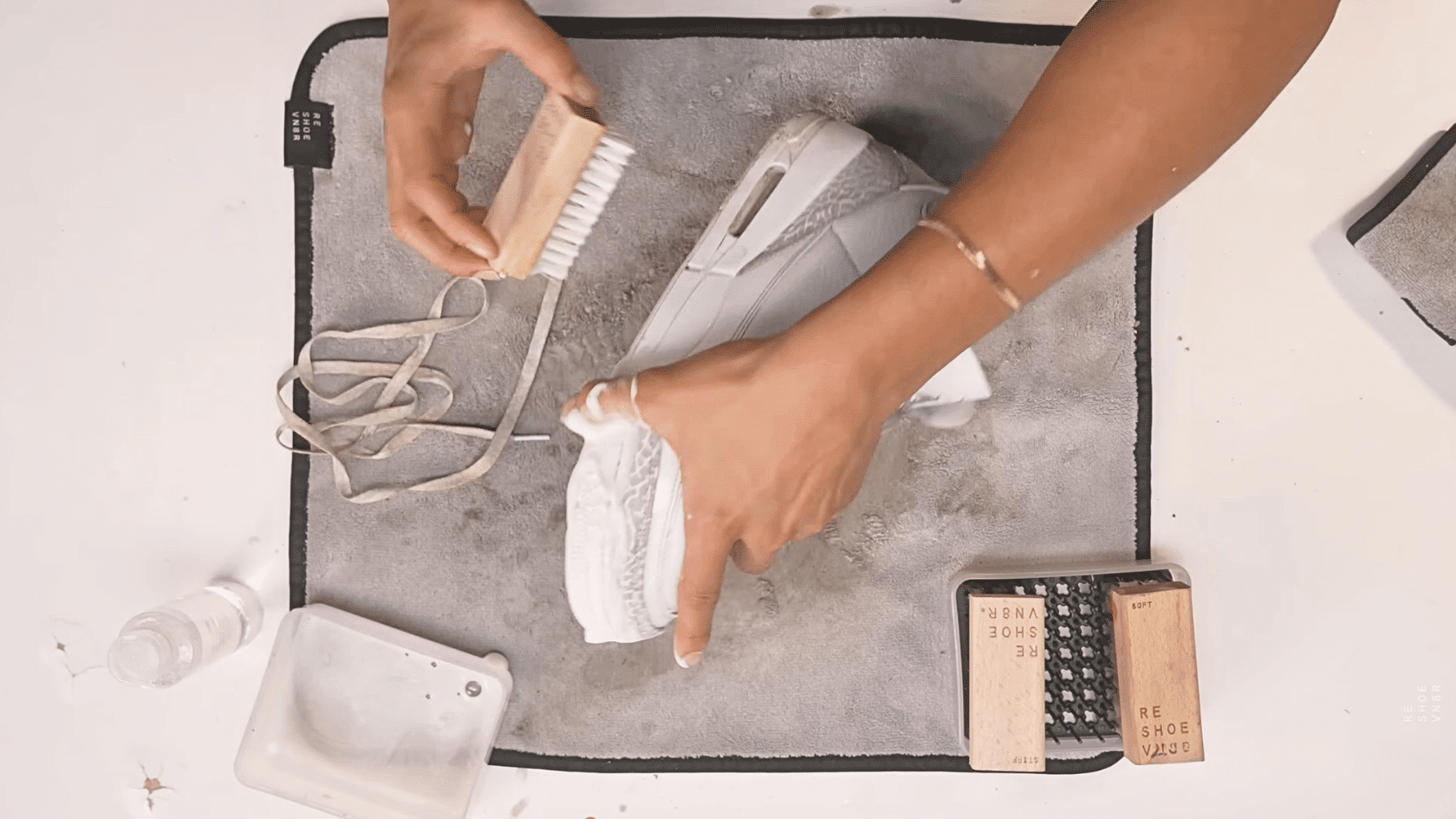
Scrub the uppers first with a soft brush for a gentle, even pass, especially important on suede sections to avoid uneven drying.
Switch to a medium brush for tougher stains on the midsole and air bubbles, then finish with a stiff brush on the outsole. Don’t forget the insole and liner, including behind the back tab.
Step 4: Clean the Laces
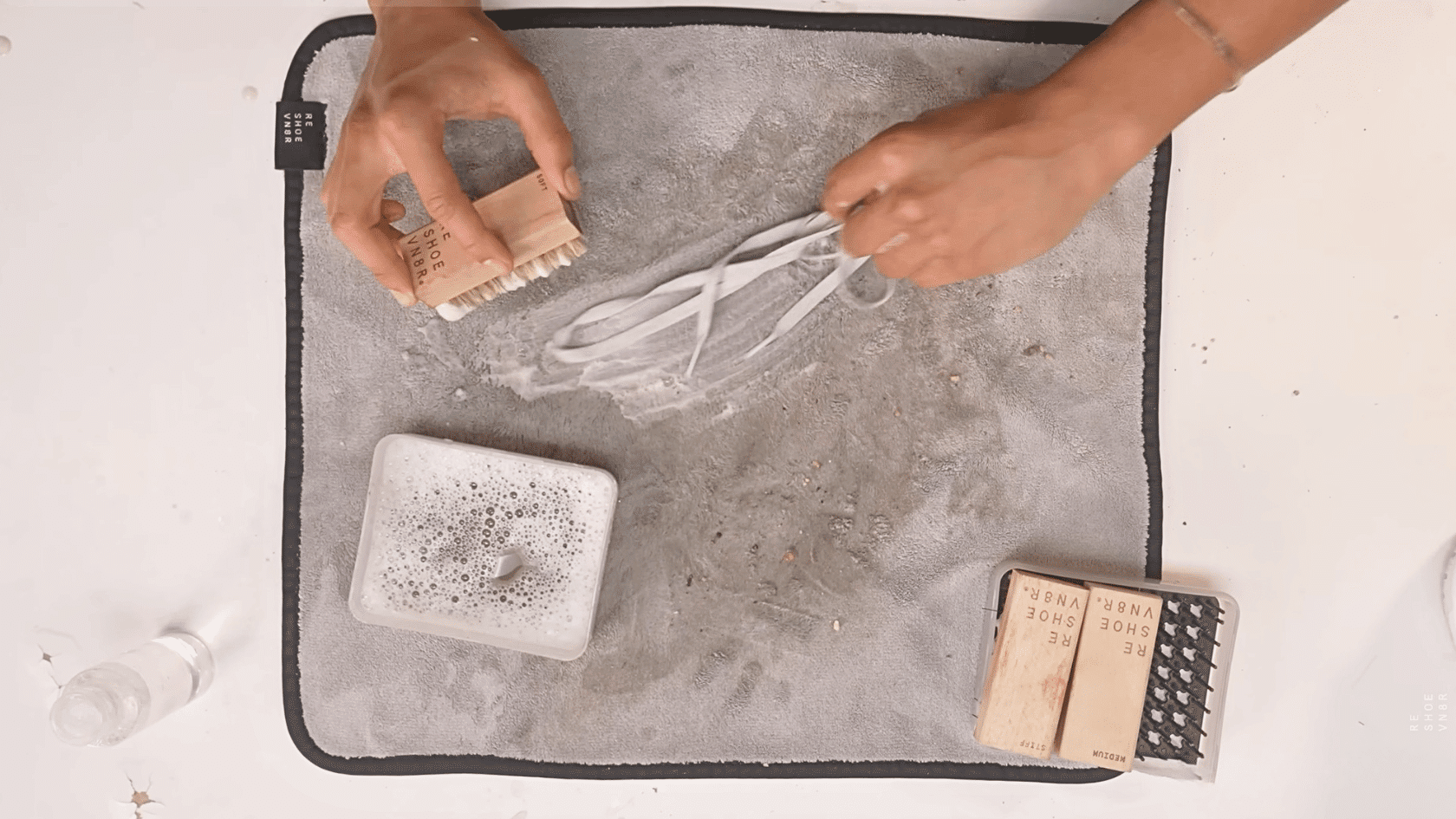
Laces deserve just as much attention as the shoe itself, since dingy laces can ruin an otherwise clean pair.
Rub them between your hands with cleaning solution until soapy, then scrub back and forth against a cleaning mat with a soft bristle brush until they look fresh, bright, and ready to be relaced later
Step 5: Wash Away Leftover Residue
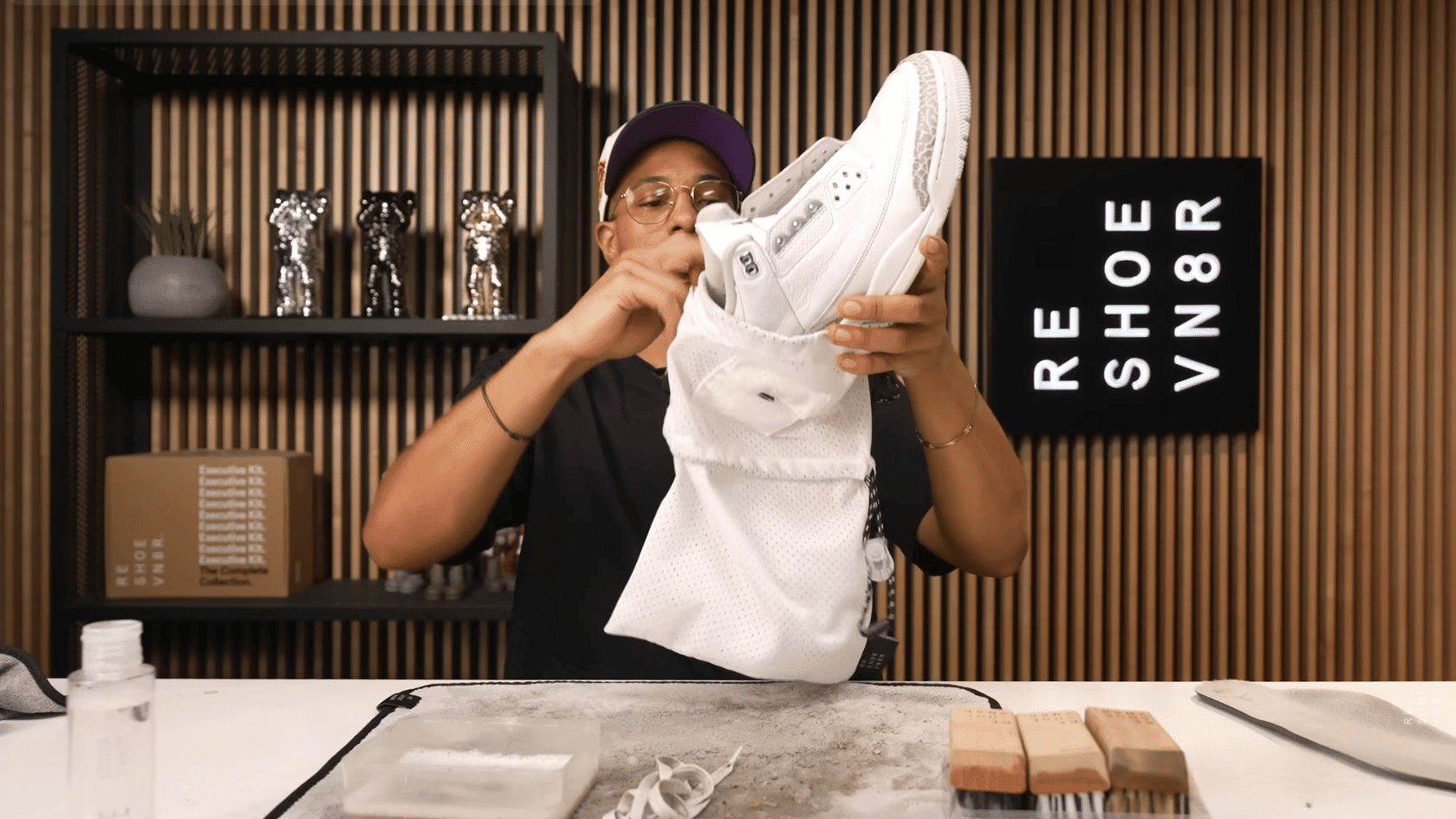
Place the scrubbed shoe in a laundry bag with a laundry sheet, then run it through the washing machine for a deeper clean than brushing alone can provide.
This step lifts remaining residue from the uppers and midsole, brightening the white leather and stitching, and leaves the sneaker looking noticeably fresher and more even.
Tip: Machine washing suits canvas and mesh sneakers with sturdy soles, while leather, suede, and glued components should be hand cleaned to prevent cracking, peeling, or water damage.
Step 6: Dry the Shoes Properly
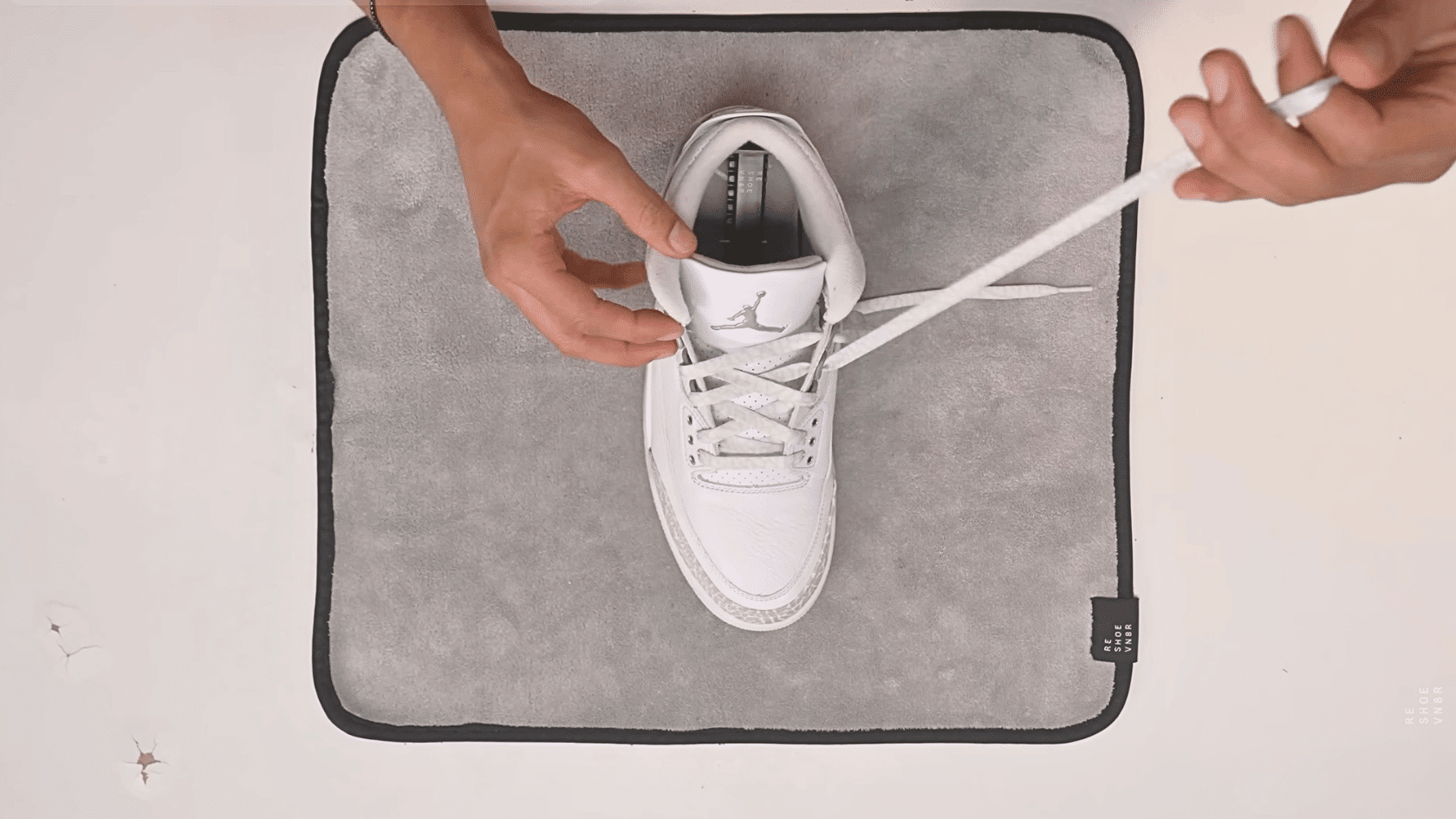
Let the sneaker air-dry outside in direct sunlight, since UV rays naturally help whiten white leather, laces, and stitching over time.
Once fully dry, use a fabric shaver to remove sock lint stuck inside the liner, reinsert the shoe tree, and re-lace the sneaker for a smooth, clean finish that looks brand new again.
With the right tools, a little patience, and these simple steps, your white shoes can look brand new again.
Regular cleaning keeps them fresh longer, so don’t wait until they’re too dirty to save.
| These white shoe cleaning steps are adapted from RESHOEVN8R’s YouTube tutorial, which covers easy techniques for cleaning and restoring white shoes using simple household methods. |
Best Ways to Treat Different White Shoe Stains
Different marks need different treatments, and common household items like baking soda, vinegar, and mild soap handle most of them without harsh chemicals.
| Stain Type | Cause | Treatment |
|---|---|---|
| Grass Stains | Lawns, sports, wet grass | Apply equal parts vinegar and water, scrub gently, then wipe with diluted detergent. |
| Mud Marks | Rain, muddy surfaces, outdoor use | Let mud dry, brush off dirt, then clean with diluted detergent and a soft brush. |
| Yellow Stains | Sweat, oxidation, aging soles, sun exposure | Apply liquid detergent, scrub gently, and rinse. |
| Scuff Marks | Pavement, curbs, rough surfaces | Rub with a damp cloth and baking soda in circular motions. |
| Oil Stains | Food, grease, machinery contact | Apply talcum powder or salt, let it absorb oil, then brush away. |
Baking soda, vinegar, and mild soap can cover nearly every type of stain here, making them reliable staples for keeping white shoes clean without specialized products.
Does Hydrogen Peroxide Make Shoes White Again?
Yes, hydrogen peroxide can restore white shoes by breaking down yellow stains, sweat marks, and mild discoloration on the surface.
Mix it with water in equal parts, apply with a soft brush, let it sit for 10-15 minutes, then rinse.
For stronger stains, use a paste of hydrogen peroxide and baking soda for extra lifting power.
Sun drying after treatment helps keep the brightness longer. I would use it mainly on canvas, rubber soles, and cotton laces, while avoiding leather and suede since hydrogen peroxide can dry out or damage these materials.
However, be careful around colored logos, mesh overlays, or trim too, since hydrogen peroxide can lighten or fade dyed sections even on otherwise white sneakers.
Note: For more information on hydrogen peroxide safety and proper handling, refer to the American Cleaning Institute’s cleaning and safety resources.
Common Mistakes to Avoid When Cleaning White Shoes
Proper care of white shoes requires avoiding common mistakes that can harm their appearance and durability. Using the right techniques helps preserve materials and keeps footwear looking fresh longer.
- Avoid Excessive Scrubbing: Aggressive rubbing can damage fabrics, coatings, mesh, and delicate shoe surfaces.
- Skip Harsh Chemicals: Avoid bleach and strong cleaners that may cause discoloration or material damage.
- Do Not Soak Shoes: Excess water can weaken materials, causing cracks, stains, or structural issues.
- Use Suitable Tools: Stiff brushes can harm surfaces, while soft brushes protect shoe materials.
- Treat Stains Quickly: Delaying treatment of oil stains allows marks to set deeper into materials.
Following these cleaning precautions helps protect white shoes from damage and preserve their appearance and structure, ensuring longer shoe life across various materials.
Conclusion
Clean white shoes come down to using the right brush, solution, and drying method for each material. Grass, mud, oil, and yellow stains require different treatments when cleaning white shoes while protecting leather, suede, canvas, and mesh.
Cleaning white shoes requires regular care, the right products, and gentle methods to keep them in good shape.
I believe that with a little regular care, like wiping stains fast and storing shoes properly, you can keep them looking fresh between deep cleans.
Consistent effort pays off more than one heavy scrubbing session, and small habits protect the material over months of wear.
Share which stain gave you the hardest time or which method worked best for your pair in the comments below.
Frequently Asked Questions
How to Keep White Shoes Clean for Longer?
White shoes stay cleaner longer when dirt is removed often, stains are wiped quickly, and footwear is stored properly between wears. Knowing how to clean white shoes and maintain them properly helps prevent dirt buildup.
Does Dawn Dish Soap Help Whiten Shoes?
Yes, Dawn dish soap cuts through grease and grime on white shoes effectively. Mix a small amount with warm water, scrub gently with a soft-bristled brush, then rinse and air-dry completely.
What Is the Best Stain Remover for Shoes?
Angelus Easy Cleaner works safely on suede, leather, and mesh; OxiClean Max Force Spray lifts tough stains from canvas and rubber; and Jason Markk Premium Shoe Cleaner restores brightness across nearly every sneaker material.