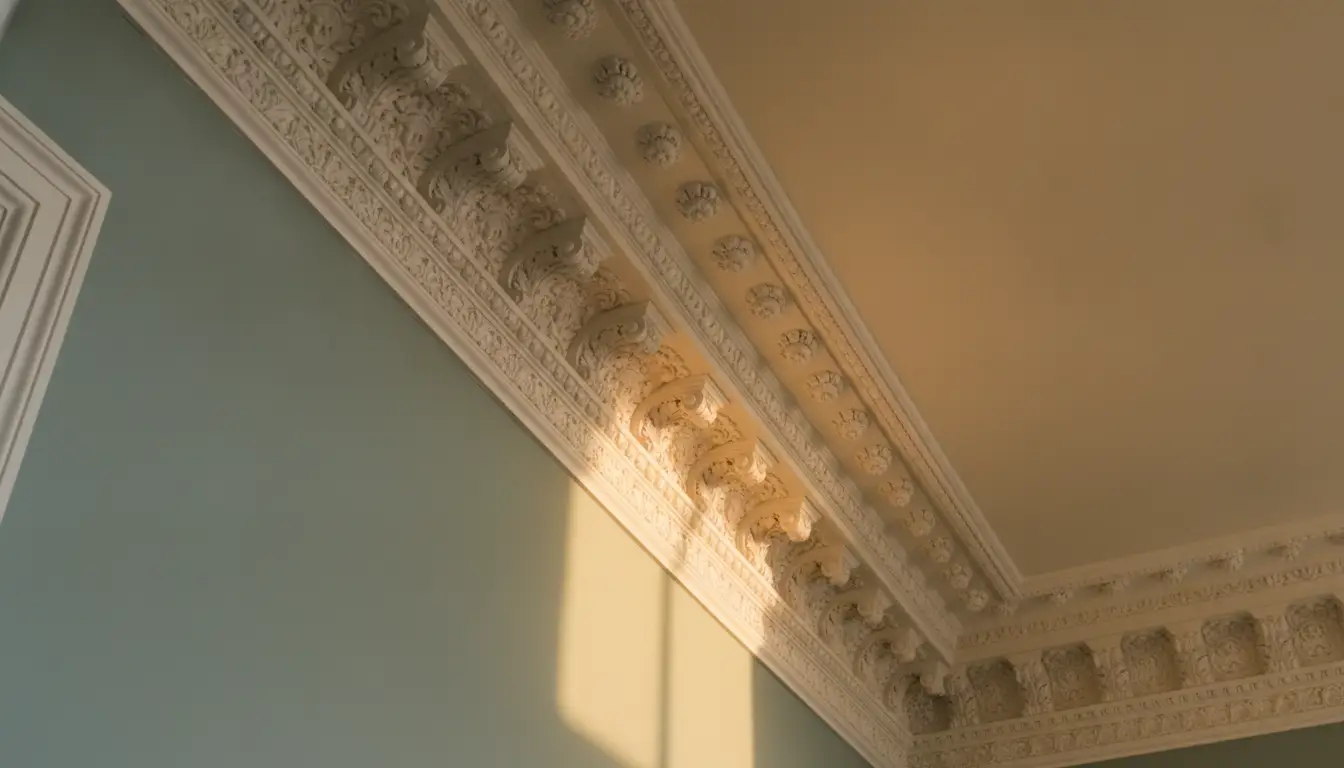
Period property owners who’ve spent months researching paint colours, flooring finishes, and kitchen specification often arrive at the coving decision in the final stages of a renovation and treat it as a straightforward selection from whatever the local plastering supplier carries.
The coving goes in, it looks approximately right, and it’s only later, when the room is furnished and lit and the eye has had time to settle, that something about the proportions doesn’t quite work in a way that’s difficult to articulate but consistently noticeable.
That feeling almost always traces back to a specification decision made quickly at the end of the project that deserved the same attention the project gave to everything else.
Profile Scale Relative to Ceiling Height
The relationship between a coving profile’s size and the room’s ceiling height is the specification decision with the most visible consequence when it goes wrong, and it goes wrong most often in Victorian and Edwardian properties where the ceiling heights exceed what modern coving profiles were designed for. A 90mm coving profile that looks proportionate in a room with 2.4 metre ceilings looks undersized in the same way that a small picture frame looks wrong on a large wall.
The original coving in period properties was proportioned for the ceiling height it was installed at, which is why rooms with 3 metre or 3.5 metre ceilings typically had coving profiles with projections and heights of 150mm or more.
Replacing that original coving with a modern standard profile because it’s what the supplier carries produces the visual imbalance that owners notice without always identifying as a coving proportion problem.
Wall Projection Versus Ceiling Projection Balance
The way a coving profile divides its geometry between wall coverage and ceiling coverage affects how the room reads in terms of apparent height and width, and that division isn’t consistent across different profiles even when the overall profile size is similar.
A profile that projects further from the ceiling draws the eye upward and makes a room feel taller. One that projects further from the wall makes the ceiling feel lower and the room feel wider. Neither effect is universally correct or incorrect, but the effect produced should be a deliberate specification choice for the specific room.
Most period properties had coving profiles where the wall and ceiling projections were balanced in ways that suited the room’s proportions, and replacing them with a profile whose projection balance is different changes the room’s spatial character in ways that are felt before they’re understood.
Substrate Compatibility and Long-Term Adhesion
Plaster coving in a period property goes onto a wall and ceiling surface whose condition reflects the property’s age and construction history. Lath and plaster substrates, lime-based plasters, surfaces that have been repainted many times, surfaces with historic coving adhesive residue, all present different adhesion conditions that the specification of the adhesive and fixing method needs to address.
A modern adhesive applied to a lime plaster substrate without surface preparation that creates the right conditions for adhesion produces a bond that works initially and fails across the first few years as the different materials move differently with seasonal humidity and temperature changes.
Material Choice and Its Effect on Period Character
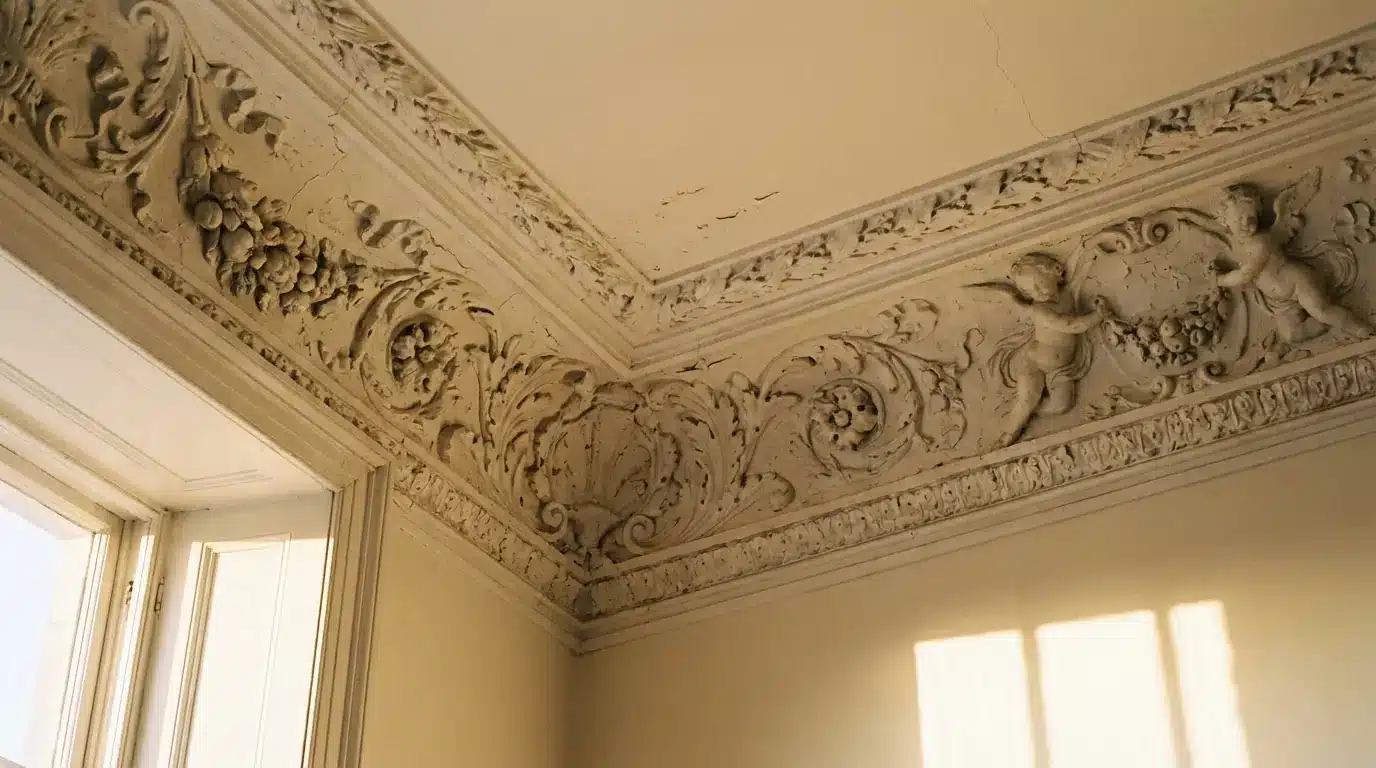
Plaster coving and GRP coving look similar in photographs and different in finished rooms, particularly in rooms where raking light reveals the surface texture and the way the profile responds to paint.
Genuine plaster has a density and a surface character that takes paint differently from a GRP profile and that reads differently under period lighting conditions, which matters in a period property where the coving is one element of an interior that benefits from the material authenticity that genuine plaster provides.
The cost difference between plaster and GRP profiles is real enough to make GRP a reasonable specification for contemporary properties where material authenticity isn’t a consideration, and less reasonable for a period interior where the coving’s material character contributes to the room’s overall period credibility.
Junction Detail at the Wall and Ceiling Interface
The way a coving profile terminates at the wall surface and the ceiling surface determines how it reads in finished condition, and the junction detail that produces a clean, sharp termination requires the wall and ceiling surfaces to be prepared to receive the coving correctly before installation begins.
A coving profile installed onto painted surfaces without the preparation that creates the right conditions for a clean adhesive joint produces a visible gap at the termination line that paint and filler address imperfectly and that’s visible in certain lighting conditions indefinitely.