A riverside cottage or a coastal home looks like the dream when you view it on a sunny afternoon. The trouble is that the same features that make these properties so appealing can cost you later. Estate agents won’t always point out what sits beneath the view, so it pays to know what you’re really taking on before you fall in love with it.
Buying near water isn’t a bad idea, but it does need more homework than a standard purchase. Keep reading to learn the hidden risks families miss and the searches that bring them to light before you commit.
Flood Risk Can Decide Whether You Get a Mortgage at All
The first thing to check is the flood zone. In England, the Environment Agency splits land into flood zones, and Flood Zone 3 means a high probability of flooding. Wales, Scotland and Northern Ireland run their own versions of the same idea.
If a property sits in Zone 3, some lenders won’t offer a mortgage on it without proof of suitable flood defences, and a few won’t lend at all. That can leave you stuck with a home you can only sell to a cash buyer down the line.
Insurance, Flood Re, and the Importance of a Conveyancing Solicitor
Insurance is the other sting. Standard cover gets harder and pricier to find near water, and some homes only qualify through the Flood Re scheme, which helps keep premiums down but doesn’t apply to every property. A home built after 1 January 2009, for example, isn’t covered by Flood Re, so you could be left paying a steep premium with a high excess.
Important: Leasehold flats in blocks of four or more are also excluded from Flood Re buildings cover, which matters if you’re looking at a riverside apartment instead of a house.
It’s important to check the Flood Re eligibility tool early, because whether a property ends up in the scheme is decided by insurers on cost, not just by where it sits on the map. Two neighbouring homes can end up with very different cover.
This is where the legal side earns its keep. The environmental and flood risk searches that form part of the conveyancing process will flag flood history, drainage problems and contamination before you exchange.
Your conveyancer should order the flood data and raise the right enquiries before you exchange. An experienced panel like SAM Conveyancing handles these searches as part of the process, so a hidden problem doesn’t surface after you’ve committed.
Erosion, Subsidence and Invisible Damage
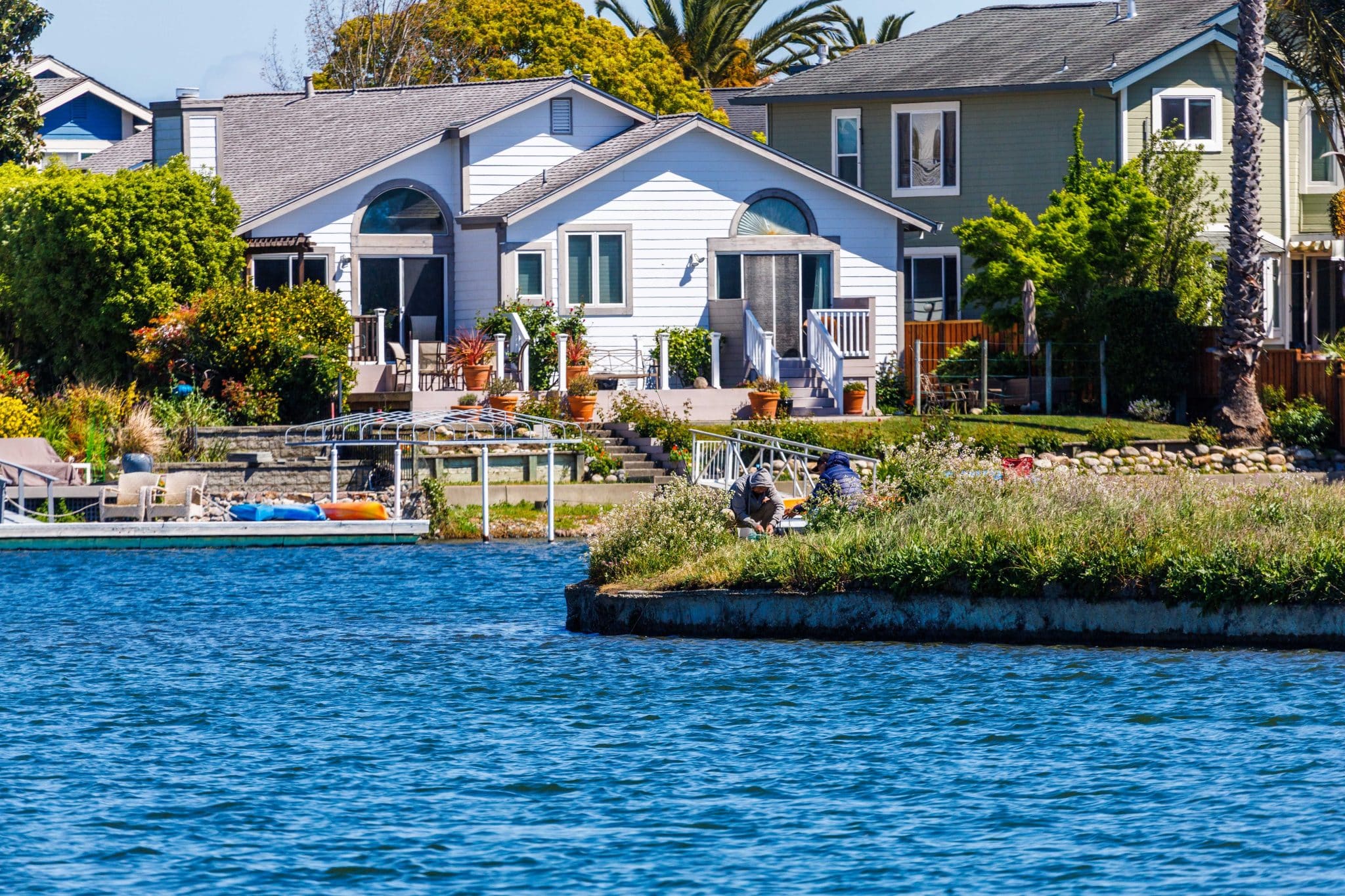
Coastal homes face a slower threat. Cliff erosion eats away at land year after year, and a property that feels safely set back now might not be in twenty years. Shoreline management plans, drawn up by Coastal Groups made up of local councils and the Environment Agency, show which stretches of coast will be defended and which won’t. You can find them through the Environment Agency’s SMP Explorer, and it’s worth reading the one for the area you’re buying in.
Ground movement is a problem too. Soil near rivers and the coast can shift as water levels change, and that leads to subsidence. You’ll often spot the signs in cracks around door frames and windows, or doors that no longer shut properly. A RICS survey, ideally a Level 3, will pick up on these warning signs and tell you whether they’re cosmetic or something more serious.
If you’re buying near a river, it’s also worth checking whether the property sits in an internal drainage board area, as this can mean an additional annual levy on top of your council tax.
Damp, Humidity and the Daily Reality of Living by Water
Living near water means living with moisture. Higher humidity makes condensation, mould and timber decay far more likely, and older waterside cottages with solid walls and poor ventilation suffer the worst. Some of these problems stay hidden until you’ve moved in and the colder months arrive.
While buying a waterside property requires deeper due diligence, the process isn’t difficult. Get the flood and environmental searches done early, instruct a proper survey, and check the long-term plans for the coastline or riverbank. Do that, and you can enjoy the view knowing exactly what you’ve bought into.