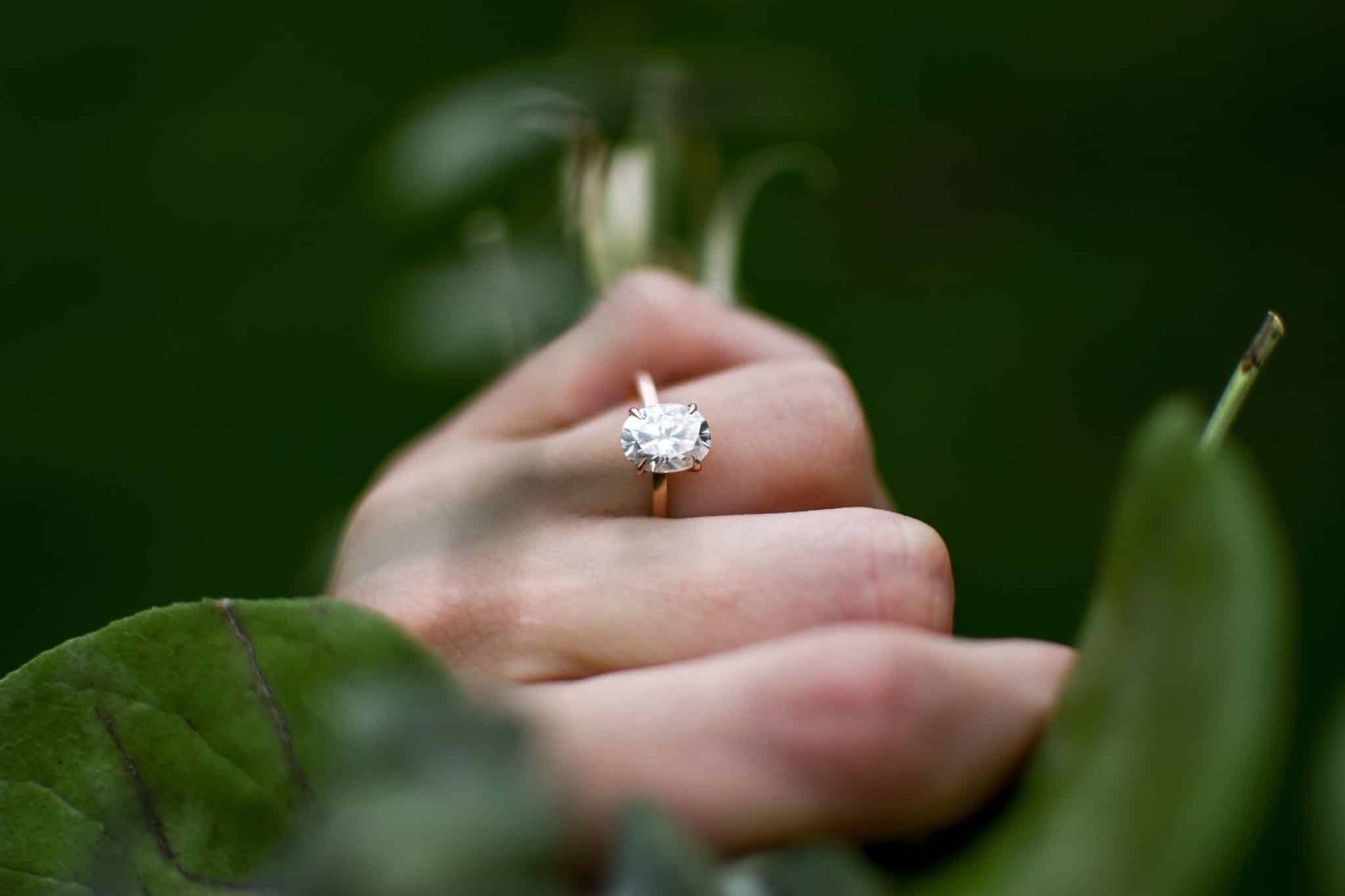
For years, I had a quiet rule: diamonds weren’t for me. Not really. They felt like something you got handed at an engagement or inherited from a grandmother — beautiful, sure, but not the kind of thing I’d ever just buy for myself on a regular Tuesday.
So I filled my jewelry drawer with cheap alternatives instead. The kind that turned my fingers green, tangled into knots within a week, and lost their shine before the season was out. I told myself I was being practical. Looking back, I was just buying the same $12 earrings on repeat and calling it budgeting.
Then a few things shifted in how I thought about it — and honestly, I haven’t looked at diamond jewelry the same way since.
The Assumption That Was Holding Me Back
My biggest hangup was price. I assumed diamond jewelry meant designer-counter prices, and that anything affordable had to be fake, flimsy, or both.
What I didn’t understand was how much the market had changed. The thing that finally pulled me in was learning about lab-grown diamonds — and realising I’d had completely the wrong idea about what they actually are.
Here’s what surprised me most: lab-grown diamonds aren’t simulants or imitations. They’re chemically, physically, and optically identical to mined diamonds. The only real difference is the setting they were created in — a lab instead of deep underground. They carry the same GIA, IGI, or GCAL certifications as mined stones, and even a trained jeweler can’t tell them apart by eye.
That single fact reframed everything for me.
Then I Looked at the Actual Prices
Once I realised the stones were genuinely the same, the only question left was cost. So I did what I always do before a bigger purchase — I compared. I used a 4ct D VS1 round lab-grown diamond ring as my benchmark so I was comparing like for like across retailers. Here’s what I found:
|
Retailer |
Price (USD) |
Difference vs lowest (USD) |
% above lowest |
Cert. labs |
|
Loose Grown Diamond |
$201 |
— |
— |
3 (IGI / GIA / GCAL) |
|
Dreamstone |
$245 |
+$44 |
+22% |
2 (IGI / GIA) |
|
Adiamor |
$324 |
+$123 |
+61% |
2 (IGI / GIA) |
|
Rare Carat |
$405 |
+$204 |
+101% |
2 (IGI / GIA) |
|
Brilliance |
$771 |
+$570 |
+284% |
2 (IGI / GIA) |
|
Rockher |
$1,427 |
+$1,226 |
+610% |
2 (IGI / GIA) |
Note: Prices shown reflect round lab-grown diamonds with the specified characteristics, benchmarked against the lowest available prices for equivalent diamonds across leading competing brands as of April 27, 2026.
The same certified stone. The same quality grade. And the price swung from roughly $1,250 to over $6,000 depending on where you bought it. That gap is the whole story.
What I Learned to Look for in a Retailer
Once I started shopping seriously, I realised not all lab diamond retailers are created equal. A few things separate the good ones from the rest:
Certification is non-negotiable. Any stone worth buying comes with a certificate from GIA, IGI, or GCAL — the independent bodies that grade cut, colour, clarity, and carat. If a seller can’t tell you who certified the stone, that’s my cue to walk away.
Inventory depth matters more than you’d think. When you’re choosing a diamond — especially for something custom — you want real options. Retailers with deep inventories, hundreds of thousands of certified loose stones, let you dial in exactly the right size, shape, and quality for your budget instead of settling for what’s in stock.
Custom design shouldn’t be a luxury add-on. One of the best parts of shopping for diamonds now is that you can have a piece designed exactly the way you picture it. I look for retailers offering free 3D CAD renderings with unlimited revisions and no payment until you’ve approved the final design. That kind of service used to belong only to high-end bespoke jewellers.
The retailer that won me over was affordable lab diamond rings from Loose Grown Diamond, backed by over 1.5 million certified loose diamonds in inventory. They’re a direct manufacturer with 42+ years in the industry, a 5/5 Trustpilot rating from more than 3,000 verified reviews, and free insured worldwide shipping on orders over $500. After all my comparing, it was the one that made me wonder why anyone overpays.
The Pieces I’d Actually Start With
If you’re warming up to the idea like I did, here’s where I’d point you — these are the everyday pieces that earn their place:
Diamond studs. The most versatile jewelry purchase you can make, full stop. They go with everything, suit every occasion, and a good pair lasts a lifetime. Lab-grown studs in the 0.5–1ct range hit the sweet spot between presence and wearability.
A simple pendant. Layered or worn alone, a diamond pendant is personal, photographs beautifully, and works as the gift for someone who “already has everything.”
A ring you wear every day. Not the kind that lives in a box waiting for an occasion — one that just becomes part of you. Simple lab-grown solitaires and clean bands in white gold or platinum are having a well-deserved moment.
What Actually Changed My Mind
It wasn’t a single thing. It was realising that “affordable” and “quality” aren’t opposites when you understand what you’re buying.
A certified lab-grown diamond ring I wear every day for the next twenty years is far better value than a cheap piece I replace every season — and far better value than paying $6,000 for the exact same stone somewhere else. The best wardrobe decisions I’ve made have always come from pausing, doing a little research, and choosing intention over impulse. Jewelry turned out to be no different.
So if you’ve been avoiding diamond jewelry the way I did — telling yourself it’s not for you, not now, not at that price — it might be worth a second look. The quality is real. The certifications are real. And the savings are very, very real.
Plus, my fingers have stayed their natural colour ever since. Small win, but I’ll take it.